



Share This:

Short Annapurna Base Camp Trek
The Short Annapurna Base Camp Trek is a 9-day Himalayan trekking package designed for travelers who want to reach Annapurna Base Camp at 4,130 meters within a shorter but well-managed itinerary. The route usually starts in Kathmandu, continues to Pokhara, and follows the trail through Simroong, Lower Sinuwa, Bamboo, Dovan, Himalaya, Deurali, Machhapuchhre Base Camp, and finally Annapurna Base Camp. This trek is best for physically active travelers who have limited time but still want a complete Annapurna Base Camp Trek experience with mountain views, Gurung-Magar culture, teahouse stays, forests, hot springs, and guided support.
The 9-day Short ABC Trek offered by Mountain Treks Nepal is suitable for solo travelers, couples, families, and private groups who want a safer, organized, and time-efficient trekking experience in the Annapurna region.
Overview of Short Annapurna Base Camp Trek

The Short Annapurna Base Camp Trek is one of the most rewarding short treks in Nepal because it takes trekkers directly into the Annapurna Sanctuary, a natural amphitheater surrounded by some of the most iconic Himalayan peaks. At Annapurna Base Camp, trekkers stand close to Annapurna I, Machhapuchhre, Hiunchuli, Annapurna South, and surrounding snowy mountains.
Unlike longer trekking routes, this itinerary focuses on the most essential part of the Annapurna Base Camp route. It removes unnecessary extra days while still covering the main trail experience, cultural villages, forest paths, river valleys, stone steps, suspension bridges, and high-altitude base camp views.
This trek is not technical. You do not need mountaineering skills, ropes, or climbing equipment. However, it is physically demanding because the walking days can be long, and the trail includes steep uphill and downhill sections. Proper preparation, steady pacing, and guidance from an experienced local guide make the journey safer and more enjoyable.
Short Annapurna Base Camp Trek Facts
| Trek Feature | Details |
|---|---|
| Trek Name | Short Annapurna Base Camp Trek |
| Duration | 9 Days |
| Highest Altitude | 4,130 m at Annapurna Base Camp |
| Difficulty | Moderate to Strenuous |
| Main Destination | Annapurna Base Camp |
| Starting Point | Kathmandu |
| Gateway City | Pokhara |
| Accommodation | Hotel in cities, teahouse/lodge during trek |
| Best Seasons | March to May and September to November |
| Trek Style | Guided teahouse trek |
| Suitable For | Active beginners, experienced trekkers, private groups, couples, families |
| Main Permits | ACAP Permit and TIMS Card |
| Major Highlights | Annapurna Sanctuary, Machhapuchhre Base Camp, Jhinu hot spring, Gurung-Magar villages, Himalayan views |
Why Choose a Short Annapurna Base Camp Trek?

Many travelers have limited vacation time in Nepal. A longer Annapurna Base Camp Trek can take 11 to 14 days depending on the route, pace, and side trips. The shorter version is designed for people who want the core ABC experience without spending two full weeks on the trail.
The 9-day route is useful for travelers who:
- Want to reach Annapurna Base Camp in a limited time
- Prefer a managed trip starting and ending in Kathmandu
- Want hotel stays in Kathmandu and Pokhara included
- Need permit, guide, transportation, and teahouse arrangements handled
- Prefer a guided trek instead of arranging everything independently
- Want a balance of adventure, comfort, and safety
This itinerary is especially helpful for international travelers arriving in Nepal for a short holiday. It allows enough time for airport transfer, travel to Pokhara, trekking to base camp, descent, and final departure.
Short Annapurna Base Camp Trek Route
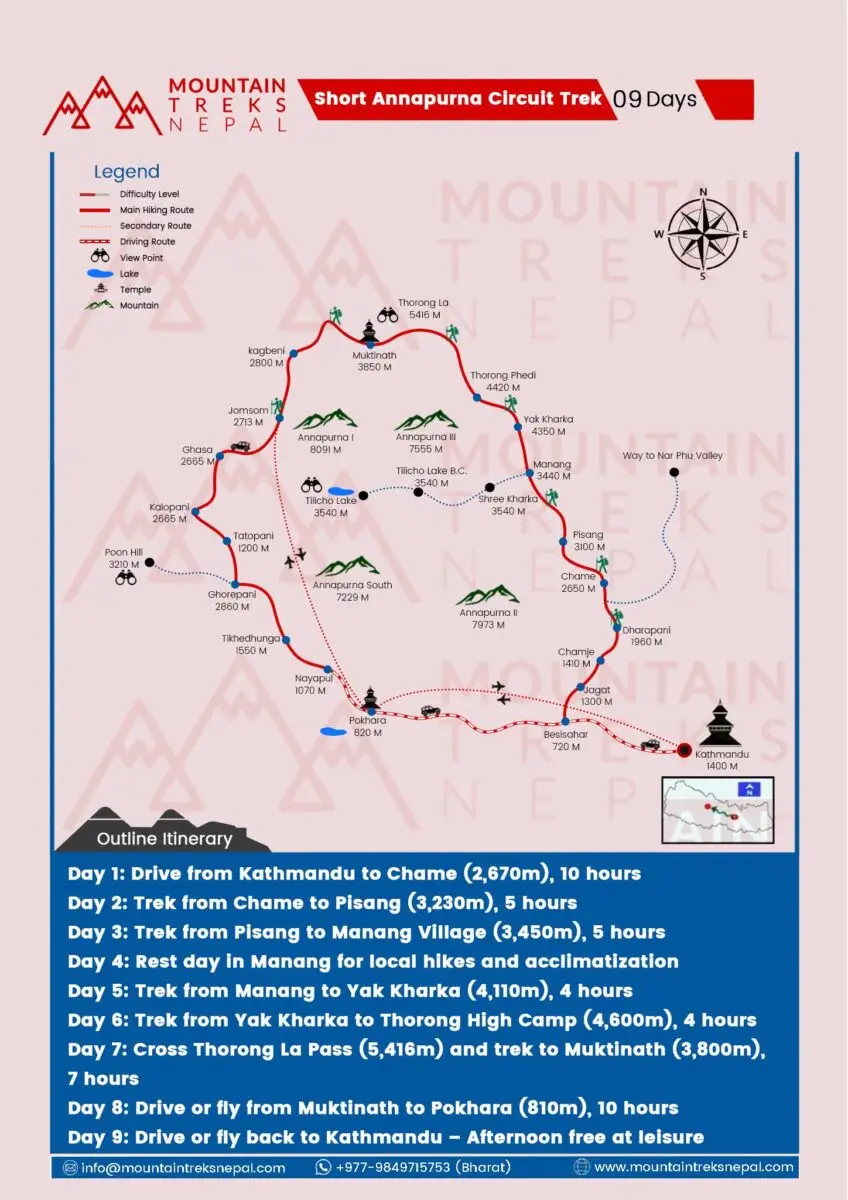
The route begins in Kathmandu, the capital city of Nepal. From Kathmandu, trekkers travel to Pokhara, the main gateway to the Annapurna region. Pokhara is a peaceful lake city surrounded by hills and mountain views, and it serves as the starting point for many Annapurna treks.
From Pokhara, the journey continues by road toward Simroong. The walking section then follows the trail through Lower Sinuwa, Bamboo, Dovan, Himalaya, and Deurali. From Deurali, the route climbs higher toward Machhapuchhre Base Camp at around 3,700 meters before reaching Annapurna Base Camp at 4,130 meters.
After enjoying sunrise, mountain views, and the dramatic landscape of the Annapurna Sanctuary, the trail descends back through Deurali and Lower Sinuwa. The trek then continues to Jhinu Danda, where many trekkers enjoy the natural hot spring. Finally, the journey returns to Pokhara and then Kathmandu.
Main Route Flow
Kathmandu → Pokhara → Simroong → Lower Sinuwa → Bamboo → Dovan → Himalaya → Deurali → Machhapuchhre Base Camp → Annapurna Base Camp → Deurali → Lower Sinuwa → Jhinu Danda → Pokhara → Kathmandu
9-Day Short Annapurna Base Camp Trek Itinerary
| Day | Route | Key Experience |
| Day 1 | Arrival in Kathmandu | Airport pickup, hotel transfer, trip preparation |
| Day 2 | Drive from Kathmandu to Pokhara | Scenic drive along rivers, hills, and highway settlements |
| Day 3 | Drive to Simroong and trek to Lower Sinuwa | First trekking day, village trail, forest sections |
| Day 4 | Trek from Lower Sinuwa to Deurali | Bamboo forests, river valley, gradual altitude gain |
| Day 5 | Trek from Deurali to Annapurna Base Camp via MBC | Highest trekking day, Annapurna Sanctuary views |
| Day 6 | Trek back from Annapurna Base Camp to Lower Sinuwa | Long descent with changing landscapes |
| Day 7 | Trek to Jhinu Danda and drive to Pokhara | Natural hot spring and return to city comfort |
| Day 8 | Drive from Pokhara to Kathmandu | Return road journey to the capital |
| Day 9 | Final departure from Nepal | Airport transfer and trip completion |
This itinerary is compact, so trekkers should be ready for steady walking days. The benefit is that travelers can complete the Annapurna Base Camp experience within a short travel window.
What Makes Annapurna Base Camp Special?

Annapurna Base Camp is not just a viewpoint. It is a high Himalayan basin surrounded by giant peaks. When trekkers reach ABC, the landscape opens into a wide sanctuary with dramatic snow-covered mountains rising on different sides.
The journey also offers a strong cultural experience. The lower and middle sections of the trail pass through Gurung and Magar communities, traditional settlements, terraced fields, stone houses, teahouses, and forested hills. Trekkers experience both natural beauty and local hospitality.
Another reason this trek is popular is accessibility. Compared with more remote Himalayan routes, the Annapurna Base Camp route has a well-established teahouse network. This means trekkers can sleep in local lodges, eat warm meals, and travel without camping equipment.
Short Annapurna Base Camp Trek Difficulty
The Short Annapurna Base Camp Trek is considered moderate to strenuous. It is not a technical climb, but it requires good physical fitness. The shorter itinerary means some trekking days are longer, and the body has less time to adjust compared with slower itineraries.
Trekkers should expect:
- 5 to 8 hours of walking on trekking days
- Stone staircases, especially around Chhomrong and Sinuwa areas
- Forest paths that may be wet or slippery
- Uphill and downhill sections on the same day
- Basic teahouse facilities at higher elevations
- Cold temperatures near Deurali, MBC, and ABC
- Possible altitude symptoms above 3,000 meters
Previous trekking experience is useful but not compulsory. Active beginners can complete the trek if they prepare well, walk slowly, stay hydrated, and follow the guide’s advice.
Can Beginners Do the Short ABC Trek?
Yes, beginners can do the Short Annapurna Base Camp Trek if they are physically active and prepared. This trek is not recommended for someone with no walking habit, poor fitness, or serious health concerns without medical advice.
A beginner should train at least 4 to 6 weeks before the trek. Useful preparation includes brisk walking, stair climbing, light jogging, leg strength exercises, and day hikes with a backpack. The goal is not speed; the goal is endurance.
For first-time trekkers, hiring a licensed guide and porter makes the journey safer and more comfortable. A guide helps with route navigation, teahouse coordination, safety monitoring, and local communication. A porter reduces the physical burden by carrying the main duffel bag.
Altitude and Safety on the Short Annapurna Base Camp Trek
The highest point of this trek is Annapurna Base Camp at 4,130 meters. Although this altitude is lower than Everest Base Camp, altitude sickness is still possible. The risk increases when trekkers ascend quickly, walk too fast, drink less water, skip meals, or ignore early symptoms.
Common altitude-related symptoms include headache, tiredness, dizziness, loss of appetite, nausea, and difficulty sleeping. If symptoms appear, trekkers should inform the guide immediately.
Safety Tips
- Walk slowly and avoid rushing
- Drink enough water throughout the day
- Eat warm and balanced meals
- Avoid alcohol during higher-altitude days
- Keep warm, especially at night
- Follow the guide’s pacing advice
- Do not hide symptoms from your guide
- Carry basic personal medicine and first aid items
- Buy travel insurance that covers high-altitude trekking and emergency evacuation
Mountain weather can change quickly. A responsible trekking company monitors route conditions, weather, accommodation availability, and trekker health throughout the journey.
Required Permits for Short Annapurna Base Camp Trek
The Annapurna Base Camp route lies inside the Annapurna Conservation Area, so trekkers need the required trekking documentation before entering the region.
| Permit / Document | Why It Is Needed |
| ACAP Permit | Required for entry into Annapurna Conservation Area |
| TIMS Card | Used for trekker information, tracking, and safety management |
| Passport Copy and Photos | Usually required for permit processing |
| Travel Insurance Details | Important for emergency support and evacuation planning |
Permit rules and fees can change, so trekkers should confirm the latest requirements before travel. When booking with Mountain Treks Nepal, the team assists with permit arrangements as part of the trekking process.
Best Time for Short Annapurna Base Camp Trek
The best time for the Short Annapurna Base Camp Trek is spring and autumn.
Spring: March to May
Spring offers mild temperatures, blooming rhododendron forests, longer daylight, and good mountain visibility. The lower forest sections become colorful, and the weather is generally suitable for trekking.
Autumn: September to November
Autumn is considered one of the best trekking seasons in Nepal. The skies are usually clearer after the monsoon, mountain visibility is excellent, and trail conditions are stable. This is also a popular season, so teahouses may be busier.
Winter: December to February
Winter trekking is possible, but it is colder, especially near Deurali, MBC, and ABC. Snow may affect the higher trail. This season is suitable for trekkers who are comfortable with cold weather and want quieter trails.
Monsoon: June to August
Monsoon brings green landscapes, but rain, leeches, cloudy views, and slippery trails can make the trek more challenging. Flight and road delays are also more common during this period.
| Season | Trekking Condition | Best For |
| Spring | Clear views, flowers, mild weather | Nature lovers and photographers |
| Autumn | Stable weather, best visibility | First-time trekkers and most travelers |
| Winter | Cold but peaceful | Experienced trekkers who like quiet trails |
| Monsoon | Rainy, green, slippery | Flexible travelers who accept weather risk |
Accommodation During the Trek
Accommodation is usually arranged in hotels in Kathmandu and Pokhara and teahouses during the trekking section. Teahouses are simple mountain lodges run by local families. Rooms are usually twin-sharing with basic beds, blankets, and shared toilets.
At lower elevations, some teahouses may offer hot showers, charging, and Wi-Fi for an extra cost. As the trail goes higher, facilities become more basic. Trekkers should not expect luxury accommodation in Deurali, MBC, or ABC. The experience is simple, warm, and community-based.
Carrying a sleeping bag is recommended because nights can be cold, especially in spring, autumn, and winter.
Food and Drinking Water
Food on the Annapurna Base Camp route is simple, filling, and suitable for trekking. The most common meal is dal bhat, a Nepali set meal with rice, lentil soup, vegetables, pickle, and sometimes curry. It is popular because it provides energy for long walking days.
Other common food options include noodles, fried rice, soup, potatoes, eggs, pancakes, pasta, momos, porridge, and tea. Food becomes more expensive as the altitude increases because supplies are carried by porters, mules, or local transport.
Drinking water is available along the trail, but trekkers should use purification tablets, filtered water, or boiled water. Avoid buying too many plastic bottles because waste management is difficult in mountain regions.
Internet, Charging, and Mobile Network
Wi-Fi is available in many teahouses, but it is not always reliable. The connection becomes weaker at higher elevations and may stop working during bad weather. Charging facilities are also available in many lodges for an additional fee.
Mobile networks such as NTC and Ncell may work in some lower sections of the trail, but coverage can be limited near Deurali, MBC, and ABC. Trekkers should inform family members that communication may be irregular during the mountain days.
Packing List for Short Annapurna Base Camp Trek
Packing light but wisely is important. Since this is a short trek, avoid carrying unnecessary items, but do not compromise on warmth and rain protection.
Clothing
- Thermal tops and bottoms
- Trekking shirts
- Fleece jacket
- Down jacket
- Waterproof and windproof jacket
- Trekking pants
- Warm hat
- Sun hat or cap
- Gloves
- Buff or neck warmer
Footwear
- Well-broken-in hiking boots
- Warm trekking socks
- Sandals or slippers for teahouses
Trekking Gear
- Daypack of 20–30 liters
- Duffel bag
- Trekking poles
- Sleeping bag suitable for cold nights
- Headlamp
- Sunglasses with UV protection
- Water bottle or hydration bladder
- Water purification tablets
Personal Items
- Sunscreen
- Lip balm
- Toiletries
- Quick-dry towel
- Personal medicine
- First aid kit
- Blister care
- Snacks and electrolyte powder
- Passport copy and permit documents
- Cash in Nepali rupees
5-Day ABC Trek vs 9-Day Short Annapurna Base Camp Trek
Some travelers search for a 5-day Annapurna Base Camp Trek. A 5-day option is usually faster and often starts and ends in Pokhara. It may suit very fit trekkers who already have experience and limited time.
The 9-day Short Annapurna Base Camp Trek is more complete because it begins from Kathmandu, includes travel to Pokhara, trekking days, return travel, hotel arrangements, permits, and guide support. It offers a more organized flow for international travelers.
| Factor | 5-Day ABC Trek | 9-Day Short ABC Trek |
| Start/End | Usually Pokhara | Kathmandu to Kathmandu |
| Pace | Faster | More managed |
| Best For | Very fit trekkers with limited time | Travelers wanting a complete package |
| Included Logistics | Usually limited | Transport, permits, hotels, guide support |
| Comfort Level | More rushed | Better travel flow |
| Altitude Adjustment | Less time | Slightly better pacing |
For most travelers coming from abroad, the 9-day version is more practical because it includes the full arrival-to-departure structure.
Why Book with Mountain Treks Nepal?
Choosing the right trekking company matters because the Annapurna Base Camp route includes changing weather, altitude, trail conditions, accommodation coordination, and transportation logistics.
Mountain Treks Nepal provides local support from arrival to departure. The team arranges airport pickup, Kathmandu and Pokhara hotel stays, road transport, trekking permits, licensed guide support, porter service, teahouse accommodation, and emergency assistance. This helps trekkers focus on the journey instead of managing every detail alone.
A local trekking company also adds cultural value. Guides explain the places, people, traditions, trail conditions, mountain names, and practical safety tips along the way. This makes the trek more meaningful than simply walking from one lodge to another.
Responsible Trekking Tips
The Annapurna region is a protected conservation area and home to local communities. Responsible trekking helps protect both nature and culture.
- Carry reusable water bottles
- Avoid leaving plastic waste on the trail
- Respect local customs and religious spaces
- Ask before photographing local people
- Use designated toilets where available
- Support local teahouses and small businesses
- Follow conservation area rules
- Keep noise low in villages and lodges
- Register at check posts when required
- Do not fly drones without proper permission
Small choices from each traveler help preserve the trail for future trekkers.
Who Should Choose This Trek?
The Short Annapurna Base Camp Trek is suitable for:
- Travelers with limited time in Nepal
- Active beginners who want a guided Himalayan trek
- Couples looking for a memorable adventure
- Families with fit members and proper preparation
- Photographers interested in Himalayan landscapes
- Trekkers who want teahouse accommodation instead of camping
- Travelers who want a complete Kathmandu-to-Kathmandu package
It may not be suitable for travelers who cannot walk for several hours a day, have serious health issues, or want a luxury-only travel experience in the mountains.
Final Booking Call-to-Action
The Short Annapurna Base Camp Trek is a practical choice for travelers who want to experience the Annapurna Sanctuary, Himalayan villages, forest trails, teahouse culture, Machhapuchhre Base Camp, Jhinu hot spring, and Annapurna Base Camp within a short itinerary.
Book your 9-day Short Annapurna Base Camp Trek with Mountain Treks Nepal for a guided, organized, and locally supported journey from arrival to departure. The team can help with permits, hotels, transport, guide service, porter support, itinerary customization, and private or group departure options.
Frequently Asked Questions About Short Annapurna Base Camp Trek
What is the best time to do a Short Annapurna Base Camp Trek?
The best time is spring from March to May and autumn from September to November. These seasons usually offer better weather, clearer views, and more comfortable trekking conditions.
What is the altitude of Annapurna Base Camp?
Annapurna Base Camp is located at 4,130 meters above sea level.
Do I need previous trekking experience?
No, previous trekking experience is not compulsory. However, you should be physically fit and prepared for several days of uphill and downhill walking.
What types of accommodation will I find during this trek?
You will stay in hotels in Kathmandu and Pokhara and local teahouses during the trekking days. Teahouses are basic but comfortable for mountain trekking.
How many days does the Short Annapurna Base Camp Trek take?
The Short Annapurna Base Camp Trek with Mountain Treks Nepal takes 9 days from arrival in Kathmandu to final departure.
What is the maximum altitude of the Short Annapurna Base Camp Trek?
The maximum altitude is 4,130 meters at Annapurna Base Camp.
Is the Short Annapurna Base Camp Trek difficult?
Yes, it is a moderate to strenuous trek. The trail includes stone steps, steep climbs, descents, forest paths, and high-altitude walking.
Can beginners do the Short Annapurna Base Camp Trek?
Yes, active beginners can do it with proper preparation, a steady pace, and guidance from an experienced trekking guide.
What permits are required for the Short Annapurna Base Camp Trek?
Trekkers generally need an Annapurna Conservation Area Permit and TIMS Card. Permit rules can change, so confirm the latest requirements before travel.
Is a guide necessary for the Annapurna Base Camp Trek?
Yes, a licensed guide is strongly recommended and may be required under current trekking rules. A guide improves safety, navigation, communication, and local understanding.
Is porter service included in the trek package?
Mountain Treks Nepal’s package includes porter support based on the package terms. Usually, one porter carries luggage for two trekkers within a set weight limit.
What type of accommodation is available during the trek?
The trek uses teahouse accommodation with basic twin-sharing rooms, shared toilets, and dining areas.
What kind of food is available during the Short ABC Trek?
Common foods include dal bhat, noodles, soup, fried rice, eggs, pancakes, pasta, potatoes, momos, tea, and coffee.
Is drinking water available during the trek?
Yes, drinking water is available, but you should use boiled, filtered, or purified water for safety.
Is Wi-Fi available on the Annapurna Base Camp route?
Wi-Fi is available in many teahouses, but the connection can be slow, paid, and unreliable at higher altitudes.
Are hot showers available during the trek?
Hot showers are available in some teahouses for an extra cost, but availability decreases at higher elevations.
Do I need travel insurance for this trek?
Yes, travel insurance is strongly recommended. It should cover high-altitude trekking, medical care, trip delays, and emergency evacuation.
Is altitude sickness possible on this trek?
Yes, altitude sickness is possible because the trek reaches 4,130 meters. Walk slowly, stay hydrated, eat well, and report symptoms to your guide.
What should I pack for the Short Annapurna Base Camp Trek?
Pack hiking boots, warm layers, waterproof jacket, down jacket, gloves, hat, sleeping bag, trekking poles, sunglasses, sunscreen, headlamp, water bottle, and personal medicine.
Can the Short Annapurna Base Camp Trek itinerary be customized?
Yes, the itinerary can be customized based on travel dates, fitness level, group size, comfort preference, and transport choice.
What is the difference between a 5-day ABC Trek and a 9-day Short ABC Trek?
A 5-day ABC Trek usually starts and ends in Pokhara and has a faster pace. The 9-day Short ABC Trek starts and ends in Kathmandu and includes a more complete travel package.
Is the Short Annapurna Base Camp Trek suitable for families?
Yes, it can be suitable for physically active families with proper preparation, realistic pacing, and guide support.
How can I book the Short Annapurna Base Camp Trek with Mountain Treks Nepal?
You can book directly through Mountain Treks Nepal by contacting the team through the official website, inquiry form, email, WhatsApp, or phone. Share your travel date, group size, and preferences for a customized booking response.