



Short Mardi Himal Trek from Pokhara - 4 Days
-
Duration:
4 days -
Max Altitude:
4,500mm -
Difficulty Level:
Moderate -
Group Size:
1-15 -
Destination:
Mardi Himal -
Start/End:
Pokhara -
Accommodation:
Tea House -
Best Season:
March to May & September to November
Trip Overview
The Short Mardi Himal Trek from Pokhara is a fast-paced, deeply rewarding journey tailored for travelers who want to stand face-to-face with the high Himalayas without spending weeks on the trail. This specialized 4-day version of the traditional Mardi Himal Trek cuts out the transitional travel days from Kathmandu, allowing trekkers to launch directly into the wilderness of the Annapurna region straight from Pokhara.
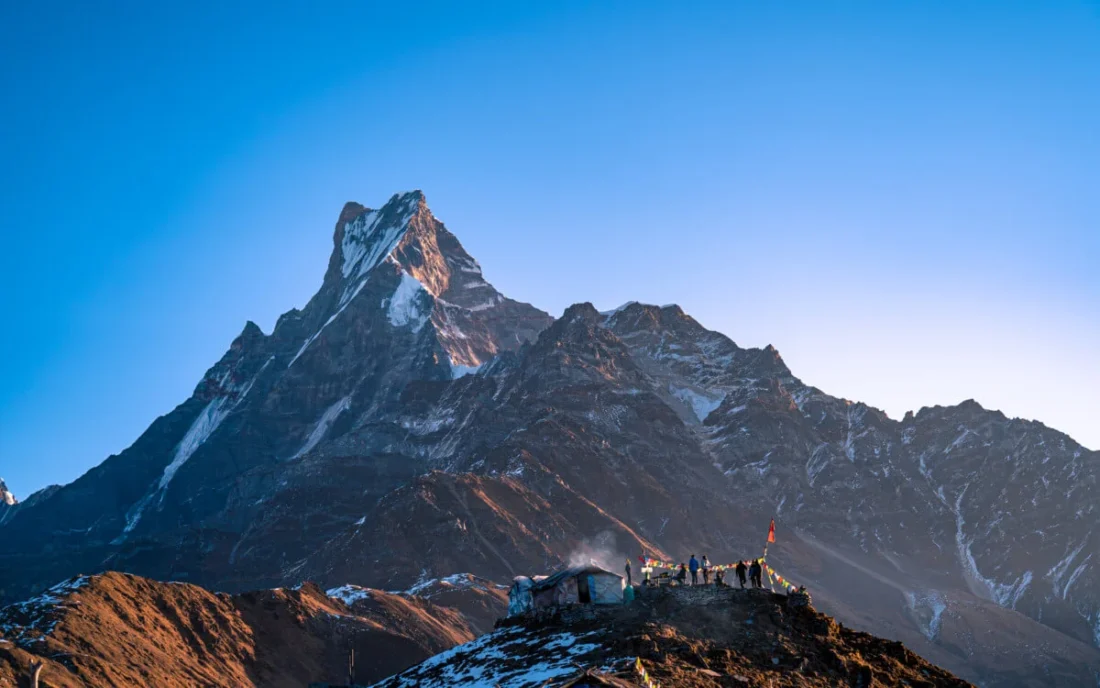
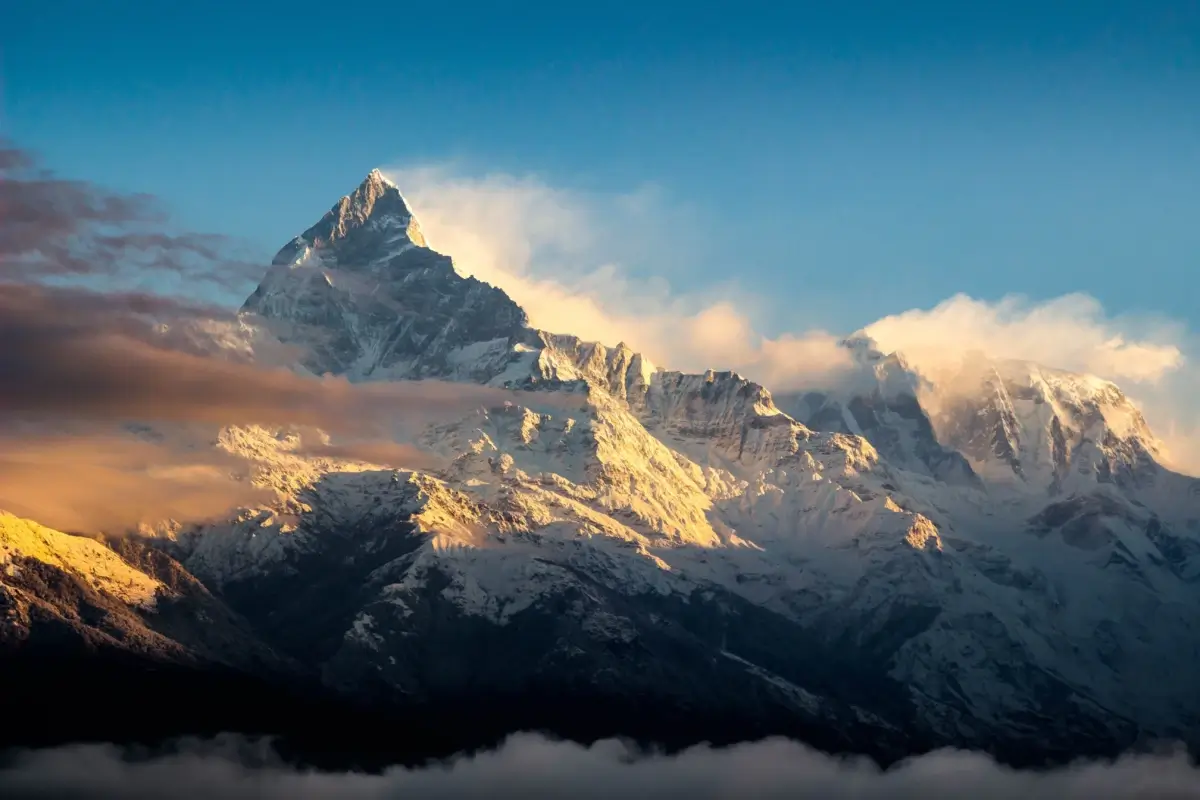
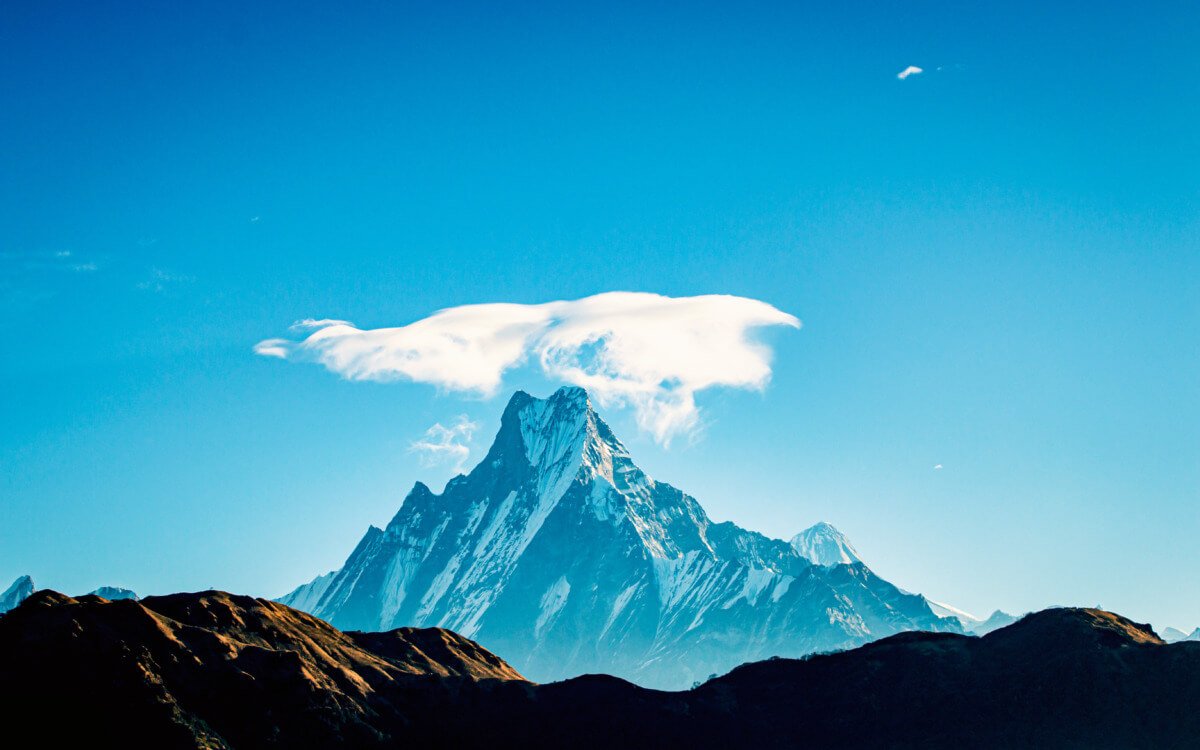
The route offers a peaceful, less-crowded alternative to more commercialized trails, taking you through vibrant oak and rhododendron forests before breaking past the tree line onto spectacular alpine ridges. Trekkers enjoy dramatic, close-up panoramic views of Mount Machhapuchhre (Fishtail), Annapurna South, and Hiunchuli. Reaching the high-altitude vantage of Mardi Himal Base Camp at 4,500 meters, this Short Mardi Himal Trek compresses massive geological wonder and local Himalayan teahouse hospitality into an accessible four-day package.
Preparation for the Short Mardi Himal Trek
Proper preparation ensures a smooth journey through the changing ecological zones of the Annapurna region. Since this 4-day itinerary features a rapid ascent profile, physical conditioning should focus on cardiovascular health and lower-body strength. Incorporate regular stair climbing, jogging, or swimming into your routine for at least four to six weeks prior to arrival. Additionally, breaking in your hiking boots beforehand is essential to prevent performance-limiting blisters on the steep, stone-paved trails.
Required Permits
Navigating the conservation regulations of Nepal requires specific legal documentation. To legally enter the trail network for the Mardi Himal Trek, you must hold two distinct permits:
-
Annapurna Conservation Area Permit (ACAP): This entry permit supports environmental conservation efforts within the zone. The cost is NPR 3,000 for international trekkers and NPR 1,000 for citizens of SAARC nations.
-
Trekkers’ Information Management Systems (TIMS) Card: This card acts as a safety registration protocol for all hikers in Nepal and costs NPR 3,000 per person.
Mountain Treks Nepal takes care of gathering your passport details, photos, and insurance information to secure both permits prior to the trek start, ensuring a seamless passage through checkpoints.
Guides & Porters
Enlisting a professional team dramatically enhances safety, cultural immersion, and physical longevity on the trail. Mountain Treks Nepal provides fully certified, English-speaking local guides who possess deep expertise in trail navigation, high-altitude safety, weather forecasting, and regional Gurung and Magar traditions.
Our local porters handle the heavy physical lifting, carrying up to 20–25 kg of shared duffel luggage between two trekkers. This relief permits you to walk unburdened with just a light daypack, protecting your knees and back on heavy incline sections. Utilizing local staff directly feeds back into the mountain economy via fair wages and ethical employment standards.
Trek Elevation and Altitude
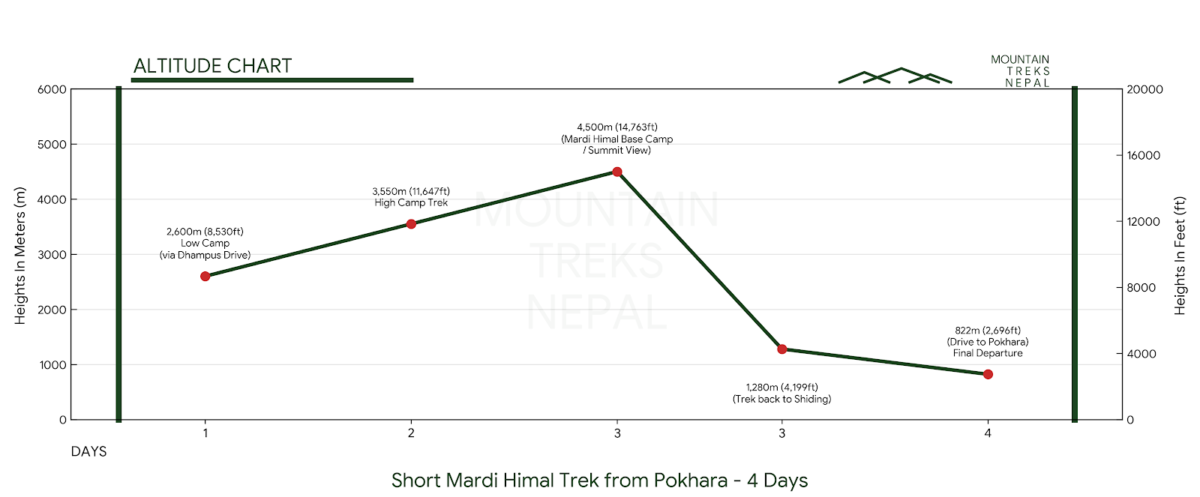
The Short Mardi Himal Trek from Pokhara covers a significant vertical layout over a brief horizontal footprint. Understanding the altitude profile helps you pace your energy expenditure across the changing zones:
-
Pokhara (Starting Hub): 850 meters
-
Dhampus (Trailhead): 1,650 meters
-
Low Camp (Day 1 Stop): 2,990 meters
-
High Camp (Day 2 Stop): 3,580 meters
-
Mardi Himal Base Camp (Max Altitude): 4,500 meters
-
Sidding Village (Descent Point): 1,850 meters
Altitude Sickness on the Mardi Himal Trek: What You Need to Know
At the maximum elevation of Mardi Himal Base Camp (4,500m), atmospheric pressure drops significantly, resulting in roughly 40% less oxygen per breath compared to sea level. Because this 4-day schedule climbs rapidly from Pokhara, understanding Acute Mountain Sickness (AMS) is vital for your safety.
Symptoms of Altitude Sickness
-
Mild Symptoms: A persistent throbbing headache (typically behind the eyes or forehead), physical fatigue, dizziness, loss of appetite, mild nausea, and disrupted sleep.
-
Severe Symptoms (HAPE/HACE): Severe loss of physical balance (ataxia), confusion, extreme breathlessness while completely at rest, and a wet, persistent cough producing pink or frothy sputum.
Prevention Tips
-
Embrace the Slow Pace: Walk slowly and steadily without rushing, commonly known in the mountains as the “pole, pole” approach.
-
Aggressive Hydration: Consume between 3 to 4 liters of clean water daily to assist cellular oxygenation.
-
Avoid Depressants: Do not consume alcohol, tobacco, or sleeping pills, as they suppress respiratory drive.
-
High-Carb Nutrition: Eat carbohydrate-heavy, warm meals at the teahouses to fuel your metabolic rate at high elevations.
Medication & Remedies
Acetazolamide (commonly sold as Diamox) can be used as a prophylactic to accelerate your body’s natural acclimatization process. It is advisable to consult a physician prior to your trip regarding proper dosage. Natural supplements like ginger tea also help settle mild high-altitude nausea.
If Symptoms Get Worse
The golden rule of high-altitude safety is absolute: never ascend with symptoms of AMS. If mild symptoms fail to improve with rest, or if any severe symptoms manifest, immediate descent to a lower sleeping altitude (such as Low Camp or Forest Camp) is mandatory, regardless of the time of day or night.
Trip Grade: Fitness, Health, and Medical Requirements
This package is graded as Moderate. It does not involve technical mountaineering, ropes, or ice axes, but the trail demands consistent physical exertion on steep inclines and stone stairs.
Medical Considerations
Trekkers should have a healthy cardiovascular system and sound joint health, particularly in the knees and ankles, to manage long, steep descents. If you have pre-existing respiratory issues, heart conditions, or severe asthma, obtaining a comprehensive medical clearance from your doctor before booking is required.
Best Time To Go
Trekking conditions in the Annapurna region are highly seasonal. Choosing the ideal window ensures clear mountain views and stable footpaths:
-
Autumn (September to November): This is the premier season for clarity. The post-monsoon air is remarkably crisp, offering unbeatable 360-degree views of the peaks under stable, deep blue skies. Nights are cold at High Camp, but daytime hiking temperatures are optimal.
-
Spring (March to May): This season brings warmer daytime temperatures and bursts of color as the massive rhododendron forests bloom in shades of red, pink, and white. High alpine zones may still hold residual winter snow.
Is the Mardi Himal Trek Suitable for Beginners?
Yes, the Mardi Himal Trek is highly accessible to beginners compared to demanding routes like the Annapurna Circuit or Everest Base Camp. The trails are clearly defined, teahouses are spaced out comfortably every few hours, and the total walking distance stays around 40 to 50 kilometers.
Essential Tips for Beginners on the Mardi Himal Trek
-
Use dual trekking poles to absorb up to 25% of the impact on your knees during descents.
-
Layer your clothing carefully so you can easily adjust as your body warms up on inclines.
-
Never try to match the speed of experienced hikers; focus entirely on your own rhythmic breathing.
Is Mardi Himal Dangerous? Understanding the Death Rate
Statistically, the Short Mardi Himal Trek is a very safe route with a mortality rate well below 1%. Unlike dangerous 8,000-meter climbing peaks, this is a trekking path with clear emergency exit routes. The very few serious incidents or fatalities that occur in this region are almost entirely caused by unmanaged altitude sickness (AMS) resulting from solo trekkers ignoring symptoms, or sudden, unpredicted extreme weather events. Trekking with a professional agency like Mountain Treks Nepal keeps these environmental and medical risks safely managed.
Travel Insurance for Mardi Himal Trek
Comprehensive travel insurance is a mandatory prerequisite for joining this trek. Your policy must be explicitly vetted to cover high-altitude trekking up to 4,500 meters above sea level. It must include provisions for medical emergency treatments, trip interruptions, and—most importantly—emergency helicopter evacuation costs from remote mountain ridges. Ensure you carry physical copies of your policy documents to share with your Mountain Treks Nepal guide.
What Is a Day on the Mardi Himal Trek Actually Like?
A typical day begins around 6:00 AM with a clear view of the morning sun hitting the peaks. After a hearty teahouse breakfast, bags are handed over to the porters, and walking begins by 7:30 AM. The morning trek consists of a steady, rhythmic pace through changing forests or alpine ridges, stopping for a hot, freshly prepared lunch at a midway settlement around midday.
The afternoon walk is generally shorter, reaching the next camp by 2:00 PM or 3:00 PM. This gives you plenty of time to rest, socialize in the heated communal dining hall, drink warm tea, and prepare your gear for the following day before a freshly cooked dinner is served around 6:30 PM.
After the Mardi Himal Trek: How to Unwind and Recharge
After finishing your long mountain descent on Day 4, returning to Pokhara offers the perfect opportunity to unwind. Treat your tired legs to a professional deep-tissue massage at a local lakeside spa, relax at a quiet café overlooking Phewa Lake, or enjoy a celebratory dinner at one of Pokhara’s exceptional restaurants to toast your successful journey to Base Camp.
Where Can I Meet Mountain Treks Nepal?
Our primary operational base is located in Kathmandu, where we host comprehensive pre-trip briefings to check your gear and introduce your guide. For trekkers arriving directly in Pokhara, our team coordinates a seamless meeting point right at your lakeside hotel or at the airport terminal to handle your permits and logistics before heading out to the trailhead.
Booking and Payment with Mountain Treks Nepal
Securing your spot on this itinerary requires a formal booking deposit submitted through our secure online payment system or via direct bank transfer. The remaining financial balance can be paid safely upon arrival in Kathmandu or Pokhara using major credit cards or cash currency. Full terms, cancellation policies, and payment receipts are delivered transparently via email upon booking confirmation.
Electricity on the Mardi Himal Trek
The lower settlements rely on local hydro-power networks, while the higher camps (Low Camp and High Camp) depend primarily on multi-battery solar systems. Teahouses provide electrical charging strips in the communal dining halls for a small fee (ranging from NPR 200 to NPR 500 per device). To stay completely self-sufficient, carrying a high-capacity power bank (10,000mAh to 20,000mAh) is highly recommended.
Drinking Water during Mardi Himal Trek
Staying hydrated is critical for safety at high altitudes. Teahouses sell safe, boiled hot water by the pot or liter. To minimize single-use plastic bottles along these fragile mountain ecosystems, Mountain Treks Nepal encourages carrying reusable, heavy-duty Nalgene bottles or water bladders. Always treat your water with purification tablets or a reliable filtration system before consumption.
Communication and Internet Services
Mobile cellular coverage through local networks like Ncell and Nepal Telecom is functional around Pokhara, Dhampus, and lower sections of the trail. As you ascend the ridge line toward High Camp and Base Camp, cellular signals become weak or cut out entirely. Most high-altitude teahouses offer satellite-linked Wi-Fi card access for an extra fee, though connection speeds can fluctuate depending on cloud cover.
Currency Exchange
The local currency used across the trail is the Nepalese Rupee (NPR). It is important to exchange your foreign currency into clean cash banknotes while you are in Kathmandu or Pokhara. ATMs are completely non-existent once you leave the highway, and mountain teahouses do not accept international credit cards, electronic wallets, or foreign currencies.
Food on the Mardi Himal Trek
Meals are freshly prepared in teahouse kitchens using local ingredients. The ultimate mountain fuel is the traditional Nepali Dal Bhat (a balanced platter of lentil soup, rice, seasonal vegetable curry, and pickles), which offers unlimited refills and high nutritional value. The menus also include popular carbohydrate options like vegetable fried noodles, garlic soups, pasta dishes, pancakes, and eggs to keep your energy high.
Culture and Festivals of the Annapurna Region
The lower and middle elevations of the Mardi ridge are home to the proud Gurung and Magar ethnic groups, famous for their rich traditions and history in the military. If you trek during Autumn, you might experience major national festivals like Dashain and Tihar, where villages fill with traditional music, community swings, and bright decorations.
Local Dress and Cultural Etiquette on the Mardi Himal Trek
-
Dress Modestly: Keep shoulders and knees covered out of respect for local community norms. Avoid revealing clothes.
-
Pass Sacred Sites Correctly: Always walk to the left side of Buddhist mani walls, prayer flags, and chortens in a clockwise direction.
-
Ask Before Photographing: Always request permission before taking portraits of local residents, sadhus, or children.
-
Remove Shoes: Take off your footwear before entering any temple interiors, monasteries, or private home spaces.
How Much Cash Should You Carry on the Mardi Himal Trek?
Even though your core package covers your accommodation and main meals, you should plan to carry roughly NPR 3,000 to NPR 4,000 (approximately USD 25 to USD 35) per day in cash. This personal budget easily covers out-of-pocket trail items like hot showers, device charging, Wi-Fi access, extra specialty coffees, bottled drinks, snacks, and tips for your mountain team.
Alternative Treks Around the Annapurna Region
If you find yourself with extra travel days or want to explore different routes, the diverse Annapurna landscape offers excellent alternatives:
-
Ghorepani Poon Hill Trek: A gentle, 4-day route famous for its sprawling rhododendrons and panoramic sunrise views over Dhaulagiri and Annapurna.
-
Annapurna Base Camp Trek: A classic 7-to-10-day loop that leads you directly inside the high-altitude glacial sanctuary of the Annapurna Massif.
-
Annapurna Circuit Trek: A deep, 10-to-14-day high-altitude journey that crosses the challenging Thorong La Pass at 5,416 meters.
Conclusion
The Short Mardi Himal Trek 4 Days stands out as an exceptional, time-efficient Himalayan package that delivers big mountain views without the logistical strain of a long expedition. From the quiet depths of rhododendron forests to the high alpine vantage points of Base Camp, every step brings you closer to the heart of the Annapurna range. Guided safely by Mountain Treks Nepal, this trek offers a safe, perfectly organized journey that leaves an impression on your heart and soul for a lifetime.
Trip Highlights
-
Mardi Himal Base Camp: Standing at 4,500 meters directly below the iconic face of Mount Machhapuchhre.
-
Stunning Sunrise Panoramic Views: Watching the morning sun hit the snow-covered peaks of Annapurna South, Hiunchuli, and Mardi Himal.
-
Quiet Forest Trails: Walking through ancient, moss-covered oak and rhododendron forests that bloom beautifully in the spring.
-
Scenic High Ridge Walks: Trekking along exposed alpine ridges that offer constant, sweeping views of deep river valleys on both sides.
-
Traditional Hospitality: Staying in authentic local teahouses and experiencing the genuine culture of the Gurung and Magar communities.
Have a Question? Inquire Now
Why Mountain Treks Nepal?
- Expert Team for Unparalleled Experience
- Best Price Guarantee
- Safety is the first Priority
- Easy Booking & Secure Online Payment
- Flexible And Personalized Service
- 24/7 Support
- Highest Satisfaction Guaranteed
- Highly Experienced Guides
- Your Satisfaction is Our Guarantee
- One-time Deposit, Assured for a Life Time
Detailed Itinerary
The trip begins with a private drive from Pokhara up to the scenic village of Dhampus. From there, the trail heads into the shade of dense oak and rhododendron forests, climbing steadily along the ridge. You’ll catch beautiful glimpses of the Annapurna range before reaching the peaceful forest clearing of Low Camp for a comfortable teahouse stay.
Leaving Low Camp behind, the trail heads up a steeper section of the mountain ridge. As the trees thin out into alpine shrubs, the route reveals wide, open mountain pastures and clear, dramatic views of Mount Machhapuchhre. The day finishes at High Camp, where you’ll want to layer up as temperatures drop quickly in the evening.
An early morning start guides you up the steep, rugged ridge to the primary upper viewpoint and onward to the main Mardi Himal Base Camp at 4,500 meters. Stand directly below the towering peaks to witness an incredible Himalayan sunrise. After taking in the views, the trail follows a long, steady descent down a quiet forest path to the traditional village of Sidding.
Enjoy breakfast in Sidding before boarding a private jeep or van for the drive out of the valley along the Mardi Khola river. The route winds past scenic farmlands and local villages, meeting the main highway at Milan Chowk before finishing with a smooth transfer back to your lakeside hotel in Pokhara.
Trip Includes
-
All necessary mountain permits, including the Annapurna Conservation Area Project (ACAP) permit and TIMS registration card.
-
Private vehicle transport from Pokhara to the Dhampus trailhead, and return transport from Sidding to Pokhara via Milan Chowk.
-
Standard teahouse lodge accommodation during the trekking days.
-
Three freshly prepared meals per day (Breakfast, Lunch, and Dinner) while on the walking route.
-
Professional, government-licensed English-speaking trekking guide.
-
Full arrangement of local government taxes and tourism service fees.
Trip Excludes
-
Hotel accommodation, airport transfers, and meals in Kathmandu or Pokhara before or after the trekking itinerary.
-
Personal travel insurance policies (compulsory; must explicitly cover helicopter medical evacuation up to 4,500m).
-
Table beverages (bottled mineral water, boiled water, tea, coffee, alcohol) and personal snacks.
-
Personal trekking clothing and gear (such as down jackets, hiking boots, and warm sleeping bags).
-
Out-of-pocket teahouse services like hot showers, device charging, and Wi-Fi access fees.
-
International airfare, Nepal entry visa fees, and domestic transit costs between cities.
-
Gratuities and tips for your guide and porters.
- One Porter for 04 days USD 100 (Optional) – the porter can carry up to 25 kg)
- Any others expenses which are not mentioned on the “Trip Includes” Section.
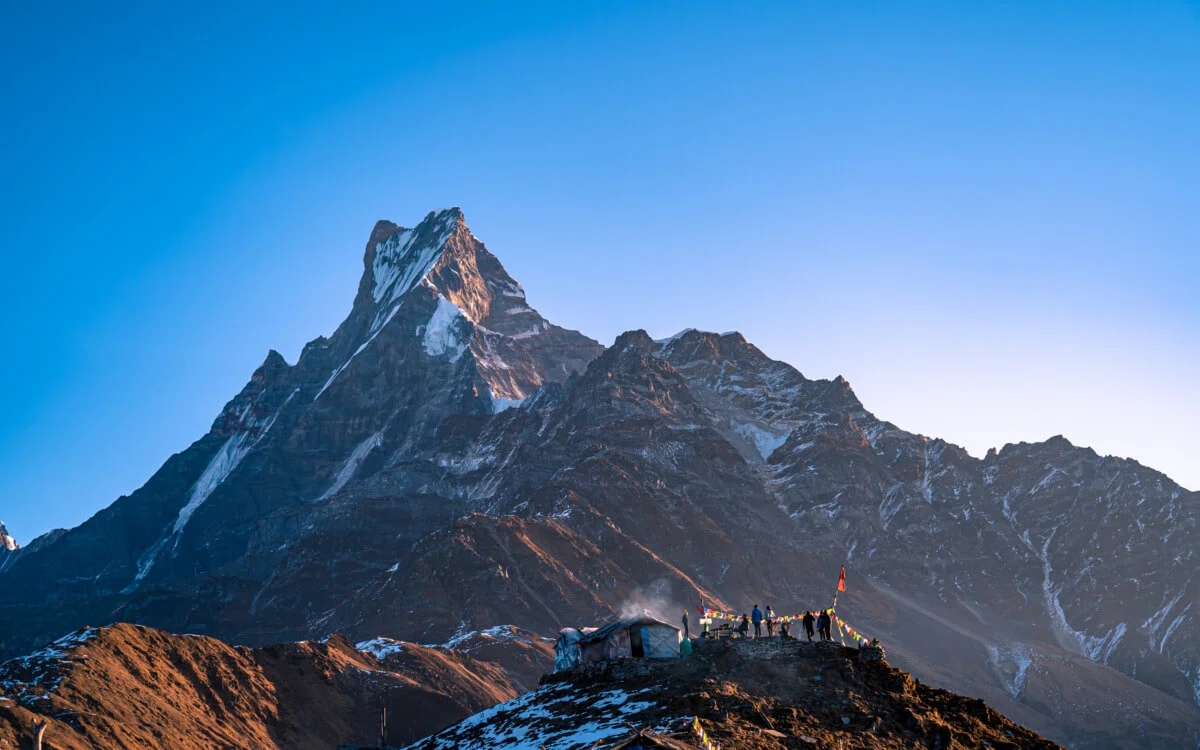
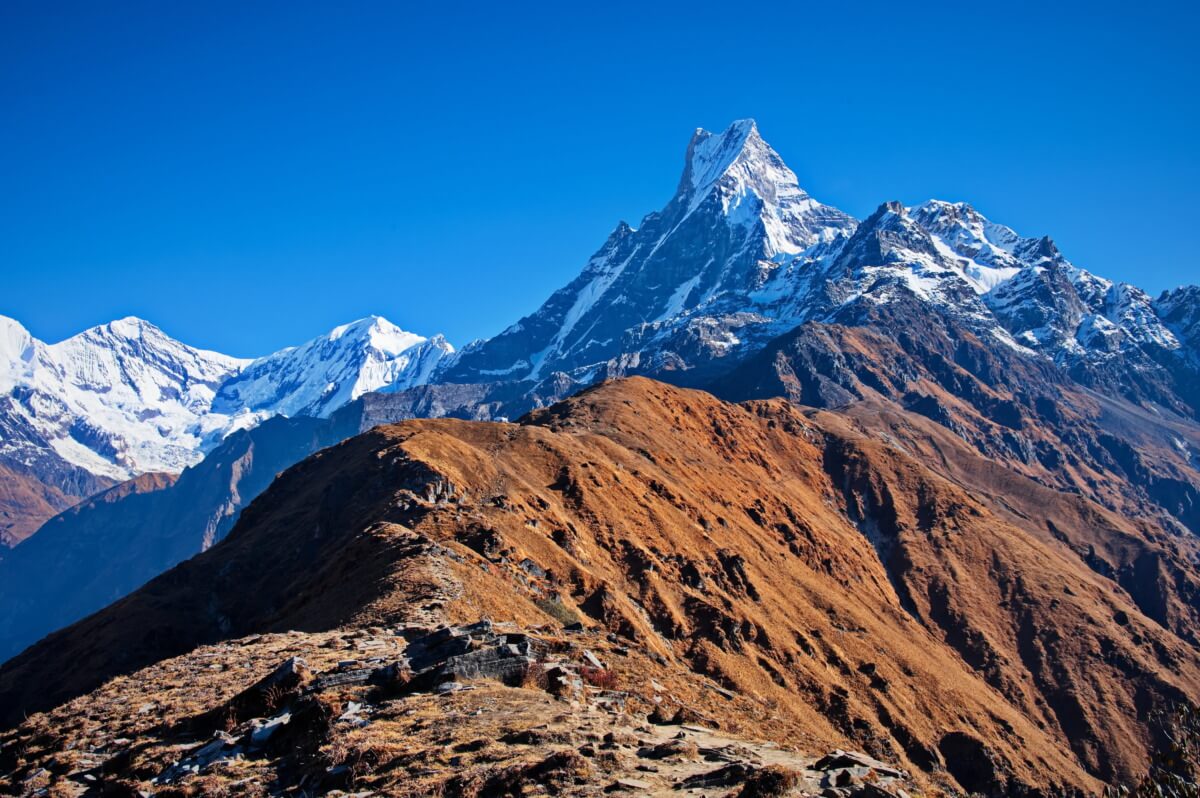
Trip Photo Gallery

Packing List For Short Mardi Himal Trek from Pokhara

Clothing
-
Base Layer: Moisture-wicking thermal tops and bottoms (2 pairs).
-
Mid-Layer: Lightweight fleece jacket or insulated pullover.
-
Outer Layer: Windproof and waterproof jacket and pants.
-
Warm Insulation: Lightweight down jacket for cold evenings at High Camp.
-
Head & Hands: Warm beanie, sun protection cap, and insulated gloves.

Footwear
-
Sturdy, waterproof hiking boots (properly broken-in).
-
Thick, moisture-wicking wool trekking socks (3 pairs).
-
Lightweight sandals or running shoes for relaxing in the teahouses.

Gear & Equipment
-
Main Pack: Durable duffel bag (carried by the porter) or a large backpack.
-
Daypack: 20L to 30L lightweight daypack for your daily essentials.
-
Sleeping Gear: Warm sleeping bag rated down to at least -10°C.
-
Trekking Poles: Adjustable trekking poles to help with stability and knee support.
-
Lighting: Bright headlamp with extra batteries for the early morning Base Camp hike.

Personal Items & Health
-
UV-blocking sunglasses and high-SPF sunscreen.
-
Two durable 1-liter water bottles or a hydration bladder.
-
Water purification tablets or a portable filtration system.
-
Personal first-aid kit containing blister treatments, rehydration salts, and altitude medication (Diamox).
-
High-energy trail snacks like chocolate bars, nuts, and electrolyte powders.
Frequently Asked Questions
This short package is rated Moderate. While it requires no technical climbing skills or mountaineering gear, the route climbs quickly up to 4,500 meters in a brief timeframe. Trekkers should be prepared for steep ridge paths and thousands of stone steps, which require good leg strength and solid cardiovascular fitness.
Prior high-altitude experience is helpful but not mandatory. Because the trails are well-defined, clear, and safe, motivated beginners with good physical stamina and proper preparation complete this trek successfully with Mountain Treks Nepal every season.
The maximum altitude reached is 4,500 meters (14,763 feet) at the main Mardi Himal Base Camp. You will also spend a night at High Camp, which sits at an elevation of 3,580 meters.
Yes, provided you follow safety protocols. Because this itinerary climbs rapidly from Pokhara, our guides enforce a slow, steady walking pace and ensure aggressive hydration. Mountain Treks Nepal guides are fully trained to spot early symptoms of Acute Mountain Sickness (AMS) and will manage your ascent or descent safely.
You need two legal permits: the Annapurna Conservation Area Permit (ACAP) and the Trekkers' Information Management Systems (TIMS) Card. Mountain Treks Nepal collects your details and handles the entire registration process before your trek begins.
Accommodation consists of classic, authentic mountain teahouses (eco-lodges). The rooms are simple, clean, and typically set up for twin-sharing with wooden beds, mattresses, pillows, and blankets. Common areas and dining halls are centrally heated, while toilets and showers are generally shared.
Yes. Lower villages rely on the local grid, while higher stops like Low Camp and High Camp use solar power systems. Teahouses provide charging power strips in their communal dining halls for a small fee (around NPR 200 to NPR 500 per device). Carrying a high-capacity power bank is highly recommended.
Cellular coverage through Ncell and Nepal Telecom is functional near Pokhara and the lower village of Sidding. However, along the high forest ridge between Low Camp, High Camp, and Base Camp, mobile signals are unstable or completely unavailable. Most high-altitude teahouses offer satellite-linked Wi-Fi access cards for a small fee.
Teahouse kitchens prepare fresh, high-energy meals. The ultimate mountain dish is traditional Nepali Dal Bhat (lentil soup, rice, and vegetable curry), which comes with free refills and provides excellent fuel for hiking. The menus also feature international items like pasta, noodles, garlic soups, eggs, and pancakes.
You can purchase safe, boiled hot water by the liter or pot at every teahouse along the path. To protect the fragile ecosystem of the Annapurna conservation zone, Mountain Treks Nepal discourages buying single-use plastic water bottles. We recommend bringing reusable bottles (like Nalgene) and treating your water with purification tablets or filters.
No. ATMs are completely non-existent once you leave the highway from Pokhara, and teahouses only accept cash in local Nepalese Rupees (NPR). You must exchange your currency and carry enough cash before departing Pokhara to pay for personal items like Wi-Fi, hot showers, drinks, and tips.
We recommend carrying roughly NPR 3,000 to NPR 4,000 (approximately USD 25 to USD 35) per day in small cash notes. This budget comfortably covers your extra personal expenses on the trail, such as hot showers, device charging, Wi-Fi, specialty coffees, snacks, and tips for your mountain team.
The premier trekking windows are Autumn (September to November) and Spring (March to May). Autumn offers exceptionally clear blue skies, stable weather, and sharp, crisp views of the snow-capped peaks. Spring brings warmer daytime temperatures and beautiful displays of blooming rhododendron forests.
Yes, comprehensive travel insurance is strictly mandatory to join this package. Your insurance policy must explicitly cover high-altitude trekking up to 4,500 meters and must include emergency helicopter evacuation, emergency medical treatment, and trip cancellation coverage.
Mountain Treks Nepal guarantees a completely organized, stress-free adventure. We provide licensed, English-speaking local guides who know the terrain perfectly, assign reliable porters to carry your heavy luggage, arrange private vehicle transport, handle all permit logistics, and maintain an ethical, fair-wage environment for our mountain staff.
Andrew
March 12, 2026 at 4:39 pmHighly Recommended Trekking Company
An amazing 4-day trek with excellent organization and wonderful hospitality. Our guide Pasang made the journey enjoyable with his experience and positive attitude. Thank you Mountain Treks Nepal and Mr. Bharat for making our Nepal trip so memorable. Highly recommended!
Trup
November 16, 2025 at 5:38 pmGreat Guide and Excellent Service
The Mardi Himal Trek exceeded our expectations. Our guide Yaka was experienced, encouraging, and shared so much about the local culture. Special thanks to Mr. Bharat for arranging everything perfectly. I would definitely trek with Mountain Treks Nepal again
Millaon
May 22, 2025 at 8:37 pmAmazing Mardi Himal Experience
Our 4-day Mardi Himal Trek from Pokhara was absolutely fantastic. The views of Machhapuchhre and Annapurna were breathtaking. A big thank you to Mountain Treks Nepal, especially Mr. Bharat for the smooth organization and our guide Suraj Gurung for his kindness and knowledge. Highly recommended!
Denies louies
March 25, 2025 at 11:36 pmPerfect Short Trek from Pokhara
The Short Mardi Himal Trek was the highlight of our Nepal trip. Great guide, comfortable teahouses, and stunning mountain scenery. Mountain Treks Nepal made the entire experience smooth and enjoyable. Thank you mr Bharat.
Andrew
October 1, 2024 at 8:35 pmAmazing 4-Day Adventure
Amazing 4-day trek with breathtaking views of Machhapuchhre and the Annapurna range. Everything was perfectly organized by Mountain Treks Nepal. Special thanks to Mr. Bharat for the excellent arrangement. Highly recommended!