



Share This:
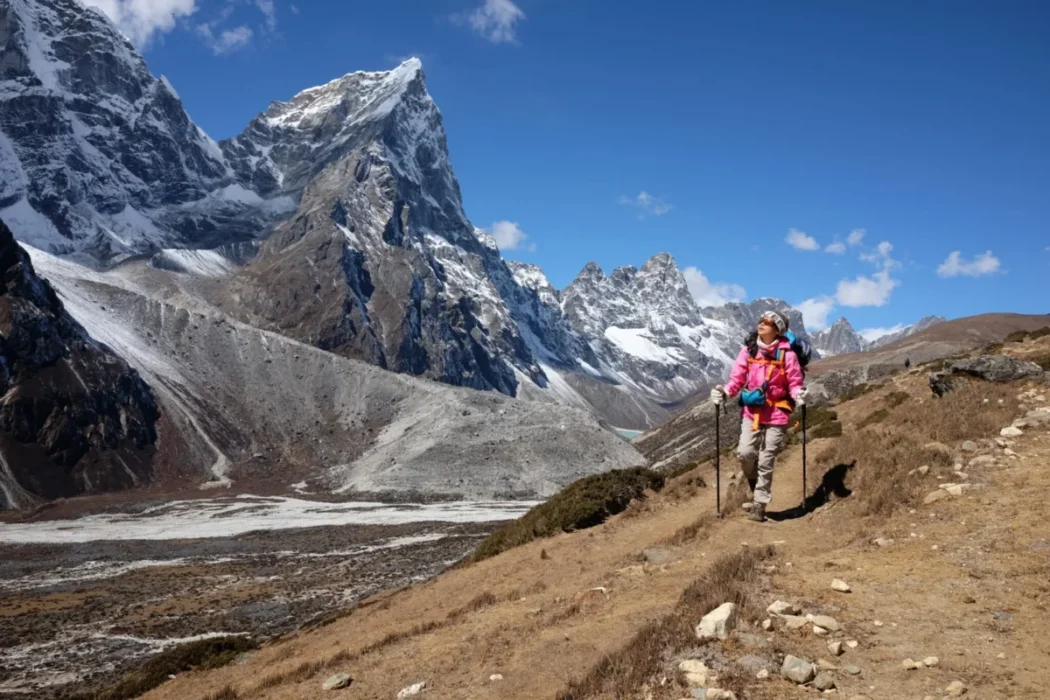
The Complete Guide to the Everest Base Camp Trek from the USA
Planning the Everest Base Camp Trek from the USA involves booking a multi-leg flight to Kathmandu, securing a 30-day Nepalese Tourist Visa on arrival, and arranging a guided trek with a registered local agency. While the logistics of traveling to the Himalayas from North America may seem daunting, the process is incredibly streamlined for US citizens.
For American adventurers, the journey from sea level to the roof of the world is a highly accessible reality. Trekking in Nepal utilizes a “teahouse” system, meaning you will sleep in mountain lodges and eat hot, prepared meals every day rather than camping in the snow.
This comprehensive guide, designed specifically for US travelers, covers everything you need to know. From navigating international flight routes and purchasing mandatory high-altitude helicopter insurance to budgeting in USD and training for the mountains right in your home state, Mountain Treks Nepal provides the expertise to ensure a safe and unforgettable Himalayan adventure.
Flights and Logistics: Getting from the US to Kathmandu
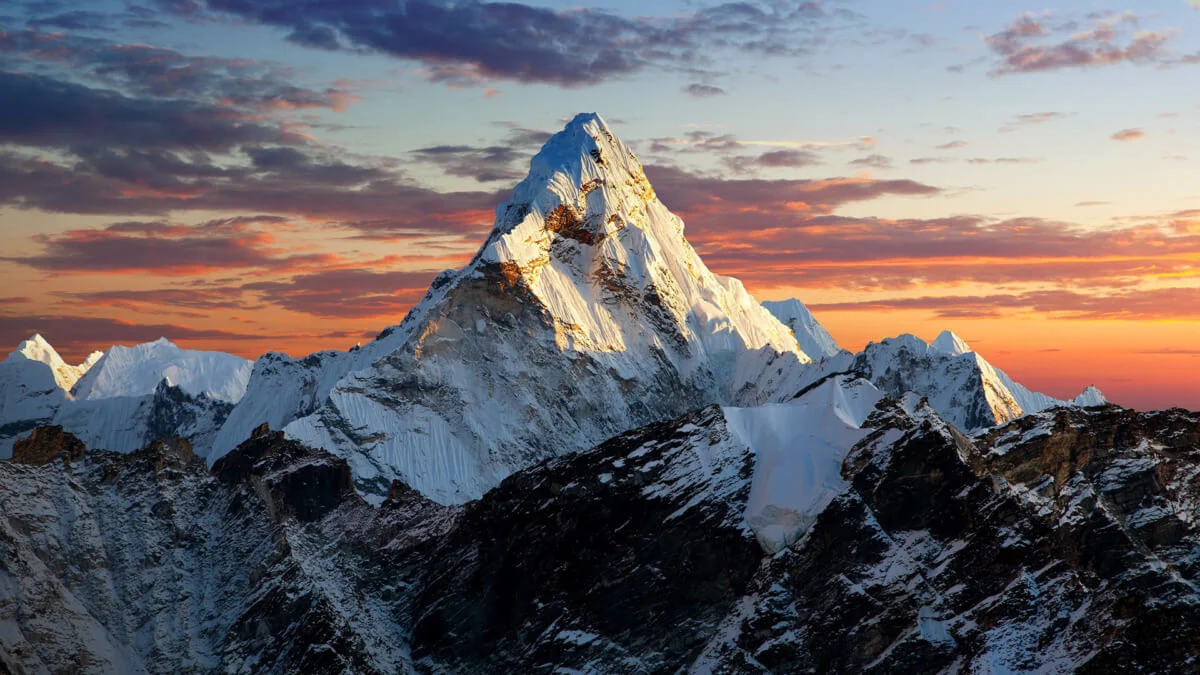
Because there are no direct commercial flights from the United States to Nepal, travelers must book a connecting flight to Kathmandu’s Tribhuvan International Airport (KTM).
The journey typically takes between 20 and 30 hours of travel time. Depending on your departure city, you have two primary flight corridors:
1. The Middle Eastern Corridor (Best for East Coast & Midwest)
For travelers departing from New York (JFK), Washington D.C. (IAD), Chicago (ORD), or Atlanta (ATL), flying east through the Middle East is usually the most efficient route.
-
Qatar Airways: Offers excellent connections through Doha (DOH) directly to Kathmandu.
-
Emirates / FlyDubai: Connects through Dubai (DXB).
-
Turkish Airlines: Connects through Istanbul (IST).
2. The Pacific/Asian Corridor (Best for West Coast)
For those flying out of Los Angeles (LAX), San Francisco (SFO), or Seattle (SEA), flying west across the Pacific is often faster.
-
Singapore Airlines: Connects through Singapore (SIN).
-
Cathay Pacific: Connects through Hong Kong (HKG).
-
Korean Air: Connects through Seoul (ICN).
Practical Advice: When booking your flights, plan to arrive in Kathmandu at least one or two full days before your trek begins. This provides a crucial buffer in case of delayed luggage, gives you time to recover from a 10-to-12-hour time difference, and allows for a pre-trek briefing.
Visas and Entry Requirements for US Citizens
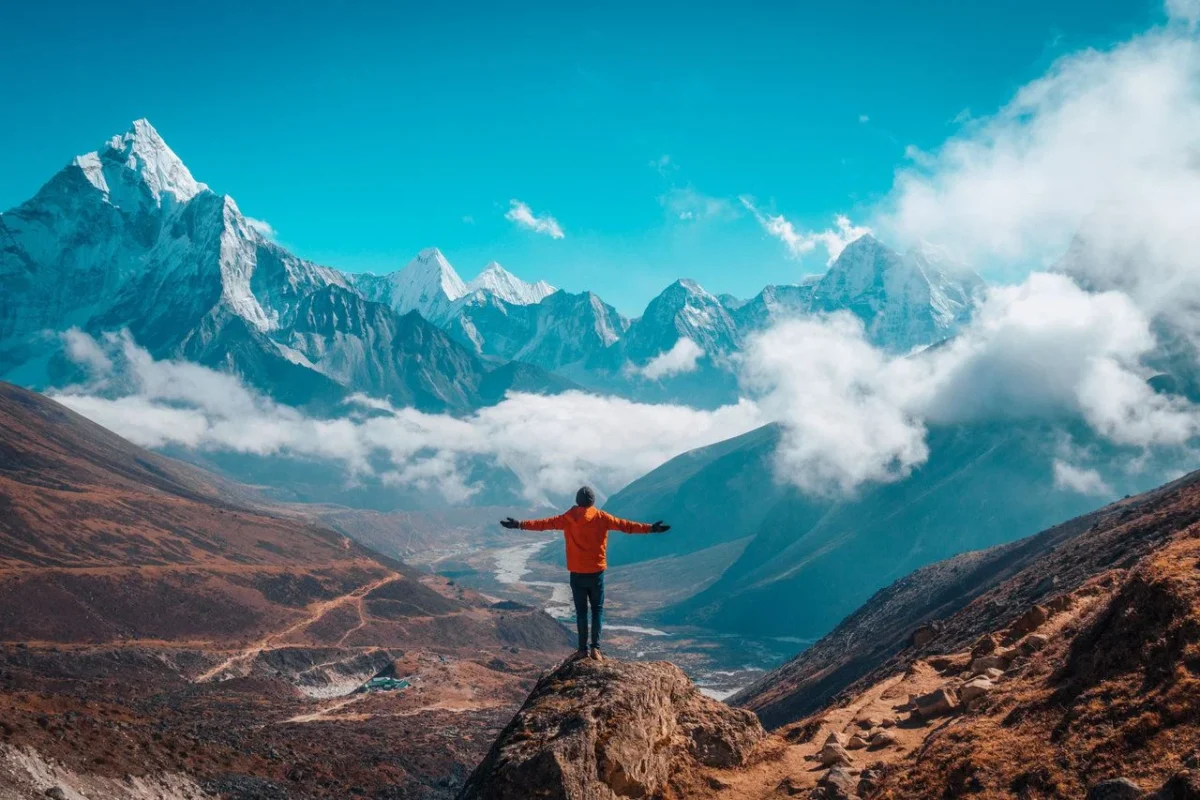
US passport holders require a visa to enter Nepal. Fortunately, Nepal offers a highly accommodating Visa on Arrival process for American tourists at the Kathmandu airport.
What you need:
-
A US passport valid for at least six months from your date of entry.
-
At least one blank visa page in your passport.
-
A completed arrival card (which can be filled out on electronic kiosks at the airport, or online via the Nepal Department of Immigration website up to 15 days before arrival).
Visa Fees:
The Nepalese government processes visa fees in USD. You must pay this in cash at the airport, so ensure you bring crisp, untorn US dollar bills.
-
15 Days: $30 USD
-
30 Days: $50 USD
-
90 Days: $125 USD
For a standard 12-to-14-day trek, the 30-day visa ($50 USD) is the standard recommendation to account for your arrival days, the trek itself, and any potential flight delays out of the mountains. If you have questions about your itinerary length, contact our trekking experts.
High-Altitude Travel Insurance for US Trekkers

Standard US travel insurance (or coverage provided by your credit card) is not sufficient for the Himalayas. The US Department of State and mountain rescue authorities mandate that your insurance policy must specifically cover high-altitude trekking.
When purchasing a policy from US-friendly providers (such as Global Rescue, World Nomads, or Ripcord), you must verify the fine print includes:
-
Altitude limits: The policy must explicitly cover trekking up to 6,000 meters (19,685 feet). Everest Base Camp sits at 5,364m, and the Kala Patthar viewpoint reaches 5,545m.
-
Helicopter Evacuation: In the event of severe Acute Mountain Sickness (AMS), broken bones, or severe gastrointestinal issues, a helicopter is the only rapid way out of the Khumbu region. Your policy must cover emergency medical evacuation without a massive out-of-pocket deductible.
-
Trip Cancellation & Interruption: To protect your investment in case of severe weather grounding flights to Lukla, which is a common occurrence.
The Standard Everest Base Camp Trek From the USA Itinerary
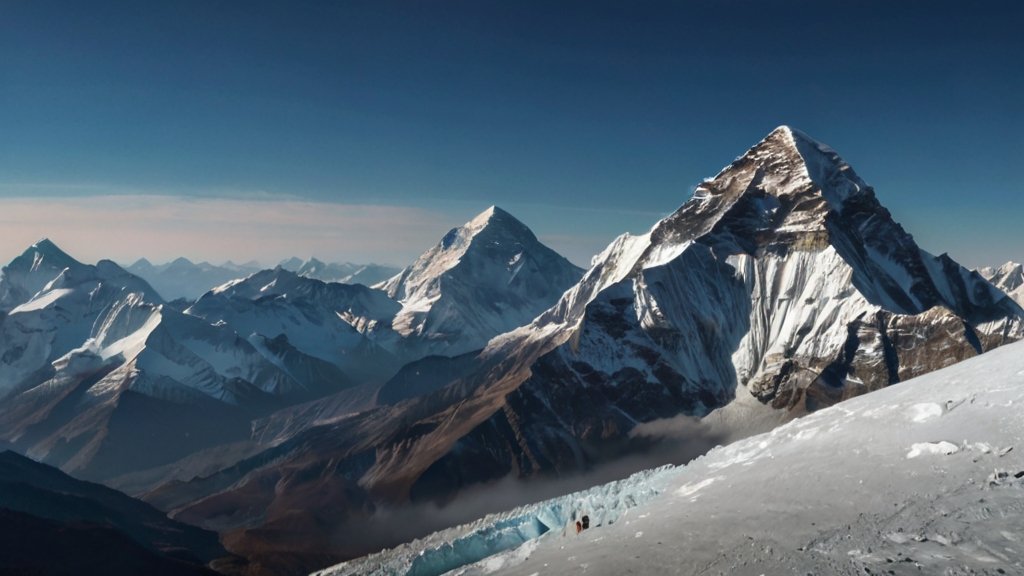
While we can customize your journey including a short Everest Base Camp Trek with a helicopter return the classic Everest Base Camp Trek itinerary takes 12 to 14 days.
Phase 1: The Gateway (Days 1–3)
The adventure begins with an exhilarating 35-minute twin-otter flight from Kathmandu to the cliffside airstrip at Lukla (2,860m). From here, your trekking team heads into the Khumbu Valley. You will hike through lush pine forests, cross massive steel suspension bridges draped in prayer flags over the Dudh Kosi river, and undertake a steep climb into Namche Bazaar (3,440m), the bustling Sherpa capital.
Phase 2: Acclimatization and Ascent (Days 4–8)
To prevent altitude sickness, mandatory acclimatization (rest) days are built into the schedule at Namche Bazaar and Dingboche (4,410m). As you ascend, the landscape transitions from green forests to alpine scrub, and finally to the stark, dramatic glacial moraines of the high Himalayas. You will pass the famous Tengboche Monastery, set against the stunning backdrop of Mount Ama Dablam.
Phase 3: Base Camp and Kala Patthar (Days 9–10)
You will reach Everest Base Camp (5,364m / 17,598 ft) on day eight or nine. Because the peak of Mount Everest itself is largely obscured from Base Camp by the massive Lhotse ridge, you will wake before dawn the following morning to climb Kala Patthar (5,545m). This high vantage point offers the definitive, unobstructed sunrise view of Everest.
Phase 4: The Descent (Days 11–13)
The return journey to Lukla is much faster as you descend to thicker, oxygen-rich air. You will retrace your steps through the valley before catching your return flight to Kathmandu.
Everest Base Camp Trek Cost: Budgeting in USD

Budgeting for the Everest Base Camp Trek requires understanding both the package costs and your personal expenses. Because the US dollar is strong against the Nepalese Rupee (NPR), Nepal remains an incredibly high-value destination for Americans.
| Expense Category | Estimated Cost (USD) | What it Typically Includes |
| International Flights | $1,200 – $2,000 | Round-trip flights from the USA to Kathmandu. |
| Guided Trek Package | $1,400 – $2,200+ | Local flights (Lukla), national park permits, registered guide, porters, teahouse accommodation, and meals (breakfast, lunch, dinner) during the trek. |
| Travel & Evac Insurance | $150 – $300 | High-altitude coverage including helicopter rescue (e.g., Global Rescue/World Nomads). |
| Nepal Tourist Visa | $50 | 30-day Visa on Arrival (paid in cash at the airport). |
| Trekking Gear | $500 – $1,500 | Boots, down jacket, sleeping bag (Note: Down jackets and sleeping bags can be rented cheaply in Kathmandu to save luggage space). |
| On-Trek Extras | $200 – $400 | Wi-Fi cards, hot showers, charging electronics, extra snacks, and guide/porter tips. |
Physical Preparation: Training in the US for the Himalayas
You do not need to be an elite marathon runner to reach Everest Base Camp, but you do need excellent cardiovascular endurance and leg strength. You will be trekking 5 to 8 hours a day for two weeks.
Because altitude is a major factor, Americans who live in high-elevation states have a slight advantage for training, but those at sea level can easily prepare with the right regimen.
-
If you live near mountains (Colorado, California, Washington): Hike frequently. Tackling Colorado “14ers” (peaks over 14,000 feet) or hiking the Sierra Nevadas is the best possible preparation for the Khumbu region.
-
If you live near sea level (New York, Florida, Texas): Focus on stamina and endurance. Utilize stadium stairs, local hills, or the StairMaster at your gym. Load a backpack with 15–20 lbs (7–9 kg) and do repeated ascents for 60 to 90 minutes.
-
General Fitness: Incorporate running, cycling, or swimming 3 to 4 times a week for at least three months leading up to your trip. Break in your hiking boots thoroughly before arriving in Nepal to avoid trip-ruining blisters.
Managing High Altitude Safely
The biggest challenge of the EBC trek is not the steepness of the trail, but the lack of oxygen. At Base Camp, there is roughly 50% less oxygen in the air than at sea level in the US.
Acute Mountain Sickness (AMS) can affect anyone, regardless of age or physical fitness. Symptoms include headaches, nausea, dizziness, loss of appetite, and extreme fatigue. If ignored, AMS can progress to fatal conditions like High Altitude Pulmonary Edema (HAPE) or High Altitude Cerebral Edema (HACE).
Safety Protocols:
-
Walk slowly: The local Sherpa phrase is “Bistari, Bistari” (slowly, slowly). Keeping your heart rate down is essential.
-
Hydrate constantly: Drink 3 to 4 liters of water a day.
-
Acclimatize: Never skip the scheduled rest days in Namche Bazaar and Dingboche. Follow the rule of “climb high, sleep low.”
-
Consider Medication: Visit a travel clinic in the US before you depart. Many American doctors prescribe Diamox (Acetazolamide) to help the body acclimatize faster.
-
Listen to your guide: The guides at Mountain Treks Nepal are trained in high-altitude first aid and carry oximeters to check your blood oxygen levels. If they advise you to descend, you must follow their instructions.
When is the Best Time for Americans to Trek?
The Nepalese trekking seasons are highly distinct due to the Asian monsoon cycle.
Autumn (Late September to November)
This is universally considered the best time to trek. The monsoon rains have cleared the dust and haze from the air, offering crystal-clear mountain views and stable temperatures.
Spring (March to May)
The second most popular season. The weather is warmer, and the lower trails are vibrant with blooming rhododendron forests. This is also the main expedition season; if you trek in April or May, Everest Base Camp will be a sprawling, colorful tent city filled with elite climbers preparing for the summit.
Winter (December to February) & Summer (June to August)
Winter offers clear skies but brutally cold temperatures at high altitudes; it is only recommended for highly experienced trekkers willing to brave freezing teahouses. Summer is the monsoon season, bringing heavy rain, leeches, canceled flights, and obscured views. It should be avoided for Everest.
FAQs
How much does a 12-day trek to Everest Base Camp cost?
A standard 12-day guided Everest Base Camp trek typically costs between $1,400 and $2,200 USD per person. This package price generally covers your round-trip domestic flights to Lukla, Sagarmatha National Park permits, a licensed guide, local porters, teahouse accommodation, and standard meals (breakfast, lunch, dinner) during the trek. International flights and insurance are separate.
Why does it cost $40,000 to climb Mount Everest?
Climbing Mount Everest (reaching the 8,848m summit) is a vastly different undertaking than trekking to Base Camp (5,364m). The $40,000 to $100,000+ cost covers a highly expensive $11,000 climbing permit paid to the Nepal government, expensive supplemental oxygen systems, months of logistical support, specialized high-altitude Sherpa climbing guides, icefall route-fixing fees, and advanced base camp infrastructure over a two-month expedition.
What is the 7000m rule for Everest?
The 7000m rule is a proposed mountaineering regulation suggesting that climbers must prove they have successfully summited at least one peak over 7,000 meters (22,965 feet) before being granted a permit to climb Mount Everest. This rule aims to reduce inexperienced climbers on the mountain, minimizing traffic jams and fatalities in the Death Zone. Note: This applies only to summit climbers, not Base Camp trekkers.
How difficult is it to trek to Everest Base Camp?
Trekking to Everest Base Camp is moderately to highly difficult. It does not require technical climbing skills, ropes, or crampons; it is a long, sustained hiking trail. The primary difficulty stems from the high altitude, cold temperatures, and the physical endurance required to walk 5 to 8 hours daily over rugged, rocky terrain for up to two weeks.
Trading your daily routine for the roof of the world is an experience you will never forget. At Mountain Treks Nepal, we provide expert local guides, prioritize your safety in high altitudes, and handle all the complicated logistics so you can simply enjoy the hike. Your Himalayan adventure awaits.