



Short Ghorepani Poon Hill Trek from Pokhara - 3 Days
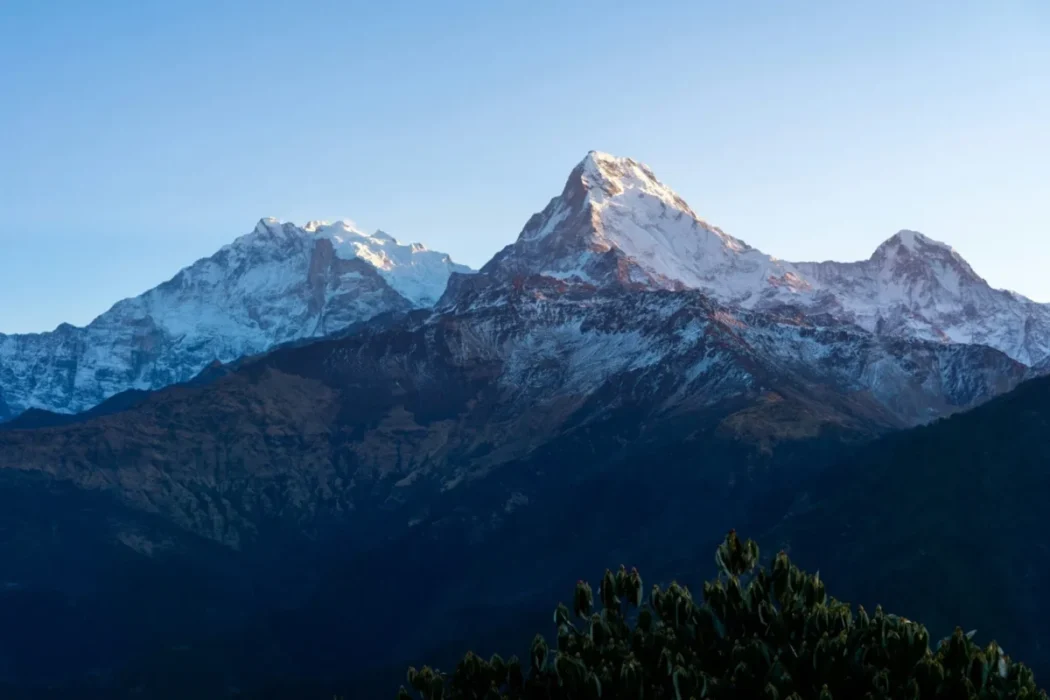
-
Duration:
3 days -
Max Altitude:
3,210mm -
Difficulty Level:
Easy to Moderate -
Best Season:
March to May and September to November
Trip Overview
The Short Ghorepani Poon Hill Trek from Pokhara is the ultimate mountain escape for travelers who want to witness the grandeur of the Annapurnas without spending a full week on the trail. This specialized 3-day version of the classic Ghorepani Poon Hill Trek cuts out extra transit loops, launching you straight from Pokhara into the heart of the world’s most famous rhododendron forests.
The route offers a highly accessible, vibrant, and culturally rich pathway up to the legendary Poon Hill viewpoint at 3,210 meters. Trekkers enjoy sweeping, iconic sunrises over the Dhaulagiri and Annapurna massifs. Designed to maximize time on the trail while avoiding long transits from Kathmandu, this Short Ghorepani Poon Hill Trek seamlessly combines physical movement, spectacular photography, and warm teahouse hospitality into a compact 3-day window managed expertly by Mountain Treks Nepal.
Preparation for the Short Ghorepani Poon Hill Trek
Proper physical preparation will greatly increase your enjoyment of this scenic loop. While it is shorter than other classic Himalayan routes, the legendary stone stairs of Ulleri require dependable lower-body stamina and stable knee health. Focus on leg-strengthening exercises such as squats, lunges, and step-ups for 2 to 4 weeks prior to arrival. Ensuring your trekking boots are thoroughly broken in before day one will protect your feet from painful blisters on the long trail segments.
Required Permits
Entering the conservation networks legally requires specific documentation. For the Ghorepani Poon Hill Trek, Mountain Treks Nepal secures two essential pieces of paperwork on your behalf:
-
Annapurna Conservation Area Permit (ACAP): This core entry document funds the ongoing environmental preservation of the valley. It costs NPR 3,000 for international travelers and NPR 1,000 for SAARC citizens.
-
Trekkers’ Information Management Systems (TIMS) Card: A vital safety registration card required for all major trekking routes, costing NPR 3,000 per trekker.
Our operational team handles the entire permit acquisition workflow seamlessly, allowing you to bypass the long queues at the tourism offices.
Guides & Porters
Trekking alongside an organized crew enhances safety and fills your journey with cultural context. Mountain Treks Nepal assigns fully licensed, English-speaking local guides native to the hills. They track weather changes, secure the finest teahouse rooms, and share insights into local traditions.
Our professional porters handle the heavy lifting, carrying up to 20–25 kg of shared luggage between two trekkers. Walking with just a light daypack ensures you can step smoothly up the historic stone staircases without straining your spine or joints.
Ghorepani Poon Hill Trek Elevation and Altitude
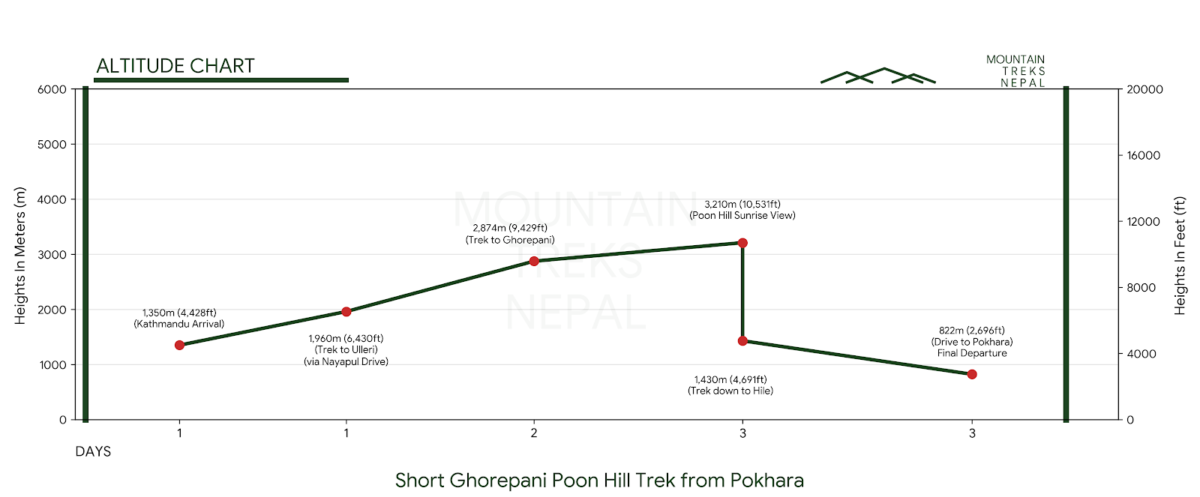
The Short Ghorepani Poon Hill Trek from Pokhara features a highly accessible vertical layout, offering a quick transition from sub-tropical valleys to alpine ridges:
-
Pokhara (Starting Hub): 850 meters
-
Nayapul (Trailhead): 1,070 meters
-
Hile (Descent Point): 1,430 meters
-
Ulleri (Day 1 Stop): 1,960 meters
-
Ghorepani (Day 2 Stop): 2,874 meters
-
Poon Hill Viewpoint (Max Altitude): 3,210 meters
Altitude Sickness on the Ghorepani Poon Hill Trek: What You Need to Know
At a peak elevation of 3,210 meters at the top of Poon Hill, the air holds roughly 30% less effective oxygen than sea level. While the threat of severe high-altitude complications is significantly lower here compared to 5,000-meter passes, Acute Mountain Sickness (AMS) can still affect trekkers who push too fast or neglect basic hydration.
Symptoms of Altitude Sickness
-
Mild Symptoms: A dull, throbbing headache, slight lightheadedness, occasional fatigue, loss of appetite, or minor sleep disturbances at Ghorepani.
-
Severe Symptoms: Loss of body coordination (ataxia), confusion, vomiting, or an inability to catch your breath while resting. Note: Severe altitude issues are exceptionally rare on this specific trail.
Prevention Tips
-
Hydrate Constantly: Drink at least 3 to 4 liters of purified water daily to help your cells carry oxygen efficiently.
-
Pace Yourself: Climb the stone steps slowly and rhythmically; treat the journey as a marathon, not a race.
-
Eat Clean: Stick to carbohydrate-rich, freshly cooked vegetarian meals at the teahouses to fuel your digestion efficiently.
-
Avoid Toxins: Refrain from consuming alcohol, cigarettes, or sleeping pills while sleeping at higher elevations.
Medication & Remedies
For those prone to rapid altitude shifts, Acetazolamide (Diamox) can be used after consulting your physician. Sipping hot ginger tea at the teahouse is a reliable, time-tested natural remedy to settle an uneasy stomach.
If Symptoms Get Worse
If a headache or mild nausea fails to clear after resting and rehydrating at Ghorepani, the golden rule applies: do not climb higher. If symptoms worsen, descending to Ulleri or Tikhedhunga brings immediate relief due to the rapid increase in atmospheric pressure.
Trip Grade: Fitness, Health, and Medical Requirements
This trip is graded as Easy to Moderate. The trails are wide, completely safe, and devoid of steep drop-offs or technical climbing zones.
Medical Considerations
The main challenge involves the demanding 3,000+ stone stairs leading up to Ulleri on Day 1. Individuals with chronic knee pain, severe ankle instability, or serious asthma should approach this trek with caution and consult their doctor. A basic level of cardiovascular stamina is all that is required to enjoy this loop comfortably.
Best Time To Go
Timing your trek right ensures perfectly clear mountain backdrops and excellent walking weather:
-
Autumn (September to November): The premier trekking window. The post-monsoon air is incredibly clear, offering sharp, postcard-perfect sunrise views of Dhaulagiri and Annapurna under deep blue skies.
-
Spring (March to May): The absolute best season for flora lovers. The entire region transforms into a blooming canvas of red, white, and pink rhododendron blossoms, creating an unforgettable forest canopy.
Is the Ghorepani Poon Hill Trek Suitable for Beginners?
Yes! The Short Ghorepani Poon Hill Trek is widely recognized as the finest introductory hike in Nepal. The trails are clearly marked, comfortable teahouses are located just hours apart, and the altitude remains well below the extreme threshold. It offers a authentic taste of Himalayan trekking without putting your body through grueling survival conditions.
Essential Tips for Beginners on the Ghorepani Poon Hill Trek
-
Make use of dual trekking poles to take the pressure off your knees during the steep descent from Ghorepani.
-
Dress in versatile layers so you can adjust your temperature quickly while climbing the stone steps.
-
Do not try to keep up with the pace of others; settle into a rhythm that matches your breathing.
Is Ghorepani Poon Hill Dangerous? Understanding the Death Rate
The Short Ghorepani Poon Hill Trek is exceptionally safe, with a statistical mortality rate near 0%. There are no treacherous technical segments or dangerous glaciers. The rare injuries that do occur are typically minor ankle sprains on wet stone steps or mild dehydration. Choosing to trek with Mountain Treks Nepal ensures you are always accompanied by an expert guide who keeps safety risks entirely managed.
Travel Insurance for Ghorepani Poon Hill Trek
Even though this route is lower in altitude and very safe, having comprehensive travel insurance is mandatory to join our trips. Your policy should cover trekking up to 3,500 meters and include coverage for unexpected trip cancellations, medical treatments, and emergency wilderness evacuation. Always bring physical copies of your policy parameters to show your guide during your pre-trip briefing.
What Is a Day on the Ghorepani Poon Hill Trek Actually Like?
Your morning starts around 6:30 AM with a warm cup of tea and views of the surrounding hills. After a filling breakfast, your main bags are handed over to the porters, and walking begins by 7:30 AM. You’ll move at a comfortable pace through traditional villages or old-growth oak forests, stopping for a freshly cooked lunch at a scenic trailside lodge around mid-day.
The afternoon walk is generally shorter, bringing you to your next night’s stay by 2:00 PM or 3:00 PM. This gives you plenty of free time to explore the local village, read a book in the warm dining room, or chat with fellow travelers before a delicious hot dinner is served around 6:30 PM.
After the Ghorepani Poon Hill Trek: How to Unwind and Recharge
After wrapping up your mountain loop on Day 3 and driving back to Pokhara, treat your body to well-deserved recovery. Spend a peaceful afternoon at a lakeside cafe, book a deep-tissue massage at a professional local spa to soothe your leg muscles, or enjoy a great celebratory dinner at a lakeside restaurant to toast your successful hike up Poon Hill.
Where Can I Meet Mountain Treks Nepal?
Our main administrative headquarters is located in Kathmandu, where we hold thorough pre-departure briefings. For travelers heading straight to the Annapurna region, our team coordinates a highly convenient meeting point directly at your lakeside hotel or at the airport terminal in Pokhara, managing all permits and logistics before you hit the trail.
Booking and Payment with Mountain Treks Nepal
Securing your dates on this package requires a standard booking deposit submitted through our encrypted online payment portal or via a direct wire transfer. The remaining financial balance can be settled smoothly upon arrival in Nepal using cash or major credit cards. All receipts, terms, and itinerary vouchers are delivered to your email inbox immediately upon confirmation.
Electricity on the Ghorepani Poon Hill Trek
The villages along this loop are well-connected to the national electricity grid. You will find standard wall outlets directly inside your private rooms at lower teahouses, while higher stops may charge a small fee (NPR 100 to NPR 300) to use the charging stations in the main dining hall. Bringing a reliable power bank ensures your cameras and phones stay fully charged for sunrise photos.
Drinking Water during Ghorepani Poon Hill Trek
Staying well-hydrated is essential for your comfort and energy. Teahouses sell safe, filtered, or boiled hot water by the liter. In our commitment to protect the fragile environment of the Annapurna conservation area, Mountain Treks Nepal strongly encourages using reusable water bottles or hydration bladders combined with purification tablets or UV filters instead of buying single-use plastic bottles.
Communication and Internet Services
Mobile network connectivity through local providers Ncell and Nepal Telecom is remarkably reliable along almost this entire loop, including at Ghorepani village. Most teahouses also provide functional high-speed Wi-Fi networks (sometimes for a small fee of NPR 200 to NPR 400), allowing you to easily share your sunrise photos with family back home.
Currency Exchange
The local currency required throughout this journey is the Nepalese Rupee (NPR). Make sure to exchange your foreign cash into local banknotes before leaving Pokhara. There are no ATMs along the trail, and the local teahouses are unable to process credit cards or accept foreign currency for minor personal purchases.
Food on the Ghorepani Poon Hill Trek
The menus at the teahouses along this established route are surprisingly diverse. You can enjoy the classic, energy-packed traditional Dal Bhat (rice, lentil soup, and vegetable curry with free refills), alongside western favorites like pasta, pizza, noodles, garlic soups, fresh eggs, and pancakes to keep your energy high.
Culture and Festivals of the Annapurna Region
The Ghorepani route travels directly through the historic homelands of the Gurung and Magar ethnic groups. If your trip lines up with autumn celebrations like Dashain and Tihar, or the spring celebration of Losar (Tibetan New Year), you will get to see local cultural dances, traditional clothing, and festive community gatherings up close.
Local Dress and Cultural Etiquette on the Ghorepani Poon Hill Trek
-
Dress Appropriately: Keep your shoulders and knees covered when walking through local villages to respect traditional cultural norms.
-
Respect Religious Sites: Always walk to the left of Buddhist chortens, mani walls, and prayer flags in a clockwise direction.
-
Ask Before Snapping Photos: Always ask for permission before taking close-up portraits of local residents or children.
-
Remove Your Shoes: Always leave your footwear at the door before entering monasteries, temples, or private home spaces.
How Much Cash Should You Carry on the Ghorepani Poon Hill Trek?
Even though your main meals and teahouse stays are covered in the core package, you should plan to bring roughly NPR 2,500 to NPR 3,500 (approximately USD 20 to USD 30) per day in cash. This personal budget easily covers small comforts like hot showers, device charging, Wi-Fi access, cold sodas, snacks, and tips for your hardworking guides and porters.
Alternative Treks Around the Annapurna Region
If you find yourself with extra travel days or want to look into other trekking options, the surrounding Annapurna foothills offer excellent paths:
-
Short Mardi Himal Trek: A fantastic 4-day option that takes you along a high ridge directly to the base of Mount Machhapuchhre.
-
Annapurna Base Camp Trek: A classic 7-to-10-day loop that leads you right into the heart of a high-altitude glacial sanctuary.
-
Khopra Danda Trek: An off-the-beaten-path alternative offering dramatic, high-altitude views of Dhaulagiri away from the main crowds.
Conclusion
The Short Ghorepani Poon Hill Trek 3 Days stands out as the ideal, time-efficient Himalayan package for travelers looking for big views without the demands of a long expedition. From the green depth of old forests to the unforgettable sunrise at the Poon Hill viewpoint, every step showcases the natural beauty of the Annapurna range. Guided safely by Mountain Treks Nepal, this trek delivers a perfectly organized, unforgettable journey that will stay with you for a lifetime.
Trip Highlights
-
Poon Hill Sunrise: Watching the morning sun hit the snow-capped faces of the Dhaulagiri and Annapurna massifs from 3,210 meters.
-
The Ulleri Challenge: Climbing the historic stone steps through traditional villages while enjoying views across the valley.
-
Massive Rhododendron Forests: Walking beneath a spectacular forest canopy that turns into a vibrant sea of red and pink blossoms in the spring.
-
Genuine Himalayan Teahouses: Experiencing the authentic hospitality, warm dining rooms, and unique culture of the local Gurung and Magar communities.
-
Hassle-Free Pokhara Connections: Enjoying a seamless, private transport loop that gets you from your lakeside hotel to the mountains and back in just three days.
Have a Question? Inquire Now
Why Mountain Treks Nepal?
- Expert Team for Unparalleled Experience
- Best Price Guarantee
- Safety is the first Priority
- Easy Booking & Secure Online Payment
- Flexible And Personalized Service
- 24/7 Support
- Highest Satisfaction Guaranteed
- Highly Experienced Guides
- Your Satisfaction is Our Guarantee
- One-time Deposit, Assured for a Life Time
Detailed Itinerary
Your adventure starts with a private morning drive from Pokhara to the trailhead at Nayapul. The trek begins with a gentle walk along the Modi Khola river to Tikhedhunga. From there, you’ll tackle the famous stone staircases up to the large Magar settlement of Ulleri, where you’ll spend the night enjoying your first panoramic views of Hiunchuli and Annapurna South.
After a hearty breakfast, the trail heads into deep oak and rhododendron forests. You’ll climb steadily along a clear mountain stream, passing through the quiet settlement of Banthanti. The path continues upward until you reach the vibrant ridge-top village of Ghorepani, a historic trading stop that offers dramatic views of the towering Dhaulagiri mountain range.
An early morning wake-up call guides you up the trail to the Poon Hill viewpoint (3,210m) to catch a breathtaking sunrise over Dhaulagiri, Nilgiri, Machhapuchhre, and the Annapurnas. After taking photos, return to Ghorepani for breakfast, then follow a steady descent through the forests down to Hile. Your private vehicle will be waiting there to provide a smooth transfer back to your hotel in Pokhara.
Trip Includes
-
All mandatory trekking documentation, including the Annapurna Conservation Area Project (ACAP) permit and TIMS safety card.
-
Private vehicle transport from your Pokhara hotel to the Nayapul trailhead, and return transport from Hile directly back to Pokhara.
-
Standard teahouse lodge accommodation during the trek.
-
Three freshly cooked meals per day (Breakfast, Lunch, and Dinner) while on the walking route.
-
Professional, government-licensed English-speaking trekking guide.
-
Reliable local porters to handle and carry your main duffel luggage (1 porter for every 2 trekkers, weight limit 20-25 kg).
-
Full arrangement of local government taxes and tourism service fees.
Trip Excludes
-
Hotel stays, airport transfers, and meals in Kathmandu or Pokhara before or after the 3-day itinerary.
-
Personal travel insurance policies (compulsory; must cover trekking up to 3,500m and emergency evacuation).
-
Table drinks (mineral water, hot boiled water, specialty teas, coffees, alcohol) and personal snacks.
-
Personal trekking gear and clothing (such as down jackets, hiking poles, and sleeping bags).
-
Out-of-pocket teahouse services, including hot showers, device charging, and Wi-Fi network fees.
-
International airfare, Nepal entry visa fees, and domestic transit costs between cities.
-
Gratuities and tips for your guide and porters.
Trip Photo Gallery


Packing List For Short Ghorepani Poon Hill Trek from Pokhara

Clothing & Layers
-
Base Layer: Moisture-wicking thermal tops and bottoms (1-2 pairs).
-
Mid-Layer: Warm fleece jacket or lightweight insulated pullover.
-
Outer Layer: Windproof and waterproof jacket.
-
Warm Insulation: Lightweight down jacket for the chilly morning hike up Poon Hill.
-
Head & Hands: Warm beanie, sun hat, and a pair of lightweight gloves.

Footwear
-
Sturdy, comfortable hiking boots (properly broken-in).
-
Moisture-wicking trekking socks (3 pairs).
-
Lightweight sandals or sneakers for relaxing in the teahouses in the evening.

Gear & Equipment
-
Main Pack: Durable duffel bag (carried by your porter) or a large backpack.
-
Daypack: 20L to 30L comfortable daypack for your daily essentials.
-
Trekking Poles: Adjustable trekking poles to help with stability and protect your knees on stone steps.
-
Lighting: Bright headlamp with extra batteries for the early morning sunrise hike.

Personal Items & Health
-
UV-blocking sunglasses and high-SPF sunscreen.
-
Two durable 1-liter water bottles or a convenient hydration bladder.
-
Water purification tablets or a portable filtration system.
-
Personal first-aid kit containing blister pads, rehydration salts, and basic pain relief.
-
High-energy snacks like chocolate, nuts, and electrolyte mix.
Frequently Asked Questions
This short itinerary is classified as Easy to Moderate. It does not feature any technical climbing or dangerous high alpine terrain, making it accessible to most travelers. The main physical challenge is the legendary stone staircase leading up to Ulleri on the first day, which consists of over 3,000 stone steps and requires decent lower-body stamina and knee health.
The maximum altitude reached on this journey is 3,210 meters (10,531 feet) at the peak of the Poon Hill viewpoint, which you will climb early on the morning of Day 3. Your highest overnight stay will be at Ghorepani village, which sits comfortably at 2,874 meters.
The risk of severe Acute Mountain Sickness (AMS) is exceptionally low on the Ghorepani Poon Hill loop because the entire trek stays well below the extreme 3,500-meter altitude threshold. However, minor symptoms like light headaches or fatigue can occasionally happen. Mountain Treks Nepal guides manage this by ensuring a steady walking pace and reminding you to stay well-hydrated.
Yes! The Short Ghorepani Poon Hill Trek is widely considered the best introductory trek in Nepal. Thanks to the wide, well-maintained trails, modest elevations, and comfortable teahouses spaced closely together, this route is perfectly suited for absolute beginners, senior travelers, and families trekking with children.
You will need two official documents: the Annapurna Conservation Area Permit (ACAP) and a Trekkers' Information Management Systems (TIMS) Card. Mountain Treks Nepal takes care of all the paperwork, fees, and registration before you start walking so you don't have to wait in administrative lines.
Accommodations consist of classic, cozy Nepalese mountain teahouses. You can expect clean, simple twin-sharing rooms equipped with wooden beds, mattresses, pillows, and blankets. The central dining rooms are heated in the evenings, providing a warm space to eat and relax, while toilet and shower facilities are typically shared.
Yes. The villages along this established route are well-connected to the electricity grid. Most teahouses provide standard wall outlets directly in your room or offer charging strips in the main dining hall for a small fee (around NPR 100 to NPR 300). Stable mobile data signals (Ncell/NTC) and teahouse Wi-Fi are readily available along almost the entire trail.
The menus on this popular route are surprisingly diverse. You can enjoy the classic mountain staple, traditional Dal Bhat (rice, lentil soup, and vegetable curry with unlimited free refills), alongside western options like pasta, noodles, vegetable pizzas, garlic soup, fried eggs, and pancakes.
We recommend exchanging currency and carrying about NPR 2,500 to NPR 3,500 (approximately USD 20 to USD 30) per day in cash. While your core meals and lodging are covered by Mountain Treks Nepal, this extra out-of-pocket cash pays for personal trail comforts like hot showers, device charging fees, Wi-Fi access, cold sodas, extra snacks, and tips for your guide and porter.
Booking with Mountain Treks Nepal guarantees an organized, safe, and entirely stress-free mountain experience. We supply government-licensed, English-speaking local guides, assign professional porters to carry your main luggage, manage all permit logistics, arrange comfortable private vehicle pickups, and run our operations under ethical, fair-wage practices for our entire field crew.