



Share This:
Mount Everest History: The Complete Story of Sagarmatha & Chomolungma
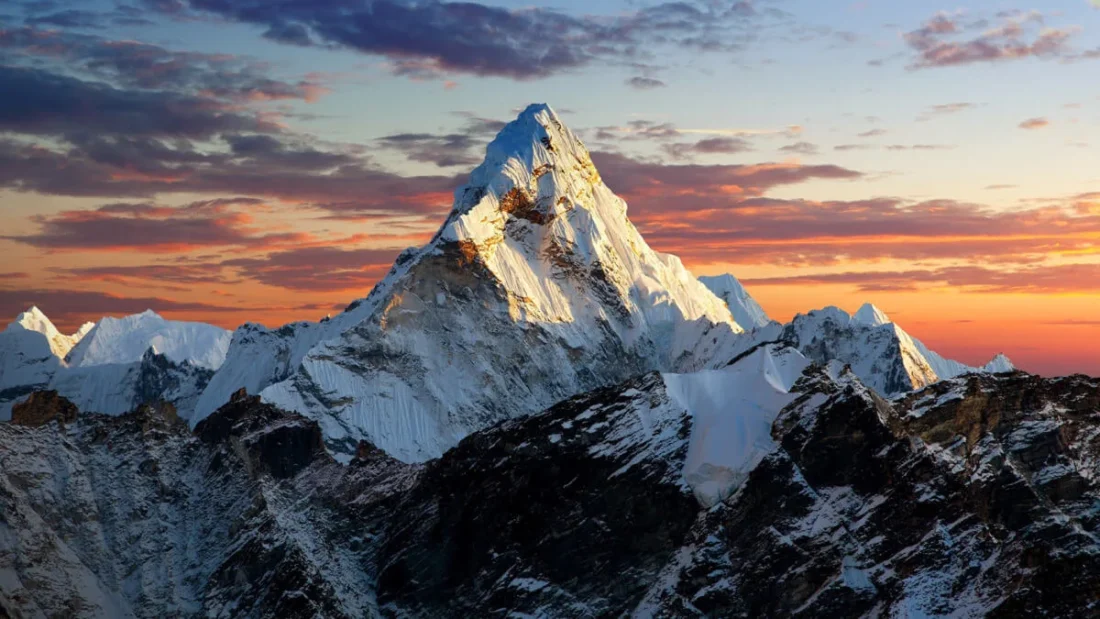
The history of Mount Everest is the story of humanity’s ultimate test against nature. While globally recognized as Everest, the mountain has been revered for centuries by the Sherpa and Tibetan people as Chomolungma (“Goddess Mother of the World”) and by the Nepalese as Sagarmatha (“Forehead of the Sky”).
If you are seeking to understand Mount Everest history, the journey does not begin with climbers in down suits. It begins 50 million years ago at the bottom of an ancient ocean. The true story behind Everest encompasses geological tectonic shifts, ancient indigenous migrations, obsessive British cartographers, and the unbreakable resilience of modern mountaineers.
Today, walking in the shadows of this 8,848.86-meter (29,031.7-foot) giant is the dream of a lifetime. This comprehensive guide covers the complete history of climbing Mount Everest, the science behind its formation, and the cultural legacy that makes it the most famous peak on Earth.
The Geological Formation: From Ocean Floor to the Forehead of the Sky
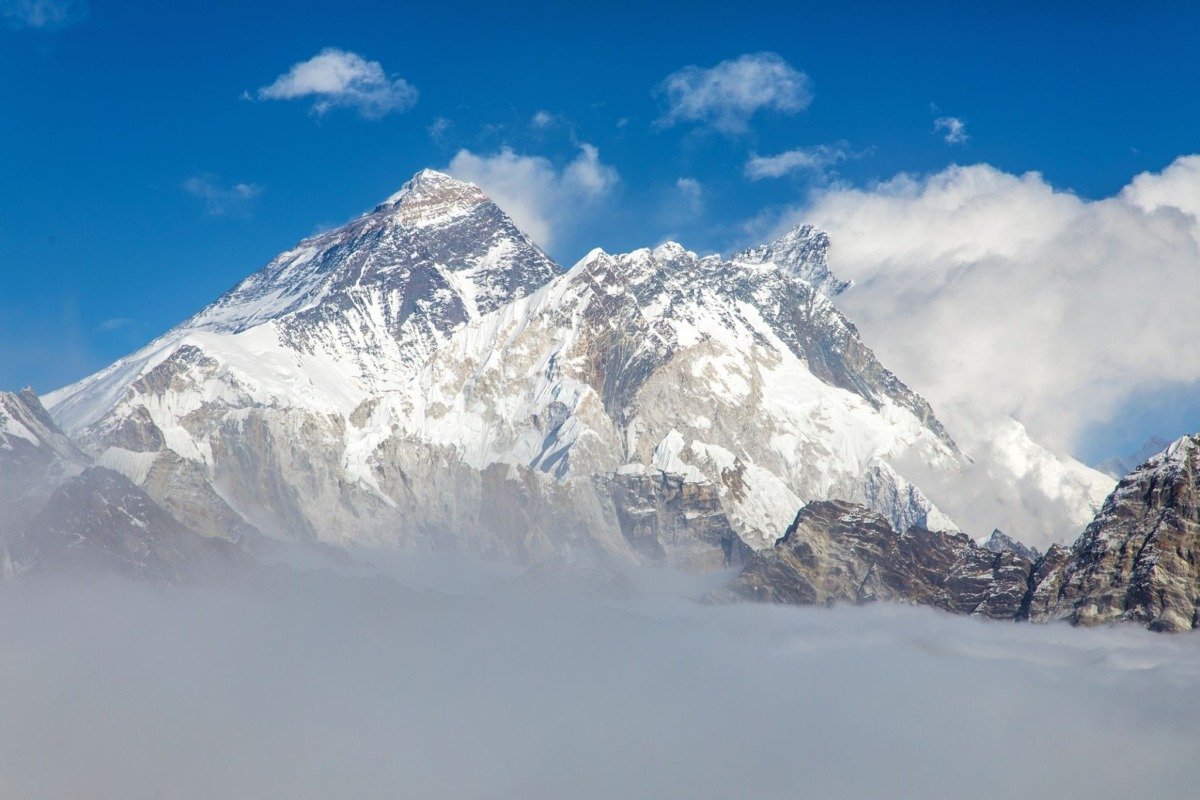
To understand the scale of Mount Everest, one must look at the ground beneath it. Mount Everest is geologically young. The mountain is the direct result of the Indian tectonic plate colliding with the Eurasian plate.
Approximately 50 to 60 million years ago, the Indian subcontinent was an island moving rapidly northward across the Tethys Ocean. When it finally smashed into the massive Eurasian plate, the incredible force crumpled the landmasses, forcing the ocean floor upward into the sky.
This violent, ongoing geological collision explains two astonishing facts about Everest:
-
Everest is still growing: The mountain rises by roughly 3 to 5 millimeters every year because the Indian plate continues to push northward.
-
Marine fossils on the summit: Climbers who reach the Yellow Band—a layer of limestone near the summit—often find fossilized trilobites and crinoids. The highest point on Earth was once the bottom of the sea.
The Naming History: Chomolungma, Peak XV, and Everest
Before British surveyors arrived with theodolites and measurement chains, the mountain already had a deep cultural identity.
For centuries, Tibetan texts referenced Chomolungma, the sacred goddess of the region. The Sherpa people, who migrated from eastern Tibet to the Khumbu Valley around 500 years ago, held deep reverence for the peak, viewing it as a protector entity that required respect, not conquest.
The Western world, however, knew nothing of the mountain until the mid-19th century. During the Great Trigonometrical Survey of India, British cartographers attempted to map the entire subcontinent. Because Nepal and Tibet were closed to foreigners, surveyors had to measure the Himalayan peaks from over 100 miles away in India.
In 1852, an Indian mathematician named Radhanath Sikdar analyzed the data for an obscure mountain labeled “Peak XV.” Through complex trigonometric calculations, Sikdar discovered that Peak XV stood at 29,002 feet—making it the tallest mountain in the world.
In 1865, Andrew Waugh, the British Surveyor General of India, proposed naming the peak after his predecessor, Sir George Everest. Despite George Everest’s own objections that the name could not be written or pronounced by the local people, the name “Mount Everest” was officially adopted by the Royal Geographical Society. Much later, in the 1960s, the Nepal government officially adopted the name Sagarmatha.
The Early Reconnaissance and the Golden Age of Exploration
The history of climbing Mount Everest began in the early 20th century. Because Nepal’s borders were strictly closed to foreigners until 1950, all early expeditions were forced to approach the mountain from the north side, through Tibet.
The 1921 and 1922 British Expeditions
The 1921 British reconnaissance expedition, which included a young schoolmaster named George Mallory, was the first to physically explore the northern approaches and discover a feasible route up the North Col.
In 1922, a subsequent expedition returned with supplementary oxygen. They broke the 8,000-meter barrier for the first time in human history. However, this expedition also marked Everest’s first recorded tragedy when an avalanche killed seven Sherpa porters, highlighting the extreme dangers of the mountain.
The Mallory and Irvine Mystery (1924)
The most enduring mystery in Mount Everest history occurred during the 1924 British expedition. On June 8, 1924, George Mallory and his climbing partner Andrew “Sandy” Irvine made a push for the summit. They were spotted through a telescope on the Northeast Ridge, mere hundreds of feet from the top, before clouds rolled in.
They never returned. Whether they reached the summit before dying remains one of mountaineering’s greatest unanswered questions. Mallory’s frozen body was eventually discovered 75 years later, in 1999, but Irvine—and the Kodak camera they carried, which might contain proof of a summit—has never been found.
The Historic 1953 Ascent: Hillary and Tenzing
After World War II, geopolitical shifts changed Everest’s history forever. China closed Tibet’s borders, effectively shutting off the northern route. Fortunately, Nepal ended its isolationist policies in 1950 and opened its borders to the world, allowing access to the southern approach through the Khumbu region.
A Swiss expedition in 1952, featuring Sherpa climber Tenzing Norgay, pushed incredibly close to the summit via the South Col route but was turned back by weather and exhaustion.
The following year, the 1953 British Expedition, led by Colonel John Hunt, arrived in Nepal with military-level logistics. On May 29, 1953, New Zealand beekeeper Sir Edmund Hillary and Nepali-Indian Sherpa Tenzing Norgay set out from their high camp. Overcoming the treacherous 40-foot rock face now known as the “Hillary Step,” they reached the 8,848-meter summit at 11:30 AM.
The news reached London on the morning of Queen Elizabeth II’s coronation, instantly catapulting Hillary and Tenzing to international superstardom and cementing their legacy in Himalayan history.
You don’t have to be a professional mountaineer to walk in the footsteps of Hillary and Tenzing. The trails they blazed are now accessible to determined hikers. Explore our Everest Base Camp Trek itineraries and start planning your own Himalayan history.
The Sherpa People: The Heart and Soul of the Himalayas
Any history of Mount Everest is incomplete without acknowledging the Sherpa people. Originally migrating from eastern Tibet, the Sherpas settled in the high-altitude Khumbu valleys beneath Everest.
Sherpas are not merely guides; they are genetically and culturally adapted to high altitudes. Scientific studies show that Sherpas possess unique mitochondrial adaptations that allow their bodies to use oxygen highly efficiently, giving them a massive physiological advantage in the “Death Zone” (above 8,000 meters).
Culturally, Sherpas view the mountains as sacred. Before any Everest expedition begins, climbers must participate in a Puja ceremony—a Buddhist ritual led by a local Lama to ask Chomolungma for permission to climb and to ensure safe passage.
Today, legendary Sherpa climbers like Kami Rita Sherpa (who holds the record for the most Everest summits) and Mingma Sherpa continue to redefine what is physically possible in the Himalayas.
The History of Climbing Mount Everest: Evolution of Routes
There are nearly 20 named routes to the summit, but the vast majority of climbers use one of two standard paths.
The South Col Route (Nepal)
Pioneered by the 1953 British team, this is the most popular route. Starting from Everest Base Camp in Nepal (5,364 meters), climbers must navigate the incredibly dangerous Khumbu Icefall—a terrifying maze of shifting ice seracs and deep crevasses.
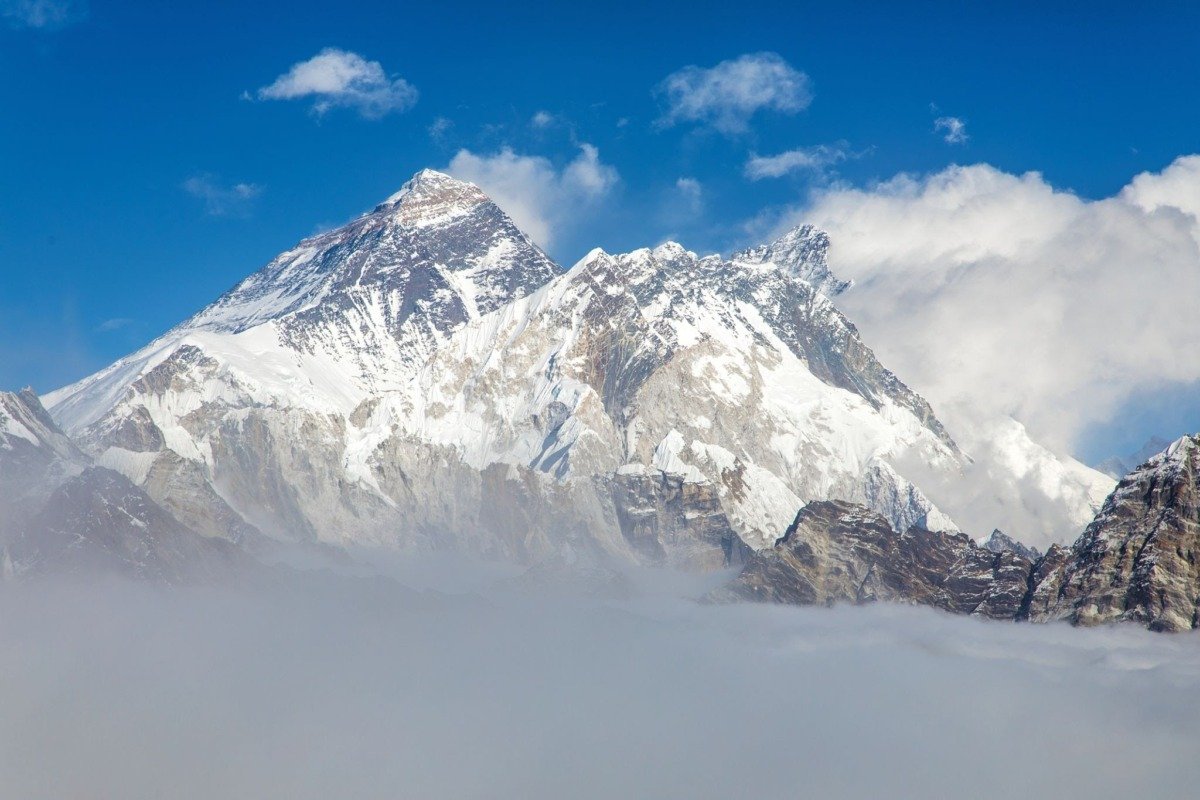
From there, climbers traverse the Western Cwm, climb the steep Lhotse Face to the South Col (Camp 4), and make their final summit push along the Southeast Ridge.
The North Ridge Route (Tibet)
Approached from the Tibetan side, this was the route attempted by Mallory and Irvine. It avoids the Khumbu Icefall entirely but requires climbers to spend more time at extreme altitudes and exposes them to the brutal, freezing winds sweeping across the Tibetan plateau.
Milestones, Records, and Tragedies on the Mountain
The history of Everest is defined by both staggering human achievement and heartbreaking tragedy.
Historical Firsts and Climbing Records
| Year | Milestone | Climber(s) | Significance |
| 1953 | First Confirmed Summit | Edmund Hillary & Tenzing Norgay | Proved human survival at the highest altitude. |
| 1975 | First Woman to Summit | Junko Tabei (Japan) | Broke gender barriers in high-altitude mountaineering. |
| 1978 | First Ascent Without Oxygen | Reinhold Messner & Peter Habeler | Defied medical science, which claimed it was impossible. |
| 1980 | First Solo Ascent | Reinhold Messner | Achieved entirely alone, without oxygen, during monsoon season. |
| 2023 | Most Summits (Record Ongoing) | Kami Rita Sherpa | Demonstrated unparalleled physical endurance and Sherpa strength. |
Tragedies and the Realities of the Death Zone
Above 8,000 meters, the human body actively begins to die due to the lack of oxygen (only 33% of the oxygen available at sea level). Altitude illnesses like High Altitude Pulmonary Edema (HAPE) and Cerebral Edema (HACE) are fatal if untreated.
Everest has claimed hundreds of lives. The 1996 Everest Disaster (chronicled in Jon Krakauer’s Into Thin Air) saw eight climbers die in a sudden blizzard. In 2014, an avalanche in the Khumbu Icefall tragically killed 16 Nepali guides, prompting major discussions about Sherpa safety and labor rights.
The Modern Era of Everest Commercialization
By the 1990s, the era of state-sponsored, nationalistic exploration transitioned into the era of commercial climbing. Experienced mountaineers began guiding paying clients to the summit.
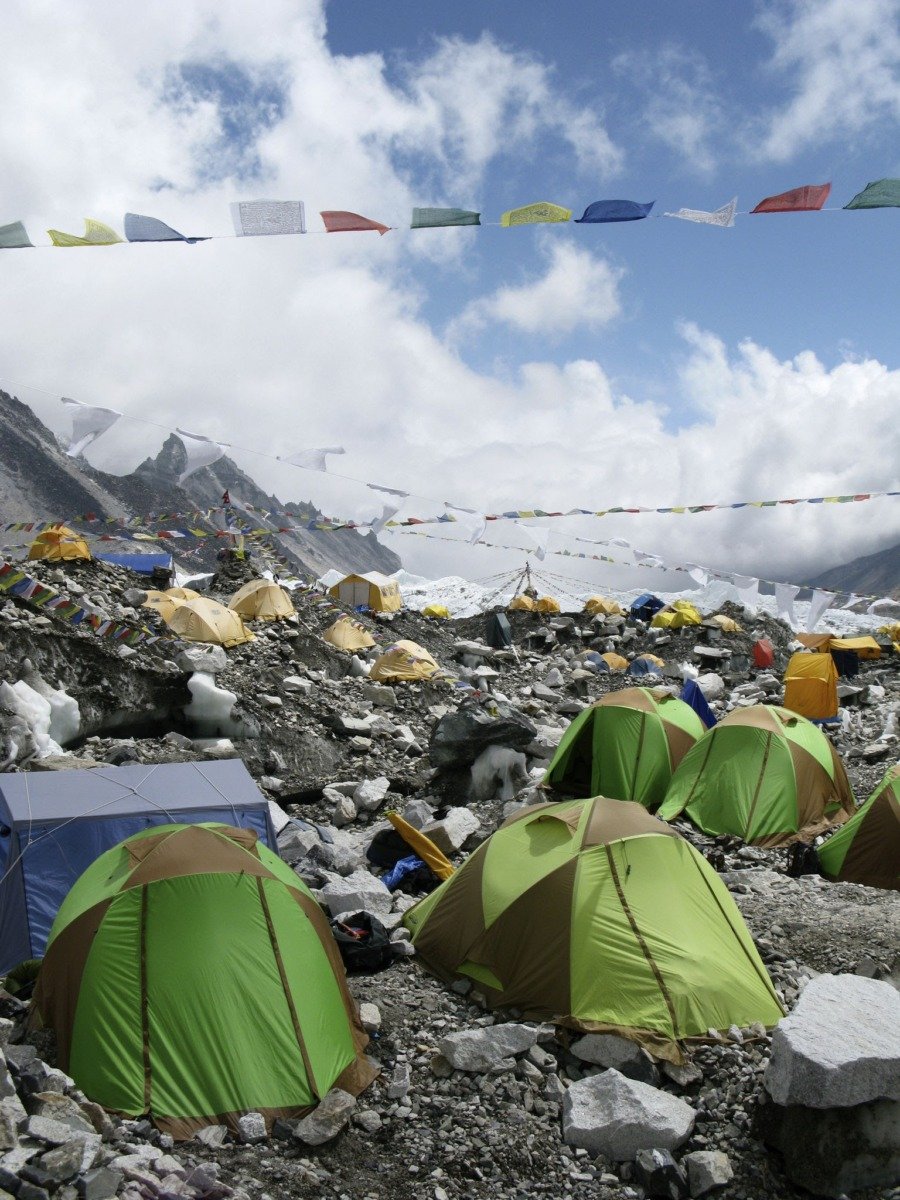
Today, the Everest economy is massive. Base Camp in the spring resembles a high-altitude city, complete with Wi-Fi, bakeries, and medical clinics. While commercialization has made the mountain accessible to thousands of dreamers, it has also brought challenges: overcrowding, environmental degradation from trash, and the rapid melting of the Khumbu Glacier due to climate change.
Despite the crowds and controversies, the allure of Sagarmatha remains unbreakable. Whether you are aiming for the summit or undertaking the legendary Everest Base Camp Trek, standing before the Goddess Mother of the World is an experience that connects you directly to the earth’s deepest history.
FAQs
What is the story behind Mount Everest?
The story of Mount Everest begins 50 million years ago when the Indian tectonic plate collided with Eurasia, thrusting the ocean floor into the sky. Culturally, it has been revered as a sacred goddess by Tibetans and Sherpas for centuries. Historically, it became the ultimate prize of 20th-century exploration, culminating in the first successful summit by Sir Edmund Hillary and Tenzing Norgay in 1953.
What are 5 facts about Mount Everest?
-
Mount Everest is geologically still growing by 3 to 5 millimeters every year.
-
The summit contains fossilized marine life from the ancient Tethys Ocean.
-
It was originally known to British surveyors simply as “Peak XV.”
-
The true summit is just the size of a dining room table.
-
Over 7,000 different individuals have successfully climbed the mountain.
What is the true story behind Everest?
The true story behind Everest is not just about Western climbers “conquering” a peak; it is a blend of tectonic geology, British cartographic obsession, and the indispensable strength of the Sherpa people. Without the physiological adaptations, cultural knowledge, and hard labor of the Sherpas, the history of climbing Mount Everest would not exist.
Who climbed Everest 7 times?
While many elite Sherpa mountaineers have climbed Everest well over 20 times (with Kami Rita Sherpa holding the record of over 30 ascents), several notable Western climbers and guides have reached the summit 7 or more times, including prominent international mountain guides who run commercial operations in the Himalayas.
Understanding Mount Everest history is one thing; witnessing Sagarmatha with your own eyes is another. At Mountain Treks Nepal, we guide adventurers safely through the Khumbu Valley to stand at the base of the world’s highest peak. Contact our trekking experts today to turn your dream into reality.