



Share This:

Annapurna Base Camp Trek: Complete Guide for 2026
The Annapurna Base Camp Trek is a classic Himalayan trekking route in Nepal that leads to Annapurna Base Camp at 4,130 meters. It combines mountain scenery, Gurung and Magar villages, rhododendron forests, terraced farmland, and a high alpine sanctuary surrounded by Annapurna I, Annapurna South, Machhapuchhre, Hiunchuli, and Gangapurna.
For travelers planning with Mountain Treks Nepal, this guide explains the route, best time, difficulty, permits, altitude, itinerary, packing list, safety tips, and common questions so you can prepare with realistic expectations.
Annapurna Base Camp Trek Quick Facts

The Annapurna Base Camp route lies inside the Annapurna Conservation Area, Nepal’s first and largest conservation area. ACAP covers 7,629 sq. km. and supports a wide range of biodiversity, including 1,226 species of flowering plants, 105 mammals, and 523 birds.
| Trek Feature | Details |
|---|---|
| Trek name | Annapurna Base Camp Trek / ABC Trek |
| Highest point | Annapurna Base Camp, 4,130 m |
| Typical duration | 7–14 days, depending on route and pace |
| Difficulty | Moderate |
| Main starting point | Pokhara area |
| Common trail villages | Ghandruk, Chhomrong, Bamboo, Deurali, Machhapuchhre Base Camp |
| Accommodation | Teahouses / mountain lodges |
| Best seasons | Spring and autumn |
| Main permits | ACAP permit; TIMS/guide requirements should be confirmed before travel |
| Suitable for beginners? | Yes, with fitness preparation and a sensible itinerary |
What Makes the Annapurna Base Camp Trek Special?

The Annapurna Base Camp Trek is popular because it gives trekkers access to high Himalayan scenery without requiring technical climbing. The route gradually moves from warm valleys and farming villages into forested hills, narrow river valleys, and finally the open basin of Annapurna Sanctuary.
At base camp, trekkers stand below Annapurna I, which Nepal Tourism Board lists as 8,091 meters and the tenth-highest mountain in the world.
The trail is also culturally rich. In the lower and middle sections, trekkers pass through Gurung and Magar communities, traditional stone houses, terraced fields, and family-run teahouses. This makes the journey more than a mountain viewpoint. It is also a close look at everyday life in Nepal’s middle hills.
Where Is Annapurna Base Camp?
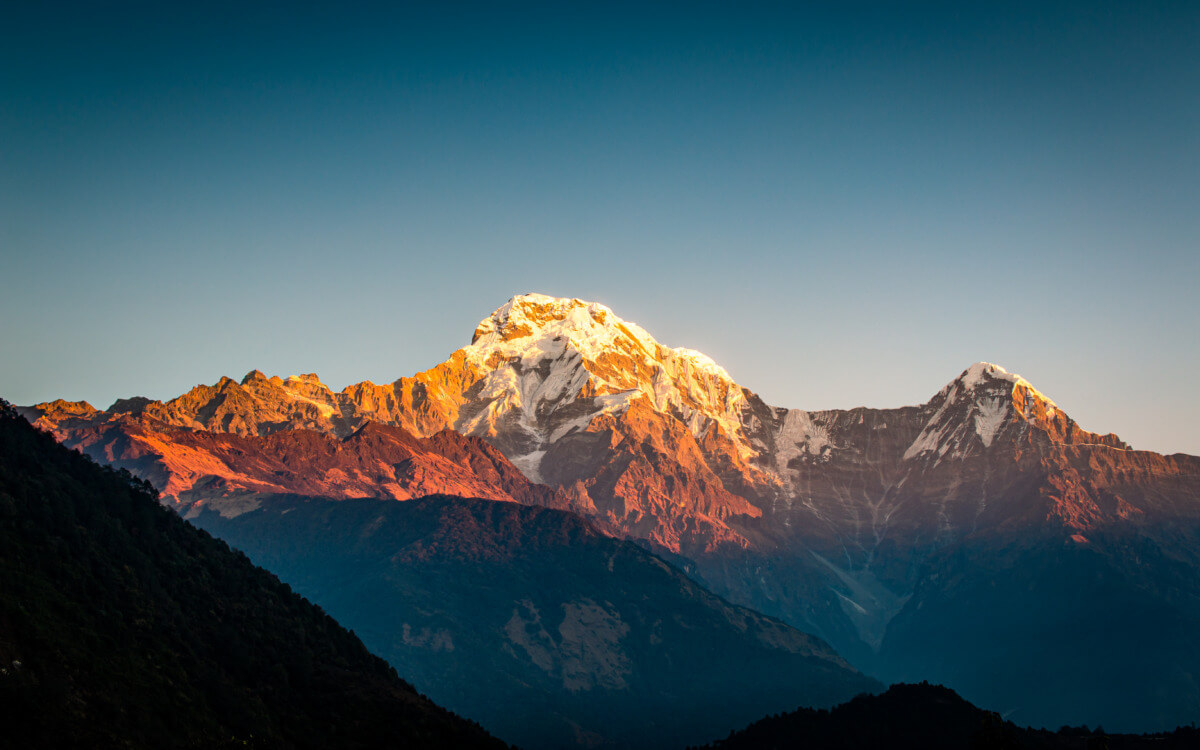
Annapurna Base Camp is located in north-central Nepal inside the Annapurna Conservation Area. The trek usually begins from Pokhara, Nepal’s main gateway city for the Annapurna region.
From Pokhara, trekkers drive to a trailhead such as Nayapul, Jhinu Danda, Siwai, or Ghandruk, depending on the itinerary. The route then follows a network of villages and forest trails toward Chhomrong, Bamboo, Himalaya, Deurali, Machhapuchhre Base Camp, and finally Annapurna Base Camp.
Mountain Treks Nepal offers both a 14-day Annapurna Base Camp Trek and a shorter 9-day Annapurna Base Camp option, giving travelers flexibility based on time, fitness, and preferred pace.
Annapurna Base Camp Trek Itinerary

A 14-day itinerary gives trekkers a balanced pace, time in Kathmandu and Pokhara, and a more comfortable trekking rhythm. Mountain Treks Nepal’s route includes Kathmandu, Pokhara, Ulleri, Ghorepani, Poon Hill, Chhomrong, Bamboo, Himalaya, Annapurna Base Camp, Jhinu Danda, and return travel.
| Day | Route | Approx. Elevation | Trip Notes |
|---|---|---|---|
| 1 | Arrival in Kathmandu | 1,350 m | Airport pickup, trip briefing |
| 2 | Drive to Pokhara | 820 m | Scenic road journey |
| 3 | Drive to Nayapul, trek to Ulleri | 1,960 m | First trekking day |
| 4 | Trek to Ghorepani | 2,870 m | Forest and village trail |
| 5 | Poon Hill sunrise, trek to Tadapani | 3,210 m / 2,721 m | Sunrise viewpoint |
| 6 | Trek to Chhomrong | 1,939 m | Gurung village |
| 7 | Trek to Bamboo | 2,340 m | Forested section |
| 8 | Trek to Himalaya | 2,900 m | Narrow valley trail |
| 9 | Trek to Annapurna Base Camp | 4,130 m | Pass Machhapuchhre Base Camp |
| 10 | Trek back to Dovan | 2,505 m | Descend from sanctuary |
| 11 | Trek to Jhinu Danda | 1,600 m | Hot spring area |
| 12 | Trek/drive to Pokhara | 820 m | End of trekking section |
| 13 | Drive or fly to Kathmandu | 1,350 m | Return to capital |
| 14 | Final departure | — | Airport transfer |
A shorter Annapurna Base Camp trekking route is possible, but it usually means longer walking days and less time to adjust to altitude. For most first-time trekkers, a slower itinerary is more comfortable.
How Difficult Is the Annapurna Base Camp Trek?

The Annapurna Base Camp Trek is considered moderate. It does not require mountaineering skills, ropes, or technical climbing. However, it does require several days of uphill and downhill walking, stone steps, changing weather, and sleeping above 3,000 meters.
Most trekking days involve 5–7 hours of walking. The hardest sections are usually the uphill climb toward Ghorepani, the long stone stairways near Chhomrong, and the higher-altitude approach from Deurali to Machhapuchhre Base Camp and Annapurna Base Camp.
You should prepare with regular walking, stair climbing, light strength training, and some longer hikes before arriving in Nepal. Fitness matters more than speed. A steady pace is safer and more enjoyable.
Annapurna Base Camp Trek Altitude and Safety
The highest point of the trek is Annapurna Base Camp at 4,130 meters. Mountain Treks Nepal’s itinerary notes the route passes Machhapuchhre Base Camp at around 3,700 meters before reaching ABC.
Altitude sickness can affect trekkers above 2,500 meters, especially when ascent is too fast. The CDC notes that altitude illness can include headache, tiredness, loss of appetite, nausea, and vomiting, and that prevention depends on gradual ascent and recognizing symptoms early.
Practical safety tips:
- Walk slowly above 3,000 meters.
- Drink enough safe water.
- Avoid rushing to base camp in too few days.
- Tell your guide early if you feel unwell.
- Do not continue higher if symptoms worsen.
- Choose travel insurance that covers trekking up to at least 5,000 meters and emergency evacuation.
Best Time for Annapurna Base Camp Trek
The best time for the Annapurna Base Camp Trek is usually spring and autumn. Mountain Treks Nepal also identifies spring and autumn as the most favorable seasons for the ABC trek because of clearer views and more stable conditions.
| Season | Months | Conditions | Best For |
|---|---|---|---|
| Spring | March–May | Rhododendron blooms, warmer days, good visibility | Flowers and mountain views |
| Summer/Monsoon | June–August | Rain, clouds, slippery trails, leeches in lower areas | Experienced trekkers comfortable with rain |
| Autumn | September–November | Clearer skies, stable weather, busy trails | Best overall trekking conditions |
| Winter | December–February | Cold mornings, possible snow at higher sections | Quieter trails and crisp views |
Autumn is often preferred for visibility. Spring is excellent for forests and flowers. Winter can be beautiful but colder, while monsoon trekking requires more flexibility.
Annapurna Base Camp Trek Permits
Trekkers need an Annapurna Conservation Area Permit, usually called ACAP. The official NTNC permit portal lists the ACAP entry fee as NPR 3,000 for foreign nationals and NPR 1,000 for SAARC nationals, with children below 10 not requiring a permit.
Nepal Tourism Board’s TIMS page lists “Poon Hill–ABC Trek” under Annapurna routes requiring a licensed trekking guide and an agency-issued TIMS card under the revised provision effective from March 31, 2023. It lists TIMS charges as NPR 1,000 for SAARC applicants and NPR 2,000 for others.
| Permit / Requirement | Cost / Rule | Notes |
|---|---|---|
| ACAP permit | NPR 3,000 for foreigners | Required for Annapurna Conservation Area |
| ACAP permit | NPR 1,000 for SAARC nationals | Tax included |
| TIMS card | NPR 2,000 for most foreign trekkers | Confirm latest enforcement before travel |
| Licensed guide | Required on listed routes under NTB provision | Best arranged through a registered agency |
Permit rules can be checked again before departure because enforcement may vary by route and checkpoint. Mountain Treks Nepal can help arrange required trekking permits and guide documentation.
Accommodation and Food on the ABC Trek
The Annapurna Base Camp route is a teahouse trek. This means trekkers sleep in local mountain lodges instead of camping.
Rooms are usually simple, with twin beds, blankets, and shared bathrooms. At higher altitudes, facilities become more basic. Hot showers, charging, and Wi-Fi may be available for an extra cost, but they should not be expected everywhere.
Food is usually served in a common dining room. Common meals include dal bhat, noodles, fried rice, soup, potatoes, eggs, pancakes, pasta, tea, and coffee.
Dal bhat is a practical trekking meal because it provides rice, lentil soup, vegetables, and often refills. Prices usually increase with altitude because goods are carried by porters, mules, or local transport networks.
What Should You Pack for Annapurna Base Camp Trek?
Packing should focus on warmth, dryness, comfort, and weight control. You do not need luxury gear, but you do need reliable layers.
| Category | Recommended Items |
|---|---|
| Clothing | Base layers, fleece, down jacket, waterproof jacket, trekking pants |
| Footwear | Broken-in hiking boots, trekking socks, sandals for lodge use |
| Accessories | Warm hat, sun hat, gloves, buff, sunglasses |
| Gear | Daypack, duffel bag, trekking poles, headlamp, water bottle |
| Health | Personal medicine, blister care, sunscreen, lip balm, water purification |
| Documents | Passport copies, insurance, permits, emergency contacts |
| Extras | Power bank, quick-dry towel, snacks, wet wipes, reusable bottle |
Avoid overpacking. A heavy bag makes the trek harder, especially on long uphill sections.
Annapurna Base Camp Trek Cost Factors
The total cost of the Annapurna Base Camp Trek depends on trip length, guide and porter support, hotel category, transport type, meals, permits, and group size.
A budget trek may use local buses and basic teahouses. A more comfortable itinerary may include private transport, better hotels in Kathmandu and Pokhara, an experienced licensed guide, porter service, and full logistical support.
Main cost factors include:
- Airport transfers
- Kathmandu and Pokhara hotels
- Ground transport or domestic flight
- Licensed guide
- Porter service
- ACAP and TIMS arrangements
- Teahouse accommodation
- Meals during the trek
- Travel insurance
- Personal expenses
Booking with Mountain Treks Nepal helps simplify these logistics because the route, permits, guide, porter, accommodation, and transport can be organized before arrival.
Annapurna Base Camp Trek vs Short ABC Trek
Not every traveler has two weeks. A short Annapurna Base Camp Trek can be completed in around 7–9 days from Kathmandu or Pokhara, depending on the route.
| Option | Best For | Trade-Off |
|---|---|---|
| 14-day ABC Trek | First-time trekkers, relaxed pace, Poon Hill included | Requires more vacation time |
| 9-day Short ABC Trek | Fit trekkers with limited time | Longer walking days |
| 7-day ABC route from Pokhara | Strong hikers already in Pokhara | Less flexibility for weather and fatigue |
A longer trek is usually better for comfort, photography, cultural stops, and altitude adjustment. A shorter trek works best for trekkers who are already active and comfortable walking full days.
Responsible Trekking in Annapurna Conservation Area
The Annapurna region receives many visitors, and responsible trekking matters. NTNC’s minimum impact guidance asks trekkers to reduce firewood use, avoid bottled water when possible, carry out waste, reuse plastics, and register at check-posts along the route.
Simple ways to reduce your impact:
- Use refillable bottles and purification tablets.
- Do not leave plastic, batteries, or wipes on the trail.
- Stay on marked paths.
- Respect local customs and private property.
- Order locally available meals.
- Support lodges that use solar or cleaner energy.
- Follow your guide’s instructions near fragile areas.
Why Choose Mountain Treks Nepal for Annapurna Base Camp Trek?
Choosing a local trekking agency is not only about booking a guide. It affects safety, pacing, communication, permit handling, transport, accommodation, and support if weather or health conditions change.
Mountain Treks Nepal is based in Nepal and offers Annapurna region itineraries including Annapurna Base Camp Trek, Short Annapurna Base Camp Trek, Annapurna Circuit Trek, Khopra Danda Trek, and Annapurna Panorama Trek.
A guided trek is useful because your guide can help with route decisions, altitude awareness, teahouse coordination, local communication, weather changes, and emergency response. For first-time visitors to Nepal, this support can make the trek smoother and safer.
FAQs About Annapurna Base Camp Trek
How high is Annapurna Base Camp?
Annapurna Base Camp is 4,130 meters above sea level. It is the highest sleeping point on the standard ABC trekking route.
How many days are needed for the Annapurna Base Camp Trek?
Most trekkers complete the route in 7–14 days. A 14-day itinerary is more comfortable if you include Kathmandu, Pokhara, Poon Hill, and a steady walking pace.
Is Annapurna Base Camp Trek suitable for beginners?
Yes, beginners can do the trek with preparation. You should be able to walk 5–7 hours a day on hilly terrain and manage repeated uphill and downhill sections.
Do I need a guide for Annapurna Base Camp Trek?
Nepal Tourism Board’s revised TIMS provision lists Poon Hill–ABC Trek under routes requiring a licensed guide and agency-issued TIMS card. Confirm the latest rule before travel or book through a registered agency such as Mountain Treks Nepal.
What permits are required for Annapurna Base Camp?
Trekkers need an ACAP permit. TIMS requirements should also be checked before travel, especially if your route includes Poon Hill and ABC.
What is the best month for Annapurna Base Camp Trek?
October and November are often preferred for clear views. March to May is also excellent, especially for rhododendron forests and warmer daytime temperatures.
Is there Wi-Fi on the Annapurna Base Camp route?
Some teahouses offer paid Wi-Fi, but it can be slow or unavailable at higher elevations. A local SIM may work in some lower areas, but coverage is not guaranteed.
Can I do Annapurna Base Camp Trek in winter?
Yes, winter trekking is possible, but it is colder and snow may affect higher trail sections. Warm gear and flexible planning are important.
What mountains can I see from Annapurna Base Camp?
You can see Annapurna I, Annapurna South, Machhapuchhre, Hiunchuli, Gangapurna, and nearby peaks from the sanctuary area, weather permitting.
Is travel insurance necessary?
Yes. Your policy should cover high-altitude trekking up to at least 5,000 meters, medical treatment, trip interruption, and helicopter evacuation.
Final Thoughts
The Annapurna Base Camp Trek is one of Nepal’s most rewarding moderate treks because it combines accessible trails, high mountain views, local villages, forest landscapes, and the experience of reaching a Himalayan base camp at 4,130 meters.
With proper preparation, realistic pacing, and local guidance from Mountain Treks Nepal, trekkers can complete the ABC route safely and comfortably while gaining a deeper understanding of the Annapurna region.