



Share This:
Complete Guide to the Annapurna Base Camp Trek: A Journey into the Sanctuary
Nestled deep within the Himalayas of Nepal lies a glacial basin so spectacular, so perfectly encircled by towering 7,000 and 8,000-meter peaks, that it has been aptly named the “Annapurna Sanctuary.” To reach the center of this amphitheater of ice and rock, you must embark on the Annapurna Base Camp (ABC) Trek.
For decades, the ABC Trek has stood shoulder-to-shoulder with Everest Base Camp as one of the most famous, most revered, and most visually rewarding long-distance hikes on the planet. Reaching an elevation of 4,130 meters (13,550 feet), the base camp places you directly at the foot of the colossal, vertical South Face of Mount Annapurna I the 10th highest mountain in the world at 8,091 meters.
But the Annapurna Base Camp trek is about far more than just its final destination. Over the course of 14 days, this trail delivers an ecological whiplash that few other routes can match. You will transition from sweltering, terraced rice paddies in the lowlands, climb through ancient, moss-draped oak and blooming rhododendron forests, plunge into the dark, damp bamboo jungles of the Modi Khola gorge, and finally emerge into a blindingly bright, high-altitude alpine tundra.
Because the journey is so incredibly diverse, preparing for it requires meticulous planning. You must know how to train for the infamous thousands of stone steps, how to pack for both jungle heat and arctic wind, and how to safely acclimatize to the thin air of the Sanctuary.
This encyclopedic, exhaustive guide is crafted by the high-altitude expedition experts at Mountain Treks Nepal. Whether you are planning your first foray into the Himalayas or you are a seasoned hiker looking to conquer the Annapurna region, this guide covers absolutely every microscopic aspect of the trek. We break down the geology, the Gurung culture, the rigorous 14-day itinerary, the strict permit regulations for 2026, and the exact gear you need to survive and thrive on the trail.
The Geography and Ecology of the Annapurna Region
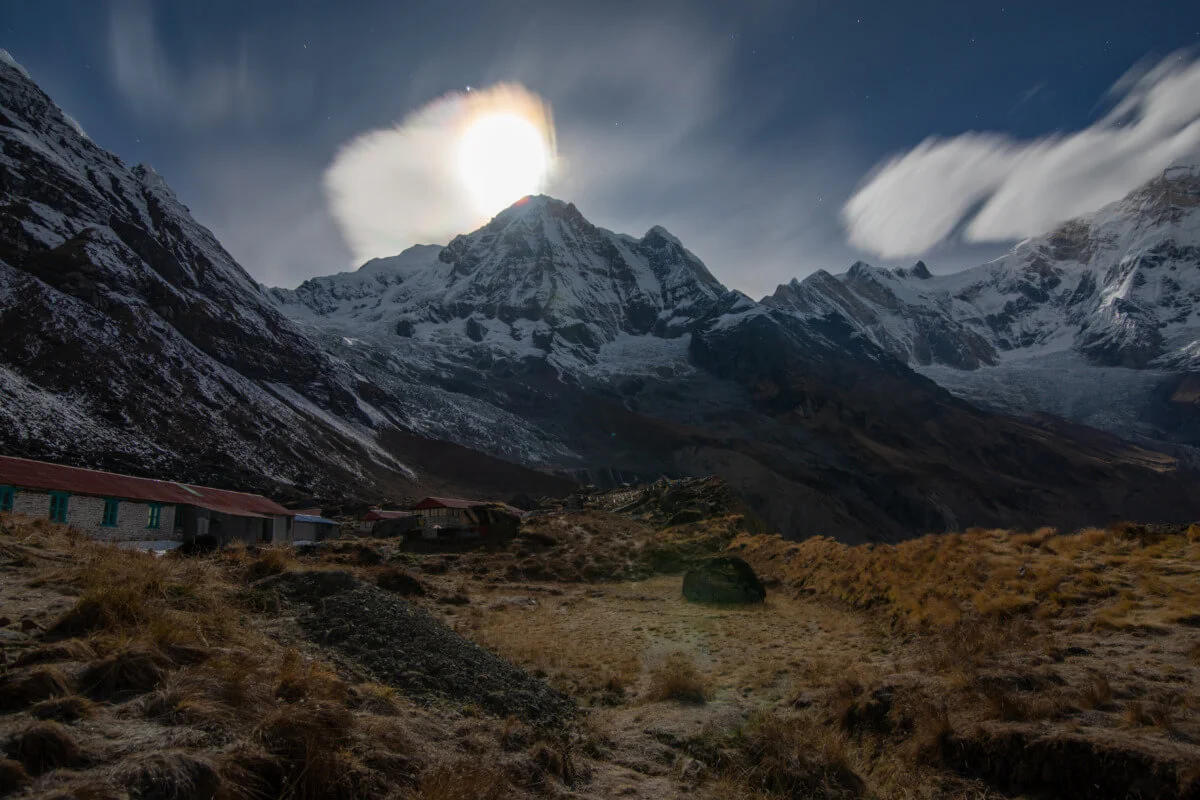
To truly appreciate the Annapurna Base Camp Trek, one must understand the sheer scale of the landscape you are walking through. The Annapurna Conservation Area Project (ACAP), established in 1986, covers a massive 7,629 square kilometers.
The Modi Khola Gorge: A Geological Marvel
The geography of the ABC trek is dictated entirely by the Modi Khola (Modi River). This roaring, glacial river originates directly from the South Annapurna Glacier inside the Sanctuary and slices a deep, narrow gorge through the Himalayan foothills. For the first half of the trek, you are walking on the ridges high above this river. For the second half, from Chhomrong onwards, you plunge deep into the V-shaped gorge, trapped between the towering walls of Hiunchuli and Machapuchare (Fishtail).
The Microclimates: From Subtropical to Glacial
Because the trek begins at a sweltering 1,070 meters in Nayapul and peaks at 4,130 meters, it encompasses several distinct climatic zones in a very short horizontal distance.
-
Sub-Tropical (Below 1,500m): Around Nayapul and Birethanti, the environment is hot and intensely humid. You will walk through banana trees, pointsettias, and vibrant green terraced rice and millet paddies.
-
Temperate (1,500m – 2,500m): As you climb past Ulleri and towards Ghorepani, the jungle gives way to fragrant broadleaf forests of oak, elm, and Nepal’s national flower, the rhododendron. In the spring (March to May), these forests erupt into a vibrant, fiery canopy of red, pink, and white blossoms.
-
Sub-Alpine (2,500m – 3,500m): Passing Bamboo and Dovan, you enter dense, dark bamboo groves. The air is damp and cool, and the trail is often shrouded in mist.
-
Alpine (Above 3,500m): Once you pass Deurali, the tree line vanishes entirely. The gorge opens up, and the landscape transforms into a barren, windswept tundra of low scrub, boulders, and glacial moraines leading into the Sanctuary.
Fauna: Wildlife in the Sanctuary
The diverse microclimates provide habitats for an incredible array of wildlife. In the lower temperate forests, you will hear the chatter of Rhesus macaques and Langur monkeys swinging through the canopy. The bamboo forests between Sinuwa and Himalaya are the prime habitat for the elusive and highly endangered Red Panda, though sightings require immense luck and a quiet step. Above the tree line, keep an eye on the sky for Himalayan Griffons and Golden Eagles riding the thermals, and look to the high cliffs for herds of Blue Sheep (Bharal) and Himalayan Tahr.
History and The Gurung Culture

The Annapurna region is a living museum of ancient Himalayan anthropology. As you ascend, you journey through the heartlands of two of Nepal’s most famous ethnic groups: the Magars and the Gurungs.
The Gurung and Magar Heartland
The lower villages of Ulleri and Ghorepani are predominantly Magar, while the massive, sprawling settlements of Ghandruk and Chhomrong are the cultural capitals of the Gurung people. Both groups are historically renowned for their physical strength, resilience, and bravery, providing the backbone of the legendary British and Indian Gurkha regiments.
The architecture consists of beautifully crafted stone houses with slate roofs, clustered tightly together on the steep hillsides. The daily rhythm is dictated by agriculture, herding, and the constant flow of trekkers.
Religion on the Trail
The people of this region practice a unique syncretic religion, blending Tibetan Buddhism with Hinduism and ancient animist traditions (Bon). As you walk, you will pass chortens (Buddhist shrines), spin prayer wheels, and see colorful prayer flags strung across suspension bridges to bless the rivers below.
The Annapurna Sanctuary itself holds profound spiritual significance. The local Gurung people believe the basin is the sacred home of several deities, including the goddesses Annapurna (the provider of food and nourishment) and Gangapurna. Machapuchare (Fishtail Mountain), the jagged spire that dominates the skyline for the entire trek, is considered sacred to the god Shiva. To this day, climbing Machapuchare is strictly forbidden by the Nepal government out of respect for local religious beliefs.
Why Choose Annapurna Base Camp? (ABC vs. EBC)?
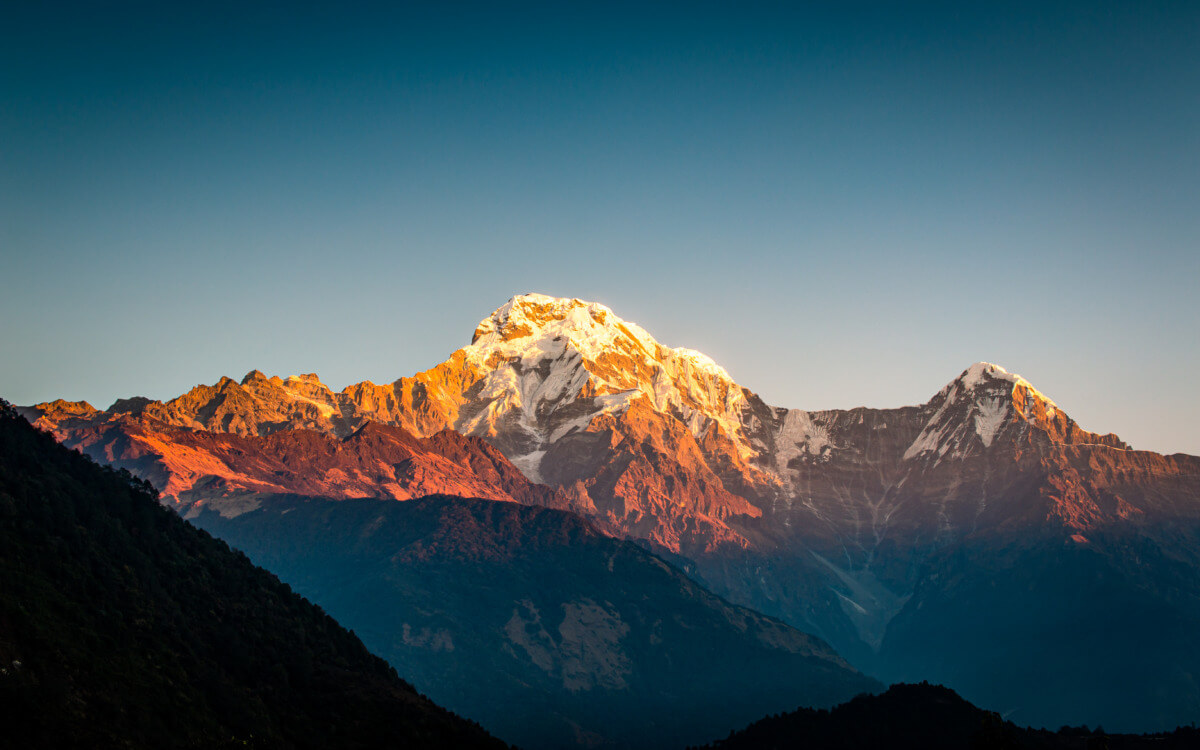
If you are torn between Nepal’s “Big Two” treks Everest Base Camp and Annapurna Base Camp here is why ABC often wins the hearts of trekkers.
-
Ecological Variety: EBC is a high-altitude trek that spends most of its time in barren, rocky, alpine tundra above the tree line. ABC is a journey through jungles, forests, and bamboo groves before finally hitting the ice. The visual variety on ABC is unparalleled.
-
The Sanctuary Amphitheater: Everest Base Camp is situated on a glacier, but you cannot actually see the summit of Mount Everest from the camp (it is blocked by the Nuptse ridge). At Annapurna Base Camp, you are standing in the center of a 360-degree bowl. You are completely surrounded by vertical walls of ice, and the South Face of Annapurna I looms directly above you. The intimacy of the mountains at ABC is staggering.
-
Lower Altitude Risk: ABC tops out at 4,130m, whereas EBC requires sleeping at 5,140m (Gorak Shep) and hiking to 5,545m (Kala Patthar). While altitude sickness is still a risk on ABC, it is significantly less dangerous and less physically debilitating than the extreme heights of the Khumbu region.
-
The Hot Springs: Only the ABC trek rewards your grueling physical effort with a visit to the natural geothermal hot springs at Jhinu Danda. Soaking your aching muscles in hot water right beside the freezing Modi River is a luxury EBC cannot offer.
How Difficult is the Annapurna Base Camp Trek?

The Annapurna Base Camp Trek is universally graded as Moderate to Challenging. It does not require technical climbing skills, ropes, or crampons, but it demands excellent cardiovascular fitness and, above all, iron-clad knee joints.
The Infamous Stone Steps
The defining physical characteristic of the ABC trek is not the altitude; it is the stairs. Unlike the gradual, sloping trails of the Everest region, the Annapurna trails are built from thousands upon thousands of hand-laid stone steps.
-
The Ulleri Climb: On Day 3, you will face a brutal ascent of over 3,200 steep stone steps climbing up to the village of Ulleri.
-
The Chhomrong Drop and Climb: On Day 6, you will descend hundreds of meters down a steep stone staircase to the river, cross a suspension bridge, and immediately climb hundreds of meters up another endless stone staircase to Sinuwa.
This constant “up-and-down” terrain (often jokingly referred to as “Nepali Flat”) is incredibly punishing on the quadriceps on the way up, and devastating to the knees on the way down. You must train on stairs before you arrive, and you must use two adjustable trekking poles to distribute the impact during the descents.
The Altitude
While ABC is lower than EBC, altitude sickness remains a very real risk. You will sleep above 3,000 meters for several nights. Our 14-day itinerary is deliberately paced to ensure a gradual elevation gain, allowing your body ample time to acclimatize safely before pushing into the thin air of the Sanctuary.
The Definitive 14-Day Annapurna Base Camp Itinerary

This is the exact, field-tested operational itinerary utilized by Mountain Treks Nepal. It is specifically engineered to balance strenuous physical exertion with the crucial physiological need for high-altitude acclimatization, while maximizing scenic exposure.
Day 1: Arrival in Kathmandu (1,350 m / 4,428 ft)
Your Himalayan adventure begins the moment your flight touches down at Tribhuvan International Airport in Kathmandu. As you step out of the terminal into the chaotic, vibrant energy of Nepal’s capital, a representative from Mountain Treks Nepal will be waiting to welcome you.
You will be transferred via a private, air-conditioned vehicle to your hotel in Thamel, the historic tourist hub of the city. After checking in, take a hot shower and shake off the jet lag.
At 5:00 PM, you will meet your lead trekking guide and the expedition manager at our headquarters. This briefing is critical. We will review the 14-day itinerary, verify your travel insurance, and finalize the processing of your Annapurna Conservation Area Project (ACAP) permits. Your guide will also conduct a rigorous gear check. In the evening, enjoy a welcome dinner at a traditional Nepali restaurant. Overnight in Kathmandu.
Day 2: Drive to Pokhara (820 m / 2,700 ft)
Drive Time: 6 to 7 hours Distance: ~200 km After an early breakfast, you board a comfortable tourist bus (or private vehicle) for the scenic overland journey to Pokhara, the famed “City of Lakes.”
The drive follows the winding curves of the Trishuli and Marsyangdi rivers, passing through the rural heartland of the Dhading and Tanahun districts. You will see terraced fields clinging to steep hillsides, roadside markets, and deep river gorges.
Upon arriving in Pokhara, the atmosphere changes instantly. Pokhara is relaxed, clean, and stunningly beautiful. After checking into your hotel, take a leisurely late-afternoon walk along the shores of Phewa Lake. If the skies are clear, you will be treated to your first magnificent views of the Annapurna range, Dhaulagiri, and the iconic, jagged spire of Machapuchare. Enjoy a great dinner in Lakeside; this is your last taste of city luxury for two weeks. Overnight in Pokhara.
Day 3: Drive to Nayapul and Trek to Ulleri (1,960 m / 6,430 ft)
Drive Time: 1.5 hours | Walking Time: 5-6 hours Elevation Gain: +1,140m The trek officially begins. A short private drive from Pokhara brings you to the bustling trailhead town of Nayapul (1,070m). Here, your permits are checked, and you officially step onto the trail.
The initial hike is a wide, dusty dirt road that follows the Bhurungdi Khola river. You pass through Birethanti and Hile, enjoying a relatively flat, gentle warm-up hike through humid, sub-tropical vegetation. However, after crossing a suspension bridge at Tikhedhunga, the real work begins.
You are faced with the infamous Ulleri steps over 3,200 steep stone steps carved directly into the hillside. It is a grueling, sweaty, 2-hour climb. You must dig deep, find a slow rhythm, and hydrate often. Reaching the top, you arrive in Ulleri, a beautiful traditional Magar village. From your teahouse, you are rewarded with sweeping views of the surrounding green valleys and the snow-capped peaks of Annapurna South and Hiunchuli peeking over the ridges. Overnight in Ulleri.
Day 4: Trek to Ghorepani (2,870 m / 9,416 ft)
Walking Time: 4-5 hours Elevation Gain: +910m Leaving Ulleri, the trail becomes noticeably cooler and more mystical. You leave the terraced farmland behind and enter dense, ancient forests of oak and rhododendron. In the spring, this forest is a riot of blooming red and pink flowers, creating a surreal, colorful tunnel.
The path consists of a steady, rolling ascent alongside small streams and waterfalls. As you gain elevation, the trees begin to thin out, and the massive, icy peaks of the Annapurna range loom larger in the sky. By early afternoon, you arrive in Ghorepani.
Ghorepani is a large and historically significant village that once served as a major rest stop for ancient salt traders traveling with horse caravans between Tibet and Pokhara. The village is vibrant, featuring excellent teahouses, bakeries, and stunning, unobstructed views of the Dhaulagiri range. Sleep early tonight; tomorrow starts before dawn. Overnight in Ghorepani.
Day 5: Poon Hill Sunrise and Trek to Tadapani (2,721 m / 8,927 ft)
Walking Time: 6-7 hours (including Poon Hill) Elevation Profile: +340m Ascent / -489m Descent You wake up at 4:30 AM, strap on your headlamp, and begin the steep, 45-minute hike up to Poon Hill (3,210 m) under a blanket of stars. As you reach the summit viewpoint, the eastern sky begins to lighten.
The Poon Hill sunrise is legendary. As the sun breaches the horizon, it strikes the towering peaks of Dhaulagiri (8,167m), Annapurna I (8,091m), Annapurna South, Machapuchare, and Nilgiri, setting the snowcaps on fire in brilliant shades of gold, orange, and pink. It is a deeply emotional, awe-inspiring experience and a highlight of the trek.
After taking dozens of photos, you descend back to Ghorepani for a hearty, well-earned breakfast. Packing your bags, you hit the trail toward Tadapani. The route climbs up the Deurali pass before plunging down through deep, dark, mossy pine forests, following ridge lines and crossing rushing streams. You end the day in Tadapani, a small cluster of teahouses perched on a ridge right in the middle of a dense forest, offering a perfectly framed view of Annapurna South and Machapuchare. Overnight in Tadapani.
Day 6: Trek to Chhomrong (1,939 m / 6,361 ft)
Walking Time: 5-6 hours Elevation Loss: -782m Today’s trek is characterized by a massive descent. Leaving Tadapani, the trail drops steeply down through a thick, dark rhododendron forest. The descent is hard on the knees, but the cool shade is refreshing. You will likely hear the calls of Langur monkeys in the canopy.
You arrive at the Kimrong Khola river, cross a suspension bridge, and then begin a grueling climb up the opposite side of the valley. The trail contours around the hillside, offering incredible, unobstructed views of Annapurna South, which now looks close enough to touch.
You finally arrive in Chhomrong, the largest Gurung village in the region and the true gateway to the Annapurna Sanctuary. Chhomrong is a sprawling village built on a steep hillside. It is famous for its excellent bakeries (the German chocolate cake is a local specialty) and rich cultural heritage. Because it is the last major village on the route, it is a bustling hub of trekkers and mule trains. Overnight in Chhomrong.
Day 7: Trek to Bamboo (2,340 m / 7,677 ft)
Walking Time: 4-5 hours Elevation Gain: +401m The day begins with a famous knee-crusher: the descent down the endless stone steps of Chhomrong to the Chhomrong Khola river. After crossing the swaying suspension bridge, you immediately begin the steep, sweaty climb back up the opposite hill to the settlement of Sinuwa.
From Sinuwa, the trail enters the narrow Modi Khola gorge. The landscape changes entirely. You leave the open, sunny hillsides behind and plunge into a deep, shaded, and damp canyon. The trail winds through dense tropical forests dominated by massive oak trees and towering, thick bamboo groves. The roaring sound of the Modi Khola river echoing off the canyon walls becomes your constant companion.
You arrive in the small, secluded settlement of Bamboo, where the teahouses sit tucked away in the deep shade of the forest. The air here is cool and damp. Overnight in Bamboo.
Day 8: Trek to Himalaya (2,900 m / 9,514 ft)
Walking Time: 4-5 hours Elevation Gain: +560m Leaving Bamboo, the trail continues upwards through the damp, cool bamboo forest. The path is often muddy and rocky, requiring careful footwork. You pass the settlement of Dovan, and the trail begins to climb more aggressively up the steep side of the gorge.
You will notice the vegetation thinning as you approach the 3,000-meter mark. The thick jungle gives way to stunted bushes, rocky overhangs, and alpine shrubs. This section of the trail is incredibly quiet, offering opportunities to spot wildlife such as Langur monkeys, barking deer, and hawk-eagles soaring on the thermals.
You end the day at Himalaya, a small cluster of stone lodges clinging to the side of a steep ridge, directly beneath the imposing Hinku Cave. The air here is noticeably thinner and much colder. At night, the temperature drops sharply, but the lack of light pollution reveals a breathtaking, crystal-clear view of the Milky Way galaxy. Overnight in Himalaya.
Day 9: Trek to Annapurna Base Camp (4,130 m / 13,549 ft)
Walking Time: 5-7 hours Elevation Gain: +1,230m The Summit Day. You begin the hike climbing through a rocky, avalanche-prone area toward Deurali. Past Deurali, the valley abruptly widens, and the trees vanish entirely. You enter a stark, magnificent high-altitude alpine landscape of rock, ice, and scrub.
The trail leads you first to Machapuchare Base Camp (MBC, 3,700 m). While climbing Machapuchare (Fishtail) is strictly forbidden due to its sacred status, standing at its base is humbling. The mountain towers above you like a vertical spear.
After a brief rest and a hot tea at MBC, you begin the final, steady 2-hour push into the Annapurna Sanctuary. The path follows a lateral moraine. The air is very thin, and your pace will slow to a crawl.
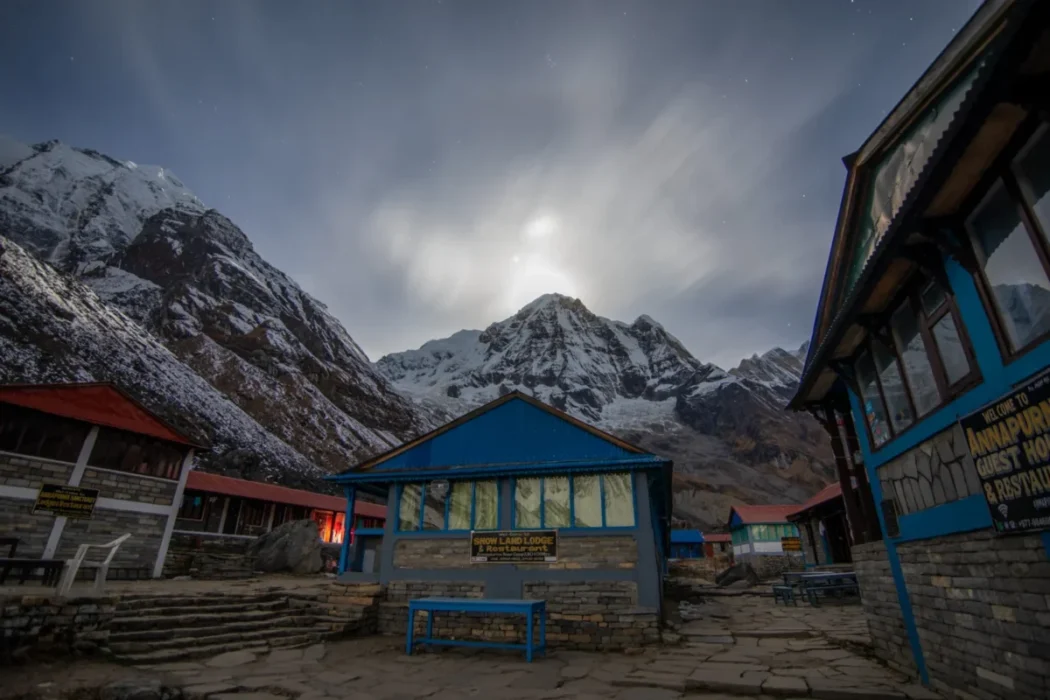
As you walk, the narrow gorge completely opens into a massive, flat glacial basin. You have arrived at Annapurna Base Camp (4,130 m). You are standing in the center of a monumental 360-degree amphitheater of rock and ice. The colossal, sheer South Face of Annapurna I looms directly above the lodges, looking close enough to touch. As the sun sets, the glaciers turn a deep, glowing purple, and the stars emerge. It is one of the most spectacular locations on planet Earth. Overnight at Annapurna Base Camp.
Day 10: Trek Back to Dovan (2,505 m / 8,218 ft)
Walking Time: 6-7 hours Elevation Loss: -1,625m Wake up early and brave the freezing morning air to witness the sunrise hit the peaks of Annapurna I, Annapurna South, and Tent Peak. The mountains slowly turn from cold gray to brilliant gold. It is a moment you will never forget.
After breakfast, it is time to say goodbye to the Sanctuary. Because you are descending and the air is getting thicker and richer with oxygen, you will feel a massive surge of energy. You retrace your steps past MBC, Deurali, and Himalaya, dropping over 1,600 vertical meters in a single day.
The descent requires strong, deliberate use of your trekking poles to protect your knee joints from the constant downhill pounding. You plunge back into the thick, humid bamboo forests, ending your day with a restful night in the peaceful settlement of Dovan. Overnight in Dovan.
Day 11: Trek to Jhinu Danda (1,600 m / 5,249 ft)
Walking Time: 5-6 hours Elevation Loss: -905m Continuing the descent, you follow the Modi Khola river back through Bamboo and up the steep climb to Sinuwa. From here, you must face the Chhomrong steps one last time descending to the river and climbing back up to the main village.
After stopping in Chhomrong for a well-deserved bakery treat and a slice of pizza, the trail drops sharply away from the main route, descending steeply through terraced fields and sub-tropical vegetation to the beautiful village of Jhinu Danda.
After checking into your teahouse, grab your swimsuit and a towel. A steep 20-minute walk down to the riverbank brings you to the famous Jhinu Danda Hot Springs. Submerging your aching, tired muscles into the natural, geothermal stone pools right beside the roaring, icy waters of the Modi Khola is the ultimate reward for your hard work on the trail. Overnight in Jhinu Danda.
Day 12: Trek to Nayapul and Drive to Pokhara (820 m / 2,700 ft)
Walking Time: 4-5 hours | Drive Time: 1.5 hours The final day of walking is a relaxed, scenic victory lap. Leaving Jhinu Danda, you follow the river valley, passing through small farming communities, crossing long suspension bridges, and enjoying the warm, rich lowland air.
You eventually merge back onto the dirt road at Siwai or Birethanti, leading to Nayapul. Here, you officially check out of the conservation area, say goodbye to your porters, and board your private vehicle. The drive back to Pokhara takes about 1.5 hours.
Returning to Pokhara feels like re-entering the modern world. You check into your hotel, take a long, luxurious hot shower, and head out to Lakeside. The evening is yours to celebrate enjoying a cold beer, a massive steak, and swapping stories with your guides and fellow trekkers by the lake. Overnight in Pokhara.
Day 13: Drive or Fly Back to Kathmandu
You have two options for your return to the capital. You can take the 6-to-7-hour tourist bus, enjoying the scenic overland journey one last time, or you can opt for a quick, 25-minute domestic flight (an optional add-on) that offers incredible aerial views of the Himalayas.
Upon arriving back in Kathmandu and checking into your Thamel hotel, the afternoon is free for souvenir shopping, massages, or exploring the city. In the evening, Mountain Treks Nepal will host a grand farewell dinner at a traditional Nepali restaurant, complete with authentic local cuisine and vibrant cultural dance performances to celebrate the success of your expedition. Overnight in Kathmandu.
Day 14: Final Departure
Your Himalayan journey comes to a close. Depending on your flight schedule, you may have time for some last-minute shopping in Thamel. A representative from Mountain Treks Nepal will transfer you to Tribhuvan International Airport three hours before your international flight. You bid farewell to Nepal, carrying home an indelible sense of achievement, a camera full of unforgettable memories, and a new perspective on the world.
Altitude Sickness and Medical Safety at 4,130m
While the Annapurna Base Camp Trek does not reach the extreme 5,000m+ elevations of the Everest High Passes, sleeping at 4,130 meters still presents a significant risk of Acute Mountain Sickness (AMS).
At Base Camp, the effective oxygen level in the air is roughly 60% of what it is at sea level. Your body must work much harder to oxygenate your blood.
Recognizing the Symptoms
AMS occurs when you ascend faster than your body can adapt to the decreasing oxygen.
-
Mild AMS: Headache, nausea, dizziness, fatigue, shortness of breath, and loss of appetite.
-
Severe AMS (HAPE/HACE): Severe confusion, inability to walk in a straight line (ataxia), a rattling cough with pink frothy sputum, and extreme lethargy. These are medical emergencies requiring immediate descent.
Mountain Treks Nepal Safety Protocols
We do not take chances with altitude. Our 14-day itinerary is medically optimized.
-
Meticulous Pacing: We ascend slowly, adhering to the principle of “climb high, sleep low.” The detour to Poon Hill not only provides great views but forces your body to adapt to 3,210m before you push into the 4,000m zone of the Sanctuary.
-
Oximeter Monitoring: Our government-licensed, wilderness first-aid-certified guides carry digital pulse oximeters. Every morning and evening, we measure your blood oxygen saturation (SpO2) and resting heart rate to detect altitude stress before severe symptoms manifest.
-
Hydration: Dehydration exacerbates altitude sickness by thickening the blood. You must drink 4 to 5 liters of purified water every day on the trail.
-
Helicopter Evacuation: In the event of a severe medical emergency (such as High Altitude Pulmonary Edema), Mountain Treks Nepal is equipped with satellite communication to coordinate a rapid helicopter evacuation directly from the Sanctuary (ABC or MBC) to a hospital in Kathmandu. Comprehensive travel insurance covering high-altitude evacuation up to 5,000 meters is absolutely mandatory.
Teahouse Culture: Accommodation, Food, and Wi-Fi on the Trail
The Annapurna Base Camp Trek is a classic “teahouse trek.” You do not need to carry tents, sleeping mats, or cooking stoves. The infrastructure along the route is excellent, providing rustic comfort and warmth.
Accommodation (The Teahouses)
Teahouses are small, family-run mountain lodges.
-
Lower Elevations (Ulleri, Ghorepani, Chhomrong): Teahouses here are quite comfortable and large. They often feature attached bathrooms, hot gas-powered showers (for a small fee of $2-$4), and relatively spacious rooms.
-
Higher Elevations (Bamboo to ABC): As you enter the gorge, the terrain is too steep and restricted by ACAP regulations to build massive lodges. The teahouses become basic and highly utilitarian. Rooms are constructed of plywood, offering zero soundproofing or insulation. You will sleep on twin beds with thin foam mattresses. The rooms are freezing at night. The only heated room in the building is the communal dining hall, warmed in the evenings by a kerosene or wood-burning stove (though wood fires are banned inside the Sanctuary to protect the environment). Because there is limited space in the Sanctuary, teahouses at ABC and MBC become extremely crowded during peak seasons (October and April), which is why trekking with an agency that pre-books your rooms is critical.
Food and Nutrition
The food on the trail is incredibly fresh, hearty, and heavily carbohydrate-focused to fuel your hiking.
-
Dal Bhat: The staple of the Himalayas. Steamed rice, lentil soup, vegetable curry, and spicy pickles. It is highly nutritious, filling, and comes with unlimited free refills.
-
Western Options: Unlike more remote treks (like Kanchenjunga or Dolpo), the ABC route caters heavily to western palates. You will find excellent pizza, pasta, pancakes, oatmeal, and famous apple pies on almost every menu.
-
The Meat Warning: We strongly advise adhering to a strict vegetarian diet once you pass Chhomrong. There is no refrigeration on the mountain. Any meat (chicken or yak) must be carried up the trail by porters for days in the sun. Eating meat at high altitude is a major risk for severe gastrointestinal illness. Stick to dal bhat, eggs, and pasta.
Connectivity and Charging
-
Wi-Fi: Wi-Fi is available at almost every teahouse on the route (often purchased via Everest Link or local network cards for $3 to $5). However, the signal is notoriously unreliable inside the deep Modi Khola gorge due to the steep terrain blocking signals.
-
Charging: Charging your devices costs money. Teahouses charge $2 to $5 to charge a phone or battery pack via their solar panels or micro-hydro plants. Bring a high-capacity (20,000mAh) power bank and sleep with it inside your sleeping bag to prevent the freezing temperatures from draining the lithium-ion battery.
Essential Packing List for the Annapurna Base Camp Trek
Packing for the ABC trek requires extreme versatility. You must prepare for 30°C (86°F) sweaty jungle hikes in Nayapul and -15°C (5°F) freezing mornings at Base Camp, all while keeping your duffel bag under the strict 15 kg (33 lbs) porter weight limit.
The Layering System (Zero Cotton)
-
Base Layers: Avoid cotton entirely; it absorbs sweat, freezes, and causes hypothermia. Bring 3 moisture-wicking synthetic or Merino wool t-shirts for the hot lowlands, and 1 heavy thermal base layer (top and bottom) strictly for sleeping in the cold upper camps.
-
Mid-Layers: A lightweight grid fleece and a heavier synthetic insulated jacket.
-
Outer Shell: A heavy-duty Gore-Tex windproof and waterproof jacket and pants. Windchill is your biggest enemy above 3,000m.
-
Insulation: An expedition-grade heavy down jacket (700+ fill power) is absolutely mandatory for the freezing evenings at ABC and MBC. (Mountain Treks Nepal provides high-quality loaner down jackets upon request).
Hardware and Footwear
-
Sleeping Bag: Even though teahouses provide simple blankets, a genuine four-season down sleeping bag rated to -10°C to -15°C is highly recommended for hygiene and guaranteed survival warmth. (Mountain Treks Nepal provides loaner sleeping bags).
-
Footwear: Sturdy, fully broken-in, high-ankle waterproof trekking boots. Bring lightweight sandals or Crocs for wearing around the teahouses to let your feet breathe.
-
Trekking Poles: Absolutely, non-negotiably mandatory for protecting your knees on the thousands of steep stone steps descending from Ulleri and Chhomrong.
-
Accessories: A high-lumen headlamp (vital for the pre-dawn Poon Hill hike and navigating unlit teahouses), category 4 UV wrap-around sunglasses, warm insulated mittens, and a swimsuit for the Jhinu Danda hot springs!
Hydration and Purification
Plastic water bottles are strictly banned in the Annapurna Conservation Area to protect the environment. You must carry two 1-liter reusable wide-mouth bottles (like Nalgenes) and purify the tap water provided at teahouses using chlorine dioxide tablets, a SteriPen, or a LifeStraw. Alternatively, you can purchase boiled water directly from the lodge kitchens.
Best Time to Trek to Annapurna Base Camp
To experience the trek safely, avoid the leeches, and guarantee the best possible mountain views, you must travel during Nepal’s two distinct trekking windows.
1. Autumn (Late September to November) — The Gold Standard
Autumn is universally recognized as the absolute best time for the ABC trek.
-
Weather: By late September, the summer monsoon retreats, washing the dust from the sky and leaving behind pristine, hyper-stable atmospheric conditions.
-
Visibility: You will enjoy crystal-clear, razor-sharp mountain panoramas of the Annapurna massif day after day.
-
Temperatures: Daytime hiking temperatures are comfortable. Nighttime temperatures drop significantly by November, especially at Base Camp (-10°C).
2. Spring (March to May) — The Floral Spectacle
Spring is the second premier window, bringing vibrant color and warming temperatures.
-
Flora & Fauna: The temperate forests between Ulleri, Ghorepani, and Tadapani erupt into a breathtaking sea of blooming red, pink, and white rhododendrons.
-
Temperatures: Days are noticeably warmer, making the 6-hour hikes comfortable and the teahouses less freezing at night.
-
Considerations: Rising heat and humidity in the lowlands can create afternoon cloud buildups and haze that obscure distant peaks by late afternoon, though mornings remain crystal clear. Early March can also still see heavy avalanche danger in the gorge between Deurali and MBC.
3. Winter (December to February) & Monsoon (June to August)
-
Winter: We strongly discourage trekking ABC in deep winter. Extreme cold and heavy snowfall routinely bury the narrow gorge above Deurali, creating massive, lethal avalanche risks that frequently force the trail to close entirely.
-
Monsoon: Do not trek in the summer. The Modi Khola gorge becomes a terrifying trap of severe landslides, washed-out bridges, constant torrential rain, zero mountain visibility, and trails infested with thousands of blood-sucking leeches.
Permits, Costs, and Logistics
Trekking in the Annapurna region requires two specific permits, both of which are strictly enforced by local authorities and fully arranged by Mountain Treks Nepal as part of your package.
Required Permits for 2026
-
Annapurna Conservation Area Project (ACAP) Permit: The official fee is NPR 3,000 (approx. $23 USD) for foreign nationals. This fee directly funds environmental protection, trail maintenance, and local community projects within the conservation area.
-
TIMS (Trekkers’ Information Management System) Card: The fee is NPR 2,000 (approx. $15 USD). This ensures your data is registered with the government for safety, tracking, and emergency rescue purposes.
The Mandatory Guide Regulation (Important 2026 Update)
For decades, the Annapurna Base Camp trek was a haven for independent, solo backpackers. This is no longer the case. As of April 2023, the Nepal Tourism Board (NTB) mandated that all foreign trekkers must hire a government-licensed guide affiliated with an authorized trekking agency to trek in any of Nepal’s national parks and conservation areas, including ACAP.
Independent, solo trekking is legally banned. You will be turned away at the Birethanti checkpoint if you arrive without a licensed Nepali guide. This law was enacted to drastically reduce the number of solo trekkers disappearing or dying from altitude sickness and exposure in the Himalayas, while also creating vital employment for local mountain communities.
Physical Training: How to Prepare for ABC
You cannot walk off the couch and conquer the Annapurna Base Camp trek. You will be walking for 5 to 7 hours a day for 10 days straight, covering roughly 110 kilometers over incredibly steep, rocky terrain with thousands of stairs. You must begin training at least 12 weeks before departure.
-
The Stairmaster is Your Best Friend: The most specific and effective training you can do for ABC is climbing stairs. Load a backpack with 7 to 10 kg (15 to 20 lbs) and climb the tallest stadium, local hill, or a gym Stairmaster for 1 to 2 hours, twice a week. You must build immense muscular endurance in your calves, glutes, and quadriceps to handle the Ulleri and Chhomrong steps.
-
Cardiovascular Endurance (The Aerobic Base): You need a massive aerobic engine to handle the thin air. Aim for 3 to 4 sessions a week of running, cycling, or swimming (45 to 60 minutes per session) keeping your heart rate in Zone 2 (conversational pace). This trains your body to process oxygen efficiently.
-
Core and Back Strength: A strong core will prevent lower back pain from carrying your daypack for 14 consecutive days. Incorporate planks, deadlifts, and lunges into your routine.
Frequently Asked Questions (FAQs)
How much weight will the porter carry?
For ethical and safety reasons, Mountain Treks Nepal enforces a strict weight limit adhering to international porter protection guidelines. One porter is assigned to every two trekkers, carrying a combined maximum weight of 20 to 25 kg (about 10 to 12.5 kg per trekker). You will pack your heavy gear in a provided waterproof duffel bag for the porter, while you carry only a small 20-30L daypack with your water, camera, rain jacket, and valuables.
Are there charging facilities and Wi-Fi on the trail?
Yes. Most teahouses along the Annapurna route offer Wi-Fi and device charging via solar panels or local micro-hydroelectricity. However, these services cost extra (usually $3 to $5 USD). The Wi-Fi signal drops frequently in the deep gorge above Bamboo. We highly recommend bringing a 20,000mAh power bank to keep your phone and camera charged for free.
Do I need to tip my guide and porter?
Yes. Tipping is a deeply ingrained part of the trekking culture in Nepal and forms a significant part of a guide and porter’s income. A general rule of thumb is to tip 10% to 15% of your total trek cost, pooled together by the trekking group and distributed on the final night in Pokhara (typically 60% to the guide, 40% split among the porters).
Can I drink the tap water on the trail?
No, never drink untreated tap or stream water. Bottled plastic water is banned in the conservation area. You must carry reusable water bottles and purify the tap water provided at teahouses using chlorine dioxide tablets, a SteriPen, or a LifeStraw. Alternatively, you can purchase boiled water from the teahouse kitchens (usually $1 to $3 per liter).
Is there an avalanche risk on the ABC trek?
Yes. The section of the trail between Deurali (3,200m) and Machapuchare Base Camp (3,700m) passes through a narrow, steep-walled ravine that acts as a natural funnel for avalanches tumbling off the slopes of Hiunchuli. This risk is highest in late winter and early spring (February-March) after heavy snowfall, or during unseasonal rainstorms. Your licensed guide is trained to assess the snow conditions and will move you swiftly and silently through this hazard zone early in the morning when the snow is frozen and stable.
Conclusion: Book Your Himalayan Adventure with Mountain Treks Nepal
The Annapurna Base Camp Trek is a perfectly balanced journey of grueling physical challenge, profound cultural discovery, and unparalleled, intimate alpine beauty. Standing in the center of the Sanctuary, surrounded by 8,000-meter peaks, is an experience that alters your perspective on the world forever.
However, navigating the logistical complexities of Nepal from securing the mandatory ACAP permits and arranging overland transport, to ensuring your safety in an avalanche zone at 4,130 meters requires a partner you can trust with your life.
Mountain Treks Nepal guarantees your safety, comfort, and success. We provide elite, government-licensed Sherpa guides equipped with pulse oximeters and comprehensive medical training. We handle every bureaucratic detail, book the best available teahouses months in advance, and supply the heavy-duty -15°C sleeping bags and down jackets you need to survive the freezing nights at Base Camp.
Don’t leave your dream trek to chance. Partner with a local agency that prioritizes your safety and experience above all else. Our expedition planners are ready to answer your questions and customize your itinerary.
Contact the team at Mountain Treks Nepal today to secure your spot for the upcoming trekking season and begin the adventure of a lifetime.