



Share This:
Packing List for the Annapurna Base Camp Trek
A well-planned packing list for the Annapurna Base Camp Trek centers on a versatile, moisture-wicking layering system that handles both warm subtropical valleys and sub-zero alpine nights at 4,130 meters (13,550 feet). Because the trail ascends from approximately 1,000 meters near Pokhara into the glaciated basin of the Annapurna Sanctuary, you need breathable hiking clothes for humid daytime climbs and a -10°C to -15°C (14°F to 5°F) rated sleeping bag and down jacket for freezing evenings.
Unlike the Everest region, the Annapurna Base Camp (ABC) route does not require a weight-restricted domestic flight to Lukla. However, if you trek with a porter, ethical weight limits still cap your main duffel bag at 15 kg (33 lbs), alongside a 5 to 7 kg (11 to 15 lbs) daypack that you carry yourself.
Whether you are preparing for a fast-paced 9-day hike or our 14-day Annapurna Base Camp Trek itinerary, packing the right equipment prevents blisters, knee strain, and hypothermia. This comprehensive checklist from Mountain Treks Nepal covers every piece of clothing, footwear, and hardware you need, plus how to take advantage of local gear rentals in Kathmandu and Pokhara.
Understanding the ABC Microclimates: Why Packing Smart Matters
Many first-time trekkers pack for the Himalayas assuming they will walk through snow from day one. On the Annapurna trail, packing only heavy winter clothes is a common mistake. As detailed in our complete Annapurna Base Camp Trek guide, the route passes through three distinct ecological and climate zones in a matter of days:
-
The Subtropical Foothills (1,000m – 2,200m | Nayapul, Ulleri, Ghandruk, Chhomrong): The first few days involve climbing thousands of stone steps through terraced rice paddies and Gurung villages. Daytime temperatures in spring and autumn often reach 20°C to 25°C (68°F to 77°F). You will sweat heavily and hike in shorts and a lightweight t-shirt.
-
The Humid Modi Khola Gorge (2,300m – 3,200m | Bamboo, Dovan, Himalaya, Deurali): As you enter the narrow river canyon leading toward the sanctuary, dense bamboo and rhododendron forests trap moisture. Afternoon mist and light rain showers are common here even in peak seasons, making quick-drying fabrics and a breathable rain shell essential.
-
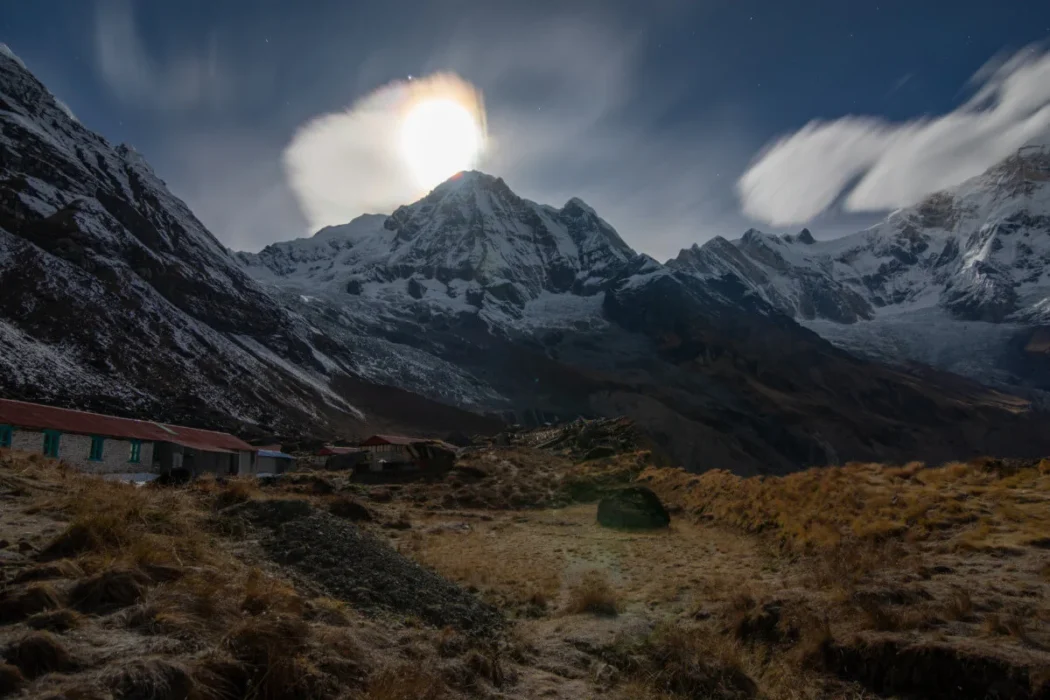
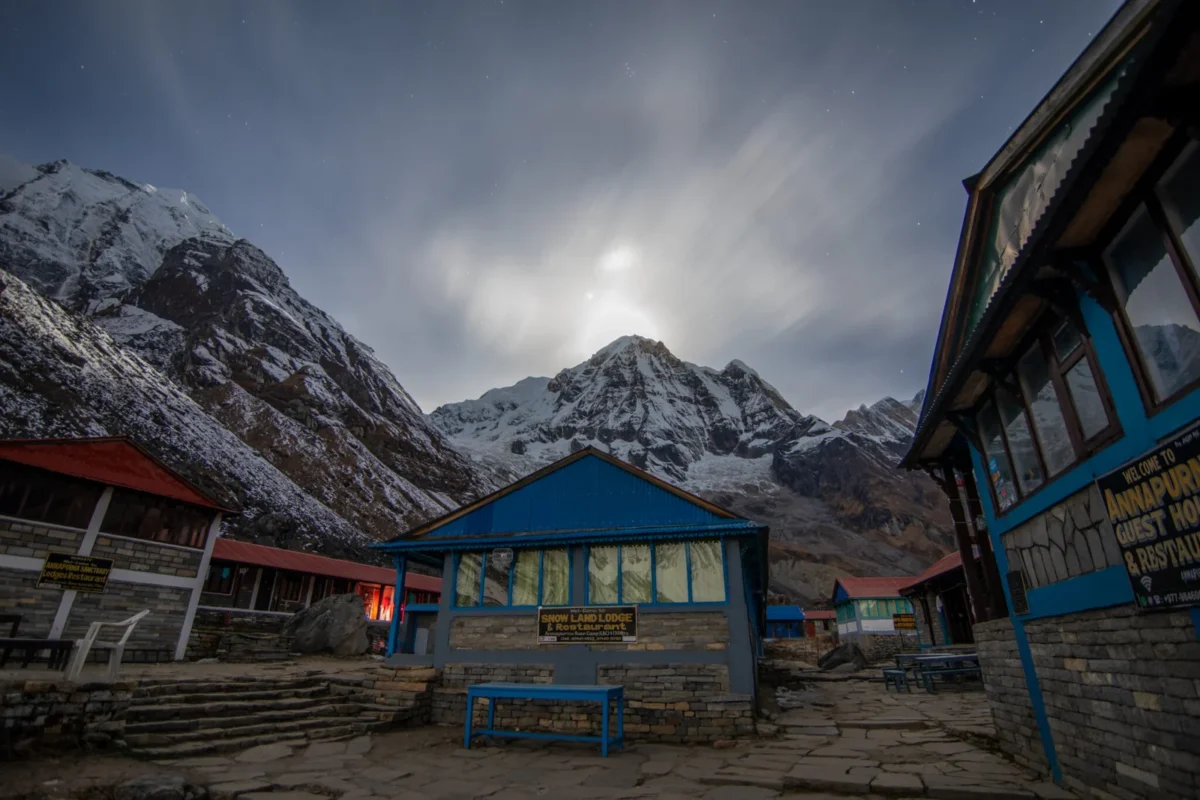
The Alpine Sanctuary (3,700m – 4,130m | Machhapuchhre Base Camp & Annapurna Base Camp): Above the tree line, you step into a vast amphitheater of rock and ice surrounded by Annapurna I (8,091m), Annapurna South, Hiunchuli, and Machhapuchhre. Once the sun drops behind the peaks, temperatures plunge rapidly to -5°C to -15°C (23°F to 5°F) inside unheated teahouse bedrooms.
1. Clothing: Mastering the Three-Layer System
The golden rule of Himalayan trekking is simple: never wear cotton. Cotton absorbs sweat like a sponge, stays wet in the humid forest sections around Bamboo, and chills your core rapidly when you stop moving at higher elevations. Choose Merino wool (150g to 250g weights) or quality synthetic fabrics like polyester and polypropylene.
Base Layers (Moisture Management)
Your base layer sits directly against your skin to wick sweat away during steep ascents.
-
3 to 4 Short-Sleeve Trekking Shirts: Lightweight, synthetic or Merino wool shirts for the warm lower valleys. A collared sun hoodie is also excellent for UV protection above Deurali.
-
2 Long-Sleeve Thermal Tops: Mid-weight Merino wool or synthetic tops. Keep one dedicated for trekking above 3,000 meters and one clean set strictly for sleeping.
-
1 to 2 Pairs of Thermal Bottoms (Long Johns): Essential for wearing under your hiking pants on the chilly morning push to base camp and for sleeping in cold teahouses.
-
5 to 6 Pairs of Moisture-Wicking Underwear: Seamless synthetic or Merino briefs prevent chafing during 6-hour walking days.
-
2 High-Support Sports Bras (for women): Choose breathable, quick-drying straps that do not rub under backpack shoulder harnesses.
Mid Layers (Core Insulation)
Mid layers trap warm air produced by your body and can be added or removed in seconds as you move between sunny trails and shaded canyon walls.
-
1 Lightweight Fleece Pullover or Grid Fleece Jacket: Your primary active insulation layer for cool mornings between Chhomrong and Deurali.
-
1 Heavy Down Jacket (650 to 800+ Fill Power): Mandatory for evenings in the teahouse dining room at MBC and ABC, as well as watching the freezing sunrise over the Annapurna Sanctuary.
-
2 Pairs of Trekking Pants: Durable, four-way stretch nylon pants with articulated knees for climbing steep steps.
-
1 Pair of Trekking Shorts: Ideal for the warm lower elevations and the return walk to Jhinu Danda.
-
1 Pair of Fleece or Sweatpants: Comfortable loungewear for relaxing inside the lodges each evening.
Outer Layers (Wind and Rain Protection)
Because the Modi Khola valley funnels moisture up from Pokhara, reliable rain protection is even more important on the ABC trek than on the drier Everest trail.
-
1 Waterproof, Breathable Hard Shell Jacket: A Gore-Tex or 2.5-layer / 3-layer waterproof jacket with pit zips for ventilation and an adjustable hood.
-
1 Pair of Waterproof Rain Pants: Lightweight packable rain trousers with side zippers so you can pull them on over your trekking boots if an afternoon shower hits.
Headwear, Gloves, and Neck Protection
-
1 Wide-Brimmed Sun Hat or Cap: Protects your face during exposed alpine climbs.
-
1 Warm Fleece or Wool Beanie: Covers your ears at night and during cold early-morning starts.
-
1 Neck Gaiter or Buff: Protects your throat from cold dry air and filters trail dust on jeep tracks.
-
1 Pair of Lightweight Liner Gloves: Touchscreen-compatible fleece or wool gloves for cool mornings.
-
1 Pair of Insulated, Waterproof Outer Gloves: Windproof ski-style or mountaineering gloves for sub-zero mornings at 4,130 meters.
2. Footwear: Conquering the Famous Stone Staircases
The Annapurna Base Camp trail is famous for its hand-laid stone staircases most notably the 3,300+ steps at Ulleri (if combining with Poon Hill) and the 2,500+ steep steps descending and ascending through Chhomrong. Your footwear must offer superior cushioning and ankle stability.
-
1 Pair of Broken-In Trekking Boots: Choose mid-to-high-cut waterproof boots with a high-traction Vibram outsole and a roomy toe box so your toes do not slam against the front during long descents. Break them in for at least 4 to 6 weeks prior to arrival.
-
1 Pair of Lightweight Camp Shoes or Sandals: After 6 hours on stone steps, your feet need to breathe. Bring Crocs, recovery sandals, or lightweight sneakers for wearing around the teahouses.
-
4 to 5 Pairs of Cushion Merino Trekking Socks: Bring 3 pairs of mid-weight crew socks for lower elevations and 2 pairs of thick, thermal expedition wool socks for Machhapuchhre and Annapurna Base Camp.
-
2 Pairs of Thin Sock Liners (Optional): Useful for trekkers prone to friction blisters.
-
1 Pair of Microspikes / Traction Cleats: If you are trekking in December, January, February, March, or late November, shaded trail sections between Deurali and ABC frequently ice over. Lightweight pocket microspikes take up minimal space and prevent dangerous slips.
3. Bags and Sleeping Gear
When you trek with a licensed agency, one porter typically carries the combined luggage of two trekkers in a large waterproof duffel bag, while you carry a comfortable daypack containing your daily essentials.
-
1 Waterproof Duffel Bag (70L – 90L): For your porter. Do not bring a hard-shell wheeled suitcase on the trail.
-
1 Ergonomic Daypack (28L – 35L): Carried by you. Must feature a padded hip belt, sternum strap, ventilated back panel, and an integrated waterproof rain cover.
-
1 Four-Season Sleeping Bag (-10°C to -15°C / 14°F to 5°F Comfort Rating): While teahouses provide a mattress, pillow, and blanket, lodge supplies at high altitude are often insufficient during peak cold snaps.
-
1 Silk or Cotton Sleeping Bag Liner: Adds 3°C to 5°C of warmth, keeps your sleeping bag clean, and gives you a hygienic barrier over teahouse pillows.
-
3 to 4 Dry Bags or Packing Cubes: Essential for organizing clean versus dirty clothes and keeping electronics and down gear 100% dry inside your duffel bag and daypack.
4. Trekking Hardware, Hydration, and Electronics
To protect the fragile ecosystem of the Annapurna Conservation Area, single-use plastic water bottles are restricted along the route. Instead, villages feature safe drinking water stations where you can refill reusable bottles for a nominal fee, or you can purify tap water yourself.
-
1 Pair of Adjustable Trekking Poles: Non-negotiable for the ABC trek. Telescopic or foldable Z-poles with shock absorption reduce impact force on your knee joints by up to 20% during the steep descents from ABC back to Jhinu Danda.
-
2 One-Liter Wide-Mouth Water Bottles (Nalgene) or Hydration Bladder: Bring at least 2 to 3 liters of carrying capacity. Pro Tip: Avoid using hose-style hydration bladders above 3,500 meters, as the drinking tube freezes solid in the morning. Wide-mouth Nalgene bottles can also be filled with boiling water at night and placed inside your sleeping bag as a hot-water bottle.
-
Water Purification System: Pack chlorine dioxide tablets (Aquamira/Micropur), a UV SteriPEN, or a hollow-fiber squeeze filter (Sawyer Squeeze or Katadyn BeFree).
-
1 LED Headlamp (200+ Lumens) + Spare Batteries: Essential for nighttime trips to shared bathrooms and early morning walks before dawn.
-
1 Category 3 or 4 Polarized Sunglasses: Intense UV reflection off the snowfields inside the Annapurna Sanctuary can cause snow blindness without proper eye protection.
-
1 High-Capacity Power Bank (20,000mAh): Charging electronics in upper teahouses (Deurali, MBC, ABC) costs $2 to $5 USD per device and relies on solar power. Keep your power bank and phone inside your sleeping bag at night so sub-zero temperatures do not drain the lithium-ion batteries.
-
Universal Travel Adapter (Type C, D, and M plugs): For charging in Kathmandu and Pokhara hotels.
-
1 Swimsuit: Most ABC itineraries stop at Jhinu Danda on the final day, where natural riverside geothermal hot springs await a 20-minute walk below the village.
5. Medical Kit, Altitude Safety, and Personal Hygiene
Personal First Aid Kit
While our licensed guides carry a comprehensive group first-aid kit and pulse oximeter to monitor your blood oxygen saturation daily, you should carry a personal kit in your daypack:
-
Altitude Sickness Prevention: Acetazolamide (Diamox, typically 125mg twice daily if prescribed by your physician) to speed up acclimatization.
-
Pain & Fever Relievers: Ibuprofen or Paracetamol for mild altitude headaches and muscle soreness.
-
Blister Treatment: Hydrocolloid blister plasters (Compeed), moleskin, and a small roll of leukotape or athletic tape. Apply tape the moment you feel a “hot spot” on your heel.
-
Gastrointestinal Care: Oral Rehydration Salts (electrolyte packets), Loperamide (Imodium), and a doctor-prescribed course of travel antibiotics (such as Azithromycin) for bacterial traveler’s diarrhea.
-
Knee Braces or Compression Sleeves: If you have a history of knee pain, pack a pair of supportive neoprene knee sleeves for the Chhomrong steps.
Toiletries and Hygiene
-
1 Medium Quick-Dry Microfiber Towel: Essential for teahouse showers and the Jhinu Danda hot springs.
-
Broad-Spectrum Sunscreen (SPF 50+) & SPF Lip Balm: High-altitude sun combined with snow reflection burns skin rapidly.
-
Biodegradable Soap / Small Shampoo Bottle: Keep weight low by using travel-sized containers.
-
Wet Wipes & Alcohol Hand Sanitizer: Above Bamboo, gas-heated showers cost $3 to $5 USD and it is often too cold to bathe comfortably. Biodegradable body wipes keep you fresh at higher camps.
-
2 Rolls of Toilet Paper (Core Removed): Teahouses do not supply toilet paper in washrooms; store your rolls inside a sealed Ziploc bag in your daypack.
-
Nail Clippers: Trim your toenails short before the trek starts to prevent bruised or blackened toenails on the long descents.
Seasonal Packing Adjustments: Spring, Autumn, Winter, and Monsoon

Your exact gear weight depends heavily on when you travel. Check our guide on the best time to go to Annapurna Base Camp to match your packing list to the season:
-
Autumn (September – November): Clear skies and dry trails. Prioritize crisp cold-weather layers for November nights, when ABC temperatures drop below -10°C (14°F).
-
Spring (March – May): Warmer lower valleys and blooming rhododendrons. Bring an extra short-sleeve shirt for sweaty afternoons, plus microspikes if trekking in early March when winter ice lingers between Deurali and MBC.
-
Winter (December – February): Extreme cold (-15°C to -20°C at night) and snow risk in the avalanche-prone Deurali corridor. Upgrade to a -20°C sleeping bag, pack 3 pairs of heavy thermal base layers, bring microspikes and gaiters, and always trek with an experienced local guide who monitors daily snowpack stability.
-
Summer / Monsoon (June – August): Heavy rain and leeches below 2,500 meters. Pack a heavy-duty backpack rain poncho, waterproof gaiters, extra dry bags, anti-leech socks (or salt/insect repellent), and multiple pairs of quick-drying synthetic shirts.
Renting vs. Buying Trekking Gear in Kathmandu and Pokhara
If you only trek at high altitude once every few years, you do not need to spend $1,000+ USD buying expedition down gear at home. Both Thamel in Kathmandu and Lakeside in Pokhara have hundreds of outdoor gear shops offering rentals and affordable purchases. You can factor these minor rental fees into your overall Annapurna Base Camp Trek cost breakdown.
| Equipment Item | Recommendation | Why? |
| Trekking Boots | Bring from Home | Never trek in un-broken-in rented or newly bought boots; severe blisters will ruin your hike. |
| Merino Base Layers & Socks | Bring from Home | Authentic Merino wool is harder to find and expensive in local tourist markets. |
| Four-Season Sleeping Bag | Use Agency Loaner / Rent | Bulky to fly with; easily provided by Mountain Treks Nepal or rented in Kathmandu/Pokhara for ~$2/day. |
| Heavy Down Jacket | Use Agency Loaner / Rent | Only needed above 3,000m; use our complimentary loaner jacket to save international luggage space. |
| Trekking Poles | Bring or Buy Locally | Airline TSA rules require poles to go in checked luggage; alternatively, buy a pair in Thamel/Pokhara for $15–$25 USD. |
| Daypack (28L–35L) | Bring from Home | A pack that fits your torso length properly prevents lower-back and shoulder fatigue. |
FAQs
What is the luggage weight limit for the Annapurna Base Camp trek?
When trekking with a porter on the Annapurna Base Camp route, the standard weight limit for your main duffel bag is 15 kg (33 lbs) per trekker, as one porter typically carries two trekkers’ bags (up to 30 kg total). You will also carry your own 5 to 7 kg daypack. You can store extra city clothes and suitcases free of charge at your hotel in Kathmandu or Pokhara during the hike.
Do I need a sleeping bag for the Annapurna Base Camp trek?
Yes, bringing a sleeping bag rated to at least -10°C (14°F) is strongly recommended. While teahouses along the trail provide basic beds and blankets, bedrooms at Machhapuchhre Base Camp (3,700m) and Annapurna Base Camp (4,130m) are unheated, and blankets can run short during busy peak months like October and April.
Can I rent trekking gear in Pokhara instead of Kathmandu?
Yes, Lakeside in Pokhara has dozens of well-stocked trekking shops where you can rent down jackets, sleeping bags, and trekking poles or buy last-minute accessories like rain ponchos and water purification tablets. However, Thamel in Kathmandu offers a larger selection and slightly more competitive prices if you need specific sizes.
Can I wear trail running shoes instead of hiking boots for ABC?
During dry autumn or late spring conditions, experienced hikers with strong ankles sometimes complete the Annapurna Base Camp trek in cushioned trail running shoes. However, mid-cut waterproof trekking boots remain the safest choice for most trekkers because the trail features thousands of uneven, wet stone steps and rocky moraines that are часто covered in snow or slush above Deurali.