



Share This:
Luxury Trekking Agency: Elevating Your Himalayan Adventure
For decades, the mere mention of “trekking in the Himalayas” evoked images of grueling physical hardship, freezing nights spent in uninsulated wooden teahouses, shared outdoor squat toilets, and a monotonous, endless diet of rice and lentils. It was a badge of honor reserved strictly for the rugged, the hardcore backpackers, and the mountaineers willing to sacrifice all earthly comforts for a glimpse of the highest peaks on the planet.
Today, a profound paradigm shift has transformed the roof of the world.
The rise of the luxury trekking agency has completely redefined what it means to explore Nepal. It is now entirely possible to walk in the footsteps of Sir Edmund Hillary during the day, and spend your evening sipping a freshly brewed cappuccino by a crackling fire, taking a hot, high-pressure shower in an en-suite bathroom, and sleeping on a plush, heated mattress under a high-thread-count duvet.
But what exactly constitutes “luxury” at 4,000 meters above sea level? How does a premium operator differ from a standard trekking company? And most importantly, how do you choose the right luxury trekking agency to entrust with your time, your safety, and your high-end expectations?
In this exhaustive, definitive guide, the elite expedition architects at Mountain Treks Nepal break down every single facet of the luxury trekking experience. We will explore the architecture of premium mountain lodges, the logistics of private helicopter charters, the culinary revolution happening on the trails, the uncompromising medical safety protocols, and the unparalleled service of veteran Sherpa guides.
If you have ever dreamed of seeing Mount Everest, the Annapurnas, or the forbidden kingdom of Mustang, but refused to compromise on your comfort and safety, this is your ultimate blueprint to luxury trekking in Nepal.
The Evolution of Himalayan Trekking
To understand the value of a luxury trekking agency, one must first understand how the industry has evolved over the last seventy years.
The Expedition Era (1950s – 1970s)
When Nepal first opened its borders to foreigners in the 1950s, trekking did not exist as a commercial enterprise. The only people walking into the Khumbu or Annapurna regions were fully-funded mountaineering expeditions (like the 1953 British Everest Expedition). These teams required hundreds of local porters to carry heavy canvas tents, cast-iron cooking equipment, and months’ worth of tinned food. There was zero infrastructure. Every night was spent in a freezing tent.
The Teahouse Era (1980s – 2010s)
As adventure tourism gained popularity, local Sherpa and Gurung families began opening their homes to hikers, offering basic meals and a bed. This evolved into the “Teahouse Trekking” model. Teahouses were and largely still are simple, rustic lodges. Rooms are constructed of plywood, offering zero soundproofing or insulation. The only heated space is the communal dining room, warmed by a yak-dung stove. Bathrooms are shared, and hot showers are a luxury provided by a bucket of sun-warmed water. For decades, this was the only way to trek Nepal.
The Dawn of High-Altitude Luxury (2010s – Present)
In the last decade, visionary hoteliers and elite trekking agencies realized that a massive demographic of travelers was being excluded from the Himalayas. High-net-worth individuals, successful professionals, retirees, and luxury travelers wanted to experience the mountains, but they were unwilling to endure the severe physical discomfort and hygiene risks of the standard teahouse.
This led to the construction of premium lodge networks such as the Yeti Mountain Homes, Everest Summit Lodges, and Ker & Downey Lodges. Concurrently, the liberalization of Nepal’s aviation sector led to a boom in private helicopter operations. Today, a luxury trekking agency seamlessly knits these premium lodges, private aviation, and elite concierge services together to create an uncompromising, frictionless 5-star wilderness experience.
What Defines a True Luxury Trekking Agency?
Many operators market themselves as “luxury,” but simply booking a nicer hotel in Kathmandu does not make a luxury trek. A true luxury trekking agency operates on a fundamentally different operational matrix than a budget or standard operator. Here are the defining pillars of a premium agency:
1. Frictionless, End-to-End Concierge Service
From the moment you inquire about a trek to the moment you board your flight home, a luxury agency removes all friction. You do not wait in lines for permits; the agency handles the bureaucracy. You do not hail taxis; a private chauffeur is at your disposal. You do not worry about domestic flight cancellations; your agency has a private helicopter on standby. The agency acts as a dedicated mountain concierge, anticipating your needs before you articulate them.
2. Exclusive Access to Premium Lodges
Standard trekking agencies use whichever teahouse has available beds. A luxury trekking agency holds long-standing contracts and guaranteed allocations at the absolute best properties in the Himalayas. Because the network of true luxury lodges is extremely limited (often only 10 to 15 rooms per lodge), securing these rooms during the peak October or April seasons requires immense operational clout.
3. The 1:1 Elite Guide Ratio
On a standard budget trek, one guide might be responsible for 8 to 12 trekkers. A luxury agency guarantees a highly personalized experience, often providing a 1:1 or 1:2 guide-to-client ratio. Furthermore, these are not junior guides. Luxury agencies deploy the “Top 1%” of their roster veteran Sherpas, often Everest summiteers, who speak fluent English, possess deep cultural knowledge, and are certified Wilderness First Responders (WFR).
4. Helicopter Integration as a Standard
Time is the ultimate luxury. A premium agency utilizes private helicopter charters to bypass the grueling, multi-day descents over terrain you have already seen, or to skip unreliable fixed-wing flights (like the notorious Lukla planes). Heli-trekking is a staple of the luxury portfolio.
5. Uncompromising Medical and Safety Protocols
Luxury travelers demand the highest safety standards. A luxury agency does not rely on local village clinics. They travel as a self-sufficient medical unit. The guide carries a comprehensive trauma kit, digital pulse oximeters, a satellite phone for immediate helicopter medevac, and often, supplementary bottled oxygen and a Portable Altitude Chamber (PAC bag) to instantly treat Acute Mountain Sickness (AMS).
6. Culinary Excellence and Dietary Customization
A luxury agency ensures you are fed like royalty. They coordinate with lodge chefs in advance to accommodate highly specific dietary requirements whether you are Celiac, strict Vegan, or require a Keto diet. They often provide supplementary luxury food items imported from Kathmandu, such as premium French press coffee, imported chocolates, and high-quality trail mix.
The Architecture of Comfort (A Deep Dive into Luxury Lodges)
The cornerstone of the luxury trekking experience is where you lay your head at night. To understand the level of comfort available, we must look at the specific lodge networks that Mountain Treks Nepal utilizes.
Yeti Mountain Home (The Everest Region)
The Yeti Mountain Home (YMH) network is a collection of luxury lodges strategically placed along the lower Everest Base Camp trail, in villages like Lukla, Phakding, Monjo, Namche Bazaar, Thame, and Kongde.
-
The Rooms: Unlike the plywood walls of standard teahouses, YMH rooms are spacious, carpeted, and beautifully paneled with natural wood.
-
The Beds: You sleep on plush, king-sized or twin spring mattresses outfitted with high-thread-count linens and thick down duvets. Crucially, the beds feature electric heating pads to keep you warm throughout the freezing Himalayan nights.
-
The Bathrooms: Every room features an en-suite bathroom with a flush toilet, a porcelain sink, and a high-pressure, consistently hot shower. Fresh towels, bathrobes, and premium biodegradable toiletries are provided.
-
The Ambience: The dining rooms are designed like high-end alpine chalets, featuring massive traditional wood-burning stoves, panoramic glass windows looking out at the peaks, and fully stocked bars offering imported wines, single malt scotches, and espresso machines.
Ker & Downey Lodges (The Annapurna Region)
Located in the lower Annapurna foothills, the Ker & Downey lodges (Sanctuary Lodge, Gurung Lodge, Basanta Lodge, etc.) offer an incredibly curated, peaceful luxury experience.
-
The Setting: These lodges are built to blend seamlessly into the traditional Gurung architecture of the region, often set within meticulously landscaped private gardens.
-
The Service: Upon arrival at a Ker & Downey lodge, you are greeted with a hot towel and a welcome drink. Your assigned porter has already placed your duffel bag in your room.
-
The Comfort: The rooms feature en-suite bathrooms, hot running water, and extremely comfortable beds. While they are slightly lower in altitude than the Everest lodges (meaning electric blankets are rarely needed), they provide hot water bottles in your bed every night for ultimate coziness.
Everest Summit Lodges (The Khumbu Region)
Similar to YMH, the Everest Summit Lodges are located in Lukla, Monjo, Namche, Mende, and Pangboche. They focus on blending traditional Sherpa aesthetics with modern luxury, offering heated blankets, thick insulation against the wind, and exceptional organic food sourced from their own greenhouses.
Shinta Mani Mustang (The Ultimate Luxury)
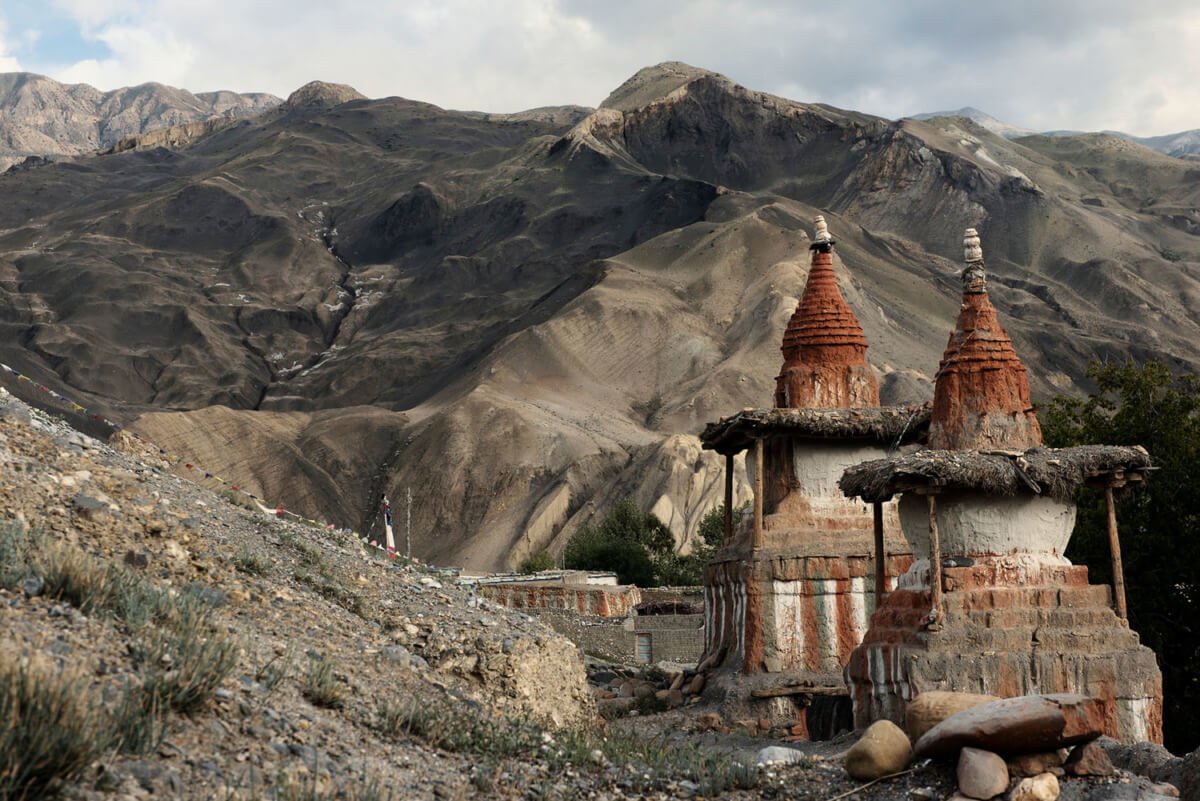
For those trekking or driving into the forbidden kingdom of Upper Mustang, the newly opened Shinta Mani Mustang (designed by world-renowned architect Bill Bensley) has brought 5-star, Aman-level luxury to the high desert. It features massive suites, floor-to-ceiling windows looking at Mount Nilgiri, a world-class spa offering Tibetan wellness treatments, and a fine-dining restaurant. Booking this property requires an elite agency with deep industry connections.
Culinary Excellence at Altitude
One of the greatest anxieties for luxury travelers in Nepal is the food. The horror stories of gastrointestinal distress and monotonous diets of dry rice are well-known. A luxury trekking agency completely mitigates this risk through rigorous hygiene standards and culinary excellence.
Breakfast on a Luxury Trek
In a standard teahouse, breakfast is often a hastily cooked fried egg and dry toast. In a luxury lodge, breakfast is a gourmet affair designed to fuel a high-net-worth traveler.
-
You are awakened by your guide or lodge staff gently knocking on your door, bringing you “Bed Tea” a freshly brewed pot of Earl Grey, Darjeeling, or local Ilam tea served to you while you are still under the warm covers.
-
The dining room offers a lavish spread: freshly baked croissants, whole-grain breads, organic local honey, Nak (female yak) butter, imported cereals, and made-to-order eggs (poached, scrambled, or omelets).
-
The Coffee: Luxury lodges are equipped with high-end Italian espresso machines. You can order a perfect cappuccino, latte, or flat white at 3,500 meters, crafted with freshly ground Himalayan Arabica beans.
Lunch on the Trail
Because the luxury lodges are spaced out for overnight stays, lunch is often eaten at standard teahouses along the route. However, your luxury agency does not leave this to chance.
-
Your elite guide calls ahead to the cleanest, most reputable teahouse on the route to pre-order your food, ensuring you do not wait two hours for a meal.
-
The guide personally inspects the kitchen to ensure hygiene standards are met.
-
You are served hearty, safe meals perhaps a rich Sherpa stew (Syakpa), a massive plate of traditional Dal Bhat (which is entirely vegetarian and safe), or freshly made pasta.
-
Your guide will set up a private table, provide hand sanitizer and wet wipes, and serve you freshly purified, warm drinking water.
Dinner at the Luxury Lodge
Dinner is the culinary climax of the day.
-
The Ingredients: Luxury lodges often operate their own organic greenhouses. The vegetables are crisp, fresh, and safely washed in purified water.
-
The Menu: The chefs are trained in Kathmandu’s top culinary schools. You can expect multi-course meals featuring soup, a beautifully plated main course (such as roasted chicken with seasonal vegetables, organic yak steak, or a refined vegetarian curry), and a decadent dessert (like fresh apple pie or chocolate fondant).
-
Dietary Customization: Whether you are gluten-intolerant, strictly vegan, pescatarian, or have specific nut allergies, your luxury trekking agency communicates this to every single lodge weeks in advance. Your meals are crafted perfectly to your specifications without compromise.
The Helicopter Element: Redefining Mountain Logistics
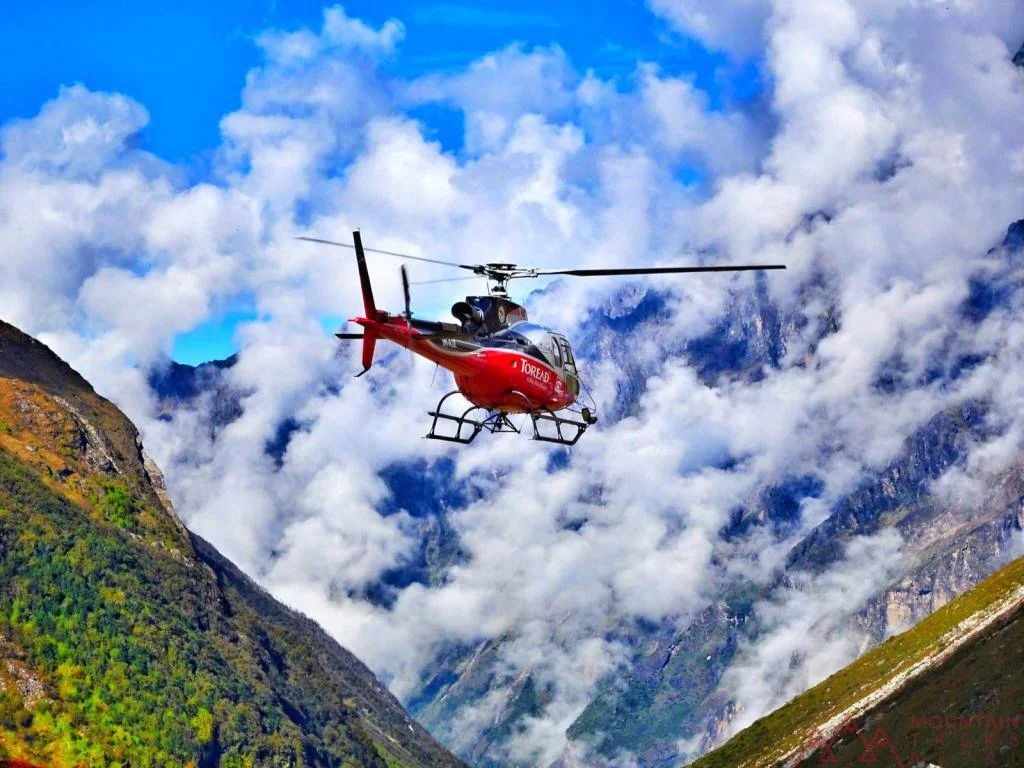
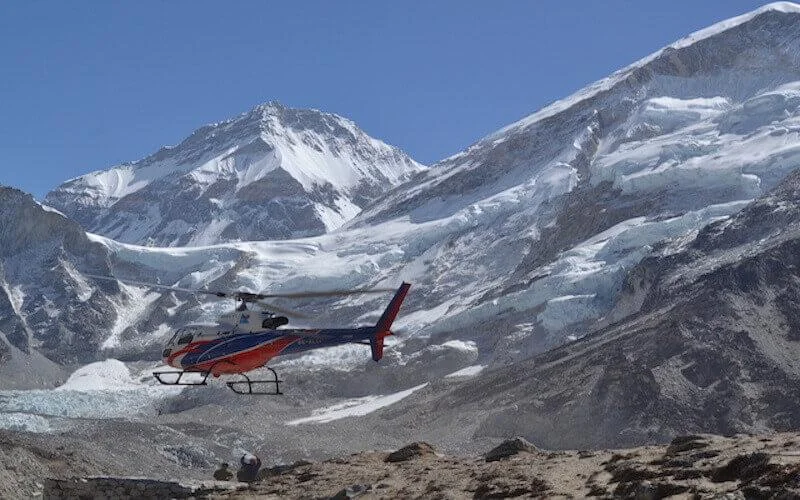
The integration of private helicopter charters is the single biggest differentiator between a standard trek and a luxury trek. Helicopters save time, eliminate the most grueling and monotonous sections of a hike, and provide an unparalleled aerial perspective of the Himalayas.
1. Bypassing the Lukla Flight Anxiety
The fixed-wing flight from Kathmandu to Lukla is famous for being terrifying and highly unreliable due to weather. Furthermore, in recent years, flights have been diverted to Ramechhap, requiring a miserable 2:00 AM wake-up call and a 4-hour drive before you even reach the airport.
-
The Luxury Solution: A luxury agency charters a private Airbus H125 (AS350 B3e) helicopter directly from the domestic terminal in Kathmandu. You board the chopper at a civilized 7:00 AM, bypass the crowds, fly smoothly over the valleys, and land directly in Lukla (or even higher, in Phakding or Namche) in just 45 minutes.
2. The Heli-Return (The Ultimate Hack)
The Everest Base Camp trek traditionally takes 12 to 14 days, primarily because after reaching Base Camp, you must spend 3 to 4 days walking the exact same trail backward to return to Lukla. The descent is punishing on the knees and visually redundant.
-
The Luxury Solution: After you reach Everest Base Camp and summit Kala Patthar to watch the sunrise over Everest, you descend to the sandy lakebed of Gorak Shep. There, your private helicopter is waiting. You board the chopper, take a spectacular scenic flight soaring directly past the summit of Everest, through the Gokyo Lakes, and fly all the way back to Kathmandu in under 90 minutes. You are back in a 5-star hotel enjoying a massage by noon.
3. Helicopter Day Tours (For Non-Trekkers)
For luxury travelers who do not want to hike at all, premium agencies offer bespoke Heli-Tours. You fly from Kathmandu, stop at Everest Base Camp for photos, and then fly to the patio of the Everest View Hotel (3,880m). Here, you sit down for a gourmet champagne breakfast while gazing directly at Mount Everest, before flying back to Kathmandu in time for lunch.
Uncompromising Safety and Medical Elite Protocols
True luxury is peace of mind. The Himalayas are an inherently dangerous environment. Acute Mountain Sickness (AMS), unpredictable weather, and gastrointestinal issues are real threats. A luxury trekking agency mitigates these risks with military-grade precision.
The Elite Sherpa Guide
Your safety rests entirely in the hands of your guide. Standard agencies often hire young, inexperienced guides who lack formal medical training.
-
The Luxury Standard: Mountain Treks Nepal employs the absolute elite. Our luxury guides are veteran Sherpas, many of whom have summited Everest or other 8,000-meter peaks. They possess 15 to 20 years of experience.
-
Medical Certifications: Our luxury guides are certified Wilderness First Responders (WFR). They are trained to instantly recognize the subtle signs of HACE (High Altitude Cerebral Edema) and HAPE (High Altitude Pulmonary Edema).
-
Language and Culture: They speak impeccable, fluent English. They are not just navigators; they are cultural ambassadors who can discuss local politics, Tibetan Buddhism, and high-altitude geology with sophistication.
The Daily Medical Check
In a luxury trekking paradigm, your health is monitored proactively, not reactively.
-
Every morning at breakfast, and every evening at dinner, your guide will perform a medical check.
-
They use a digital pulse oximeter to measure your blood oxygen saturation ($SpO_2$) and your resting heart rate.
-
They carry a logbook to track your vitals over the course of the trek. A sudden drop in oxygen saturation allows the guide to adjust the day’s pacing before AMS symptoms even manifest.
The Mobile Medical Kit
A luxury guide does not rely on local clinics. They carry a comprehensive, heavy-duty expedition medical kit containing:
-
Antibiotics for gastrointestinal infections and respiratory issues.
-
High-altitude medications (Acetazolamide/Diamox, Dexamethasone, Nifedipine).
-
Trauma supplies, blister kits (Compeed), and water purification systems.
Emergency Evacuation Protocols
If you twist an ankle or develop severe altitude sickness, standard trekkers must often wait hours or days for a mule or a rescue team.
-
The Luxury Standard: Your guide carries a satellite phone. If an emergency occurs, they have a direct line to our helicopter dispatch desk in Kathmandu. We can scramble a rescue chopper to your exact GPS coordinates within minutes (weather permitting). You are flown directly to a world-class international clinic (like CIWEC Hospital) in Kathmandu.
Personalized Pace and The Luxury of Time
One of the most stressful aspects of standard group trekking is the feeling of being rushed. If you are in a group of 12 strangers, the pace is dictated by the fastest or the slowest member.
The Private Group Paradigm
When you book with a luxury trekking agency, your trek is strictly private. It is just you, your chosen travel companions, your elite guide, and your dedicated porters.
-
You Dictate the Start Time: If you want to sleep in until 8:00 AM and enjoy a long, leisurely breakfast, you can. If you are an early bird who wants to hit the trail at 6:00 AM to catch the morning light for photography, you can.
-
You Dictate the Pace: There is absolutely no rush to reach the next lodge to “secure a bed,” because your premium rooms are guaranteed and paid for months in advance. You can stop every 20 minutes to take photos, rest, drink water, or listen to your guide explain the local flora.
-
Flexible Itineraries: If you reach Namche Bazaar and decide you absolutely love the town and want to spend an extra rest day exploring the bakeries and museums, a luxury agency has the logistical flexibility to alter your itinerary on the fly.
The Top 4 Luxury Trekking Routes in Nepal
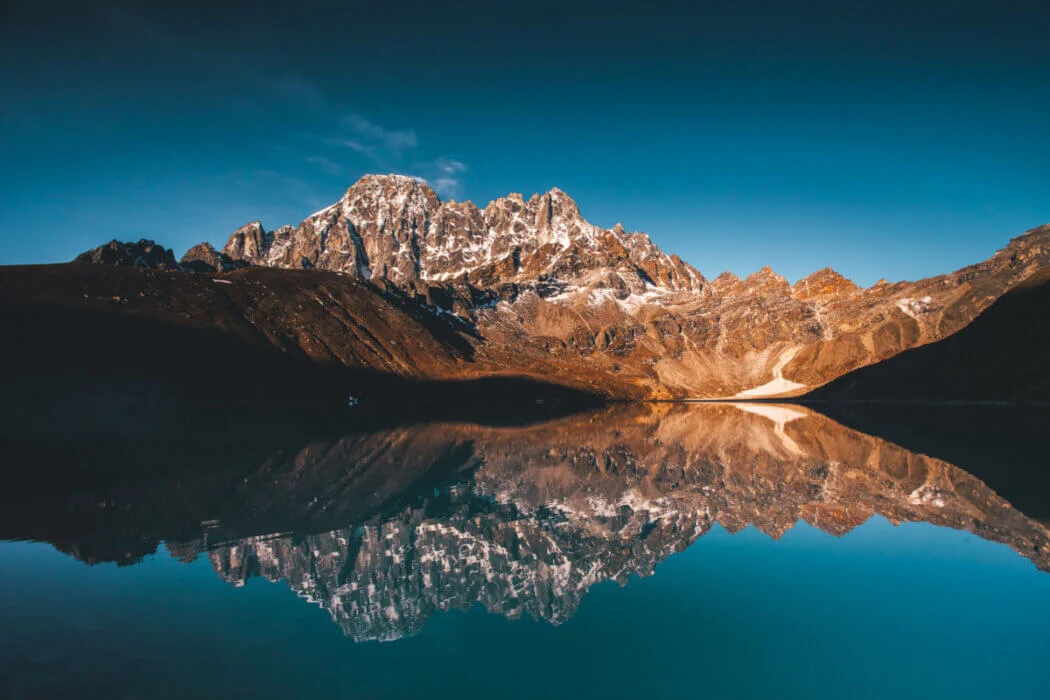
Not all regions of Nepal have the infrastructure to support a true luxury trek. Here are the premier routes where Mountain Treks Nepal can deliver a flawless 5-star experience.
1. The Luxury Everest Base Camp Trek (with Heli-Return)
Duration: 10 to 12 Days Max Altitude: 5,545m (Kala Patthar) This is the crown jewel of luxury trekking. You fly into Lukla via private helicopter and trek up the Dudh Koshi valley. For the first week, you stay exclusively in the world-class Yeti Mountain Homes or Everest Summit Lodges in Phakding, Namche Bazaar, and Pangboche. You enjoy heated blankets, en-suite bathrooms, and gourmet food.
Because luxury lodges do not exist above 4,000 meters, the final few nights at Dingboche, Lobuche, and Gorak Shep are spent in the best available standard teahouses (though your guide brings luxury sleeping bags and premium food supplements to maintain comfort). After reaching Base Camp, you board a private helicopter at Gorak Shep and fly directly back to Kathmandu.
2. The Annapurna Luxury Lodge Trek (The Ker & Downey Route)
Duration: 7 to 9 Days Max Altitude: ~2,000m For travelers who want the ultimate luxury experience but do not want to risk altitude sickness or endure extreme physical exertion, the lower Annapurna foothills are perfect.
This trek utilizes the exclusive Ker & Downey lodge network (Sanctuary Lodge, Gurung Lodge, Basanta Lodge). The walking is gentle, passing through pristine rhododendron forests, terraced rice paddies, and immaculate Gurung villages. The altitude never exceeds 2,000 meters, meaning you never suffer from breathlessness. The lodges offer stunning views of Annapurna South and Machapuchare (Fishtail). The trek concludes near Pokhara, where you can spend a few nights at a world-class resort like The Pavilions Himalayas.
3. The Upper Mustang Luxury Jeep & Trek Expedition
Duration: 10 to 14 Days Max Altitude: 3,800m Upper Mustang is a restricted, forbidden kingdom bordering Tibet. It is a high-altitude desert of golden rock, ancient caves, and deep Tibetan Buddhist culture.
A luxury agency tackles Mustang by utilizing premium 4WD SUVs (like Land Cruisers). You can choose to drive the rugged, dusty sections of the route in air-conditioned comfort, and get out to hike only the most beautiful, scenic stretches. The crowning jewel of this route is staying at the newly opened, ultra-luxurious Shinta Mani Mustang resort in Jomsom, providing an Aman-level luxury experience in one of the most remote corners of the earth.
4. The Luxury Everest Panorama Trek (Kongde Route)
Duration: 8 to 10 Days Max Altitude: 4,250m For those who want to see Everest but do not want to hike all the way to Base Camp, this route is the ultimate compromise. You trek to Namche Bazaar, then veer off the main trail to the secluded villages of Thame and Kongde.
The Yeti Mountain Home in Kongde sits at 4,250 meters and is arguably the most spectacularly located hotel in the world. It offers a direct, unobstructed, panoramic view of Mount Everest, Lhotse, and Ama Dablam right from your bedroom window. You can sit on the patio with a glass of wine and watch the sunset turn Everest pink, before flying back to Kathmandu via helicopter the next morning.
A Day in the Life on a Luxury Trek
To truly grasp the difference, let us walk through a typical day on the Luxury Everest Base Camp trail with Mountain Treks Nepal.
-
06:30 AM (The Wake-Up): You are gently awakened by a soft knock on your door. A staff member enters with a warm smile, bearing a tray with a pot of freshly brewed French press coffee and hot tea. They also provide a bowl of steaming hot water and a fresh towel for you to wash your face.
-
07:30 AM (Gourmet Breakfast): You head to the heated dining room. You enjoy a lavish breakfast of eggs benedict, fresh fruit, oatmeal, and toast. Your guide sits with you, measures your blood oxygen levels with an oximeter, and discusses the route for the day.
-
08:30 AM (Hitting the Trail): You step outside into the crisp mountain air. You are carrying only a light daypack (water, camera, sunscreen). Your dedicated porter has already packed your heavy 15kg duffel bag and set off ahead of you.
-
08:30 AM – 12:30 PM (The Hike): You walk at a leisurely, highly enjoyable pace. Your guide points out Danphe birds in the trees, explains the history of the mani walls you pass, and ensures you take frequent water breaks.
-
12:30 PM (Lunch): You arrive at a pre-selected teahouse. A private table is already set. Your guide serves you warm washing water for your hands. You enjoy a massive, pre-ordered hot lunch of Sherpa stew or pasta.
-
01:30 PM – 03:30 PM (The Final Stretch): You complete the afternoon hike, surrounded by towering, snow-capped peaks.
-
03:30 PM (Arrival at the Luxury Lodge): You arrive at the Yeti Mountain Home. You are greeted at the door with a hot, moist towel and a glass of warm lemon-ginger tea. The lodge manager hands you your room key.
-
04:00 PM (The Hot Shower): You enter your spacious, wood-paneled room. Your duffel bag is already sitting at the foot of your bed. You step into the en-suite bathroom and take a long, high-pressure, scalding hot shower to wash away the dust of the trail.
-
05:00 PM (Relaxation): You change into comfortable lodge clothes (fleece pants, a sweater, and slippers). You head to the dining room, sink into a plush armchair by the roaring wood-burning stove, and read a book or review your photos.
-
06:00 PM (Pre-Dinner Drinks): You order a glass of imported Cabernet Sauvignon or a hot toddy from the bar.
-
07:00 PM (Gourmet Dinner): You are served a three-course dinner, perfectly accommodating your dietary requirements, crafted with fresh, organic ingredients.
-
09:00 PM (Retiring for the Night): You return to your room. The lodge staff has already turned on the electric heating pad on your mattress. You slide under the thick down duvet into a wonderfully warm bed, falling asleep instantly to prepare for another glorious day in the Himalayas.
Logistics Before You Hit the Trail (The Kathmandu VIP Experience)
A luxury trekking agency’s service begins the moment you clear customs at Tribhuvan International Airport, long before you ever see a mountain.
VIP Airport Arrival
You do not have to fight through the chaotic crowds of taxi drivers outside the terminal. A uniformed representative from Mountain Treks Nepal is waiting for you with a personalized placard. Your luggage is immediately handled, and you are escorted to a pristine, air-conditioned luxury SUV (such as a Toyota Land Cruiser or Prado).
5-Star Hotel Accommodations in Kathmandu
Standard trekkers stay in noisy, budget hostels in Thamel. Luxury trekkers are booked into Kathmandu’s premier 5-star heritage hotels.
-
Dwarika’s Hotel: Often considered one of the finest heritage hotels in Asia, Dwarika’s is a living museum of traditional Newari architecture, featuring intricate wood carvings, a world-class spa, and the famous Krishnarpan restaurant (offering a 22-course traditional Nepali dining experience).
-
The Marriott Kathmandu or Yak & Yeti: For those who prefer modern, international 5-star luxury, these hotels offer expansive pools, fitness centers, and impeccable service.
Private Cultural Tours
Before you fly to the mountains, you spend a day acclimatizing to the time zone. Your agency provides a private, air-conditioned vehicle and an elite, English-speaking cultural historian. You are given a VIP, guided tour of Kathmandu’s UNESCO World Heritage sites the Boudhanath Stupa, the Pashupatinath Temple, and Patan Durbar Square bypassing the crowds and gaining deep insights into the spiritual heart of Nepal.
Sustainable and Ethical Luxury
In the modern era, true luxury must be responsible. High-net-worth travelers want to know that their money is positively impacting the fragile environment and the local communities of the Himalayas. A premium luxury trekking agency like Mountain Treks Nepal operates on strict ethical pillars.
1. Ethical Treatment of Porters
Porters are the unsung heroes of the Himalayas, carrying the heavy loads that make trekking possible. In the budget trekking industry, porters are often grossly underpaid, overloaded (carrying 30 to 40 kg), and improperly clothed.
-
The Luxury Standard: We adhere strictly to the International Porter Protection Group (IPPG) guidelines. Our porters carry a strict maximum of 15 kg per client (usually 30 kg max per porter, covering two clients). They are provided with high-quality Gore-Tex jackets, proper trekking boots, polarized sunglasses, and comprehensive medical insurance. They are paid significantly above the industry standard.
2. Supporting Local Economies
Luxury lodges like Yeti Mountain Home and Ker & Downey are heavily invested in their local communities. They run their own hydroelectric micro-plants, operate organic greenhouses that employ local women, and fund local schools and monasteries. By booking a luxury trek, your capital stays in the Khumbu and Annapurna regions, driving sustainable economic growth rather than enriching foreign conglomerates.
3. Leave No Trace and Environmental Protection
Luxury agencies are hyper-conscious of their environmental footprint. We enforce a strict “no single-use plastic” policy on the trail. We provide our clients with Nalgene bottles and high-end water purification systems (like SteriPens) to eliminate the need to purchase plastic water bottles. We ensure that all non-biodegradable waste generated by our expeditions is flown back to Kathmandu for proper recycling.
How to Pack for a Luxury Trek
One of the great misconceptions about luxury trekking is that you do not need proper gear. While the agency handles the heavy lifting, the helicopters, and the heated beds, you still have to walk 5 to 7 hours a day in the high Himalayas. The weather outside the lodge is exactly the same for a luxury trekker as it is for a budget trekker.
What the Luxury Agency Provides (The Heavy Gear)
To save you from purchasing expensive, bulky high-altitude gear that you may only use once in your life, Mountain Treks Nepal provides:
-
A Premium Waterproof Duffel Bag: A rugged, 80-liter duffel bag for your porter to carry your main belongings.
-
Expedition-Grade Down Jacket: A freshly laundered, 800-fill-power heavy down parka essential for the freezing mornings above 4,000 meters.
-
Four-Season Sleeping Bag: A high-quality, -20°C rated down sleeping bag (used primarily for the few nights you must stay in standard teahouses above the luxury lodge tree-line, such as in Gorak Shep).
What You Must Bring (The Personal Gear)
Your packing list should focus on high-performance, lightweight technical apparel.
-
The Base Layers: 3 sets of moisture-wicking synthetic t-shirts. 2 sets of heavy-weight Merino wool thermals (top and bottom) for the cold evenings. Absolutely no cotton.
-
The Mid-Layers: A high-quality grid fleece (like a Patagonia R1) and a lightweight synthetic puffy jacket (like an Arc’teryx Atom LT) for active hiking in the cold.
-
The Outer Shell: A premium Gore-Tex Pro waterproof and windproof jacket and rain pants. The wind chill at 5,000 meters is severe; your shell is your armor.
-
The Footwear: Do not skimp here. You need premium, waterproof, high-ankle trekking boots (e.g., Lowa, Salomon, or Meindl). They must be broken in prior to arriving in Nepal. Bring 4 pairs of Darn Tough or Smartwool trekking socks.
-
The Daypack: A comfortable 25-35L daypack (Osprey or Gregory) with a rain cover.
-
Accessories: Category 4 polarized sunglasses (vital for snow glare), a Buff (to protect your lungs from the dry, dusty air and prevent the “Khumbu Cough”), high-SPF sunscreen, and flick-lock trekking poles to save your knees on the descents.
Physical Preparation for a Luxury Trek
Do not let the word “luxury” lull you into a false sense of physical security. A helicopter will fly you back, and a heated bed will keep you warm, but you still have to walk up the mountain.
Trekking to Everest Base Camp or traversing the Annapurnas requires serious cardiovascular endurance and muscular stamina. You must begin training at least 12 weeks before your flight to Kathmandu.
1. The Aerobic Engine (Cardio)
At 5,000 meters, there is 50% less oxygen in the air. To prepare your lungs and heart, you must build a massive aerobic base.
-
Action: Engage in Zone 2 cardiovascular training (running, cycling, swimming, or brisk walking on an incline) for 45 to 60 minutes, 3 to 4 times a week. Keep your heart rate in a conversational zone to train your body to process oxygen efficiently.
2. Muscular Endurance (Stairs and Rucking)
The trails in Nepal are rarely flat. You will be climbing thousands of irregular stone steps. You must condition your quadriceps, calves, and glutes.
-
Action: The absolute best training for Nepal is stair climbing with a weighted backpack (rucking). Load your daypack with 7 to 10 kg (15-20 lbs) and climb the tallest stadium stairs, local hill, or a gym Stairmaster for 1 to 2 hours, twice a week.
3. Core Strength
You will be wearing a backpack for 6 hours a day, 12 days in a row. A weak core will lead to severe lower back pain, ruining your luxury experience.
-
Action: Incorporate planks, deadlifts, and lunges into your weekly routine to build a bulletproof core and strong stabilizing muscles.
The Investment: Breaking Down the Cost of Luxury Trekking
A standard, budget-backpacker Everest Base Camp trek can be done for around $1,200 to $1,500. A true Luxury Everest Base Camp Trek typically ranges from $4,500 to $8,000+ USD per person, depending on the extent of helicopter usage.
Why the massive price difference? Here is exactly where your investment goes when you book with a luxury agency:
-
Premium Lodging: A bed in a standard teahouse costs $5 to $10 a night. A room in a Yeti Mountain Home or Ker & Downey lodge costs between $150 and $250+ per night.
-
Private Helicopter Charters: Helicopters are exorbitantly expensive to operate in the high Himalayas. A private charter to bypass the Lukla flight, or a heli-return from Gorak Shep to Kathmandu, can cost thousands of dollars per flight hour.
-
Elite Staff Compensation: You are paying for the Michael Jordan of Sherpa guides. Highly trained, English-fluent, WFR-certified Everest summiteers command premium salaries, as do the ethically treated, well-equipped porters carrying your gear.
-
5-Star Kathmandu Hotels: Properties like Dwarika’s Hotel charge $300 to $500+ per night, vastly increasing the package cost compared to a $30 Thamel hostel.
-
Gourmet Food and Unlimited Perks: On a budget trek, every cup of tea, hot shower, and Wi-Fi password costs extra out-of-pocket cash. A luxury package is entirely all-inclusive. You can order as many cappuccinos and hot showers as you desire without ever pulling out your wallet on the mountain.
-
Uncompromising Safety: You are funding the maintenance of high-end satellite phones, pulse oximeters, PAC bags, and comprehensive medical kits that budget operators simply do not carry.
Frequently Asked Questions
1. Is it possible to have a luxury trek all the way to Everest Base Camp?
Yes and No. True luxury lodges (like Yeti Mountain Home) only exist up to the village of Pangboche (approx. 4,000m). Above that, it is too cold and logistically difficult to run running water and electric heating. For the final 3 or 4 nights (Dingboche, Lobuche, Gorak Shep), you must stay in standard teahouses. However, your luxury agency will book the absolute best rooms available, provide you with -20°C sleeping bags, hot water bottles, and premium food to ensure you remain as comfortable as humanly possible during the final push to Base Camp.
2. What happens if the weather is bad and the helicopter cannot fly?
Mountain weather is the ultimate dictator. If heavy fog or wind grounds the helicopters, you cannot fly. Luxury agencies account for this by building “buffer days” into your itinerary. If a heli-return from Base Camp is grounded, you may have to wait a day in a lodge, or in worst-case scenarios, begin trekking down until you reach a clearing where the chopper can land.
3. Do I need to carry my own luggage?
Absolutely not. You will only carry a lightweight 25-30L daypack containing your daily essentials (water, sunscreen, camera, rain jacket). Your dedicated porter will carry your heavy 15kg duffel bag from lodge to lodge. When you arrive at your luxury lodge in the afternoon, your duffel bag will already be waiting inside your room.
4. Can a luxury agency accommodate my severe food allergies?
Yes. This is a hallmark of a luxury operator. When you book, you provide your exact dietary restrictions (Celiac, nut allergies, strict vegan, etc.). The agency communicates this directly to the chefs at the premium lodges weeks in advance. Because the luxury lodges have highly trained kitchen staff and clean, distinct cooking stations, cross-contamination is rigorously avoided, and bespoke meals are prepared for you.
5. Will I get altitude sickness if I take a helicopter?
If you take a helicopter up the mountain too fast, yes, you will get severely ill. This is why luxury heli-treks fly you to Lukla (2,800m) and then you walk up the mountain over 8 to 10 days, allowing your body to acclimatize safely. The helicopter is used for the return journey (flying from 5,300m back down to Kathmandu). Flying down rapidly poses absolutely zero risk of altitude sickness; in fact, the influx of thick oxygen feels incredibly rejuvenating.
6. Are children allowed on luxury treks?
Yes, but with caveats. The lower-altitude Annapurna luxury treks (Ker & Downey route) are fantastic for families with children as young as 7 or 8 years old, as the walking is gentle and the altitude is safe. For the Everest Base Camp luxury trek, due to the extreme altitude, most luxury agencies recommend a minimum age of 12 to 14 years old, provided the child is physically active and mature enough to communicate altitude symptoms.
Conclusion : Your Journey Awaits with Mountain Treks Nepal
The Himalayas are no longer a realm reserved exclusively for the rugged ascetic. You do not have to choose between witnessing the majesty of Mount Everest and enjoying the comforts of a 5-star lifestyle. A luxury trekking agency bridges the gap between raw, unfiltered wilderness and refined, sophisticated hospitality.
By choosing a premium operator, you are investing in your safety, your health, and your precious time. You are ensuring that every ounce of your energy is spent marveling at the towering ice seracs of the Khumbu Glacier, engaging with the beautiful Sherpa culture, and taking photographs of a lifetime, rather than stressing about cold rooms, unhygienic food, or crowded trails.
Mountain Treks Nepal is the premier architect of luxury Himalayan adventures. We have spent decades cultivating relationships with the finest lodges, securing the most reliable helicopter fleets, and training the absolute elite echelon of Sherpa guides. We know how to navigate the logistical complexities of Nepal so that you never have to.
If you are ready to elevate your Himalayan adventure, sleep under heated blankets in the shadow of giants, and experience the roof of the world without compromise, your journey begins here.
Contact the expedition concierges at Mountain Treks Nepal today. Let us customize your private itinerary, secure your rooms at the Yeti Mountain Homes, and prepare the helicopter for the greatest adventure of your life.