


Share This:
Upper Mustang Overland Tour – 12 Days: Complete Route, Permits and Travel Guide
An Upper Mustang Overland Tour is a practical way to explore Nepal’s high-altitude desert, historic villages and Tibetan Buddhist heritage without undertaking a long, multi-day trek. This 12-day journey follows the road corridor from Kathmandu and Pokhara into the former Kingdom of Lo, combining cultural sightseeing with a private 4WD journey through the Kali Gandaki valley.
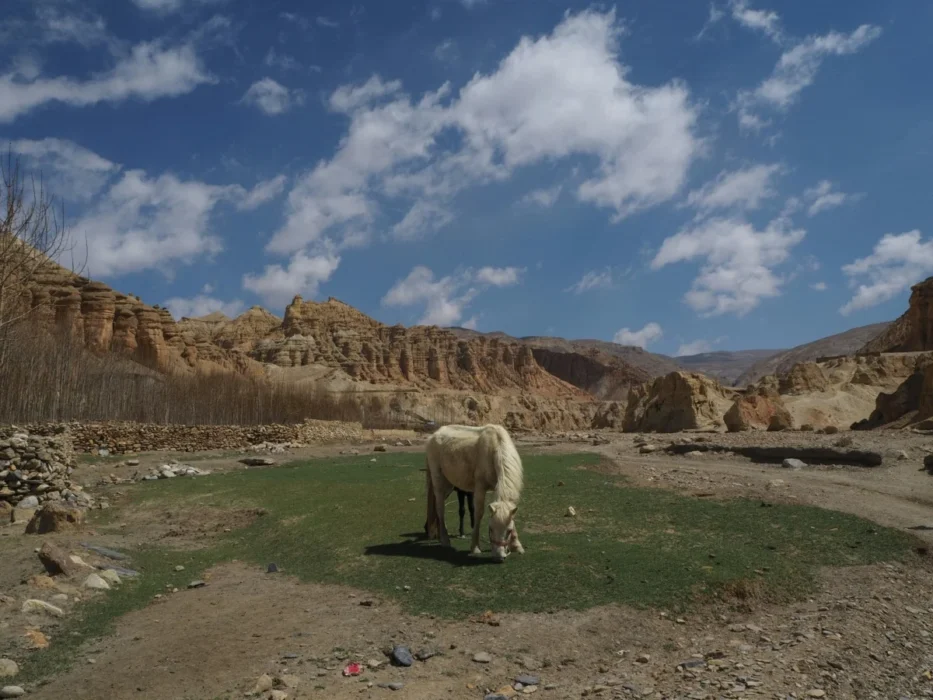
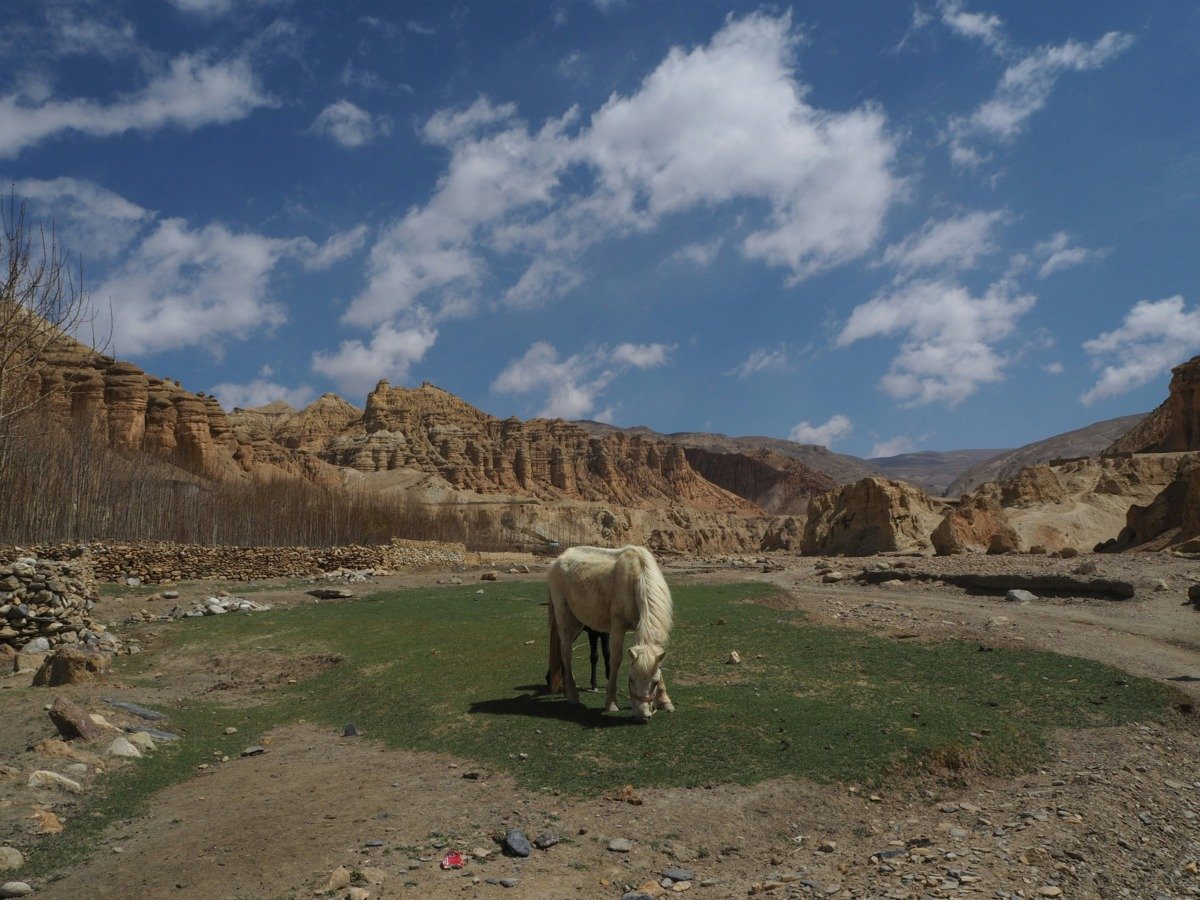
Upper Mustang feels very different from the green foothills often associated with Nepal. Beyond Kagbeni, the landscape becomes dry, open and wind-shaped, with layered cliffs, pale riverbeds, prayer walls, cave sites and villages built from stone and mud. The destination is not simply about reaching Lo Manthang. The experience comes from moving gradually through a living cultural landscape, pausing at monasteries, visiting Muktinath, observing local customs and understanding why this remote border region is protected by special travel rules.
The 12-day format is designed for travellers who value cultural depth and mountain scenery but prefer short walks and jeep-supported travel. It suits couples, families, photographers, senior travellers in good health and visitors who have limited time in Nepal. It still requires sensible preparation: the roads are mountain roads, conditions can change, and the tour reaches approximately 4,010 metres.
Upper Mustang Overland Tour at a Glance
| Trip element | Details |
| Duration | 12 days / 11 nights |
| Destination | Upper Mustang, Nepal |
| Maximum programme altitude | Approximately 4,010 m |
| Travel style | Private 4WD overland journey with short sightseeing walks |
| Accommodation | Hotels in Kathmandu and Pokhara; mountain lodges or teahouses on the route |
| Ideal seasons | Spring, monsoon in the rain-shadow region, and autumn |
| Typical group size | Private departure or small group; up to 15 travellers |
| Main places | Kathmandu, Pokhara, Tatopani, Kagbeni, Muktinath, Ghami, Lo Manthang, Chhoser and Jomsom |
| Physical level | Easy to moderate; no technical trekking is required |
Why Choose an Upper Mustang Overland Tour Instead of a Trek?
The Upper Mustang trek and an overland journey reach many of the same cultural areas, but they offer different ways of travelling. A trekking itinerary is built around long walking days, while a Mustang jeep tour prioritises access, cultural stops and flexibility for guests who do not want to hike for several hours every day.
On an overland trip, the jeep covers the long valley sections, allowing time for short walks through villages, visits to monasteries, viewpoints and heritage sites. This does not remove the realities of mountain travel. Guests should still be prepared for bumpy road sections, dust, wind and extended days in a vehicle. Yet it makes the region accessible to a wider range of travellers.
| Consideration | Overland tour | Upper Mustang trek |
| Daily movement | 4WD driving and short walks | Several hours of walking most days |
| Best for | Culture-led travellers, families, limited-time visitors | Travellers who want a walking-focused Himalayan journey |
| Fitness level | Basic mobility and good general health | Moderate trekking fitness and walking endurance |
| Luggage support | Stored in vehicle; daypack used for sightseeing | Usually carried by porter or traveller |
| Pace | More time for cultural stops and road-based access | Slower progression through villages and trails |
| Shared essentials | Restricted-area permits, altitude awareness, guide support and respectful travel | Restricted-area permits, altitude awareness, guide support and respectful travel |
The right choice depends on how you want to experience Mustang. The overland route is not a shortcut that ignores the destination; it is a different style of access. It gives more people the opportunity to see the walled town of Lo Manthang, ancient cave landscapes and high-desert valleys while keeping daily walking manageable.
What Makes Upper Mustang Different?
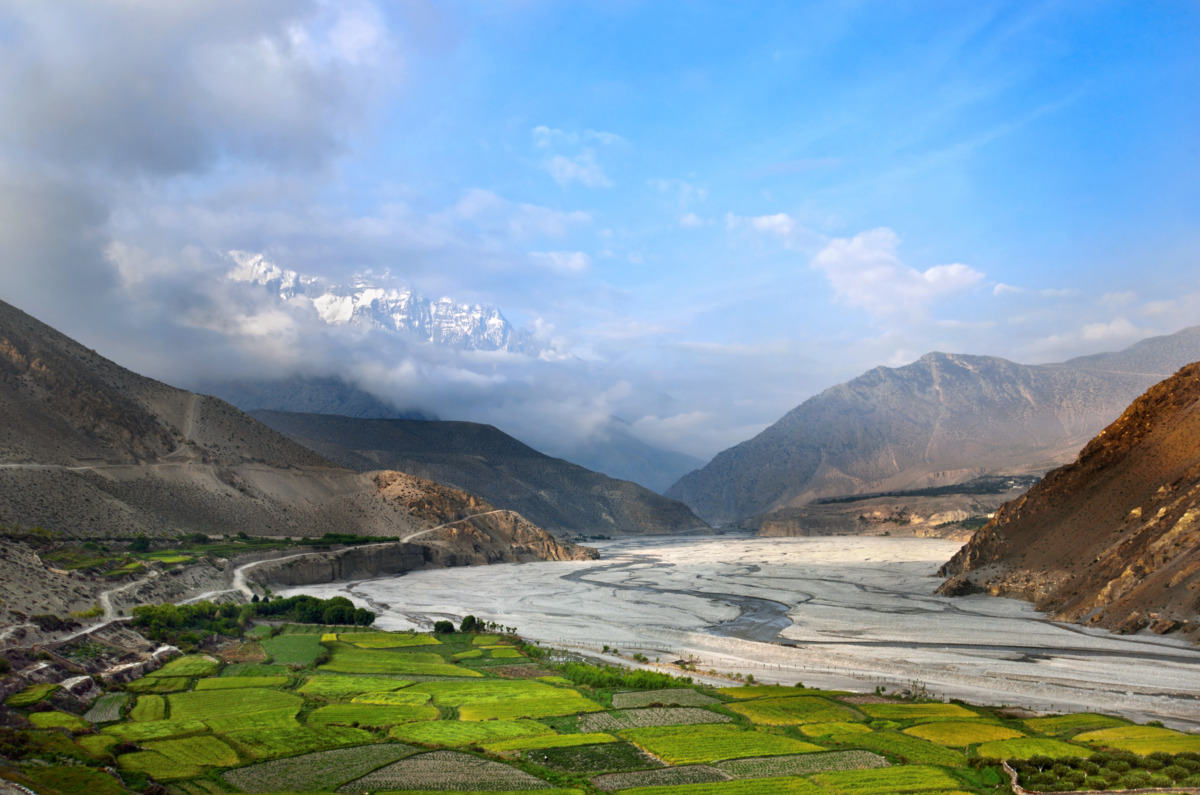
Upper Mustang lies north of the main Himalayan ranges in a rain-shadow landscape. The result is a dramatic transition from river valleys and forested lower sections to a dry trans-Himalayan plateau. The scenery is defined by eroded cliffs, wide skies, sculpted ridges, ochre-coloured slopes and settlements that appear almost unexpectedly in the open terrain.
Culturally, the region is closely connected to Tibetan Buddhist traditions. Prayer flags, mani walls, chortens, monasteries and village rituals are part of daily life rather than staged attractions. Visitors should approach religious sites quietly, ask before photographing people, and follow local guidance around monasteries, family homes and sacred objects.
The historic centre of the route is Lo Manthang, a walled settlement with narrow lanes, traditional homes, monastic institutions and a distinct sense of place. Nearby Chhoser adds another layer to the journey through its caves, rugged formations and cultural sites. Kagbeni and Muktinath provide important contrasts: Kagbeni marks the transition toward the restricted area, while Muktinath is a major pilgrimage location for both Hindu and Buddhist visitors.
Upper Mustang Overland Tour Route and 12-Day Itinerary
The route is planned to build elevation progressively and to allow time for the long road approach. Daily timing can vary according to road condition, weather, local traffic, stops and the pace of the group.
Day 1: Arrival in Kathmandu
Arrive in Kathmandu and meet the Mountain Treks Nepal team for airport transfer and hotel check-in. Use the evening to rest after your flight, exchange currency, purchase any last-minute essentials and receive an initial briefing on the journey ahead.
Day 2: Kathmandu Preparation and Sightseeing
The second day is reserved for final travel preparation, permit documentation and selected cultural sightseeing in Kathmandu. Your guide reviews altitude awareness, luggage requirements, road travel expectations and local etiquette before the overland section begins.
Day 3: Kathmandu to Pokhara
Travel west to Pokhara, Nepal’s lakeside gateway to the Annapurna and Mustang regions. The drive provides a gradual transition from Kathmandu’s urban valley to river landscapes and foothill settlements. Overnight in Pokhara.
Day 4: Pokhara to Beni and Tatopani
Leave Pokhara and follow the road toward Beni and Tatopani. The scenery changes as the route enters deeper valleys shaped by the Kali Gandaki river system. Tatopani is known for its natural hot-spring area and is a useful overnight stop before the higher mountain roads.
Day 5: Tatopani to Kagbeni and Muktinath
Continue north through the Mustang corridor toward Kagbeni and visit Muktinath. This is an important elevation-gain day, so hydration, a relaxed pace and good rest matter. Muktinath is an important sacred destination, while Kagbeni offers traditional architecture, prayer walls and the atmosphere of an old Himalayan trading settlement.
Day 6: Kagbeni/Muktinath to Ghami via Syangboche
Drive into the restricted Upper Mustang area, passing windswept terrain and high road sections around Syangboche. The route introduces the open, arid character of the region, with layered hills and distant mountain views. Overnight in or near Ghami, a traditional village known for its cultural landscape.
Day 7: Ghami to Lo Manthang
Travel toward Lo Manthang through dry valleys, village clusters and broad plateau views. This is the day many travellers anticipate most, as the road reaches the historic walled town that served as the capital of the former Kingdom of Lo. Settle in, take a gentle orientation walk and allow the body time to adjust to the altitude.
Day 8: Explore Lo Manthang and Chhoser
Spend a full day exploring Lo Manthang and the nearby Chhoser area. Depending on access, group pace and local conditions, the day may include monasteries, traditional streets, cave sites, viewpoints and conversations about local history and culture. Keep the schedule unhurried; this is the most valuable day for understanding the destination beyond photography.
Day 9: Lo Manthang to Jomsom
Begin the return journey south, retracing sections of the Upper Mustang road toward Jomsom. The change in direction offers different light, perspectives and stopping opportunities. Jomsom is a key service town in lower Mustang and provides a more developed overnight base.
Day 10: Jomsom to Pokhara
Drive back toward Pokhara through the Mustang and Kali Gandaki corridor. This is a longer transition day, so expect breaks for meals, viewpoints and comfort. By evening, return to Pokhara for a hotel stay and a chance to enjoy a warmer, lower-altitude environment.
Day 11: Pokhara to Kathmandu
Travel from Pokhara back to Kathmandu. The evening is free for shopping, a relaxed dinner or rest before departure. It is also a useful buffer day if mountain-road conditions have required minor itinerary adjustments.
Day 12: Departure from Kathmandu
After breakfast, transfer to the airport according to your international flight schedule. Carry your permits, travel documents and valuables in your hand luggage, and allow sufficient time for airport procedures.
Main Highlights of This Mustang Jeep Tour
Lo Manthang: Explore the walled town, traditional alleys, monastic heritage and distinctive mud-brick architecture of the former Kingdom of Lo.
Muktinath: Visit a major pilgrimage site in the Mustang region, approached through a spectacular high mountain setting.
Kagbeni: Experience a culturally significant village of stone houses, narrow lanes, chortens and river-valley views.
Chhoser Caves and Landscapes: Discover an area known for its cliffside formations, caves and a striking high-desert setting near Lo Manthang.
Syangboche and the High Roads: Travel through open trans-Himalayan scenery where wind, wide skies and layered hills create some of the route’s most memorable views.
Kali Gandaki Corridor: Follow one of Nepal’s great mountain river valleys, watching the landscape change from lower green valleys to the dry north.
Permits and Restricted-Area Travel Requirements
Upper Mustang is a restricted area, so guests need approved documentation before travelling beyond the controlled entry points. For international visitors, the core documents generally include:
- Upper Mustang Restricted Area Permit: USD 50 per person per day.
- Annapurna Conservation Area Permit: NPR 3,000 for foreign visitors and NPR 1,000 for SAARC visitors.
Permit rules, payment methods, itinerary limits and documentation requirements can change. Mountain Treks Nepal should confirm the current requirements when you book and process the paperwork through the appropriate channels. Carry printed or digital copies as requested and keep your passport details consistent across permits, insurance and flight bookings.
Restricted-area travel also carries a responsibility to respect local communities, conservation rules and check-post procedures. Do not treat permits as a simple fee; they are part of a managed system designed to protect a culturally and environmentally sensitive region.
Best Time for an Upper Mustang Jeep Tour
Upper Mustang can be visited for much of the year, but the best departure window depends on your priorities.
| Season | What to expect | Best suited to |
| March to May | Pleasant days, clearer skies, changing spring colours and comfortable sightseeing conditions | First-time visitors, photographers and culture-focused groups |
| June to August | Relatively dry conditions compared with many other Himalayan routes because Mustang lies in a rain-shadow area | Monsoon-season travellers who want a mountain journey |
| September to November | Stable weather, crisp views and popular travel conditions | Scenic road travel, photography and small-group tours |
| December to February | Cold mornings and nights, strong winds and possible transport disruption | Well-prepared travellers with flexible schedules |
Weather in the Himalayas is never fixed. A practical itinerary includes contingency time and a flexible mindset, especially for road sections, domestic transport and high-altitude travel.
Road Conditions, Vehicle Comfort and Daily Travel
The journey is normally operated in a private 4WD jeep because Upper Mustang road conditions are not the same as city highways. Some stretches are smooth, while others can be dusty, rocky, narrow or affected by rain, wind and maintenance work. The exact experience changes from season to season.
A private jeep is valuable not because it makes mountain travel effortless, but because it gives the group better control over stops, luggage, pace and roadside comfort. Guests should expect seat belts where available, planned breaks, careful driving and a guide who communicates clearly about the day ahead. Travellers prone to motion sickness should bring suitable medicine after consulting a medical professional.
Altitude, Fitness and Health Preparation
This is an easy-to-moderate itinerary in terms of walking, but it is still a high-altitude journey. Lo Manthang sits around 3,840 metres, and the tour programme reaches roughly 4,010 metres. The body may react to elevation even when you are travelling by jeep.
Basic fitness and good mobility are usually enough. Prepare by walking regularly, using stairs, improving hydration habits and discussing pre-existing health conditions with a qualified clinician before travel. During the tour, eat regular meals, drink water, limit alcohol at altitude and tell your guide promptly about headache, nausea, dizziness, unusual fatigue or poor sleep.
Travel insurance with suitable high-altitude medical and emergency evacuation cover is strongly recommended. Read the policy carefully; many standard policies place limits on altitude, adventure activity, road travel or helicopter evacuation.
Food, Accommodation, Wi-Fi and Charging
Accommodation is comfortable but simple once the tour enters the mountain region. Hotels are used in Kathmandu and Pokhara. In Mustang, rooms are commonly in family-run lodges or teahouses, often with twin beds and shared bathroom facilities. Private rooms and attached bathrooms may be available in some larger villages, but they should not be assumed everywhere.
Meals are designed for mountain travel. Expect dal bhat, vegetables, noodles, soups, momo, Tibetan-style dishes, rice, potatoes, eggs and seasonal local ingredients. Menus can be more limited at higher elevations because ingredients must be transported long distances.
Wi-Fi, charging and hot showers may be available at some lodges, often for an additional charge. Connections can be slow or unreliable, particularly in remote sections. Buy a Nepali SIM card before leaving Kathmandu or Pokhara, but treat communication as a convenience rather than a guarantee.
What to Pack for a 12-Day Upper Mustang Road Trip
Pack for wind, dust, sun, cold evenings and changing road conditions rather than only for warm daytime weather.
- Lightweight thermal base layers and a warm fleece
- Windproof and waterproof outer jacket
- Insulated down jacket for mornings and evenings
- Comfortable broken-in hiking shoes or boots
- Warm socks, gloves, hat and sun cap
- Sunglasses with UV protection and sunscreen
- Reusable water bottle and water-purification method
- Small daypack for camera, documents, snacks and layers
- Personal medicines, first-aid essentials and lip balm
- Power bank, charging cable, headlamp and universal adapter
- Soft-sided luggage or duffel bag that fits easily in the vehicle
- Modest clothing for monasteries and villages
Avoid overpacking. Space in a mountain jeep is shared with passengers, luggage, water and essential equipment.
Responsible Travel in Upper Mustang
Responsible travel is practical, not performative. Carry reusable bottles, limit single-use plastic, avoid leaving waste at roadside stops and choose refill or purification options where appropriate. At monasteries and village sites, follow your guide’s instructions about photography, dress and movement around sacred objects.
Support local businesses through lodge stays, local meals and respectful purchases. Do not enter private homes, caves or religious spaces without permission. Cultural sensitivity matters as much as scenic appreciation in a region where community life continues alongside tourism.
Why Travel with Mountain Treks Nepal?
A restricted, high-altitude road journey benefits from careful planning and local coordination. Mountain Treks Nepal arranges the essential logistics around airport transfer, permits, private vehicle support, accommodation, guide services and a route designed with gradual altitude gain in mind.
The value of a local operator is not merely transportation. It is the ability to explain changing conditions, manage documentation, arrange practical stops, communicate with lodges and help travellers engage with the destination respectfully. The itinerary can also be tailored for private groups, family travel, photography interests or a preferred pace where operational conditions allow.
Frequently Asked Questions
What is the Upper Mustang Overland Tour?
It is a 12-day private 4WD journey into Upper Mustang, Nepal’s restricted high-desert region. The trip combines road travel with short walks, cultural sightseeing, monasteries, Muktinath, Kagbeni, Lo Manthang and Chhoser rather than a long point-to-point trek.
How many days does the Upper Mustang Overland Tour take?
This itinerary takes 12 days, including arrival and departure days in Kathmandu. It allows time for the road journey via Pokhara, acclimatisation, exploration around Lo Manthang and a return buffer before your international flight.
Is the Upper Mustang Overland Tour difficult?
It is generally easy to moderate because most travel is by private 4WD jeep. The main challenges are altitude, long drives, uneven roads, wind, dust and cold mornings or evenings rather than technical trekking.
Do I need trekking experience for this tour?
No. You do not need technical trekking skills or a long-distance hiking background. You should be comfortable with short walks, getting in and out of a 4WD vehicle, and spending several hours on mountain roads.
What is the highest altitude on the tour?
The maximum programme elevation is approximately 4,010 metres. Lo Manthang is around 3,840 metres, so travellers should take altitude seriously even though they are travelling by vehicle.
Can altitude sickness happen on an overland tour?
Yes. Altitude sickness is caused by elevation, not by walking distance. Gradual ascent, hydration, rest, regular meals and quick communication with your guide are important. Seek medical advice before travel if you have a relevant health condition.
What are the road conditions like in Upper Mustang?
Roads range from paved or relatively smooth sections to dusty, rocky and uneven mountain tracks. Conditions change with weather and maintenance. A private 4WD jeep, an experienced driver and realistic daily expectations are essential.
What vehicle is used for the Mustang overland journey?
The tour generally uses a private 4WD jeep suited to mountain roads. Vehicle size is matched to group size and luggage needs. Smaller groups usually have more personal space and greater flexibility for photo or comfort stops.
Can I visit Upper Mustang during the monsoon?
Yes. Upper Mustang is one of Nepal’s more practical monsoon-season mountain destinations because it sits in a rain-shadow area. Local road conditions and travel disruption are still possible, so a flexible itinerary remains important.
Do I need permits for the Upper Mustang Overland Tour?
Yes. International visitors normally require the Upper Mustang Restricted Area Permit and the Annapurna Conservation Area Permit. Mountain Treks Nepal assists with current paperwork, fees, passport details and itinerary-based permit processing.
What accommodation is available during the trip?
Kathmandu and Pokhara use hotels. In the mountain section, travellers stay in simple but clean lodges or teahouses. Rooms are commonly twin-share, while private bathrooms, hot showers and Wi-Fi may be limited or chargeable in remote locations.
What food is available in Upper Mustang?
Lodges offer Nepali, Tibetan-inspired and basic international dishes. Common choices include dal bhat, soup, noodles, momo, potatoes, fried rice, eggs and seasonal vegetables. Menu choice becomes more limited at higher altitude, so choose fresh, filling meals.
Are Wi-Fi, charging and hot showers available?
They are available in many stops but cannot be guaranteed throughout the route. Services may be slow, seasonal or chargeable. Carry a power bank, download important information in advance and be prepared for limited connectivity.
Is travel insurance necessary for this tour?
Comprehensive travel insurance is strongly recommended. Choose a policy that clearly covers high-altitude travel, medical treatment, emergency evacuation and trip disruption. Review exclusions carefully before purchase, especially if you have pre-existing conditions.
Is this trip suitable for senior travellers or families?
It can be suitable for healthy senior travellers and families who are comfortable with high-altitude road travel. The best approach is a private itinerary with an unhurried pace, appropriate vehicle space and medical clearance where necessary.
How far in advance should I book?
Booking earlier gives more time for permit preparation, hotel coordination, vehicle planning and personalised adjustments. Peak spring and autumn dates can have higher demand, while any itinerary should allow room for road or weather changes.
Plan a Meaningful Journey into Upper Mustang
An Upper Mustang overland journey is best approached with curiosity, patience and respect for the place. The destination rewards travellers who look beyond a checklist of viewpoints and take time to understand its villages, faith traditions, harsh geography and living heritage.
With a carefully paced 12-day itinerary, reliable 4WD support and knowledgeable local guidance, Mountain Treks Nepal helps travellers experience the road to Lo Manthang with greater confidence and context. Contact the team to discuss travel dates, permit support, private-group options and a plan that matches your comfort level.