



Share This:
Makalu Base Camp Trek – 17 Days Itinerary, Cost, Difficulty & Guide
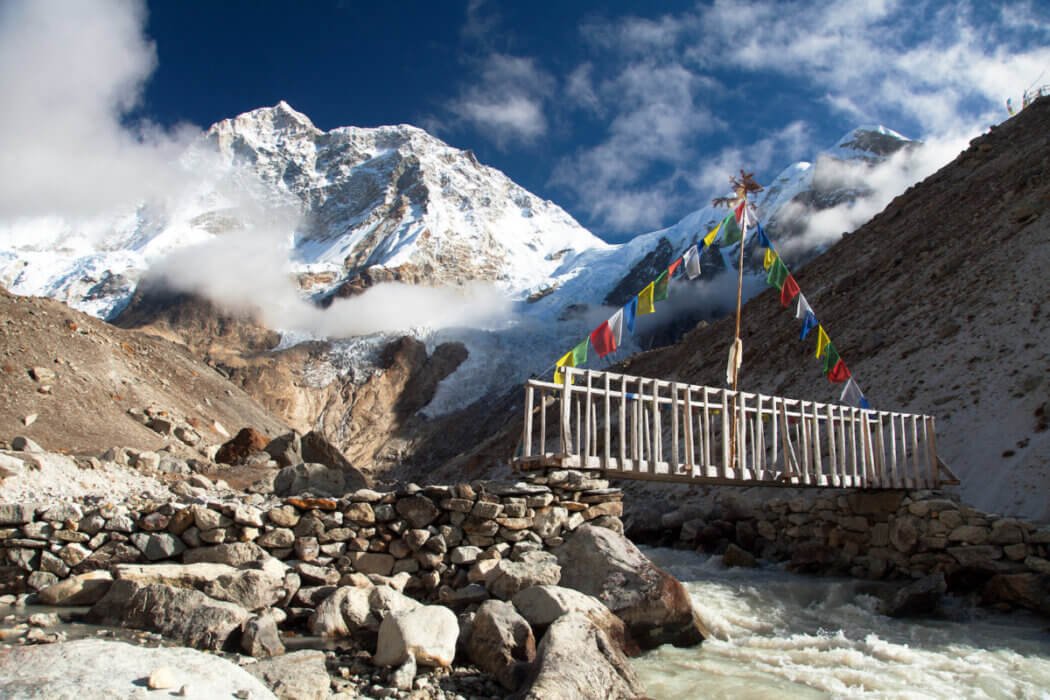
The Makalu Base Camp Trek is a remote and challenging trekking journey in eastern Nepal that takes trekkers to the base of Mount Makalu, the fifth-highest mountain in the world. This trek reaches Makalu Base Camp at 4,870 meters / 15,978 feet and passes through Makalu Barun National Park, traditional villages, rhododendron forests, river valleys, alpine meadows, yak pastures, and rugged high-altitude landscapes.
Unlike the busier Everest and Annapurna trails, this route is quieter, wilder, and better suited for trekkers who want a real Himalayan wilderness experience. With Mountain Treks Nepal, the 17-day Makalu Base Camp journey is designed for physically fit trekkers who want peaceful trails, mountain views, local culture, and a carefully managed high-altitude adventure.
Quick Facts About Makalu Base Camp Trek
| Trek Feature | Details |
|---|---|
| Trek Name | Makalu Base Camp Trek |
| Duration | 17 Days |
| Maximum Altitude | 4,870 m / 15,978 ft |
| Trek Difficulty | Strenuous |
| Trek Region | Makalu Region, Eastern Nepal |
| National Park | Makalu Barun National Park |
| Starting Point | Kathmandu |
| Main Trailhead | Tumlingtar / Num |
| Ending Point | Kathmandu |
| Accommodation | Basic teahouses and hotel in Kathmandu |
| Transportation | Domestic flight and vehicle |
| Best Season | March to May and September to November |
| Suitable For | Fit trekkers with previous hiking or trekking experience |
| Main Highlights | Makalu Base Camp, Barun Valley, remote villages, alpine landscapes, Himalayan views |
What Makes the Makalu Base Camp Trek Special?
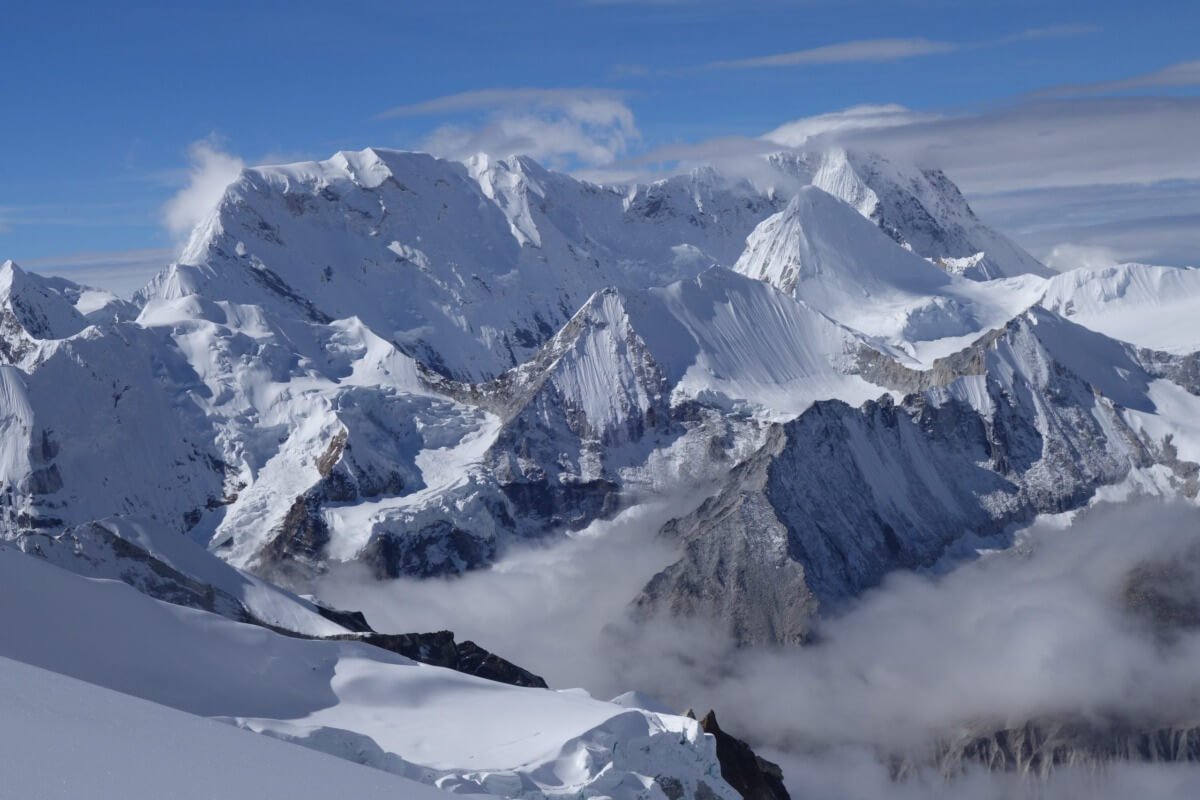
The Makalu Base Camp route is one of the most rewarding remote treks in Nepal. It gives trekkers a rare chance to explore an area that still feels natural, quiet, and less commercial compared to many popular trekking regions.
The trail moves through a dramatic range of landscapes. At lower elevations, trekkers walk through terraced fields, warm valleys, forests, and traditional settlements. As the route gains altitude, the scenery changes into rhododendron forests, high ridges, yak grazing areas, rocky valleys, and glacier-fed terrain.
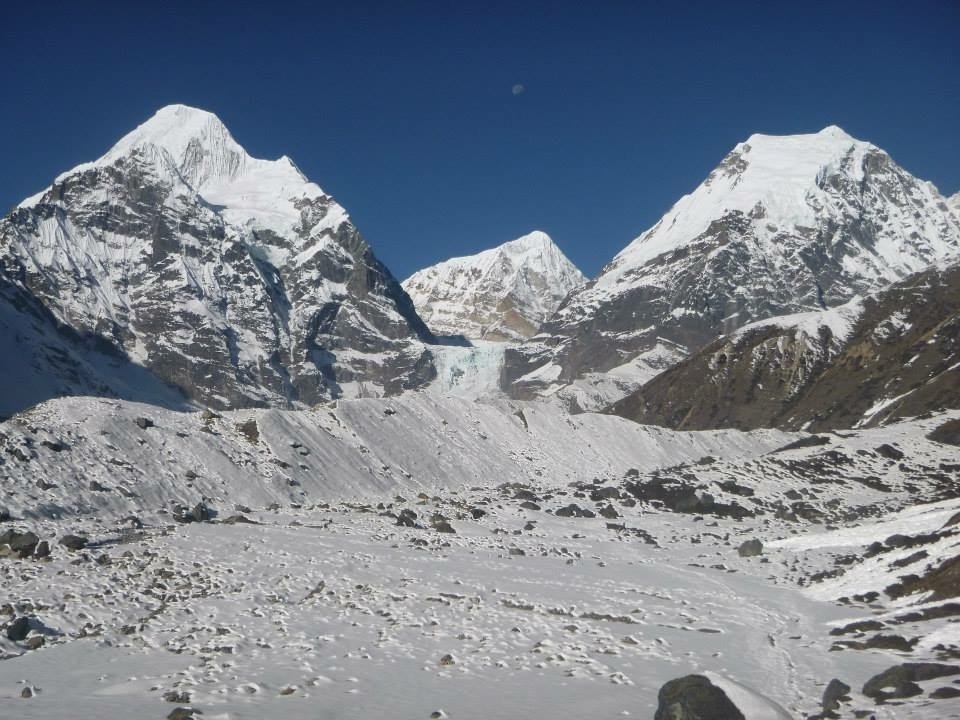
The biggest reward is reaching Makalu Base Camp, where Mount Makalu rises powerfully above the surrounding Himalayan landscape. From the base camp area and nearby viewpoints, trekkers may see Makalu, Chamlang, Baruntse, Peak 6, Peak 7, and distant Himalayan peaks depending on weather and visibility.
This trek is not only about reaching a destination. It is about the gradual transition from village life to high mountain wilderness.
Where Is Makalu Base Camp?
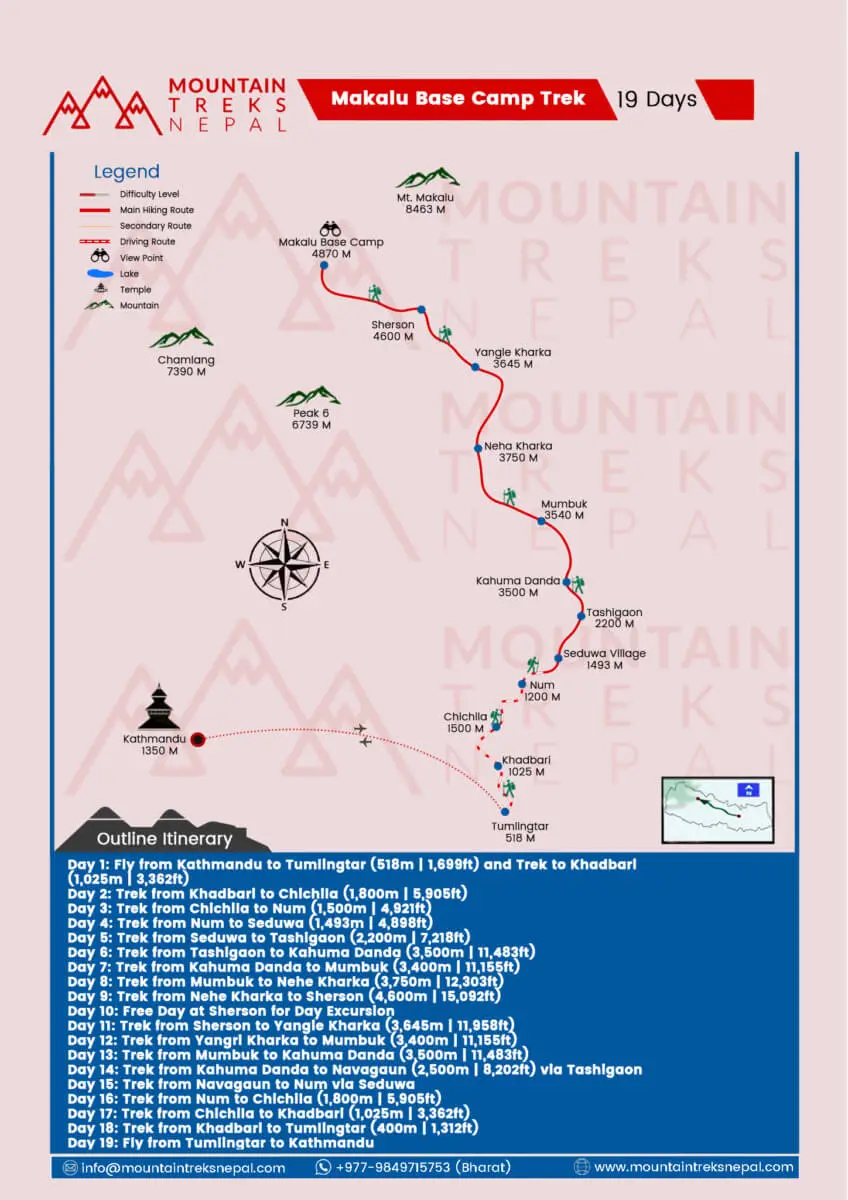
Makalu Base Camp lies in the Makalu region of eastern Nepal, inside Makalu Barun National Park. The trek usually begins with a flight from Kathmandu to Tumlingtar, followed by a road journey toward Num. From Num, the walking trail leads through Seduwa, Tashigaon, Khongma Danda, Dobato, Yangle Kharka, Langmale Kharka, and finally Makalu Base Camp.
The region is remote and less developed than Everest or Annapurna. This is part of what makes the journey special, but it also means trekkers should be prepared for basic facilities, long walking days, and limited communication.
Makalu Base Camp Trek Highlights
- Reach Makalu Base Camp at 4,870 meters / 15,978 feet
- Trek near Mount Makalu, the fifth-highest mountain in the world
- Explore Makalu Barun National Park, one of Nepal’s most biodiverse protected areas
- Walk through remote villages such as Num, Seduwa, Tashigaon, Khongma Danda, Yangle Kharka, and Langmale Kharka
- Experience peaceful trails away from the busy Everest and Annapurna routes
- Cross suspension bridges, river valleys, forests, ridges, and high mountain terrain
- Enjoy views of Makalu, Chamlang, Baruntse, Peak 6, Peak 7, and other Himalayan peaks
- Discover the Barun Valley, a wild and scenic Himalayan valley
- Observe changing landscapes from subtropical forest to alpine and glacial terrain
- Complete a challenging trek suitable for experienced adventure seekers
Makalu Base Camp Trek Itinerary Overview
This 17-day itinerary is planned with gradual altitude gain, remote trail conditions, and necessary rest time in mind.
| Day | Route | Altitude | Duration |
|---|---|---|---|
| Day 1 | Arrival in Kathmandu and pre-trek briefing | 1,400 m | – |
| Day 2 | Fly to Tumlingtar and drive to Num | 1,560 m | Flight + drive |
| Day 3 | Trek from Num to Seduwa | 1,500 m | 5–6 hrs |
| Day 4 | Trek from Seduwa to Tashigaon | 2,070 m | 5–6 hrs |
| Day 5 | Trek from Tashigaon to Khongma Danda | 3,560 m | 8–9 hrs |
| Day 6 | Trek from Khongma Danda to Dobato | 3,860 m | 7–8 hrs |
| Day 7 | Trek from Dobato to Yangle Kharka | 3,610 m | 7–8 hrs |
| Day 8 | Acclimatization day at Yangle Kharka | 3,610 m | Rest day |
| Day 9 | Trek from Yangle Kharka to Langmale Kharka | 4,410 m | 6–7 hrs |
| Day 10 | Trek from Langmale Kharka to Makalu Base Camp | 4,870 m | 6–7 hrs |
| Day 11 | Explore Makalu Base Camp | 4,870 m | Exploration |
| Day 12 | Trek from Makalu Base Camp to Yangle Kharka | 3,610 m | 5–6 hrs |
| Day 13 | Trek from Yangle Kharka to Khongma Danda | 3,560 m | 8–9 hrs |
| Day 14 | Trek from Khongma Danda to Seduwa | 1,500 m | 7–8 hrs |
| Day 15 | Trek to Arun River and drive to Tumlingtar | 518 m | Trek + drive |
| Day 16 | Fly from Tumlingtar to Kathmandu | 1,400 m | Flight |
| Day 17 | Final departure | 1,400 m | Departure |
Detailed Makalu Base Camp Trek Itinerary
Day 1: Arrival in Kathmandu and Pre-Trek Meeting
After arriving at Tribhuvan International Airport, you will be transferred to your hotel in Kathmandu. This day is kept for rest, trek preparation, and a pre-trek meeting with your guide.
During the briefing, your guide explains the route, altitude profile, permits, packing checklist, safety guidelines, weather expectations, food, accommodation, and other important details. Since the Makalu region is remote, proper preparation before leaving Kathmandu is important.
Day 2: Flight to Tumlingtar and Drive to Num
The journey begins with a domestic flight from Kathmandu to Tumlingtar. The flight provides beautiful views of hills, valleys, and Himalayan landscapes when the weather is clear.
After landing at Tumlingtar, the trip continues by vehicle toward Num. The drive passes through rural settlements, green hills, local markets, and winding mountain roads. Num is a hillside village and the starting point of the walking journey.
Day 3: Trek from Num to Seduwa
The trekking journey starts with a descent from Num toward the Arun River. After crossing a suspension bridge, the trail climbs gradually toward Seduwa.
This section introduces trekkers to the remote beauty of the Makalu region. The trail includes river valleys, forest paths, terraced farmlands, and traditional local settlements. Seduwa is located near the entrance area of Makalu Barun National Park and is an important overnight stop.
Day 4: Trek from Seduwa to Tashigaon
The trail from Seduwa to Tashigaon passes through cultivated fields, village trails, and forest sections. The walk is mostly gradual compared to the steeper days ahead.
Tashigaon is one of the last major villages before the route becomes more isolated and physically demanding. It is a good place to experience local farming life, traditional houses, and the culture of the eastern Himalayan region.
Day 5: Trek from Tashigaon to Khongma Danda
This is one of the most demanding days of the trek. The trail climbs steeply from Tashigaon through forests, ridges, and high mountain terrain.
The altitude gain is significant, so slow pacing, hydration, and proper rest are very important. As the trail moves higher, the landscape begins to change from village and forest areas to colder alpine surroundings. Khongma Danda offers a peaceful high-altitude atmosphere and impressive mountain views when the weather is clear.
Day 6: Trek from Khongma Danda to Dobato
The trek from Khongma Danda to Dobato is scenic and adventurous. The trail follows high ridges and may pass through mountain pass areas such as Shipton La and Keke La, depending on trail and weather conditions.
This section can be physically challenging because of altitude, uneven terrain, and possible weather changes. Trekkers should walk carefully, follow the guide’s advice, and avoid rushing.
Day 7: Trek from Dobato to Yangle Kharka
After breakfast, the trail descends through forested areas and remote valleys toward Yangle Kharka. The route passes through rhododendron forests, river sections, and yak grazing landscapes.
Yangle Kharka is a peaceful overnight stop surrounded by mountain wilderness. The open valley, quiet environment, and natural scenery make it one of the most memorable parts of the trek.
Day 8: Acclimatization Day at Yangle Kharka
This day is reserved for acclimatization and rest. Since the next stage moves above 4,000 meters, allowing the body to adjust is important.
Trekkers may take a short hike nearby, explore the surrounding area, drink enough water, eat well, and rest. Acclimatization does not mean staying inactive all day. Light movement can help the body adapt better, but the pace should remain easy and comfortable.
Day 9: Trek from Yangle Kharka to Langmale Kharka
The trail climbs higher into the alpine zone. Vegetation becomes thinner, the air becomes colder, and the landscape turns more rugged and open.
Trekkers pass through yak pastures, rocky trails, and high mountain scenery before reaching Langmale Kharka. This is the final overnight stop before Makalu Base Camp. Because the altitude is above 4,000 meters, walking slowly and staying hydrated are essential.
Day 10: Trek from Langmale Kharka to Makalu Base Camp
This is the most exciting day of the trek. The trail moves through high-altitude terrain, rocky sections, glacier-fed landscapes, and open valleys before reaching Makalu Base Camp.
After several days of walking through remote Himalayan terrain, reaching the base of Mount Makalu feels deeply rewarding. The mountain scenery around the base camp is dramatic, raw, and powerful.
Day 11: Explore Makalu Base Camp
This day is kept for exploration, photography, rest, and viewpoint hikes around the base camp area. Depending on weather and trail conditions, trekkers may walk around nearby viewpoints for better views of Mount Makalu, Barun Glacier, Chamlang, Lhotse, and other Himalayan peaks.
This extra day also provides flexibility in case of weather changes or slower movement due to altitude.
Day 12: Trek from Makalu Base Camp to Yangle Kharka
After breakfast, the return journey begins. The trail descends through rocky terrain, alpine valleys, and glacial surroundings toward Yangle Kharka.
As the altitude decreases, breathing becomes easier and walking feels more comfortable. The return trail offers another opportunity to enjoy the beauty of Barun Valley from a different perspective.
Day 13: Trek from Yangle Kharka to Khongma Danda
This is another long and demanding trekking day. The trail climbs back through remote valleys, forest sections, and high-altitude terrain toward Khongma Danda.
Even though the route is familiar, the day still requires good stamina and careful pacing. Your guide will help maintain a safe rhythm throughout the walk.
Day 14: Trek from Khongma Danda to Seduwa
The trail descends significantly as trekkers leave the higher ridges and return toward the lower village areas. The walk passes through forests, farmlands, and local settlements before reaching Seduwa.
The warmer temperature and thicker air make this day feel easier compared to the high-altitude sections.
Day 15: Trek to Arun River and Drive to Tumlingtar
After breakfast, the route descends toward the Arun River and continues to the road connection point. From there, you drive back to Tumlingtar.
This day marks the end of the trekking trail. You can rest in Tumlingtar and enjoy the final evening in the eastern hills of Nepal.
Day 16: Flight from Tumlingtar to Kathmandu
After breakfast, you take the return flight from Tumlingtar to Kathmandu. Once in Kathmandu, you will be transferred to your hotel.
The rest of the day can be used for rest, shopping, or exploring Kathmandu. Since domestic mountain flights can be affected by weather, it is wise to keep some flexibility in your travel plan.
Day 17: Final Departure
The Mountain Treks Nepal team will transfer you to Tribhuvan International Airport for your final departure. You leave Nepal with memories of one of the most remote and rewarding trekking routes in the Himalayas.
Makalu Base Camp Trek Difficulty
The Makalu Base Camp Trek is considered a strenuous trek. It is more demanding than many mainstream trekking routes in Nepal because of its remoteness, long walking days, steep ascents, high altitude, limited facilities, and rugged terrain.
Some days require 7 to 9 hours of walking. The trail includes steep climbs, descents, high ridges, rocky paths, forest sections, river crossings, and isolated valleys. Trekkers should have good physical fitness and preferably previous hiking or trekking experience.
This trek is not recommended for complete beginners unless they have strong fitness, mental preparation, and enough time to train before the trip.
Who Should Choose This Trek?
The Makalu Base Camp route is suitable for trekkers who:
- Want a remote trekking experience in Nepal
- Prefer peaceful trails over crowded routes
- Have previous hiking or trekking experience
- Are physically fit and comfortable with long walking days
- Can handle basic food, accommodation, and limited facilities
- Want to explore Makalu Barun National Park
- Are interested in biodiversity, mountain culture, and raw Himalayan landscapes
- Are looking for a challenging trek beyond Everest Base Camp or Annapurna Base Camp
This trek is not ideal for people looking for luxury lodges, short easy walks, or highly developed trekking infrastructure.
Best Time for Makalu Base Camp Trek
The best time for the Makalu Base Camp Trek is during spring and autumn.
Spring: March to May
Spring is one of the most beautiful times for trekking in the Makalu region. The weather is generally pleasant, days are longer, and rhododendron forests may bloom along the trail. Mountain views are often clear, especially in the morning.
Lower elevations can feel warm in late spring, while higher areas remain cold. This season is good for trekkers who enjoy forest trails, flowers, and comfortable daytime temperatures.
Autumn: September to November
Autumn is considered one of the best seasons for trekking in Nepal. After the monsoon, the skies are usually clearer, visibility improves, and mountain views are excellent. The weather is more stable compared to monsoon and winter.
October and November are especially popular for remote treks because of good visibility and comfortable trekking conditions.
Winter and Monsoon
Winter and monsoon treks are possible but more challenging. Winter can bring extreme cold, snow, icy trails, and closed or difficult high passes. Monsoon brings rain, slippery trails, leeches in lower areas, cloud cover, and possible flight delays.
For most trekkers, spring and autumn remain the safest and most comfortable seasons.
Makalu Base Camp Trek Permits
Trekkers need permits to enter and trek in the Makalu region. Commonly required permits include:
| Permit | Purpose |
|---|---|
| Makalu Barun National Park Entry Permit | Required for entering the national park area |
| TIMS or applicable trekking registration | Used for trekker record and safety management |
| Local permits if applicable | May be required depending on current local regulations |
Permit fees and requirements may change over time, so trekkers should confirm the latest details before departure. Booking with a local trekking company helps simplify the process because the team can arrange permits, documents, transportation, and route logistics.
Food During the Makalu Base Camp Trek
Food during the trek is served at local teahouses. Common meals include dal bhat, noodles, fried rice, soup, pasta, potatoes, eggs, Tibetan bread, tea, coffee, and seasonal local dishes.
At lower elevations, food options may be more varied. As the trail moves higher and more remote, menus become limited because supplies are difficult to transport. Dal bhat is highly recommended because it is filling, warm, and suitable for long trekking days.
Trekkers should carry some personal snacks such as energy bars, nuts, dried fruits, electrolyte powder, or chocolate for long walking sections.
Accommodation During the Trek
Accommodation on the Makalu Base Camp Trek is mostly in basic teahouses and lodges. Rooms are usually simple twin-sharing rooms with basic beds and blankets.
Facilities become more basic as altitude increases. Toilets are generally shared. Hot showers may be available in some lower villages for an extra charge but are not guaranteed everywhere. A warm sleeping bag is strongly recommended, especially at higher elevations.
In Kathmandu, accommodation is usually provided in a hotel based on the selected package standard.
Internet, Mobile Network, Electricity, and Hot Shower
The Makalu region is remote, so internet and mobile network coverage are limited. Some lower villages may have mobile signals, but higher areas may not have reliable connection.
Charging may be available in some teahouses for an extra cost. Hot showers may also be available in selected places but should not be expected throughout the route.
Trekkers should carry:
- Power bank
- Extra camera batteries
- Headlamp
- Enough cash
- Offline maps or saved documents
- Water purification method
- Warm sleeping gear
Drinking Water During the Trek
Bottled water may be available in some lower villages but becomes expensive and less available at higher elevations. Boiled water is often available at teahouses for an extra cost.
To reduce plastic waste, trekkers are encouraged to carry a reusable water bottle and use purification tablets, filters, or purification drops. Drinking enough water is also important for altitude adjustment.
Altitude Sickness and Safety
Altitude sickness is a real concern on the Makalu Base Camp Trek because the route reaches 4,870 meters. Symptoms may include headache, nausea, dizziness, loss of appetite, tiredness, and difficulty sleeping.
To reduce risk:
- Walk slowly
- Stay hydrated
- Avoid alcohol
- Eat enough food
- Do not rush altitude gain
- Inform your guide about symptoms early
- Take acclimatization days seriously
- Descend if symptoms become serious
A good trekking itinerary should include proper pacing and acclimatization support. Travel insurance with high-altitude trekking and emergency evacuation coverage is strongly recommended.
Altitude Chart
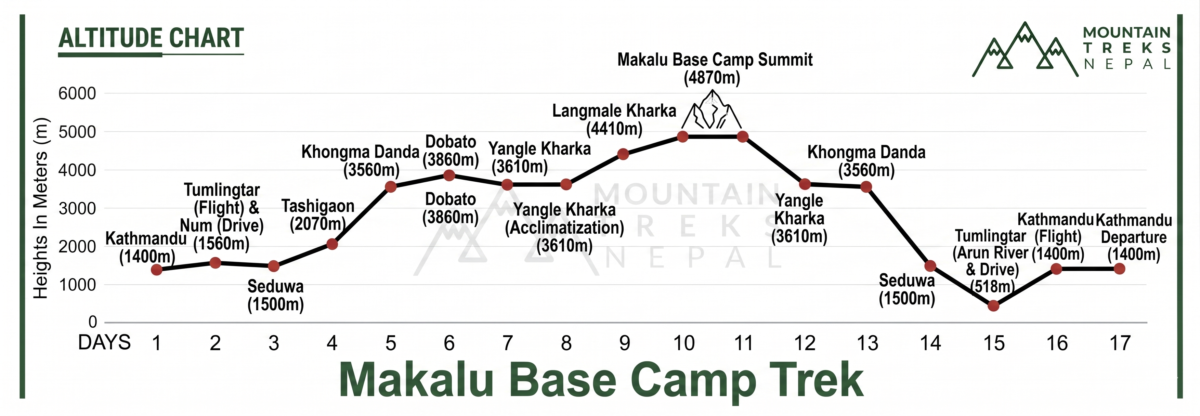
This 17-Day Makalu Base Camp Trek altitude chart beautifully maps out a highly challenging and remote Himalayan journey, tracking your progression from the low valleys straight into the high-alpine zone. Your adventure kicks off at 1,400 meters in Kathmandu, moving through the transit hub of Tumlingtar and Num (1,560m) before dropping slightly into the river basin at Seduwa (1,500m). From Day 4, the chart illustrates a demanding and sharp upward trajectory as you conquer massive elevation gains, climbing steeply through Tashigaon (2,070m) and Khongma Danda (3,560m) to cross a high mountain ridge at Dobato (3,860m). The line then drops slightly into a horizontal plateau at Yangle Kharka (3,610m) on Days 7 and 8, visually highlighting your essential acclimatization rest day where no altitude is gained. Moving forward, the profile surges upward once again through Langmale Kharka (4,410m) until it crests at the pinnacle of your trek: the majestic Makalu Base Camp at 4,870 meters. The flat crest across Days 10 and 11 signifies your dedicated exploration time directly beneath the towering south face of Mt. Makalu. The return leg of the chart mirrors your ascent with a rapid downward slope as you quickly shed altitude through the familiar stops of Yangle Kharka, Khongma Danda, and Seduwa, hitting the absolute lowest point of the journey at the Tumlingtar airstrip (518m) before a final vertical step brings you back to 1,400 meters in Kathmandu for your departure.
Travel Insurance for Makalu Base Camp Trek
Travel insurance is essential for this trek because of the remote terrain, high altitude, and limited road access. A good policy should cover:
- High-altitude trekking
- Emergency medical treatment
- Helicopter evacuation
- Trip cancellation or delay
- Lost baggage
- Flight delays or cancellations
- Accidents and illness
Trekkers should check policy details carefully before buying insurance. Not all general travel insurance covers trekking above 4,000 meters.
What to Pack for Makalu Base Camp Trek
A good packing list makes the trek safer and more comfortable.
Clothing
- Thermal tops and bottoms
- Trekking shirts
- Fleece jacket
- Down jacket
- Waterproof and windproof jacket
- Waterproof trousers
- Trekking pants
- Warm hat
- Sun hat
- Gloves
- Buff or neck gaiter
Footwear
- Sturdy hiking boots
- Warm hiking socks
- Sandals or slippers for teahouses
- Gaiters if trekking in snow or wet conditions
Trekking Gear
- Daypack
- Duffel bag
- Trekking poles
- Sleeping bag
- Headlamp
- Sunglasses
- Water bottle
- Water purification tablets or filter
- Rain cover
- Dry bags
Personal Items
- Sunscreen
- Lip balm
- First aid kit
- Personal medicines
- Toiletries
- Quick-dry towel
- Hand sanitizer
- Wet wipes
- Power bank
- Camera
- Cash in Nepali rupees
- Passport and permit copies
Makalu Base Camp Trek Cost
The cost of the Makalu Base Camp Trek depends on itinerary length, group size, service standard, guide and porter arrangement, accommodation level, permits, transportation, and included meals.
A well-managed package usually includes airport transfers, hotel accommodation in Kathmandu, domestic flights, meals during the trek, guide service, permits, national park fees, first aid support, government taxes, and farewell dinner.
Costs may increase due to weather delays, extra nights, personal expenses, hot showers, charging, Wi-Fi, snacks, drinks, porter service, travel insurance, visa fees, and tips.
For accurate pricing, trekkers should contact Mountain Treks Nepal directly and confirm what is included and excluded in the package.
Makalu Base Camp Trek vs Everest Base Camp Trek
| Feature | Makalu Base Camp Trek | Everest Base Camp Trek |
|---|---|---|
| Crowd Level | Less crowded | More crowded |
| Difficulty | Strenuous | Moderate to strenuous |
| Facilities | Basic and limited | More developed |
| Accommodation | Basic teahouses | Better teahouse network |
| Route Feel | Remote wilderness | Popular classic trail |
| Best For | Experienced trekkers seeking solitude | First-time high-altitude trekkers with good fitness |
| Culture | Eastern Nepal villages, Rai/Sherpa influence | Sherpa culture of Khumbu |
| Main View | Mount Makalu and Barun Valley | Everest, Lhotse, Nuptse, Ama Dablam |
| Trail Infrastructure | Less developed | More established |
The Makalu route is better for trekkers who want remoteness and fewer crowds. Everest Base Camp is better for trekkers who want a more established trail with stronger lodge infrastructure.
Makalu Base Camp Trek vs Annapurna Base Camp Trek
| Feature | Makalu Base Camp Trek | Annapurna Base Camp Trek |
|---|---|---|
| Duration | Around 17 days | Usually 7–12 days |
| Difficulty | Strenuous | Moderate |
| Remoteness | Very remote | More accessible |
| Facilities | Basic | More comfortable |
| Maximum Altitude | 4,870 m | 4,130 m |
| Best For | Experienced trekkers | Beginners to intermediate trekkers |
| Trail Type | Wilderness and high mountain terrain | Forest, villages, amphitheater mountain views |
| Crowd Level | Low | Moderate to high |
Annapurna Base Camp is easier and more accessible, while Makalu Base Camp is more remote, longer, and physically demanding.
Why Trek with Mountain Treks Nepal?
Choosing the right trekking agency matters more on remote routes like Makalu than on heavily developed trails. The region has limited facilities, fewer trekkers, basic communication, and long walking sections. Good planning, experienced guides, and safety-focused logistics make a real difference.
Mountain Treks Nepal offers:
- Local trekking company based in Nepal
- Experienced guides familiar with remote Himalayan routes
- Carefully planned itinerary with acclimatization support
- Flexible private trip options
- Permit, flight, transport, and logistics assistance
- Safety-focused trekking service
- Customizable itinerary based on time, budget, and fitness level
- Friendly local team with practical mountain knowledge
For trekkers comparing the best trekking agency in Nepal for remote Himalayan routes, the most important factors should be safety, transparency, local experience, communication, and realistic itinerary planning.
Responsible Trekking in Makalu Barun National Park
Makalu Barun National Park is ecologically rich and culturally important. Trekkers should follow responsible travel practices to protect the environment and support local communities.
Responsible trekking tips:
- Carry reusable water bottles
- Avoid plastic waste
- Carry out non-biodegradable waste
- Respect local customs and traditions
- Ask before photographing people
- Support local teahouses and communities
- Use water and fuel responsibly
- Stay on marked trails
- Follow guide instructions
- Avoid disturbing wildlife
Remote trekking is not only about adventure. It is also about respecting the land, culture, and people who make the journey possible.
Is Makalu Base Camp Trek Worth It?
Yes, the Makalu Base Camp Trek is worth it for trekkers who want a remote, peaceful, and physically challenging Himalayan journey. It offers wild landscapes, quiet trails, strong mountain views, biodiversity, local culture, and the rare feeling of walking in a region that still feels untouched by mass tourism.
However, it is not the right trek for everyone. The route is strenuous, the facilities are basic, and the location is remote. Trekkers should choose this journey only after understanding the difficulty and preparing properly.
For those who are ready, Makalu Base Camp is one of the most meaningful trekking experiences in Nepal.
Conclusion
The Makalu Base Camp Trek is a powerful journey into one of Nepal’s most remote Himalayan regions. From the flight to Tumlingtar and the climb through Num, Seduwa, Tashigaon, Khongma Danda, Dobato, Yangle Kharka, and Langmale Kharka, every stage of the trek reveals a new layer of eastern Nepal’s natural and cultural beauty.
The journey demands fitness, patience, preparation, and respect for altitude. In return, it offers peaceful trails, dramatic valleys, high mountain landscapes, and the unforgettable experience of standing below Mount Makalu.
For trekkers who want more than a popular trail, Makalu Base Camp offers a deeper connection with the Himalayas. With Mountain Treks Nepal, this 17-day journey is planned with local knowledge, practical support, and a safety-focused approach.
Frequently Asked Questions About Makalu Base Camp Trek
1. How long is the Makalu Base Camp Trek?
The itinerary includes arrival in Kathmandu, flight to Tumlingtar, drive to Num, trekking days through Seduwa, Tashigaon, Khongma Danda, Dobato, Yangle Kharka, Langmale Kharka, Makalu Base Camp exploration, return trek, flight back to Kathmandu, and final departure. Some companies offer longer or shorter versions depending on acclimatization, route, transport, and buffer days.
2. What is the altitude of Makalu Base Camp?
The trek reaches its highest overnight point at Makalu Base Camp. Because the altitude is close to 5,000 meters, trekkers should walk slowly, stay hydrated, follow proper acclimatization, and report any symptoms of altitude sickness to the guide immediately.
3. Is the Makalu Base Camp Trek difficult?
The trek includes long walking days, steep ascents and descents, high-altitude sections, remote terrain, basic facilities, and limited communication. Some days require 7 to 9 hours of walking. It is best for physically fit trekkers with previous hiking or trekking experience.
4. Is Makalu Base Camp Trek suitable for beginners?
Beginners with strong fitness and serious preparation may complete the trek, but the route is generally better suited for trekkers who already have experience with multi-day hiking or trekking. The remoteness and physical demand make it more challenging than many popular beginner-friendly treks in Nepal.
5. What is the best time for Makalu Base Camp Trek?
Spring offers pleasant weather, longer daylight, and blooming rhododendron forests. Autumn provides clearer skies, stable weather, and excellent mountain visibility. Winter and monsoon are possible but more difficult due to snow, cold, rain, slippery trails, clouds, and possible transport delays.
6. Where does the Makalu Base Camp Trek start?
Most itineraries begin in Kathmandu. Trekkers fly to Tumlingtar, drive to Num, and then start walking through villages and forests toward Makalu Base Camp. The return journey usually follows a similar trail back to Tumlingtar.
7. What permits are required for Makalu Base Camp Trek?
Permit requirements and fees can change, so it is best to confirm current regulations before departure. Mountain Treks Nepal can assist with arranging the required permits and official documents for the trek.
8. Do I need a guide for Makalu Base Camp Trek?
The Makalu region is remote, less crowded, and physically demanding. A guide helps with navigation, local communication, accommodation coordination, safety decisions, altitude awareness, and emergency response. For a remote trek like Makalu, experienced guidance adds important safety value.
9. Do I need a porter for this trek?
Since the trek is long and physically demanding, carrying a heavy backpack can increase fatigue and reduce enjoyment. A porter allows trekkers to walk with only a daypack while supporting local employment. Porter arrangements should follow fair weight limits and ethical working conditions.
10. What kind of accommodation is available?
Rooms are usually simple twin-sharing rooms with basic beds and blankets. Facilities become more limited at higher elevations. Toilets are often shared, and hot showers may not be available everywhere. A warm sleeping bag is recommended.
11. What food is available during the trek?
Food options are better in lower villages and more limited at higher altitudes. Dal bhat is a reliable meal because it is warm, filling, and suitable for long trekking days. Trekkers should carry personal snacks for long walking sections.
12. Is drinking water available on the trail?
Boiled water may be available at teahouses, and bottled water may be found in some lower villages. At higher elevations, bottled water becomes expensive and less available. Using purification tablets, filters, or drops is recommended.
13. Is there internet during the Makalu Base Camp Trek?
Some lower villages may have mobile network or paid Wi-Fi, but the connection can be slow or unavailable, especially at higher elevations. Trekkers should inform family or friends before the trek that communication may be limited.
14. Can I charge my phone during the trek?
Electricity is limited in remote areas. Carrying a power bank, extra batteries, and a headlamp is recommended. Do not depend completely on charging facilities throughout the route.
15. Are hot showers available?
At higher elevations, hot showers become limited and may require extra payment. Wet wipes, a quick-dry towel, and basic hygiene supplies are useful for remote trekking conditions.
16. What mountains can be seen during the trek?
Views depend on weather and visibility. The base camp area offers dramatic views of Mount Makalu and nearby Himalayan landscapes. Clear mornings often provide the best visibility.
17. Is altitude sickness a risk?
The trek reaches 4,870 meters, so altitude symptoms can occur. Headache, nausea, dizziness, tiredness, and loss of appetite should not be ignored. Proper acclimatization, slow walking, hydration, and guide communication are important.
18. Do I need travel insurance?
Insurance should cover high-altitude trekking, emergency medical treatment, helicopter evacuation, trip cancellation, and delays. Trekkers should confirm that the policy covers trekking up to at least 5,000 meters.
19. What should I pack for Makalu Base Camp Trek?
The trek moves through different climate zones, so layering is important. A warm sleeping bag, down jacket, gloves, hat, waterproof jacket, sturdy boots, power bank, sunscreen, and first aid kit are highly recommended.
20. How fit should I be for this trek?
Training should include walking, hiking, stair climbing, cardio, leg strength, and backpack practice. Start training several weeks or months before the trek, especially if you are not used to long walking days.
21. Can the itinerary be customized?
The route can be adjusted based on time, budget, group size, fitness level, acclimatization needs, and travel preference. Extra buffer days can be useful because weather may affect flights and road conditions.
22. How does Makalu Base Camp compare with Everest Base Camp?
Everest Base Camp has better lodge infrastructure and more trekkers. Makalu Base Camp is quieter, wilder, and more physically demanding. Trekkers looking for solitude may prefer Makalu, while first-time high-altitude trekkers may prefer Everest.
23. Is Makalu Base Camp Trek safe?
The main safety concerns are altitude, remoteness, weather changes, long walking days, and limited facilities. Trekking with a reliable local team, carrying proper gear, and having insurance with evacuation coverage improves safety.
24. Is Makalu Base Camp Trek worth it?
The trek offers peaceful trails, dramatic landscapes, biodiversity, local villages, and close views of Mount Makalu. It is especially rewarding for trekkers who want a less commercial trekking route in Nepal.
25. Why choose Mountain Treks Nepal for this trek?
A remote trek like Makalu requires good logistics, route knowledge, permit handling, transport coordination, and altitude awareness. Mountain Treks Nepal helps trekkers plan and complete the journey with local expertise, practical guidance, and flexible trip arrangements.