



Share This:

Island Peak Climbing (6,189m): Conquering Imja Tse in the Heart of the Everest Region (2026–2027 Edition)
Rising to a commanding elevation of 6,189 meters (20,305 feet) in the heart of Nepal’s Khumbu Valley, Island Peak known locally as Imja Tse is the undisputed crown jewel of Himalayan trekking peaks. Positioned like a jagged, snow-draped island emerging from a frozen sea of glaciers, the mountain sits on the extended southern ridge of Lhotse Shar, framed by the colossal walls of Lhotse, Nuptse, Baruntse, and Ama Dablam.
For ambitious trekkers ready to cross the threshold from high-altitude hiking into genuine Himalayan mountaineering, Island Peak Climbing is the ultimate proving ground. Unlike non-technical snow walks, Imja Tse demands real alpine skills: roped glacier travel, crossing deep crevasses on aluminum ladders, front-pointing up a steep 45° to 50° ice headwall on fixed lines, and balancing along an exposed, knife-edge summit ridge.
Originally named by Eric Shipton’s British Everest reconnaissance team in 1951–1952 and first summited in 1953 by members of the historic British Everest Expedition including Tenzing Norgay Sherpa as a training climb for Mount Everest, Island Peak continues to serve that exact purpose today. Standing on its summit bridges the gap between commercial trekking and 7,000-meter or 8,000-meter expedition climbing.
This exhaustive operational guide is crafted by the certified high-altitude climbing specialists at Mountain Treks Nepal. Built around our field-tested 14-Day Island Peak Climbing expedition, this manual covers every logistical, technical, and physiological detail required to reach 6,189 meters safely: from the geography of the Imja Valley and the 2026 Ramechhap flight diversions, to Base Camp skills clinics, summit-night tactics, permit fees, gear rentals, and a complete 16-week physical training blueprint.
Geography, History, and the Meaning of “Imja Tse”

Understanding the terrain of the Khumbu region provides essential context for the physical and visual drama of the climb. Island Peak sits within Sagarmatha National Park, a UNESCO World Heritage site in northeastern Nepal.
Why “Island Peak” and “Imja Tse”?
When viewed from the high-altitude village of Dingboche (4,410m), the mountain rises dramatically out of the surrounding glacial floor, appearing completely isolated like an island in a sea of ice. Recognizing this striking topography, the 1951–1953 British Himalayan expeditions named it Island Peak. In 1983, the Government of Nepal formally assigned the mountain its local Sherpa name, Imja Tse, referring to the Imja Valley and Imja Glacier that flank its base. Both names are used interchangeably across maps, permits, and mountaineering literature.
The Surrounding Amphitheater of Giants
Island Peak is an extension of the south ridge of Lhotse Shar. Reaching its Base Camp and summit places climbers inside one of the most dramatic alpine amphitheaters on Earth:
-
To the North: The sheer, 3,000-meter-high South Face of Lhotse (8,516m) and Lhotse Middle, alongside Nuptse (7,861m).
-
To the East: The massive glaciated pyramid of Makalu (8,485m), the fifth-highest mountain in the world, and Baruntse (7,129m).
-
To the South: The iconic, razor-sharp spire of Ama Dablam (6,812m), often called the “Matterhorn of the Himalayas.”
Can Climbers See Mount Everest from the Summit of Island Peak?
A common misconception is that Mount Everest is visible from the summit of Island Peak. Despite sitting just 10 kilometers south of Everest, the summit of Mount Everest is completely blocked from view by the massive wall of Lhotse. However, climbers enjoy breathtaking, unobstructed views of Everest throughout the approach trek from the ridge above Namche Bazaar, the Everest View Hotel, Tengboche Monastery, and the upper Imja Valley.
Technical Difficulty and Alpine Grade (PD+)

While the Nepal Mountaineering Association (NMA) officially classifies Island Peak as a “Trekking Peak” (Group B), the label can be misleading. Island Peak is graded Alpine PD+ (Peu Difficile Plus) meaning it is a genuine mountaineering objective requiring technical hardware, rope management, and comfort with exposure.
The Three Technical Cruxes of Island Peak
-
The Glacier and Crevasse Crossing: Above the rocky scramble from Base Camp lies “Crampon Point,” where climbers step onto the active summit glacier. This glaciated terrain is fractured by deep, shifting crevasses some spanning 3 to 4 meters wide. Climbers travel roped together in teams and cross the widest crevasses using fixed aluminum ladders anchored by Sherpa climbing teams. Walking across a narrow ladder over a bottomless blue ice chasm in heavy double boots and 12-point crampons is a defining psychological test.
-
The Ice Headwall (The Main Crux): After navigating the glacier, the route hits a steep snow and ice headwall rising 100 to 150 meters at an angle of 45° to 50°. Fixed ropes are anchored along the entire wall. Climbers clip into the fixed line with a mechanical ascender (Jumar) and a safety lanyard, kicking the front points of their crampons into the ice and hauling themselves upward step by step in oxygen-depleted air.
-
The Knife-Edge Summit Ridge: Topping out on the headwall does not immediately end the climb. Climbers must traverse a narrow, heavily exposed snow ridge with sheer drops on both sides. Maintaining steady balance, deliberate footwork, and strict focus along this final ridgeline leads directly to the 6,189-meter summit.
Island Peak vs. Mera Peak: Choosing the Right 6,000m Peak
| Feature | Island Peak (Imja Tse) | Mera Peak |
| Summit Elevation | 6,189m (20,305 ft) | 6,476m (21,246 ft) |
| Alpine Grade | PD+ (Technical Trekking Peak) | PD (Non-Technical Glacier Walk) |
| Primary Challenge | Technical ice headwall (45°–50°), crevasse ladders, exposed ridge | Extreme altitude, long glacier slog, colder summit temperatures |
| Technical Gear Needed | Full kit: double boots, crampons, ice axe, harness, jumar, figure-8 descender | Basic glacier kit: double boots, crampons, ice axe, harness, jumar |
| Approach Trail | Iconic Khumbu / Everest Trail (Namche, Tengboche, Dingboche) | Remote, uninhabited Hinku Valley |
| Best For | Trekkers wanting real alpine climbing skills for Ama Dablam or Everest | Trekkers wanting maximum altitude and a 5x 8,000m peak panorama |
The 14-Day Direct Itinerary vs. The 17-Day EBC Combo
Mountain Treks Nepal offers the streamlined 14-Day Island Peak Climbing package, engineered specifically for fit climbers who want to focus their energy and vacation time directly on summiting Imja Tse without the extra days required to detour to Everest Base Camp.
-
14-Day Direct Island Peak Expedition (Mountain Treks Nepal Standard): Follows the classic Khumbu trail through Lukla, Phakding, Namche Bazaar, Tengboche, and Dingboche, with two dedicated acclimatization days (Namche and Dingboche) before turning east into the Chhukung Valley and Island Peak Base Camp. This keeps legs fresh for summit night and fits comfortably into a two-week travel window.
-
16–17 Day EBC + Island Peak Combo (Custom Option): Extends the route north from Dingboche to Lobuche, Gorak Shep, Everest Base Camp (5,364m), and Kala Patthar (5,545m) before returning to Chhukung. This provides extra high-altitude exposure above 5,000 meters and ticks off two bucket-list objectives in one trip, though it requires 3 additional days and higher cumulative physical fatigue.
The Definitive 14-Day Island Peak Climbing Itinerary
This is the exact, day-by-day operational itinerary run by Mountain Treks Nepal. Every elevation gain, rest day, and training clinic is structured to maximize acclimatization and summit success.
Itinerary at a Glance
| Day | Route | Max Altitude | Walking / Climbing Time | Accommodation | Meals |
| Day 1 | Arrival in Kathmandu | 1,350m (4,429 ft) | Airport transfer | Hotel | Welcome Dinner |
| Day 2 | Fly to Lukla & Trek to Phakding | 2,860m / 2,652m | 35m flight / 3–4 hrs | Teahouse | B, L, D |
| Day 3 | Phakding to Namche Bazaar | 3,440m (11,286 ft) | 6–7 hrs | Teahouse | B, L, D |
| Day 4 | Acclimatization Day in Namche Bazaar | 3,880m (hike) / 3,440m | 4–5 hrs | Teahouse | B, L, D |
| Day 5 | Namche Bazaar to Tengboche | 3,860m (12,664 ft) | 5–6 hrs | Teahouse | B, L, D |
| Day 6 | Tengboche to Dingboche | 4,410m (14,468 ft) | 5–6 hrs | Teahouse | B, L, D |
| Day 7 | Acclimatization Day in Dingboche | 5,083m (hike) / 4,410m | 4–5 hrs | Teahouse | B, L, D |
| Day 8 | Dingboche to Chhukung | 4,730m (15,518 ft) | 3–4 hrs | Teahouse | B, L, D |
| Day 9 | Chhukung to Island Peak Base Camp + Skills Clinic | 5,240m (17,191 ft) | 4–5 hrs + training | Expedition Tent | B, L, D |
| Day 10 | Summit Island Peak (6,189m) & Return to Dingboche | 6,189m (20,305 ft) | 10–12 hrs | Teahouse | B, L, D |
| Day 11 | Dingboche to Namche Bazaar | 3,440m (11,286 ft) | 6–7 hrs | Teahouse | B, L, D |
| Day 12 | Namche Bazaar to Lukla | 2,860m (9,383 ft) | 6–7 hrs | Teahouse | B, L, D |
| Day 13 | Fly Lukla to Kathmandu | 1,350m (4,429 ft) | 35m flight | Hotel | B, Farewell Dinner |
| Day 14 | Final Departure | 1,350m | Airport transfer | — | B |
Day 1: Arrival in Kathmandu (1,350m / 4,429 ft)
Upon landing at Tribhuvan International Airport (TIA), a representative from Mountain Treks Nepal welcomes climbers at the arrival gate and transfers the team to a hotel in Thamel. After checking in and resting, the evening features a formal expedition briefing led by the lead climbing guide. During this session, the team reviews the 14-day schedule, verifies high-altitude travel insurance, finalizes NMA climbing permits, and inspects personal gear to identify any technical equipment that needs to be rented in Thamel. Overnight at a hotel in Kathmandu.
Day 2: Fly to Lukla (2,860m) and Trek to Phakding (2,652m)
Flight: 35 mins (Kathmandu) or 20 mins (Manthali/Ramechhap) | Trek: 3–4 hours (2026 Logistical Note: During peak Spring and Autumn months, fixed-wing flights to Lukla are routinely diverted to Manthali Airport in Ramechhap, requiring a 1:30 AM departure and 4-to-5-hour overland drive from Kathmandu.)
The thrilling mountain flight lands on the short, sloped runway of Tenzing-Hillary Airport in Lukla. After meeting the Sherpa support crew and porters, the trek begins with a gentle descent along the Dudh Koshi River. Passing through the Sherpa settlements of Chheplung and Nurning, the trail is lined with carved mani stones, prayer wheels, and suspension bridges. The short, low-stress hike ends in Phakding (2,652m) to ease the body into mountain elevation. Overnight in a teahouse.
Day 3: Trek from Phakding to Namche Bazaar (3,440m)
Trek: 6–7 hours | Elevation Gain: +788m The trail follows the Dudh Koshi valley northward through Benkar and Monjo, where climbers enter Sagarmatha National Park and complete permit checks. After lunch at Jorsalle, the route crosses five suspension bridges, culminating in the dramatic, prayer-flag-draped Hillary Suspension Bridge high above the river confluence. Beyond the bridge lies a relentless, two-hour uphill climb through pine forests. Midway up the ascent, weather permitting, climbers catch their first glimpse of Mount Everest peeking over the Lhotse-Nuptse ridge before arriving in the horseshoe-shaped Sherpa capital of Namche Bazaar. Overnight in Namche Bazaar.
Day 4: Mandatory Acclimatization Day in Namche Bazaar (3,440m)
Acclimatization Hike: 4–5 hours (up to 3,880m) Active rest is essential at 3,440 meters. Following the mountaineering rule of “climb high, sleep low,” the team hikes steeply up the ridge to the Everest View Hotel (3,880m) for sweeping panoramas of Everest, Lhotse, Nuptse, and Ama Dablam. Climbers can also visit the Sherpa Culture Museum, the Everest Photo Gallery, or extend the walk to Khumjung Village to see the Hillary School and Khumjung Monastery before returning to Namche for the afternoon. Overnight in Namche Bazaar.
Day 5: Trek from Namche Bazaar to Tengboche (3,860m)
Trek: 5–6 hours | Elevation Gain: +420m Leaving Namche, the trail contours along a scenic, relatively flat ridge high above the Dudh Koshi with constant views of Ama Dablam. The path then drops sharply to the riverside hamlet of Phunki Thenga for lunch before tackling a steep, two-hour climb through dense rhododendron and pine forests to reach the grassy plateau of Tengboche. Built in 1916 by Lama Gulu, Tengboche Monastery is the largest and most important Buddhist Gompa in the Khumbu. Climbers can attend the late-afternoon chanting ceremony before retiring for the night. Overnight in Tengboche.
Day 6: Trek from Tengboche to Dingboche (4,410m)
Trek: 5–6 hours | Elevation Gain: +550m Descending through birch and conifer forests to Debuche, the trail crosses the Imja Khola on a steel bridge and climbs steadily past Pangboche. Passing the 4,000-meter mark, the tree line disappears entirely, giving way to dry, windswept alpine tundra. The trail enters the wide Imja Valley, arriving at Dingboche (4,410m), a high-altitude settlement famous for its kilometers of intricate stone walls built to protect barley and potato fields from freezing winds. Overnight in Dingboche.
Day 7: Mandatory Acclimatization Day in Dingboche (4,410m)
Acclimatization Hike: 4–5 hours (up to 5,083m) A second acclimatization day above 4,400 meters is non-negotiable before moving onto a 6,000-meter peak. The team hikes up Nangkartshang Peak (5,083m) directly behind the village. Reaching 5,000 meters stimulates red blood cell production while delivering extraordinary views of Makalu (8,485m), Lhotse, Ama Dablam, and Island Peak itself. Returning to Dingboche for lunch, the afternoon is dedicated to hydration, rest, and oximeter checks. Overnight in Dingboche.
Day 8: Trek from Dingboche to Chhukung (4,730m)
Trek: 3–4 hours | Elevation Gain: +320m A short, deliberate hike leads deeper into the upper Imja Valley. Surrounded by towering glacial moraines and the massive south face of Lhotse, climbers arrive in Chhukung (4,730m), a small seasonal settlement that serves as the final teahouse outpost before Island Peak. The afternoon is spent conducting a final equipment check fitting crampons to double boots, checking harnesses, and renting any last-minute technical items available in Chhukung. Overnight in a teahouse in Chhukung.
Day 9: Trek to Island Peak Base Camp (5,240m) & Pre-Summit Skills Clinic
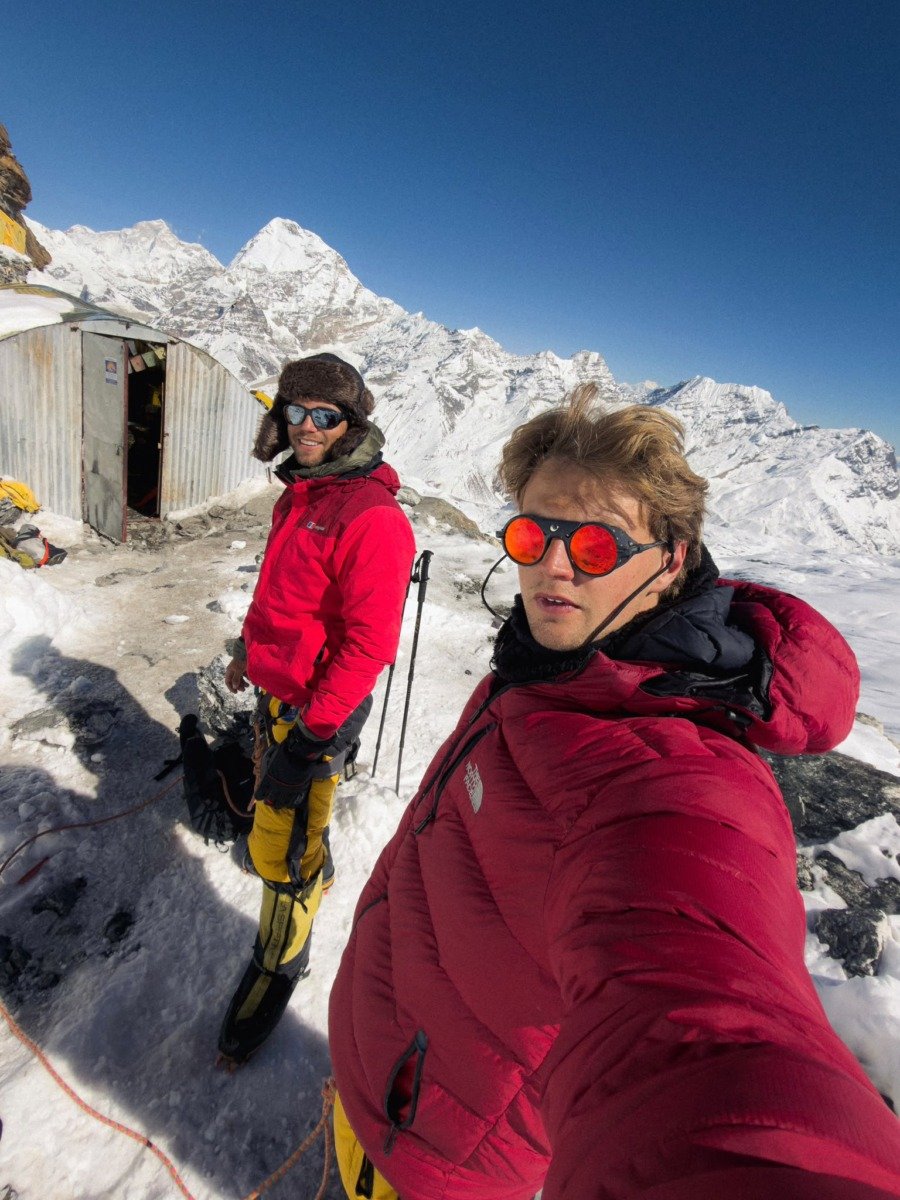
Trek: 4–5 hours | Elevation Gain: +510m Leaving Chhukung, the trail climbs south and then east along a steep, winding path beneath the southern flank of the Lhotse Glacier moraine. Crisscrossing the rocky terrain between the Imja and Lhotse glaciers, the team arrives at Island Peak Base Camp (5,240m) known locally as Pareshaya Gyab situated in a stark, dusty bowl beneath the southwest face of the peak.
The Mandatory Pre-Summit Skills Clinic: After settling into the Mountain Treks Nepal tented camp and eating a hot lunch, the lead climbing Sherpas conduct a hands-on mountaineering clinic on nearby rock and ice slopes. Climbers practice:
-
Proper harness fitting and tying into a rope team.
-
Ascending fixed lines with a Jumar (mechanical ascender) and transferring past anchors.
-
Abseiling (rappelling) smoothly using a Figure-8 or ATC descender.
-
Walking and front-pointing efficiently in 12-point crampons.
An early dinner is served in the dining tent, followed by rest before the midnight wake-up call. Overnight in 4-season expedition tents at Base Camp.
Day 10: Summit Island Peak (6,189m) & Descend to Dingboche (4,410m)
Climbing & Trekking Time: 10–12 hours | Elevation Profile: +949m Ascent / -1,779m Descent Summit Day. The team wakes between 12:00 AM and 1:00 AM in freezing temperatures (-15°C to -20°C). After a quick breakfast of hot porridge and tea, climbers strap on headlamps and depart Base Camp to reach the summit before midday winds and solar warming soften the glacier.
-
The Rock Gully & Ridge (5,240m – 5,600m): The trail climbs a steep, sandy hillside that quickly turns into a boulder-strewn rock gully with short scrambling steps, passing the cramped ledge of High Camp (5,600m).
-
Crampon Point & Glacier Traverse (5,600m – 5,950m): At the snout of the glacier, climbers put on crampons, harnesses, and helmets, roping up with their Sherpa guides. The route weaves through seracs and crosses deep crevasses via fixed aluminum ladders.
-
The Ice Headwall (5,950m – 6,100m): Reaching the base of the 100–150m headwall (45°–50°), climbers clip their jumars onto the fixed line and ascend steadily.
-
The Summit Ridge (6,100m – 6,189m): Topping the headwall leads onto the narrow, exhilarating summit ridge. A final careful push brings the team to the 6,189-meter summit of Island Peak.
After celebrating and taking photos of Lhotse, Makalu, Baruntse, and Ama Dablam, climbers rappel back down the fixed lines, re-cross the glacier, and descend to Base Camp for hot soup and tea. Refueled, the team packs up and descends all the way to the oxygen-rich air and warm teahouses of Dingboche (4,410m) for a deeply earned night’s sleep. Overnight in Dingboche.
Day 11: Trek from Dingboche to Namche Bazaar (3,440m)
Trek: 6–7 hours | Elevation Loss: -970m Retracing the Khumbu trail downward through Pangboche, Debuche, and Tengboche, the return journey feels dramatically faster as oxygen levels rise. Descending back below the tree line into fragrant rhododendron and pine forests brings immense physical relief. Arriving in Namche Bazaar, climbers can enjoy a hot shower, fresh bakery treats, and a celebratory meal. Overnight in Namche Bazaar.
Day 12: Trek from Namche Bazaar to Lukla (2,860m)
Trek: 6–7 hours | Elevation Loss: -580m The final day on foot drops steeply down the Namche hill, crossing the Hillary Suspension Bridge one last time and following the Dudh Koshi River out of Sagarmatha National Park through Monjo and Phakding. A final uphill push enters Lukla, where the team celebrates the expedition’s success and shares traditional gratuities with the Sherpa guides and porters. Overnight in Lukla.
Day 13: Fly Lukla to Kathmandu (1,350m)
An early morning flight returns climbers to Kathmandu (or Manthali Airport followed by the overland transfer). After checking back into the hotel, the afternoon is free for rest, massages, or souvenir shopping in Thamel. In the evening, Mountain Treks Nepal hosts a traditional Nepali farewell dinner. Overnight in Kathmandu.
Day 14: Final Departure
A Mountain Treks Nepal representative escorts climbers to Tribhuvan International Airport approximately three hours before international departure.
Base Camp vs. High Camp Strategy
A frequent strategic question on Island Peak is whether to launch the summit push directly from Base Camp (5,240m) or move up to High Camp (5,600m).
-
Launching from Base Camp (Mountain Treks Nepal Standard): Base Camp sits in a wide, sheltered rocky bowl with reliable glacial meltwater, full kitchen tents, and comfortable sleeping conditions. Starting at 1:00 AM adds roughly 2 hours to summit morning, but climbers actually get real sleep and proper hydration the night before which dramatically improves summit success rates.
-
Launching from High Camp: High Camp is a cramped, rocky, wind-exposed ledge at 5,600 meters with zero natural water source (every liter must be hauled up by porters). Sleep is almost impossible due to altitude and howling winds. While it shortens summit morning, most climbers arrive at the headwall more dehydrated and fatigued than those who slept soundly at Base Camp.
Mandatory Permits and Regulations (2026–2027)
Climbing Island Peak requires three separate permits, all of which are processed and managed by Mountain Treks Nepal before departure:
-
Nepal Mountaineering Association (NMA) Island Peak Climbing Permit: Classified as a Group B Trekking Peak, the NMA royalty fee varies by season:
-
Spring (March – May): USD $250 to $350 per person (subject to current NMA seasonal tariff updates).
-
Autumn (September – November): USD $125 to $175 per person.
-
Winter (Dec – Feb) & Summer (June – Aug): USD $70 to $175 per person.
-
-
Sagarmatha National Park Entry Permit:
-
NPR 3,000 (approx. USD $23) for foreign nationals; NPR 1,500 for SAARC nationals.
-
-
Khumbu Pasang Lhamu Rural Municipality Permit:
-
NPR 3,000 (approx. USD $23) for all foreign trekkers, collected at Lukla or Monjo.
-
Mandatory Licensed Guide Rule: Independent solo climbing on NMA trekking peaks is strictly prohibited. All climbers must be accompanied by a government-licensed climbing guide affiliated with a registered trekking agency.
Altitude Sickness, Safety Protocols, and Travel Insurance
At 6,189 meters, atmospheric oxygen is less than half of sea-level availability. Acute Mountain Sickness (AMS), High Altitude Pulmonary Edema (HAPE), and High Altitude Cerebral Edema (HACE) are serious risks that must be managed systematically.
Mountain Treks Nepal Safety Standards
-
Twice-Daily Oximeter Checks: Guides monitor blood oxygen saturation ($SpO_2$) and resting heart rate every morning and evening to catch altitude stress early.
-
Emergency Oxygen & Medical Kits: Base Camp is stocked with supplemental emergency oxygen and a comprehensive high-altitude medical kit (including Diamox, Dexamethasone, and trauma supplies).
-
Strict Turn-Around Times: Guides enforce non-negotiable summit turn-around times (typically 10:30 AM – 11:00 AM) to ensure the team descends the headwall and glacier before afternoon winds and sun-softened snow create avalanche or rockfall hazards.
-
Satellite Communication: Lead guides carry satellite phones for instant coordination with Kathmandu rescue dispatch.
Mandatory Travel Insurance
Standard travel or credit card insurance does not cover Island Peak. Climbers must present a printed policy that explicitly covers:
-
Technical mountaineering / peak climbing up to 6,500 meters.
-
Emergency helicopter search, rescue, and medical evacuation directly from the Khumbu Valley to Kathmandu.
-
Domestic flight delays/cancellations (critical for Lukla).
Best Time to Climb Island Peak
-
Spring (March to May): Widely regarded as the prime climbing window for Island Peak. Daylight temperatures are warmer, rhododendron forests bloom in the lower valleys, and snow on the glacier and headwall is typically packed and firm for crampon traction. Expect busier fixed lines in April and May.
-
Autumn (September to November): Post-monsoon skies deliver the sharpest, clearest panoramas in the Himalayas with low wind speeds and dry rock gullies. Nighttime temperatures at Base Camp drop sharply by November (-15°C to -20°C), requiring heavyweight insulation.
-
Winter (December to February) & Monsoon (June to August): Not recommended for standard expeditions. Winter brings brutal sub-zero windchills and high winds, while the summer monsoon brings heavy cloud cover, wet snow, slippery trails, heightened crevasse/avalanche risks, and chronic Lukla flight cancellations.
Complete Gear & Technical Equipment List
Summit night temperatures drop to -20°C before windchill, while lower valleys around Phakding can reach 20°C. A disciplined layering system and proper technical hardware are mandatory.
Technical Climbing Hardware (Available for Rent in Kathmandu or Chhukung)
-
Double Mountaineering Boots: Insulated 6,000m boots (e.g., La Sportiva G2 SM, Scarpa Phantom 6000). Standard trekking boots are unsafe for summit day and will cause frostbite.
-
Crampons: 12-point steel mountaineering crampons fitted to the double boots.
-
Ice Axe: Standard straight-shaft walking/mountaineering ice axe.
-
Climbing Harness: Lightweight alpine harness with gear loops.
-
Ascender & Descender: 1 Jumar (mechanical ascender), 1 Figure-8 or ATC belay/rappel device, 2–3 locking carabiners, 2 non-locking carabiners, and 2 prusik loops / safety slings.
-
Climbing Helmet: Essential for rockfall protection in the gully and ice protection on the headwall.
Clothing & Layering System (Zero Cotton)
-
Base Layers: 2–3 sets of heavyweight Merino wool or synthetic thermal tops and bottoms (keep one completely dry set exclusively for summit night).
-
Mid-Layers: Grid fleece jacket and synthetic fleece pants.
-
Outer Shell: Waterproof and windproof GORE-TEX jacket and shell pants with full side-zips (to put on over boots).
-
Expedition Down Jacket: 800+ fill-power heavy down parka with an insulated hood. (Provided as complimentary loaner gear by Mountain Treks Nepal).
-
Down Pants: Optional but strongly recommended for Base Camp evenings and frigid summit starts.
-
Hands & Head: Liner gloves, waterproof insulated mountaineering gloves, heavyweight expedition down mittens, warm beanie, Buff/neck gaiter (to prevent the dry “Khumbu cough”), and Category 4 polarized glacier glasses.
Sleep System, Hydration & Essentials
-
Sleeping Bag: Four-season down sleeping bag rated to -20°C plus a thermal liner. (Complimentary loaner provided by Mountain Treks Nepal).
-
Packs: 35–45L climbing daypack with rain cover, plus an 80L waterproof duffel bag for porters (15 kg strict weight limit).
-
Hydration: Two 1-liter wide-mouth Nalgene bottles with insulated sleeves (or thermal flasks) so water does not freeze solid on summit night, plus water purification tablets.
-
Lighting & Power: 300+ lumen headlamp with fresh lithium spare batteries, and a 20,000mAh power bank (kept inside the sleeping bag at night).
Physical Training Blueprint (16 Weeks Out)
Success on Island Peak depends far more on cardiovascular endurance and leg stamina than on prior technical climbing experience. Training should begin 12 to 16 weeks before departure:
-
Aerobic Base (Zone 2 Cardio): 45–60 minutes of running, cycling, swimming, or rowing 3–4 times per week to train the heart and lungs to operate efficiently on limited oxygen.
-
Weighted Stair Climbing (Rucking): The single most effective preparation. Load a backpack with 10–12 kg (22–26 lbs) and climb stadium stairs, steep hills, or a StairMaster for 1–2 hours twice a week.
-
Lower-Body & Core Strength: Incorporate squats, weighted lunges, step-ups, deadlifts, and planks twice a week. Strong calves prevent cramping while front-pointing on the ice headwall, and a strong core stabilizes the body while hanging on fixed ropes.
Cost Breakdown and What Is Included
A comprehensive, professionally guided 14-Day Island Peak Climbing expedition with Mountain Treks Nepal typically ranges from $2,050 to $2,400 USD per person, depending on group size and seasonal permit tariffs.
Included in Mountain Treks Nepal’s 14-Day Package
-
Airport pickup and drop-off in Kathmandu.
-
2 nights hotel accommodation in Kathmandu with breakfast.
-
Teahouse accommodation along the Khumbu trail and 4-season tented camp at Island Peak Base Camp.
-
Three meals daily (Breakfast, Lunch, Dinner) throughout the trek and climb.
-
Round-trip domestic flights (Kathmandu/Manthali – Lukla – Kathmandu/Manthali).
-
Experienced English-speaking trekking guide, certified Sherpa climbing guide, and porters.
-
All required permits (NMA Island Peak Climbing Permit, Sagarmatha National Park, Khumbu Municipality).
-
All group climbing equipment (fixed ropes, snow bars, ice screws, Base Camp tents, kitchen gear).
-
Complimentary loaner sleeping bag, down jacket, and duffel bag.
-
Comprehensive medical kit, farewell dinner, and all government/local taxes.
Excluded (Budget Separately)
-
International airfare and Nepal entry visa ($30 for 15 days / $50 for 30 days).
-
Specialized high-altitude travel and helicopter evacuation insurance ($150–$350).
-
Personal technical gear rental in Kathmandu/Chhukung ($150–$250).
-
On-trail extras: hot showers ($3–$5), device charging ($3–$5), Everest Link Wi-Fi, bottled/boiled drinks, and snacks.
-
Gratuities for guides and porters (typically 10%–15% of total trip cost).
Frequently Asked Questions (FAQs)
1. How high is Island Peak?
Island Peak (Imja Tse) reaches 6,189 meters (20,305 feet) above sea level.
2. Is prior mountaineering experience required?
No prior technical climbing experience is mandatory, though previous high-altitude trekking experience above 4,500 meters is strongly recommended. Mountain Treks Nepal conducts a full hands-on skills clinic at Base Camp covering crampons, jumars, harnesses, and rappelling before summit night.
3. What is the summit success rate on Island Peak?
Across the industry, summit success averages 70%–80%, with altitude sickness and high winds being the primary turn-around factors. With proper acclimatization in Namche and Dingboche, pre-summit training, and experienced Sherpa guides, Mountain Treks Nepal maintains a success rate exceeding 90%.
4. How steep is the Island Peak ice headwall?
The headwall rises 100 to 150 meters at an angle of 45° to 50°. Climbers ascend using a mechanical ascender (Jumar) clipped to fixed ropes installed by the Sherpa team.
5. Can technical climbing gear be rented in Nepal?
Yes. Double mountaineering boots, crampons, ice axes, harnesses, helmets, and jumars can all be rented in Thamel (Kathmandu) or in Chhukung right before heading to Base Camp. Guides inspect all rented equipment for proper fit and safety.
6. What happens when bad weather hits on Day 10?
Safety always takes precedence over the summit. Mountain Treks Nepal’s itinerary maintains operational flexibility to adjust timing or utilize a buffer day if weather windows shift, though climbers should always book 1–2 extra buffer days in Kathmandu before international flights home.
7. How are toilets and hygiene managed at Island Peak Base Camp?
Mountain Treks Nepal sets up private toilet tents with portable commodes over designated pits, adhering strictly to Leave No Trace (LNT) principles and Sagarmatha National Park waste regulations.
8. Is there Wi-Fi or mobile signal on the route?
Ncell and Nepal Telecom (NTC) mobile coverage and paid Everest Link Wi-Fi are available in villages up to Dingboche and Chhukung. Island Peak Base Camp is a dead zone with no cellular or internet signal; guides carry satellite phones for emergency communication.
Start Your Island Peak Expedition with Mountain Treks Nepal

Standing on the 6,189-meter summit ridge of Island Peak surrounded by the towering glaciers of Lhotse, Makalu, and Ama Dablam is a defining milestone in any adventurer’s life. It transforms a trekker into a mountaineer.
Executing a safe, successful ascent of Imja Tse requires more than personal determination; it requires a local partner with deep Khumbu expertise, certified Everest-summiteer Sherpas, meticulous acclimatization pacing, and rock-solid Base Camp logistics. Mountain Treks Nepal manages every permit, flight, tent, rope, and safety protocol so climbers can focus entirely on the mountain.
Contact the expedition team at Mountain Treks Nepal today to reserve dates for the upcoming Spring or Autumn season, customize a 14-day direct climb or 17-day Everest Base Camp combo, and begin preparing for Nepal’s most iconic 6,000-meter summit.