



Share This:
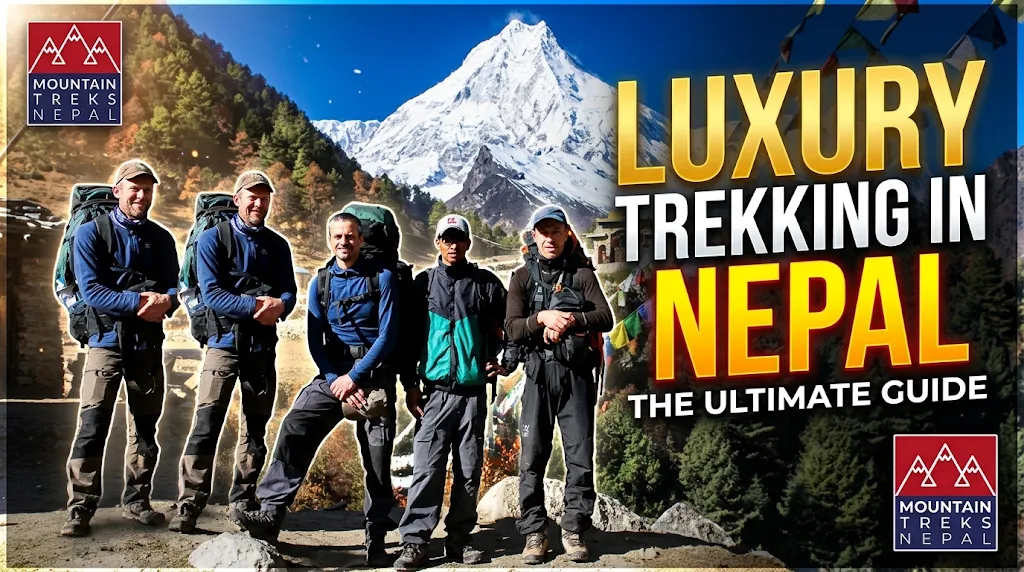
Luxury Trekking in Nepal: Redefining High-Altitude Adventure (2026-2027)
Most luxury travel looks exactly the same no matter where you go in the world: a better hotel, higher thread-count sheets, gourmet food, smoother airport transfers, and a dedicated concierge handling every microscopic detail of your itinerary. But Nepal works differently. In the shadow of the highest mountains on Earth, the very definition of luxury undergoes a radical transformation.
Once you understand why luxury in the Himalayas looks the way it does, the decision about how to trek here, who to book with, and what to expect becomes infinitely clearer.
Luxury Trekking in Nepal does not mean finding five-star hotels at 5,000 meters. The mountains do not have room service. Above 3,500 meters on any route in Nepal, the infrastructure is what it is: supplies are carried on the backs of porters or yaks, power relies on solar panels or generators, the nights are freezing, and hot water is limited. No amount of money you pay an agency changes the altitude, the oxygen levels, or the weather.
What money does change is everything surrounding that physical reality. It changes the guide who walks beside you—providing an expert who has summited Everest or walked to Base Camp 200 times instead of 20. It changes the lodge you sleep in—securing an attached bathroom, a heated mattress pad, and a window framing Ama Dablam instead of a shared outdoor squat toilet and a thin plywood wall. It provides the helicopter that flies you directly back to Kathmandu if your knee gives out on day ten. It means an itinerary built entirely around your personal pace, rather than the lowest common denominator of a group of twelve strangers.
On a private or luxury trek with Mountain Treks Nepal, none of those critical variables are left to chance.
In this exhaustive, definitive guide to Luxury Trekking in Nepal, we will break down exactly what you are paying for, where the best lodges actually exist, how helicopter integrations work in 2026, and how to choose the perfect bespoke itinerary for your Himalayan adventure.
What Luxury Actually Means in the Himalayas?
When you book a luxury trek, you are paying for the transition from comfort to confidence. Below 3,500 meters, genuine comfort upgrades are available and absolutely worth having. Above 4,000 meters, the goal shifts entirely to confidence: confidence in your guide, your acclimatization plan, your gear, and your contingency options if the unexpected occurs.
Luxury in Nepal is not just about adding comfort; it is about removing friction.
What Exists at 5,000 Meters on a Luxury Trek
-
A functional, warm communal dining room heated by a yak-dung or kerosene stove.
-
A clean, private room (the best available at that specific altitude).
-
An elite, English-speaking guide who knows exactly what to do and monitors your blood oxygen levels twice a day.
-
Logistics, backup plans, and helicopter evacuation protocols handled long before you land in Kathmandu.
What Does NOT Exist at 5,000 Meters
-
Central heating in bedrooms.
-
Fast, reliable Wi-Fi.
-
Hotel-level luxury and room service.
-
Guaranteed weather or flight departures.
Regardless of your budget, at 5,364 meters at Everest Base Camp, everyone is working harder to breathe. Altitude sickness does not discriminate by net worth. Cold nights above 4,000 meters are freezing for everyone, and the rocky trail from Gorak Shep to Base Camp is the exact same trail for the budget backpacker and the luxury traveler.
What changes is how you are managed on that trail, how fast you respond to emergencies, and the quality of your rest when the hiking stops. That is not a failure of the operator; it is the uncompromising reality of the mountain.
Where the Best Accommodation Actually Exists?
If you are seeking physical comfort on the trail, route selection is everything. Not all regions in Nepal have been developed equally.
The Everest Region (Khumbu): The Strongest Luxury Infrastructure
The Khumbu Valley has been hosting international trekkers longer than any other region in Nepal, and its lodge network reflects decades of investment. The Everest region boasts the absolute best high-end teahouses and boutique lodges in the Himalayas.
On a private Luxury Trekking in Nepal experience, Mountain Treks Nepal secures the best available accommodation at every single stop on the route. The two premier luxury chains in this region are Yeti Mountain Home and Everest Summit Lodges.
-
Yeti Mountain Home (YMH): This is a chain of five luxury properties located in Lukla, Phakding, Monjo, Namche Bazaar, and Kongde. Built in traditional Sherpa architectural styles, these lodges offer spacious rooms, high-quality spring mattresses, electric heating pads (crucial for cold nights), and en-suite bathrooms with reliable, high-pressure hot showers. Rooms range from $120 to $180 per night, offering unparalleled comfort on the lower half of the trail.
-
Everest Summit Lodges: A boutique alternative to YMH, operating properties in Lukla, Monjo, Mende, Tashinga, and Pangboche. They emphasize contemporary mountain design, cultural immersion, and sustainable practices, with rooms featuring instant hot water heaters that are often more reliable than solar systems in the winter.
The Altitude Reality Check:
Even in the Everest region, true luxury lodges do not exist above Pangboche (approx. 4,000m). From Dingboche onward, you are staying in standard, albeit the best available, high-altitude teahouses.
-
Dingboche & Pheriche (4,280m – 4,410m): We utilize the best available resorts (like Dingboche Resort or Pheriche Resort) which offer solid facilities, but you will begin to notice the stripping back of luxury as the altitude increases.
-
Lobuche & Gorak Shep (4,940m – 5,140m): Accommodation here is strictly functional. You will sleep in plywood-walled rooms with shared bathrooms. Nobody sleeps in 5-star luxury at 5,140 meters. What matters here is that your guide has pre-booked your room months in advance so you are not sleeping in the dining hall.
The Annapurna Region: Comfort to Mid-Altitude
The Annapurna region is the second most popular trekking destination in Nepal. The best lodges sit in the lower villages. Ghorepani, Ghandruk, and Chhomrong feature excellent infrastructure with attached bathrooms, hot showers, and genuinely fantastic food menus.
However, if you are heading into the Annapurna Sanctuary (Annapurna Base Camp), accommodation becomes progressively more basic above Chhomrong. At Annapurna Base Camp (4,130m) itself, every trekker is sleeping in the exact same basic teahouses regardless of what they paid. The luxury on the Annapurna Base Camp trek is in the private pacing, the dedicated porter carrying your gear, and the expert guidance—not in the room itself.
Remote Regions: Honest About Limitations
Regions like the Tsum Valley, Upper Mustang, and Upper Dolpo offer extraordinary, untouched landscapes and deep Tibetan Buddhist culture. What they do not have is luxury infrastructure. These trails feature highly basic homestays and rudimentary teahouses. What they offer is genuine remoteness and the kind of profound silence that the Everest and Annapurna trails can no longer deliver. For the right traveler, that absolute isolation is worth far more than a hot shower.
The Three Versions of a Luxury Nepal Trek
When booking with Mountain Treks Nepal, you are not buying a one-size-fits-all package. Luxury trekking is entirely modular, allowing you to build the exact experience you require.
1. The Private Guided Trek
The most important upgrade on any Nepal trek is the guide, not the lodge. A private, licensed guide fundamentally changes the entire trekking experience.
On a standard group trek, you share a guide with up to ten other people. You are forced to walk at the pace of the slowest person in the group. Your rest days and acclimatization schedules are fixed months in advance. If you feel ill on day six, the group either waits for you, or they continue without you while you are sent down with an assistant guide.
On a private trek, every single decision revolves around you. The guide’s full attention is on your physical condition, your breathing, and your experience. If you want an extra acclimatization day in Namche Bazaar because you are not feeling 100%, you take it. If you want to wake up at 4:00 AM to summit Kala Patthar before the thermal clouds build, that is exactly what happens. If your knee is struggling on the descent and you want to call a helicopter from Pheriche, that decision is executed immediately without having to consult a group consensus.
2. The Helicopter Integration

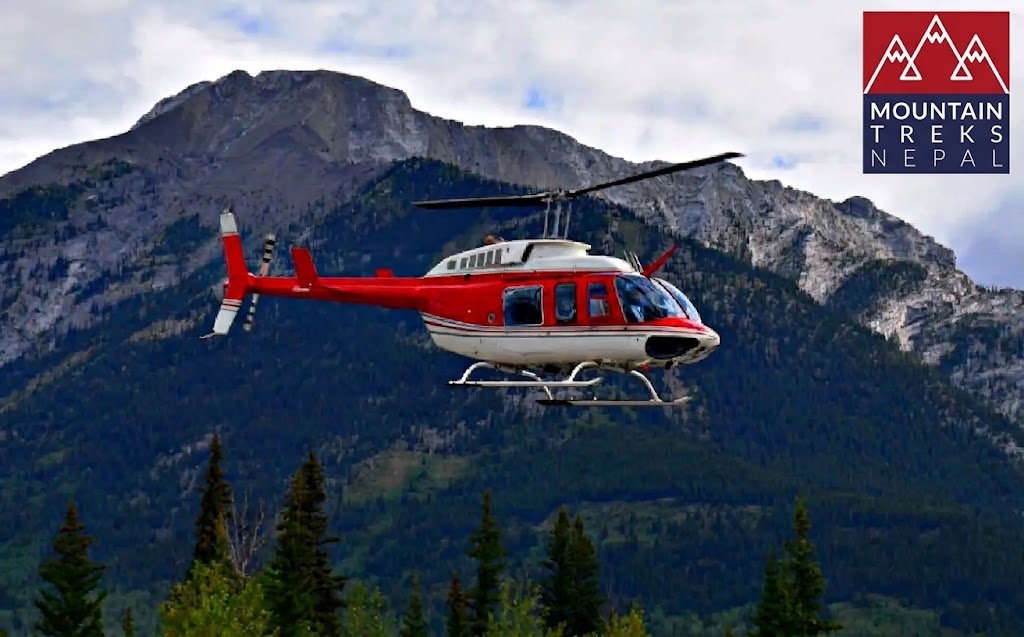
Nepal has a highly developed commercial helicopter network serving both sightseeing and high-altitude rescue operations. Integrating helicopters into your itinerary is the ultimate luxury hack, saving your knees and buying you the most precious commodity: time.
-
Skipping the Lukla Flight: The fixed-wing airplane flight from Kathmandu (or Ramechhap) to Lukla is famous for being terrifying and highly susceptible to weather delays. A luxury option is to charter a helicopter directly from Kathmandu to Lukla, Namche Bazaar, or even Pheriche, cutting days off the approach and arriving fresh.
-
The Heli-Return: The most popular luxury product in 2026 is the Everest Base Camp Trek with Helicopter Return. You walk the full 9-day route up to Base Camp and Kala Patthar, fully acclimatizing and experiencing the trail. But instead of spending three grueling days walking the exact same path backward to Lukla, a helicopter picks you up at Gorak Shep (5,140m) and flies you directly back to Kathmandu.
-
Costing: A shared helicopter return from Gorak Shep costs approximately USD 700 to USD 1,250 per person. A private helicopter charter for up to four trekkers (plus your guide) costs around USD 2,300 to USD 3,500 depending on the exact routing and fuel costs, which often works out cheaper per person for small groups.
3. The Fully Custom Itinerary
True luxury is bespoke. Some clients want a highly specific lodge list (e.g., staying exclusively at Yeti Mountain Homes). Some want a specific acclimatization schedule, or a combination of treks that does not exist on a standard brochure. Mountain Treks Nepal specializes in custom itinerary design. You provide your dates, your fitness level, and your budget, and our expedition architects build a realistic, safe, and luxurious itinerary within hours.
A Real Day on a Private Luxury EBC Trek (Namche Bazaar)
To truly understand the difference between a budget group trek and a private luxury trek, let us look at a real acclimatization day in Namche Bazaar (3,440m), the commercial capital of the Khumbu.
07:00 AM: You wake up in your deluxe, wood-paneled room at the Yeti Mountain Home. You step into your en-suite bathroom for a hot shower. You walk into the heated dining room for breakfast, enjoying a stunning view of the Khumbu valley. You order hot French press coffee, made-to-order eggs, and toast. There is absolutely no rush.
09:00 AM: You begin your acclimatization hike to the Hotel Everest View (3,880m) with your private guide. Because it is just the two of you, you walk at exactly your preferred pace, stopping to take photos of Mount Everest and Ama Dablam whenever you wish. At the top, your guide pulls out a digital pulse oximeter and checks your blood oxygen saturation to ensure you are adapting safely to the altitude.
01:00 PM: You hike back down to Namche. Your guide has pre-booked a table at a premium teahouse for lunch. Afterward, you return to your lodge for an afternoon rest in your private room.
04:00 PM: The afternoon is entirely optional. With no group agenda to follow, you can choose to explore the Namche market, visit the Sherpa Culture Museum, or simply sit on the terrace with a book and watch the clouds roll over the valley.
06:30 PM: You sit down for a gourmet dinner with your guide. You debrief on tomorrow’s route to Tengboche, review the weather update, and do a quick gear check. You retire to your room early, turning on your electric heated mattress pad for a perfect night’s sleep before a 5:00 AM start.
On a standard group trek, the physical route for this day is identical. However, the guide is simultaneously managing the pacing, questions, and physical ailments of seven different people. On a private luxury trek, that entire day, and every decision made within it, belongs exclusively to you.
Breaking Down the Costs: What Are You Actually Paying For?
The standard guided group trek to Everest Base Camp is excellent value and the right call for a large proportion of young backpackers. However, for a different demographic, the private luxury version is the only way to travel.
Here is an honest comparison of what you get for your investment:
| Feature | Standard Group Trek | Luxury / Private Trek |
| The Guide | Shared across 8-12 strangers | Private, dedicated exclusively to you |
| Pacing | Dictated by the group average | Fully flexible, tailored to your body |
| Accommodation | Standard plywood teahouses | The absolute best upgraded lodges available |
| Rest Days | Pre-scheduled, rigid | Yours to set and alter on the fly |
| Helicopter Options | Emergency rescue only | Available for entry, exit, or luxury sightseeing |
| Logistics | Standard booking | VIP airport transfers, premium Kathmandu hotels |
| Emergency Response | Guide manages the whole group | Guide is focused 100% on your evacuation |
Estimated Pricing (2026-2027):
-
Standard EBC Trek: From USD 1,160 per person.
-
Private EBC Trek (2-3 people): From USD 1,160 to USD 1,440 per person (base rate, lodge upgrades extra).
-
Luxury EBC Trek with Yeti Mountain Homes: Custom quoted based on dates, typically ranging from USD 2,500 to USD 4,000+ per person.
-
EBC Trek with Helicopter Return: From USD 1,860 to USD 2,649 per person (depending on group size and exact flight routing).
-
Night at Hotel Everest View: From USD 204 (bed and breakfast).
When you pay for Luxury Trekking in Nepal, you are paying for the removal of variables. You land in Kathmandu, and the only thing left for you to manage is your own body on the trail. Permits are handled, transfers are confirmed, lodge bookings are secured, weather contingencies are planned, and emergency contacts are established.
Who is Luxury Trekking Actually For?
The luxury trekking demographic has expanded significantly in recent years. This style of travel is perfectly suited for:
-
Older Trekkers and Retirees: Those who possess the mental grit and desire for the experience, but require a highly personalized pace that suits their body. A private guide makes all the difference when making critical acclimatization decisions above 4,000 meters.
-
Couples and Honeymooners: Travelers who want the trek to be an intimate, shared experience rather than a communal dorm-room style trip with strangers. They want private pacing, a private guide, and a private table at the end of the day.
-
Busy Professionals and Executives: Individuals with exactly two weeks of annual leave and zero margin for error, flight delays, or a ruined experience. Every variable must be managed, and helicopters are utilized to maximize time on the mountain and minimize time in transit.
-
Returning Trekkers: Veterans who have done a budget group trek in their twenties, know exactly what the physical toll entails, and now want to return to the Himalayas with the financial means to eliminate the discomforts they remember from their first trip.
The Top Luxury Trekking Routes in Nepal
While Everest dominates the luxury market, Mountain Treks Nepal curates premium experiences across the Himalayas. Here are the top routes optimized for a luxury or private experience in 2026.
1. Luxury Everest Base Camp Trek (14 Days)
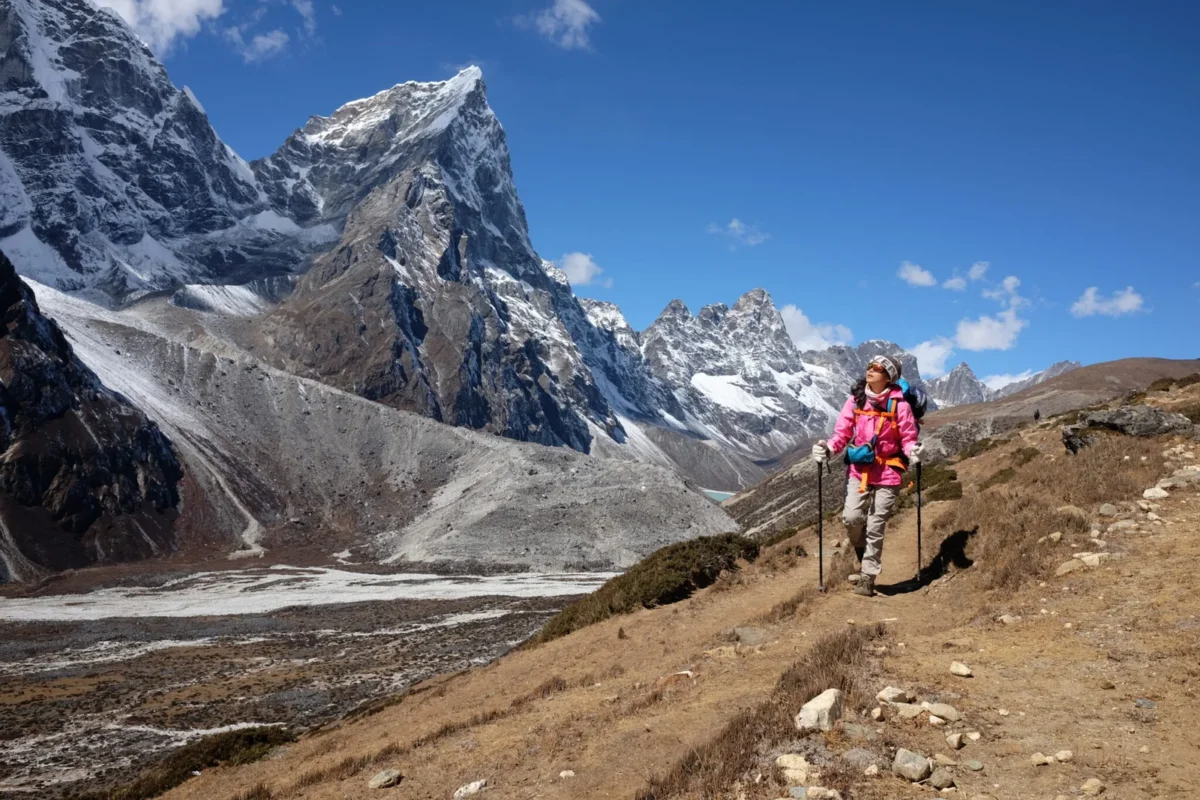
The iconic, classic route featuring the strongest high-altitude lodge infrastructure on Earth. You will stay in Yeti Mountain Homes and Everest Summit Lodges up to 4,000 meters, ensuring hot showers and heated beds for the first half of the journey. A private guide ensures your pacing is perfect as you push into the functional teahouses of Lobuche and Gorak Shep to reach Base Camp (5,364m) and the summit of Kala Patthar (5,545m).
2. Everest Base Camp with Helicopter Return (11-12 Days)
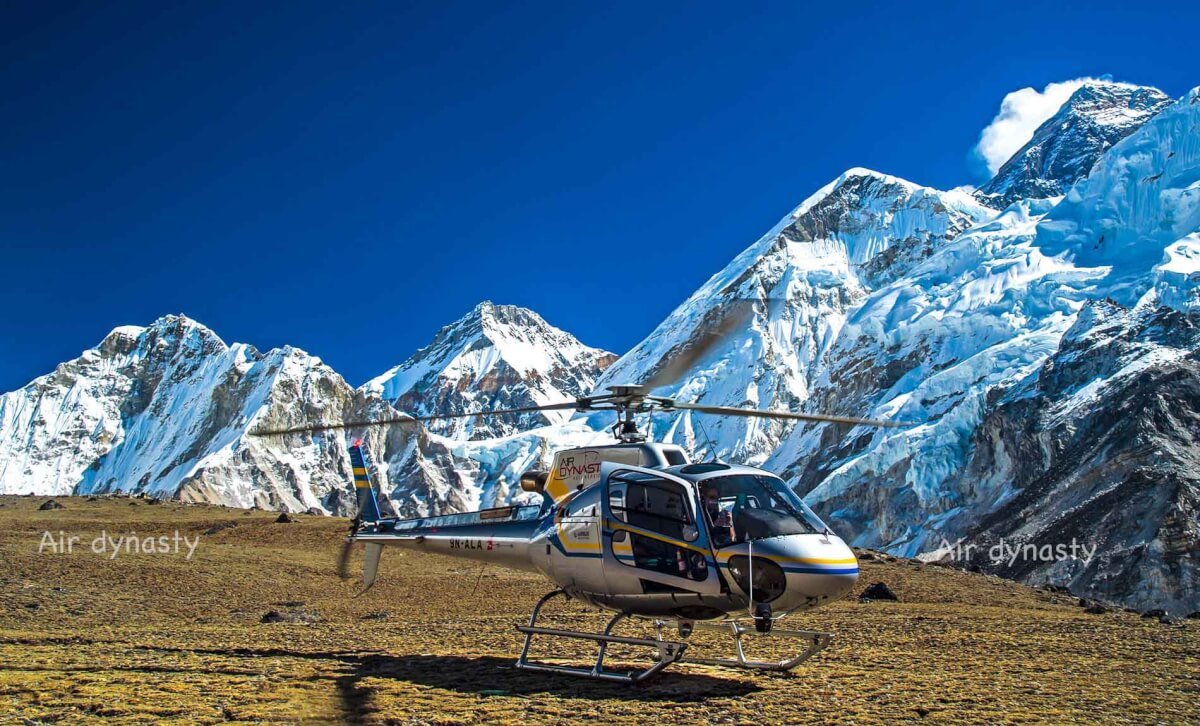
The ultimate combination of physical achievement and luxury convenience. You walk the full, traditional route up the Khumbu Valley, acclimatizing safely in Namche and Dingboche. After reaching Base Camp and watching the sunrise over Everest from Kala Patthar, you board a private or shared helicopter at Gorak Shep. You soar over the glaciers you just walked up, bypassing three grueling days of downhill hiking, and land in Kathmandu in time for a hot shower and a celebratory dinner.
3. Everest Base Camp via Gokyo Lakes with Heli-Return (17 Days)

For the ambitious luxury traveler who wants to go further off the beaten path. This route diverges from the main EBC trail to explore the pristine, turquoise Gokyo Lakes. You will cross the formidable Cho La Pass (5,420m) before joining the main trail to Base Camp. This route is far quieter and visually spectacular. The trek concludes with a scenic helicopter flight out of the high mountains back to civilization.
4. Annapurna Base Camp Luxury Lodge Trek (14 Days)

While the upper Annapurna Sanctuary lacks 5-star lodges, the approach is filled with premium Ker & Downey lodges and upgraded teahouses. This trek offers an incredible ecological transition, starting in sweltering jungles, passing through blooming rhododendron forests, and culminating in a spectacular 360-degree amphitheater of 8,000-meter peaks at Annapurna Base Camp (4,130m). A private guide ensures you navigate the infamous thousands of stone steps safely.
5. Mardi Himal Private Trek (10 Days)
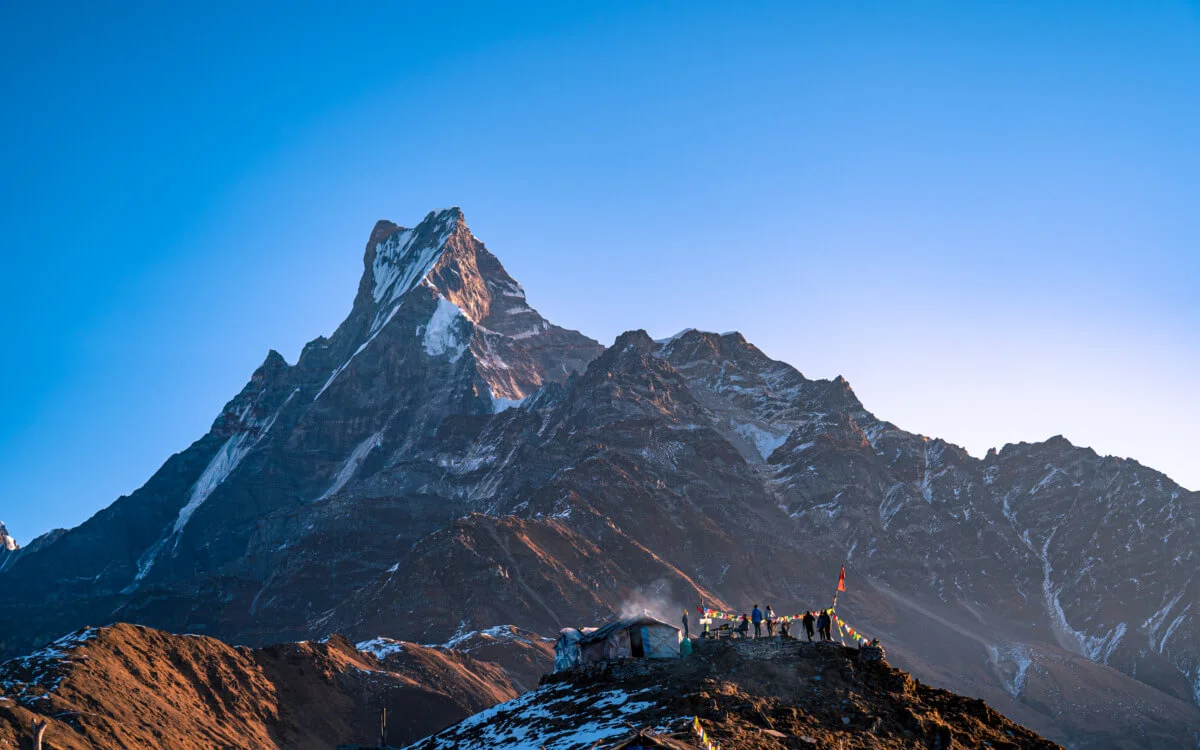
The quietest, most pristine ridge trek in the Annapurna region. You walk along a high ridgeline with the jagged, sacred spire of Machhapuchhre (Fishtail Mountain) dominating the skyline ahead of you. It is a shorter, highly focused trek that works perfectly as a private trip for couples who want breathtaking views without the extreme 5,000m+ altitudes of EBC.
6. Pikey Peak Luxury Trek (10 Days)
Famous as Sir Edmund Hillary’s personal favorite viewpoint of Mount Everest, Pikey Peak is a lower-altitude trek (topping out at 4,065m) that offers a staggering panoramic view of eight distinct 8,000-meter peaks. The massive luxury advantage of Pikey Peak is that it requires no terrifying flight to Lukla; it can be accessed via a private overland jeep drive from Kathmandu. It is perfect for those who want a serious Himalayan experience without the extreme physical commitment of EBC.
Crucial Preparation: Medical Safety and Packing
Even on a luxury trek, the physical demands of the Himalayas are absolute. You must be prepared.
The Altitude Reality
Altitude sickness is the great equalizer. It does not care if you paid $1,000 or $10,000 for your trek. Above 3,000 meters, your body must adapt to the decreasing oxygen levels.
-
The Luxury Advantage: Your private guide from Mountain Treks Nepal is a certified Wilderness First Responder (WFR). They carry a comprehensive trauma kit, medications (like Diamox), and a digital pulse oximeter. By monitoring your blood oxygen saturation daily, they can adjust your walking pace to prevent Acute Mountain Sickness (AMS) before it ever develops.
-
Insurance: Regardless of how luxurious your package is, you must purchase comprehensive travel insurance that explicitly covers high-altitude helicopter evacuation up to 6,000 meters. This is a non-negotiable requirement for trekking in Nepal.
Packing for a Luxury Trek
Because you will have a dedicated porter, you are allowed a generous weight limit (typically 15 kg / 33 lbs in your main duffel bag). However, you must still pack highly technical, functional gear.
-
No Cotton: Pack moisture-wicking synthetic base layers and heavy Merino wool thermals for sleeping.
-
Insulation: You must bring an expedition-grade heavy down jacket (700+ fill power) and a four-season (-20°C) sleeping bag. Even if you stay in Yeti Mountain Homes for the first few nights, the final nights at Gorak Shep will be freezing. (Note: Mountain Treks Nepal provides high-quality loaner sleeping bags and down jackets to our luxury clients).
-
Footwear: Sturdy, waterproof trekking boots with ankle support that have been rigorously broken in prior to your arrival. Blisters will ruin a luxury trek just as quickly as a budget one.
The Honest Conclusion
A private guide and an upgraded lodge do not change the altitude. At 5,364 meters at Everest Base Camp, the air is thin, the wind is freezing, and the terrain is unforgiving.
But what changes with Luxury Trekking in Nepal is absolutely everything surrounding those harsh facts. It is the quality of the acclimatization decisions made on your behalf. It is the absolute confidence in the logistics. It is the lightning-fast speed of the response if something goes wrong. It is the deep, cultural, and professional experience of the Sherpa walking beside you.
Nepal is not the Swiss Alps. There are no funicular railways to the summit, and there are no Michelin-star restaurants on the glaciers. Luxury here is different, and that difference is exactly the point. It is about experiencing the rawest, most majestic, and most formidable natural environment on Earth, while feeling completely safe, perfectly managed, and exceptionally well cared for.
If you are ready to explore the roof of the world without leaving your comfort and confidence to chance, Mountain Treks Nepal is ready to build your bespoke itinerary.