



Share This:
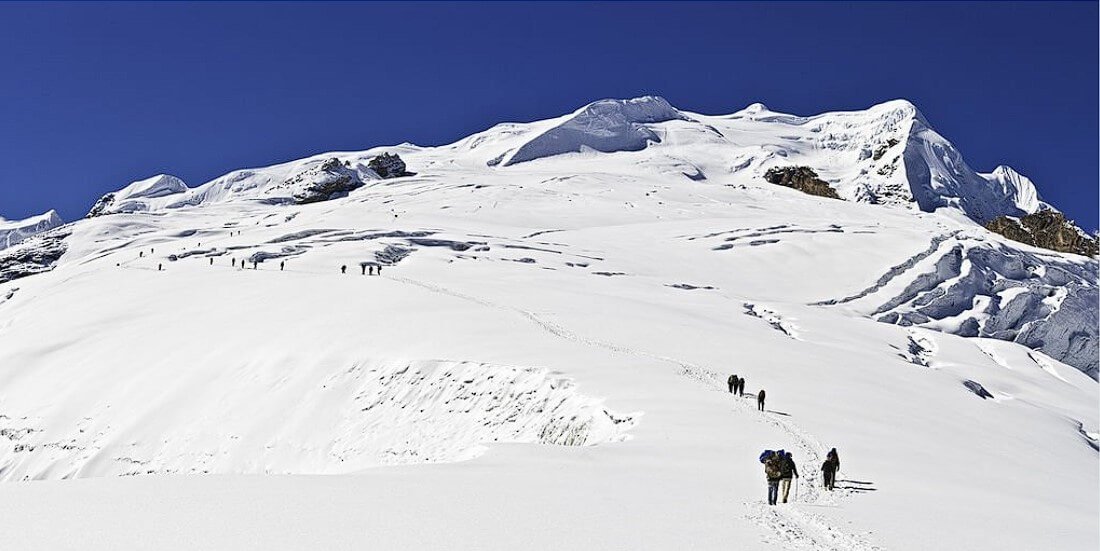
10 Best Peak Climbing in Nepal: Complete Climber’s Guide
The best peak climbing in Nepal combines classic Himalayan trekking with the thrill of scaling summits between 5,000 meters and 6,500 meters. Classified as “trekking peaks” by the Nepal Mountaineering Association (NMA), options like Mera Peak (6,476m), Island Peak (6,189m), and Lobuche East (6,119m) offer the ideal progression for novice and intermediate climbers aiming to gain high-altitude experience without committing to expensive, full-scale 8,000-meter expeditions.
Whether you seek a non-technical entry-level climb in the Langtang region or a more technical headwall ascent in the Khumbu, selecting the right peak requires evaluating your physical fitness, alpine skill level, acclimatization schedule, and target region. At Mountain Treks Nepal, our licensed Sherpa guides lead safety-focused, fully equipped climbing expeditions across all major Nepalese mountain ranges.
Understanding Trekking Peaks in Nepal: NMA Classification & Alpine Grading
In Nepal, the term “trekking peak” does not imply that a summit is a simple walk-up. The Nepal Mountaineering Association (NMA) categorizes 27 specific mountains ranging from 5,500m to 6,500m under Group ‘A’ and Group ‘B’ peak categories to distinguish them from major expedition peaks managed directly by the Ministry of Culture, Tourism, and Civil Aviation.
These peaks require an official NMA permit, a certified climbing Sherpa, and specialized high-altitude insurance. Alpine difficulty is typically measured using the International French Adjectival System (IFAS):
-
F (Facile / Easy): Straightforward walking on snow or scree; minimal rope work required (e.g., Yala Peak, Dhampus Peak).
-
PD (Peu Difficile / Slightly Difficult): Moderate snow and ice slopes up to 45 degrees, requiring crampons, ice axe usage, and basic fixed-rope handling (e.g., Mera Peak, Island Peak).
-
AD (Assez Difficile / Fairly Hard): Steeper technical ice, exposed rock ridges, and sustained vertical sections requiring confident jumar (ascender) and abseiling skills (e.g., Lobuche East, Chulu West).
Comparison Matrix: Top 10 Nepalese Climbing Peaks at a Glance
| Peak Name | Elevation | Region | Alpine Grade | Technical Difficulty | Ideal For |
| Mera Peak | 6,476m / 21,247ft | Everest / Hinku | Alpine PD | Low (Glacial Walk) | Beginner climbers wanting maximum altitude |
| Island Peak | 6,189m / 20,305ft | Everest / Imja | Alpine PD+ | Moderate (Headwall & Ridge) | Trekkers seeking classic Everest combo |
| Lobuche East | 6,119m / 20,070ft | Everest / Khumbu | Alpine AD- | Moderate-High (Sustained Ice) | Intermediate climbers preparing for 7000m+ |
| Yala Peak | 5,700m / 18,700ft | Langtang Valley | Alpine F | Very Low (Non-Technical) | First-time altitude seekers with limited time |
| Pisang Peak | 6,091m / 19,978ft | Annapurna / Manang | Alpine PD+ | Moderate (Rock/Ice Slopes) | Annapurna Circuit trekkers |
| Chulu West | 6,419m / 21,055ft | Annapurna / Manang | Alpine AD | High (Long Ridge/High Camps) | Fit climbers wanting a strenuous summit |
| Dhampus Peak | 6,012m / 19,719ft | Dhaulagiri / Mustang | Alpine F/PD | Low (Snow Slopes) | Off-the-beaten-path wilderness trekkers |
| Pokhalde Peak | 5,806m / 19,049ft | Everest / Khumbu | Alpine F | Low (Scrambling) | Trekkers wanting an easy 5,000m+ add-on |
| Pharchamo Peak | 6,187m / 20,298ft | Rolwaling Valley | Alpine PD+ | Moderate (Glacier/Crevasses) | Remote expedition enthusiasts |
| Tent Peak | 5,663m / 18,575ft | Annapurna Sanctuary | Alpine PD | Moderate (Short Ice Wall) | Annapurna Base Camp trekkers |
Note: Alpine grades represent ideal weather conditions. Unexpected snowfall or ice formation can elevate technical requirements on any Himalayan summit.
Detailed Breakdown of the 10 Best Peaks to Climb in Nepal
1. Island Peak (Imja Tse) – 6,189m / 20,305ft

Island Peak, known locally as Imja Tse, sits in the heart of the Khumbu region, surrounded by Lhotse, Ama Dablam, and Makalu. It remains the most sought-after peak climbing destination in Nepal due to its logical integration with the classic Everest Base Camp trek.
-
Technical Profile: The ascent involves crossing a glaciated field with crevasses using ladders and fixed ropes, followed by a steep 100-meter headwall (40–45 degrees) leading to a narrow, sharp summit ridge.
-
Best Suitability: High-energy trekkers and novice mountaineers who have completed basic alpine instruction at base camp.
2. Mera Peak – 6,476m / 21,247ft

Standing as Nepal’s highest officially designated trekking peak, Mera Peak is located in the pristine Hinku Valley south of Everest. Despite its significant altitude, Mera Peak features non-steep glaciated slopes, making it technically straightforward.
-
Technical Profile: Predominantly an alpine snow-walk using crampons and trekking poles, with fixed ropes utilized primarily on the short final summit dome.
-
Best Suitability: Climbers whose primary goal is breaching the 6,400-meter altitude barrier with minimal technical rock or ice climbing requirements.
3. Lobuche East – 6,119m / 20,070ft
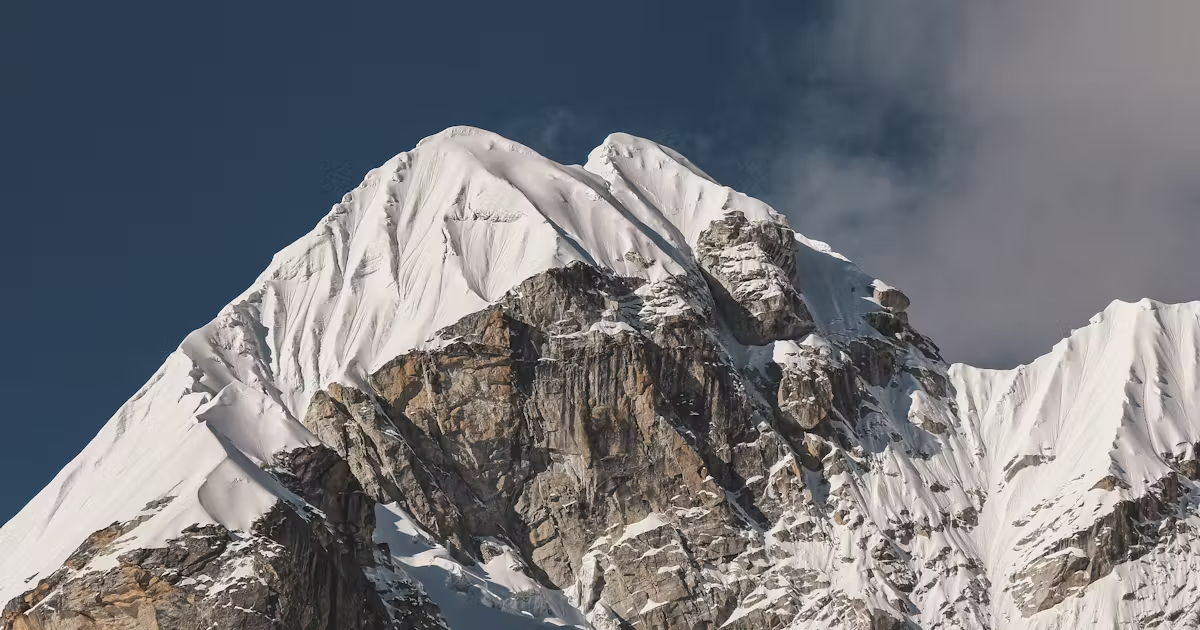
Located near the Khumbu Glacier and Gorak Shep, Lobuche East presents a stiffer alpine challenge than Island Peak or Mera Peak. It features two distinct summits: Lobuche East (false summit) and Lobuche Far East. Most commercial climbing expeditions target the East summit ridge.
-
Technical Profile: Requires fixed rope ascents over steep granite slabs, mixed rock and ice, and a sustained snow ridge.
-
Best Suitability: Intermediate climbers seeking genuine alpine climbing experience before attempting technical 7,000m peaks like Ama Dablam.
4. Yala Peak – 5,700m / 18,700ft
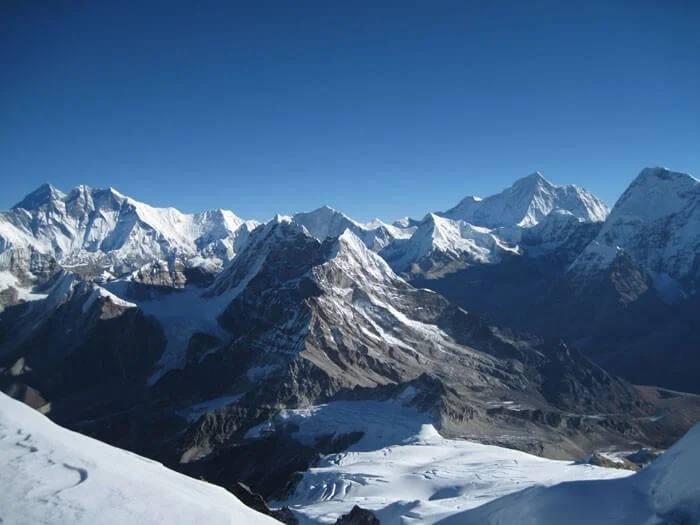
Situated inside Langtang National Park near the Tibetan border, Yala Peak offers an accessible, low-stress climbing option close to Kathmandu. The approach takes climbers through Kyanjin Gompa and scenic rhododendron forests.
-
Technical Profile: Primarily a non-technical walk-up over scree and low-angle snow. Basic ice axe support may be used near the narrow summit block depending on snow cover.
-
Best Suitability: Beginners, short-duration travelers, and families seeking a genuine Himalayan summit experience without heavy mountaineering gear.
5. Pisang Peak – 6,091m / 19,978ft
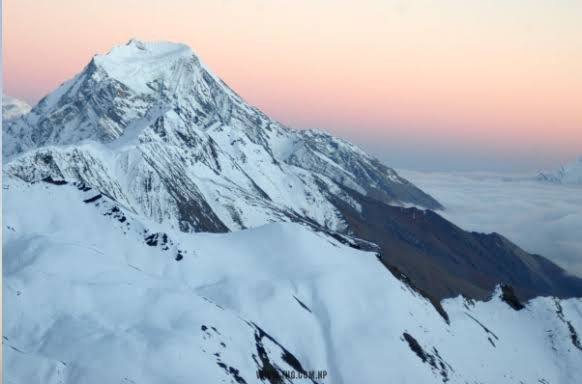
Rising sharply above the village of Pisang along the Annapurna Circuit trail, Pisang Peak provides sweeping views of Annapurna II, Annapurna IV, and Gangapurna.
-
Technical Profile: The route features steep western rock ridges, open ice faces, and exposed snow slopes that require confident footwork, crampon control, and fixed-rope ascents.
-
Best Suitability: Experienced trekkers traversing the Annapurna Circuit who want to add an adventurous technical summit to their crossing of Thorong La Pass.
6. Chulu West – 6,419m / 21,055ft
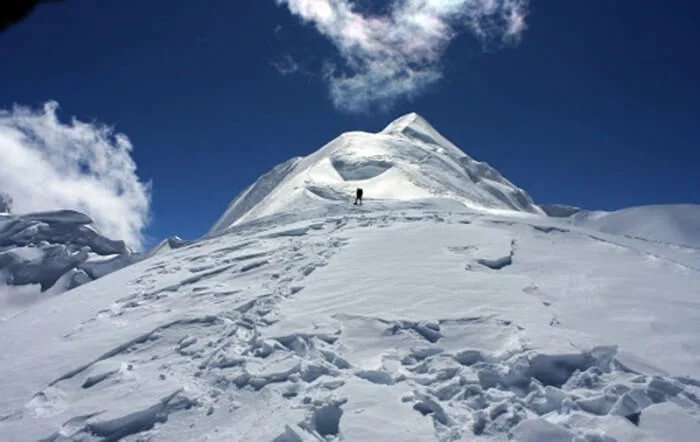
Also situated in the Manang Valley within the Annapurna region, Chulu West is one of the most demanding trekking peaks on the NMA list. The climb requires establishing two high camps (Base Camp and High Camp) before attempting the summit push.
-
Technical Profile: Highly physical and prolonged. Involves navigating crevassed glaciers, loose rock scree, and long snow ridges requiring fixed ropes and ascenders.
-
Best Suitability: Physically fit mountaineers with prior high-altitude endurance experience looking for a remote, less-crowded challenge.
7. Dhampus Peak (Thapa Peak) – 6,012m / 19,719ft
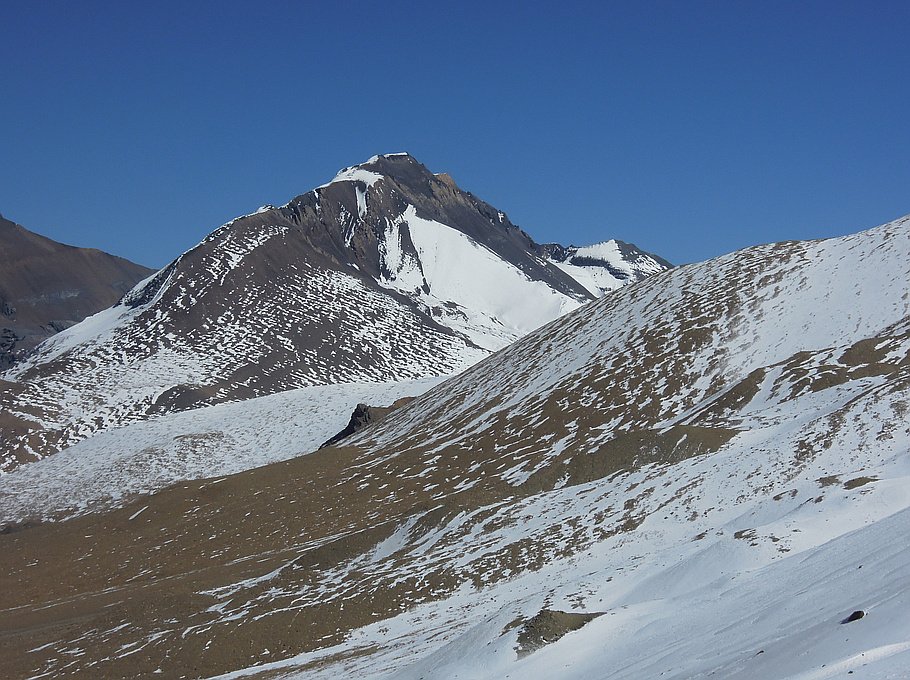
Lying northeast of the massive Dhaulagiri range, Dhampus Peak (often called Thapa Peak) offers an extraordinary vantage point over 30 Himalayan giants, including the Kali Gandaki Gorge and the Annapurna massif.
-
Technical Profile: Straightforward alpine snow-walking with mild angles. The primary challenge stems from wind exposure and remote high-pass navigation via French Pass (5,360m) and Dhampus Pass (5,240m).
-
Best Suitability: Off-the-grid adventurers undertaking the Dhaulagiri Circuit or Mustang wilderness treks.
8. Pokhalde Peak (Dolma Ri) – 5,806m / 19,049ft
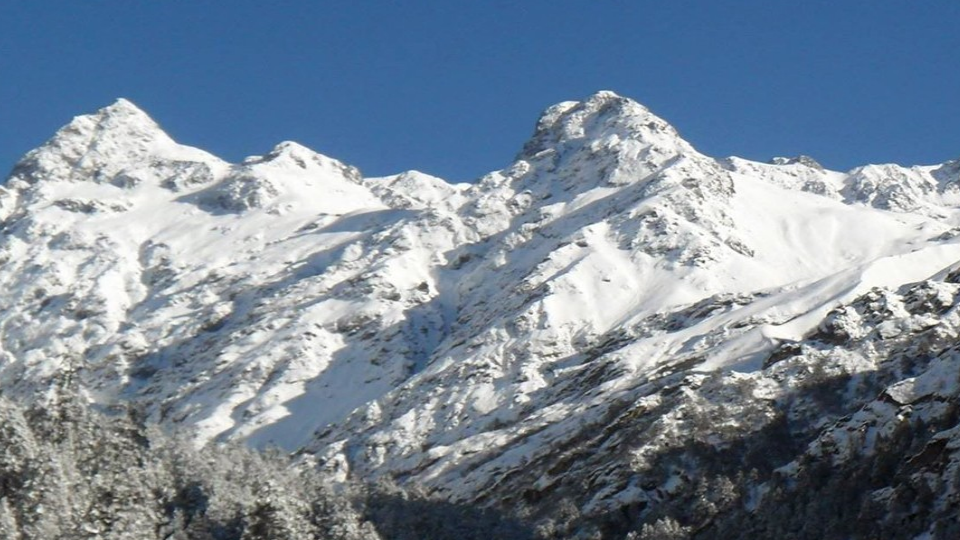
Located just 12 kilometers southwest of Mount Everest, Pokhalde Peak is a short, highly accessible climb that can be tackled from Kongma La Pass or Chhukung Valley.
-
Technical Profile: Predominantly a scramble over rocky ridges. Under normal seasonal conditions, crampons and ice axes are rarely necessary until reaching the final summit crest.
-
Best Suitability: Trekkers exploring the Everest Three Passes loop who desire a quick, non-technical 5,800-meter summit experience.
9. Pharchamo Peak – 6,187m / 20,298ft
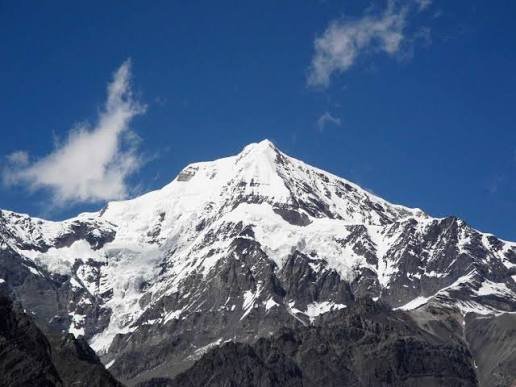
Pharchamo stands guard at the high-altitude interface between the quiet Rolwaling Valley and the Khumbu region, directly south of the challenging Tashi Lapcha Pass (5,755m).
-
Technical Profile: Features a uniform, ice-covered step-ridge that demands good crampon technique, rope work, and careful crevasse negotiation on the glacier approach.
-
Best Suitability: Wilderness enthusiasts seeking an uncrowded alpine expedition through remote Sherpa villages.
10. Tent Peak (Tharpu Chuli) – 5,663m / 18,575ft
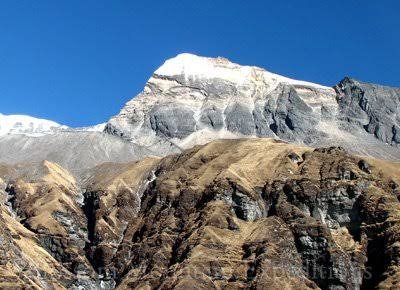
Positioned in the middle of the Annapurna Sanctuary, Tent Peak offers 360-degree views of Annapurna I (8,091m), Annapurna South, Machapuchare (Fishtail), and Hiunchuli.
-
Technical Profile: Involves crossing a fluted ice wall, negotiating a narrow glacier, and ascending a short 50-degree ice face to reach the summit plateau.
-
Best Suitability: Climbers trekking to Annapurna Base Camp who wish to test their beginner technical ice-climbing skills.
Key Factors to Consider When Selecting Your Peak
When selecting among the best peak climbing options in Nepal, balance your personal experience against the mountain’s requirements:
-
Prior High-Altitude Experience: If you have never been above 5,000m, start with Yala Peak or Dhampus Peak before attempting 6,400m giants like Mera or Chulu West.
-
Technical Preparation: Island Peak, Lobuche East, and Pisang require familiarity with climbing harnesses, crampons, jumars, and rappelling devices. Sherpa guides conduct training at base camp, but prior familiarity speeds up safety mastery.
-
Acclimatization Profile: Ensure your itinerary builds in rest and acclimatization days before reaching high camp. Rapid ascents are the leading cause of failed summit attempts due to Acute Mountain Sickness (AMS).
-
Logistics & Permits: All climbs require official NMA permits, garbage deposits, national park access permits (Sagarmatha, Annapurna, or Langtang), and registered Sherpa guides.
Best Seasons for Himalayan Peak Climbing
Mountaineering conditions in Nepal are dictated by the seasonal monsoon cycle:
-
Spring Season (Pre-Monsoon: March to May): Stable weather, warmer temperatures, and clear morning skies. Snow conditions on glaciers are generally favorable, though afternoon cloud cover is common.
-
Autumn Season (Post-Monsoon: September to November): Crisp air, minimal rainfall, and crystal-clear visibility. High altitude temperatures are colder than spring, but snow packs are stable, making autumn the peak season for trekking peak climbing in Nepal.
-
Winter (December to February): Severe cold, high winds, and heavy snowfall make high camps difficult to maintain, suitable only for seasoned winter alpine specialists.
-
Monsoon (June to August): Heavy rains, cloud cover, and landslide risks make climbing unsafe, except in rain-shadow areas such as Mustang or Upper Dolpo.
Frequently Asked Questions (FAQs)
Which mountains are best to climb in Nepal?
The best mountains to climb in Nepal depend on your alpine experience. For beginners seeking high altitude with low technical demand, Mera Peak (6,476m) and Yala Peak (5,700m) are ideal. For trekkers wanting a blend of classic trekking and technical ice climbing, Island Peak (6,189m) and Lobuche East (6,119m) offer the top experiences.
What are the 7 highest peaks in Nepal?
Nepal contains eight of the world’s fourteen 8,000-meter peaks. The seven highest inside Nepal are Mount Everest (8,848.86m), Kangchenjunga (8,586m), Lhotse (8,516m), Makalu (8,485m), Cho Oyu (8,188m), Dhaulagiri I (8,167m), and Manaslu (8,163m). Note that Annapurna I (8,091m) is the eighth 8,000m peak in Nepal.
Is there good rock climbing in Nepal?
Yes, Nepal offers excellent rock climbing opportunities alongside its high-altitude peaks. Popular natural rock climbing sites include Nagarjun Forest Reserve and Hattiban near Kathmandu, Bimal Nagar on the way to Pokhara, and high-altitude granite formations near Khumbu’s Chhukung Valley. Many trekking peaks, like Lobuche East and Pisang Peak, also feature dedicated rock scrambling sections.
What is the easiest climb in Nepal?
Yala Peak (5,700m) in the Langtang region and Pokhalde Peak (5,806m) in the Everest region are considered the easiest official climbing peaks in Nepal. They require basic physical fitness and scrambling rather than complex technical ice-climbing equipment or fixed ropes.
Key Takeaways & Essential Climber Checklist
-
Choose the Right Peak: Match the mountain’s technical grade (F, PD, AD) to your realistic skill level.
-
Invest in Acclimatization: Choose itineraries with built-in rest days to prevent AMS.
-
Gear Up Properly: Quality double-mountaineering boots, rated sleeping bags (-20°C), thermal layers, and climbing harnesses are mandatory.
-
Hire Certified Guides: Always climb with NMA-licensed Sherpa guides equipped with high-altitude satellite communication and medical kits.
Plan Your Himalayan Climbing Expedition
Ready to stand on a Himalayan summit? Whether you are aiming for your first 6,000m summit on Mera Peak or tackling the headwall of Island Peak, the team at Mountain Treks Nepal crafts custom, safety-focused climbing itineraries tailored to your schedule and experience level.
Contact the Himalayan experts at Mountain Treks Nepal today to get a custom quote and begin your alpine preparation.