



Share This:
Understanding the Kanchenjunga Circuit Trek Difficulty
The Kanchenjunga Circuit Trek is widely regarded by Himalayan veterans as one of Nepal’s most demanding, awe-inspiring, and raw wilderness adventures. Encircling Mount Kanchenjunga the third-highest mountain on Earth at 8,586 meters (28,169 feet) this trek takes you into the far eastern borderland of Nepal, where glaciers, deep river gorges, and alpine passes create a dramatic landscape.
Unlike heavily commercialized routes like the Everest Base Camp or Annapurna Circuit, Kanchenjunga remains an untouched, restricted wilderness area. But with great beauty comes serious physical and logistical challenge.
On standard grading scales, the Kanchenjunga Circuit is rated Grade 4 to 5 (Strenuous to Demanding). It demands high cardiovascular fitness, mental resilience, and comfort with basic mountain infrastructure.
Whether you are evaluating your readiness for this remote circuit or deciding between eastern Nepal and other Himalayan regions, this definitive guide breaks down every factor influencing the difficulty of the Kanchenjunga Circuit Trek from altitude profiles and high passes to physical training strategies.
Kanchenjunga Circuit Trek: Key Facts at a Glance
Before examining the difficulty factors in detail, here is a breakdown of what the route involves:
| Parameter | Specification | Impact on Difficulty |
| Maximum Elevation | 5,143 m (16,873 ft) at Pangpema (North Base Camp) | High risk of Acute Mountain Sickness (AMS); requires strict acclimatization. |
| Secondary High Point | 4,730 m (15,518 ft) at Oktang (South Base Camp) | Extended time spent above 4,000 meters. |
| Total Distance | Approximately 220 to 250 kilometers (137–155 miles) | Demands sustained stamina over multi-week walking days. |
| Trek Duration | 18 to 24 Days (depending on itinerary and transport) | Long duration causes cumulative physical fatigue. |
| Daily Walking Hours | 6 to 8 hours daily (up to 9 hours on pass days) | Requires solid endurance and muscle recovery. |
| Key High Passes | Sele La (4,290m), Mirgin La (4,665m), Sinelapche La (4,840m) | Cold, exposed, steep, and technically tiring terrain. |
| Accommodation | Basic Teahouses & Local Lodges | Limited amenities, shared facilities, and basic heating. |
| Required Permits | Restricted Area Permit (RAP) & Kanchenjunga Conservation Area Permit (KCAP) | Mandatory licensed guide and minimum 2 trekkers per group. |
5 Primary Factors That Make the Kanchenjunga Circuit Challenging
Trekking around Mount Kanchenjunga is fundamentally different from walking the heavily paved trails of the Annapurna or Everest regions. Five distinct factors contribute to its physical and mental difficulty:
1. High and Prolonged Altitude Exposure
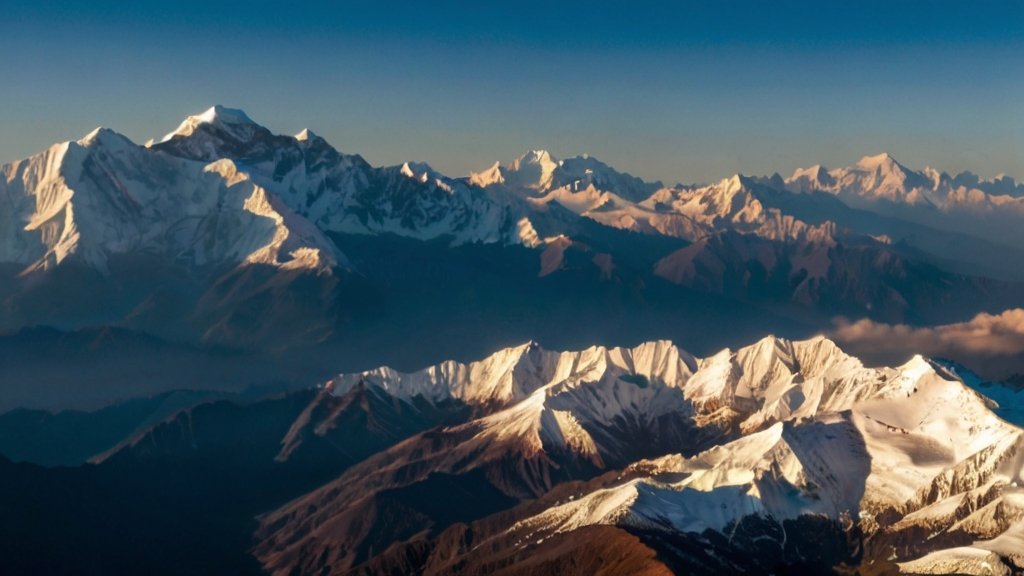
Altitude is often the single biggest hurdle on the Kanchenjunga Circuit. The trail takes you to 5,143 meters (16,873 feet) at Pangpema (Kanchenjunga North Base Camp).
What makes Kanchenjunga particularly challenging is not just reaching 5,143 meters, but the duration of time spent at high altitude. Trekkers typically spend 8 to 10 consecutive days above 3,500 meters (11,480 feet) without descending into lower valleys.
At 5,000 meters above sea level, effective atmospheric oxygen drops to roughly 50% of sea-level pressure. Sustained activity under these conditions can lead to:
-
High risk of Acute Mountain Sickness (AMS) if ascent rates are unmanaged.
-
Slower muscle recovery and reduced appetite.
-
Dehydration due to rapid breathing in dry, cold air.
-
Heightened risk of severe conditions like High-Altitude Pulmonary Edema (HAPE) or High-Altitude Cerebral Edema (HACE) without proper acclimatization.
Safety Standard from Mountain Treks Nepal: A safe Kanchenjunga itinerary includes dedicated acclimatization rest days in key villages like Ghunsa (3,427m) before pushing above 4,000 meters.
2. Trek Distance and Daily Walking Hours
Covering a distance of 220 to 250 kilometers over 18 to 22 trekking days, the Kanchenjunga Circuit is a test of long-distance endurance.
Unlike shorter 7-to-10-day treks where you can push through fatigue, the Kanchenjunga Circuit requires pacing yourself over three weeks.
-
Average Daily Distance: 12 to 18 kilometers per day.
-
Daily Ascent/Descent: Frequent vertical gains and losses exceeding 800 to 1,200 meters in a single day.
-
Trekking Time: Expect to walk 6 to 8 hours most days, with pass-crossing days stretching to 8 to 9 hours.
The cumulative physical fatigue over 20 days can turn minor muscle strains or blisters into major discomfort if you are not well-conditioned.
3. Crossing High Alpine Passes
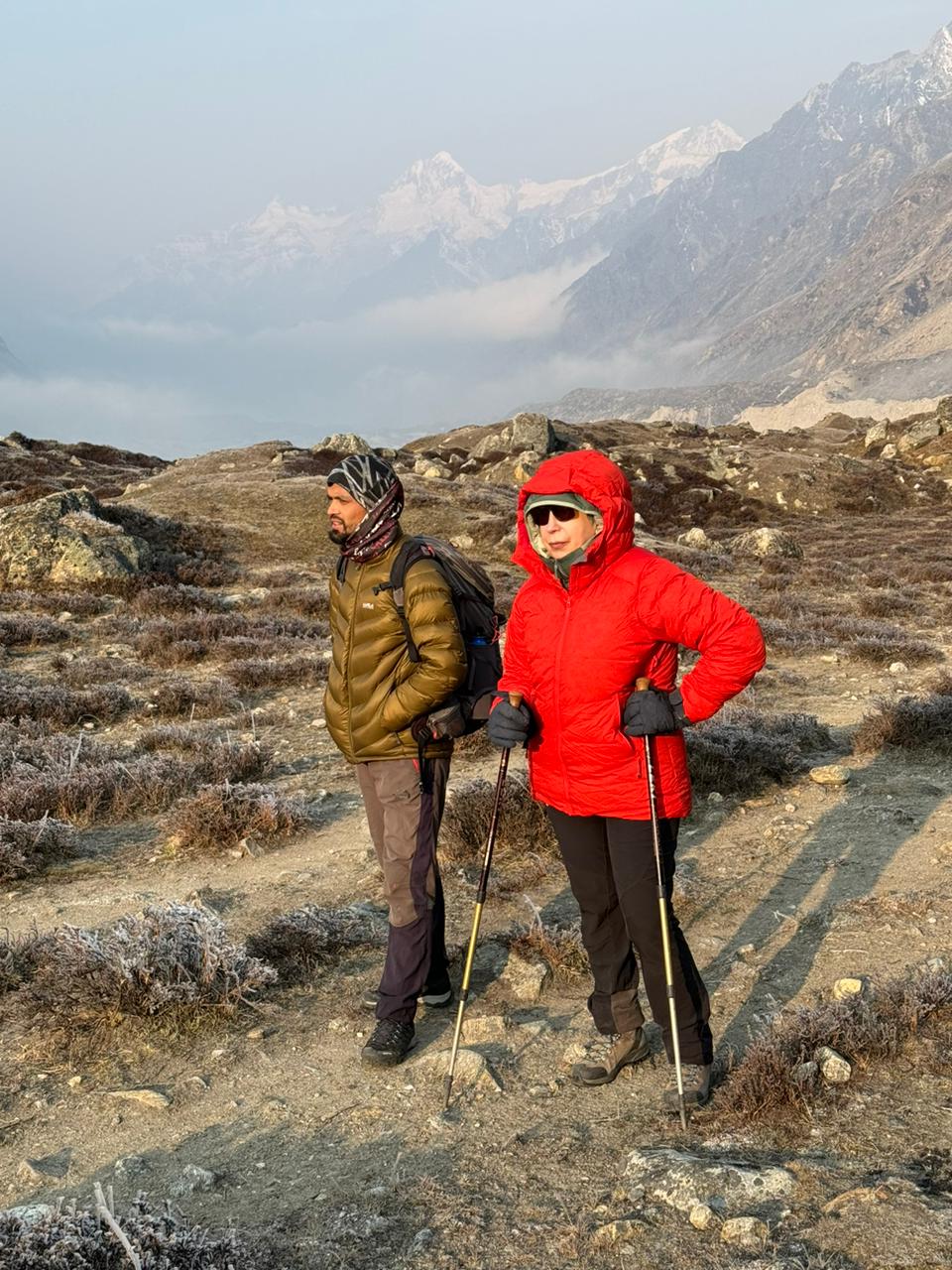
Connecting the North Base Camp route (Ghunsa/Pangpema) to the South Base Camp route (Tseram/Oktang) requires crossing high mountain passes:
-
Sele La Pass (4,290 m / 14,074 ft)
-
Mirgin La Pass (4,665 m / 15,305 ft)
-
Sinelapche La Pass (4,840 m / 15,879 ft)
Crossing these passes is often the most demanding single day of the entire circuit. Trekkers face:
-
Exposed, scree-covered trails: Loose rock, narrow cliffside paths, and icy steps.
-
Extreme wind and cold: High mountain passes are wind channels where temperatures plunge quickly.
-
Unpredictable weather: Early snow or sudden mountain fog can reduce visibility and slow your pace.
4. Extreme Remoteness and Rustic Infrastructure
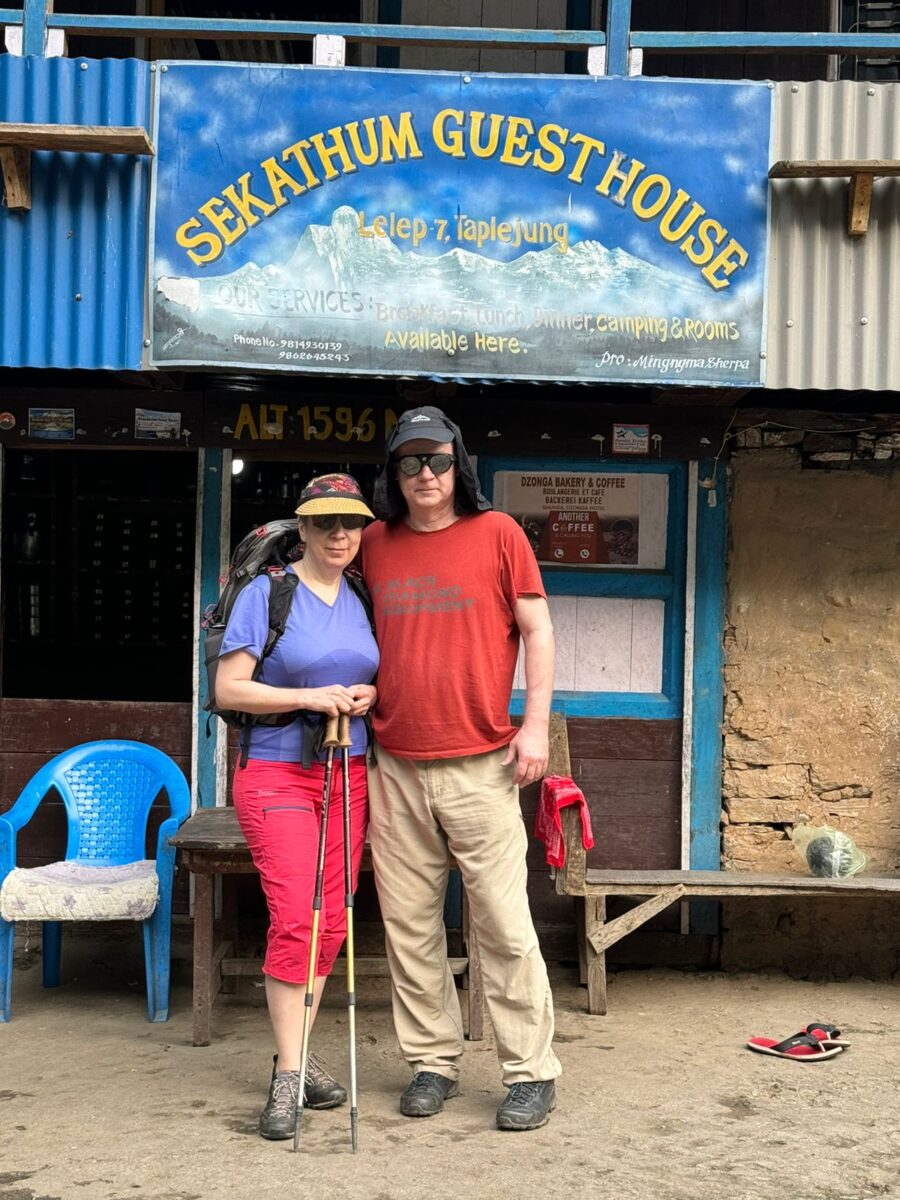
The Kanchenjunga region is located in far eastern Nepal, far from major tourist centers. This isolation contributes heavily to its difficulty score:
-
Basic Teahouse Amenities: Teahouses above 3,500 meters offer simple accommodations. Expect unheated twin-share rooms, shared drop or squat toilets, and very limited opportunities for hot showers.
-
Simple Meals: Food options become simpler at high elevation. Dal Bhat (rice, lentil soup, and vegetable curry), noodle soups, and porridge are staples that fuel your body.
-
Limited Medical Infrastructure: There are no pharmacies, advanced health posts, or paved roads along the upper trail. In an emergency, evacuation relies on helicopter dispatch—which requires comprehensive travel insurance covering high-altitude rescue up to 5,500 meters.
5. Volatile Terrain and Microclimates
The trail underfoot on the Kanchenjunga Circuit changes constantly:
-
Subtropical Lowlands (Sekathum to Amjilosa, 1,500m – 2,500m): Dense bamboo and rhododendron forests, hot and humid walking, steep stone staircases, and river gorge crossings.
-
Alpine Valleys (Gyabla to Ghunsa, 2,700m – 3,500m): Pine forests, riverbeds, boulder fields, and gradual glacier-carved valley climbs.
-
Glacial Moraines (Khambachen to Pangpema, 4,000m – 5,143m): Unstable scree slopes, lateral glacial moraines, lateral ice fields, and active landslide channels requiring alert footwork.
Route Breakdown: Altitude Progression Timeline

To visualize how elevation and difficulty build over time, review this itinerary stage profile:
Seasonal Difficulty Comparison
Weather plays a direct role in how difficult the trek feels. Selecting the right season makes a noticeable difference in trail conditions and safety.
Autumn (October – November)
-
Conditions: Post-monsoon atmospheric clarity, crisp blue skies, stable weather patterns.
-
Impact on Difficulty: Optimal. Firm ground, low precipitation risk, and clear trail markers across high passes. Cold nights above 4,000m require a heavy down sleeping bag (-15°C rating).
Spring (March – May)
-
Conditions: Blooming rhododendrons in lower elevations, warming day temperatures, moderate afternoon cloud cover.
-
Impact on Difficulty: Moderate to Great. Early spring may retain winter snowpack on Sele La Pass. Warmer lower valleys increase sweating and hydration requirements during day hikes.
Winter (December – February) & Monsoon (June – September)
-
Why to Avoid: Monsoon brings severe landslide risks in river gorges, heavy rain, active leeches, and thick fog. Winter brings heavy snowfall that blocks high passes like Sele La and forces teahouses at upper elevations to close.
How to Prepare: 4-Step Training & Safety Strategy
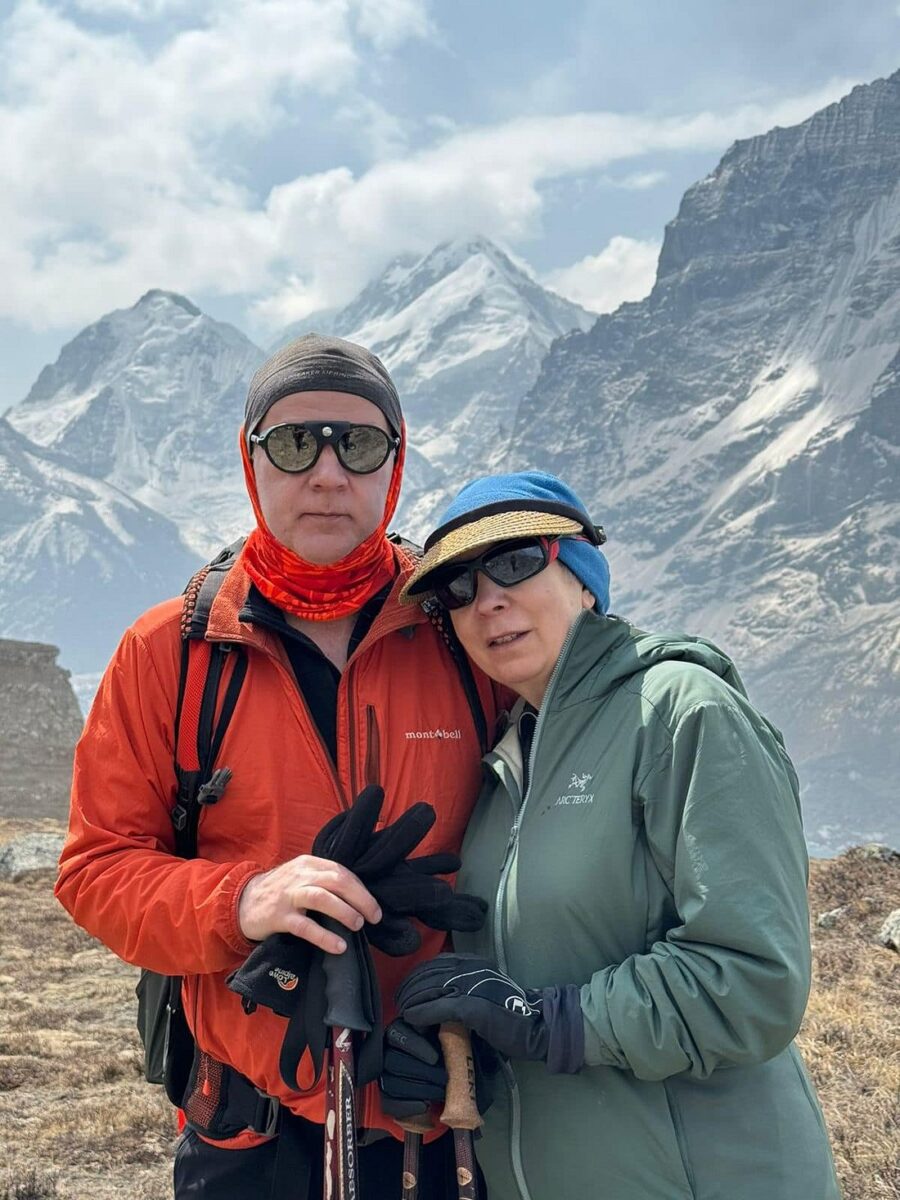
Preparing properly transforms a daunting trek into a manageable and deeply rewarding journey. We recommend starting your physical preparation 12 to 16 weeks prior to departure.
How Kanchenjunga Compares to Other Popular Nepal Treks?

To contextualize the difficulty of the Kanchenjunga Circuit, see how it compares against Nepal’s other major high-altitude circuits:
| Comparison Metric | Kanchenjunga Circuit | Everest Base Camp (EBC) | Annapurna Circuit | Manaslu Circuit |
| Max Elevation | 5,143 m | 5,364 m (EBC) / 5,545 m (Kala Patthar) | 5,416 m (Thorong La) | 5,106 m (Larkya La) |
| Overall Difficulty | Strenuous / Grade 4–5 | Moderate–Strenuous / Grade 3 | Moderate–Strenuous / Grade 3 | Strenuous / Grade 4 |
| Duration | 18 – 24 Days | 12 – 14 Days | 12 – 18 Days | 14 – 18 Days |
| Remoteness & Crowds | Extremely Remote / Low Crowds | Highly Developed / High Crowds | Moderate Development / High Crowds | Moderate Development / Moderate Crowds |
| Teahouse Comfort | Basic Lodges | High (Private rooms available) | Good to High | Moderate Teahouses |
| Trail Technicality | Glacial moraines, high pass trails | Well-paved, dirt trails | Well-paved tracks, dirt road sections | Rocky passes, river gorge steps |
Required Frequently Asked Questions (FAQs)
Is Kanchenjunga harder than Annapurna?
Yes, overall the Kanchenjunga Circuit Trek is significantly harder than the Annapurna Circuit. While the Annapurna Circuit reaches a slightly higher peak elevation at Thorong La Pass (5,416m vs. Pangpema’s 5,143m), Annapurna features more developed infrastructure, frequent towns, easier road access, shorter duration, and abundant lodge amenities. Kanchenjunga is longer (18–24 days), far more remote, crosses multiple high passes above 4,200m, and involves rougher glacial terrain.
Which is the toughest trek in Nepal?
Among commercial trekking routes in Nepal, the Kanchenjunga Circuit, Upper Dolpo Trek, and Great Himalaya Trail sections are considered the toughest. For open teahouse/lodge circuit treks, Kanchenjunga consistently ranks near the top due to its 220km length, remote location, high pass crossings, and days spent at altitude.
Can a beginner climb Kanchenjunga?
No, a beginner should not attempt to climb Mount Kanchenjunga (the 8,586m peak climbing expedition), nor is the 20-day Kanchenjunga Circuit Trek recommended as a first-time Himalayan trek. Mountaineering on Kanchenjunga is an extreme 8,000m peak expedition reserved for elite high-altitude climbers. Regarding the trek, beginners without prior high-altitude multi-day trekking experience (such as Langtang, Annapurna, or Everest) should build their experience before attempting Kanchenjunga.
Is Kanchenjunga harder than Everest?
When comparing the trekking routes (Kanchenjunga Circuit vs. Everest Base Camp Trek), Kanchenjunga is much harder. Everest Base Camp has well-established trails, luxury tea houses, quick helicopter access, and shorter daily walking times. Kanchenjunga requires almost twice as many days on the trail, basic lodge accommodations, and isolated high-pass navigation. (Note: When comparing summit climbing expeditions, both 8,000m peaks are extremely dangerous, with Kanchenjunga often considered technically harder than Everest’s standard South Col route).
How difficult is the Kanchenjunga Trek?
The Kanchenjunga Trek is graded as Grade 4 to 5 (Strenuous/Challenging). Key difficulty factors include reaching 5,143m at Pangpema North Base Camp, walking 6 to 9 hours daily for 18–24 days, spending 8 to 10 days above 3,500 meters, crossing multiple high passes (Sele La, Mirgin La), and adjusting to basic teahouse facilities in remote eastern Nepal.
Why is Kanchenjunga not climbed?
Mount Kanchenjunga is climbed by professional mountaineers today, but it remains one of the least-climbed 8,000-meter peaks due to its extreme technical difficulty, avalanche risks, and remote location in eastern Nepal. Historically, early summiters (such as Joe Brown and George Band in 1955) stopped a few feet short of the actual summit to respect local Sikkimese religious beliefs that the top is sacred ground. Additionally, peak climbing from the Sikkim side in India is prohibited, so all current expeditions take place from the Nepal side. The trekking circuit around the mountain remains open to organized trekking groups.
What is the altitude of the Kanchenjunga circuit trek?
The maximum altitude reached on the Kanchenjunga Circuit Trek is 5,143 meters (16,873 feet) at Pangpema (North Base Camp). Other major high altitude points include Oktang South Base Camp (4,730 m), Sinelapche La Pass (4,840 m), Mirgin La Pass (4,665 m), and Sele La Pass (4,290 m). Trekkers spend substantial time walking between 3,500m and 5,143m throughout the trip.
Trekking Safely with Mountain Treks Nepal
While the Kanchenjunga Circuit is physically demanding, it is also one of the most rewarding wilderness experiences in the Himalayas. Navigating remote high-altitude trails requires expert planning, proper acclimatization schedules, and experienced mountain leadership.
At Mountain Treks Nepal, our local guides are native to Nepal’s high mountain regions and trained in high-altitude safety, wilderness first aid, and logistics management. From managing restricted area permits and organizing reliable transport to pacing your daily ascents, we handle the details so you can focus on the trail.