


Share This:

Upper Mustang Trek Guide 2026: 14-Day Itinerary, Cost, Permits & Best Time | Mountain Treks Nepal
Introduction
Some places impress you with towering mountains. Others leave a lasting impression through their history, culture, and timeless landscapes. The Upper Mustang Trek offers all three in one unforgettable journey.
Hidden behind the massive Annapurna and Dhaulagiri ranges, Upper Mustang remained closed to foreign visitors until 1992. Even today, it preserves a way of life that has changed very little over centuries. The region’s villages, monasteries, prayer walls, and caves reflect a deep connection to Tibetan Buddhism, making every step feel like a walk through living history.
Unlike the lush forests found on many Himalayan trails, Upper Mustang welcomes trekkers with colorful cliffs, windswept valleys, high desert plateaus, and striking rock formations. The scenery constantly changes from the fertile banks of the Kali Gandaki River to the red canyons surrounding Dhakmar and the ancient walls of Lo Manthang.
This 14-day journey is designed for travelers who want more than mountain views. It combines moderate trekking, cultural immersion, and carefully planned acclimatization while providing opportunities to visit historic monasteries, traditional villages, and the fascinating Chhoser Cave.
Whether you are planning your first restricted-area trek in Nepal or looking for a unique Himalayan adventure beyond Everest and Annapurna, this guide covers everything you need to know from permits and costs to the best time to visit and a detailed itinerary.
Upper Mustang Trek at a Glance
| Trek Overview | Details |
|---|---|
| Trek Duration | 14 Days |
| Trek Region | Mustang District, Nepal |
| Highest Elevation | Lo Manthang (3,840 m / 12,598 ft) |
| Starting Point | Kathmandu |
| Trek Starting Point | Kagbeni |
| Ending Point | Jomsom |
| Difficulty | Moderate |
| Accommodation | Local Tea Houses |
| Best Seasons | Spring (March–May) & Autumn (September–November) |
| Monsoon Suitability | Excellent (Rain Shadow Region) |
| Transportation | Drive + Domestic Flights + Trekking |
| Restricted Area Permit | Required |
| ACAP Permit | Required |
| Guide Requirement | Mandatory |
| Maximum Group Size | Flexible |
Why the Upper Mustang Trek Is Different from Other Treks in Nepal?
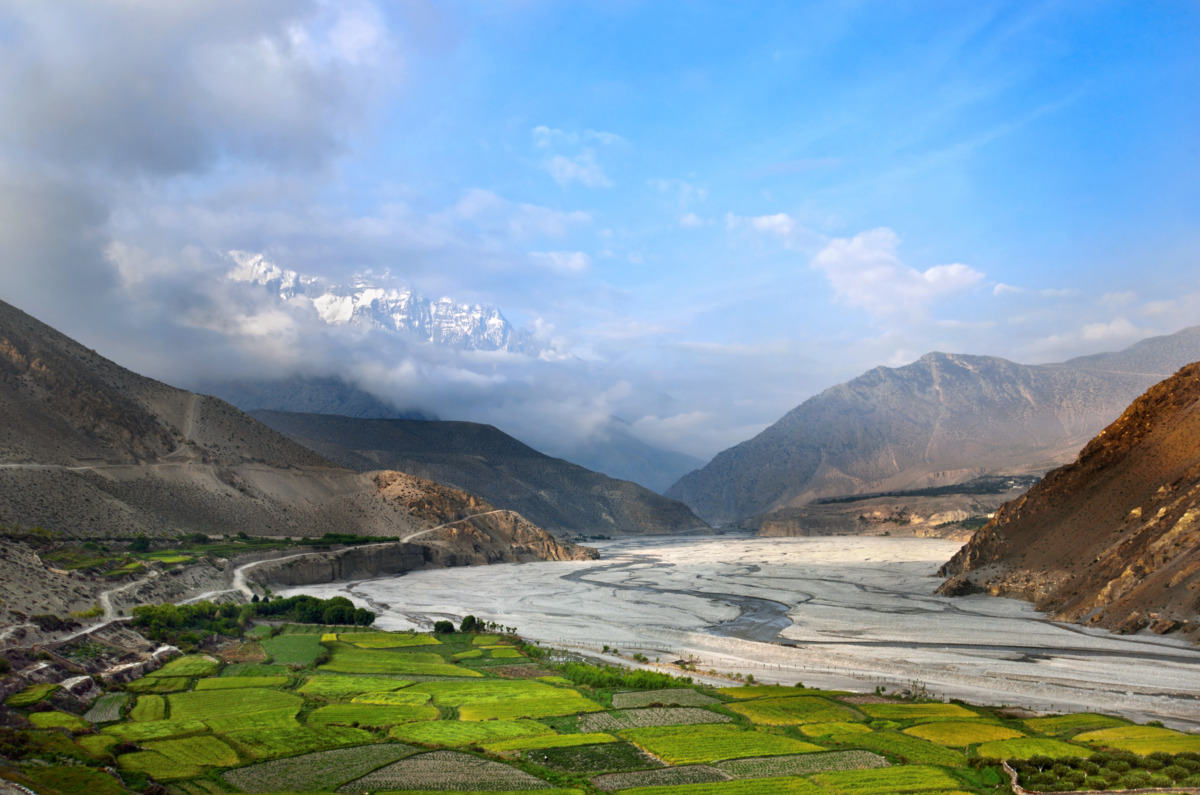
Nepal offers dozens of famous trekking routes, but Upper Mustang stands apart because of its geography, history, and cultural identity.
Unlike Everest Base Camp or the Annapurna Circuit, Upper Mustang lies north of the Himalayan range within a high-altitude desert. This unique location creates a dry climate that allows trekking even during Nepal’s summer monsoon, when many other trails experience heavy rainfall.
Another defining feature is its rich Tibetan heritage. Before becoming part of Nepal, Mustang was an independent kingdom with strong cultural and trade connections to Tibet. Today, visitors can still witness centuries-old monasteries, whitewashed villages, colorful prayer flags, and traditional mud-brick homes that preserve this remarkable legacy.
The route also offers a different style of trekking. Rather than climbing to extremely high altitudes, the journey focuses on exploring remote settlements, ancient cave complexes, dramatic landscapes, and historic sites while maintaining a comfortable trekking pace.
For travelers seeking a blend of natural beauty, cultural exploration, and historical significance, Upper Mustang offers one of the most rewarding experiences in the Himalayas.
Top Highlights of the Upper Mustang Trek
Explore the Ancient Kingdom of Lo Manthang
The highlight of the trek is reaching Lo Manthang, the former capital of the Kingdom of Mustang. Surrounded by centuries-old defensive walls, this remarkable settlement is home to royal palaces, monasteries, and narrow alleyways that reveal the region’s unique history.
Walk Through Nepal’s High-Altitude Desert
The landscapes of Upper Mustang differ dramatically from the green hills often associated with Nepal. Deep canyons, layered cliffs, colorful rock formations, and wide valleys create scenery unlike anywhere else in the country.
Experience Authentic Tibetan Buddhist Culture
Prayer wheels, mani walls, monasteries, and local festivals remain an integral part of daily life in Upper Mustang. Visitors have the opportunity to observe traditions that have been preserved for generations.
Visit the Ancient Chhoser Cave
Near Lo Manthang lies the fascinating Chhoser Cave, a multi-level cave complex carved into towering cliffs. Archaeologists believe parts of the cave system date back more than 2,000 years and were once used for meditation, shelter, and burial rituals.
Trek Along the Kali Gandaki Valley
The journey follows sections of the Kali Gandaki Gorge, one of the deepest river valleys in the world, offering spectacular mountain views and unique geological formations.
Discover Traditional Mustang Villages
Each village along the route has its own character. Kagbeni welcomes trekkers at the gateway to Upper Mustang, Chele introduces the region’s desert landscape, Ghami is known for one of the longest mani walls in Nepal, and Charang showcases impressive monasteries and traditional architecture.
Best Time for the Upper Mustang Trek
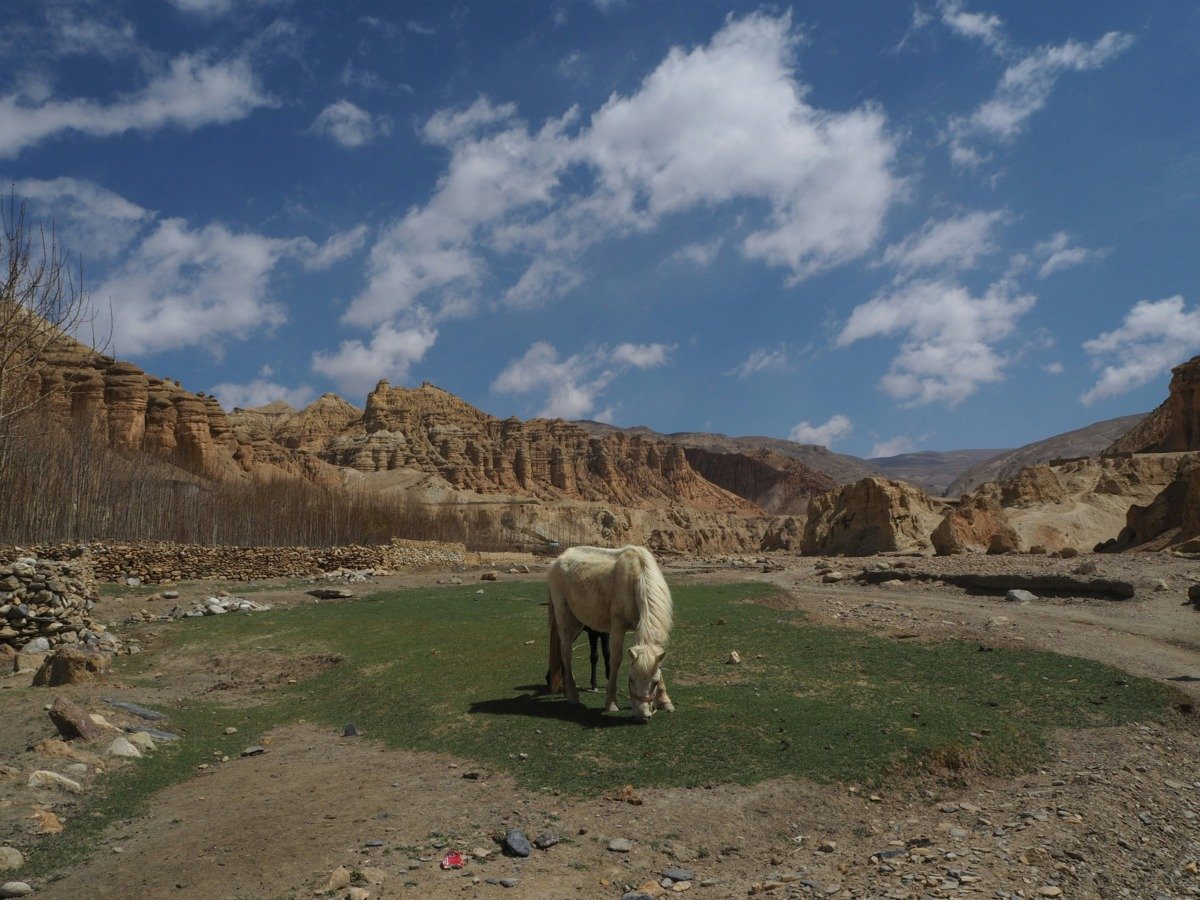
One of the biggest advantages of the Upper Mustang Trek is its flexibility throughout much of the year. Thanks to its location in the Himalayan rain shadow, the region receives significantly less rainfall than most trekking areas in Nepal.
Spring (March to May)
Spring offers mild temperatures, clear mountain views, and comfortable trekking conditions. Rhododendron forests bloom in the lower elevations around Pokhara before the trail transitions into Mustang’s distinctive arid landscape. This season is ideal for photographers and first-time trekkers.
Summer / Monsoon (June to August)
Unlike Everest or Annapurna Base Camp, Upper Mustang remains one of Nepal’s best trekking destinations during the monsoon. The surrounding Himalayan ranges block much of the rainfall, leaving the trails relatively dry.
This is also the season when the famous Tiji Festival is celebrated in Lo Manthang, attracting travelers interested in Buddhist culture and traditional ceremonies.
Autumn (September to November)
Autumn is considered the most popular trekking season due to its stable weather, crisp air, and exceptional visibility. Pleasant daytime temperatures make long trekking days comfortable while offering panoramic views of Nilgiri, Annapurna, and Dhaulagiri.
Winter (December to February)
Winter trekking is possible but more challenging due to cold temperatures and occasional snowfall. Some local residents move to lower elevations during this period, and tea houses may operate with limited services.
Detailed 14-Day Upper Mustang Trek Itinerary
A well-planned itinerary is essential for a comfortable and enjoyable trek in Upper Mustang. This 14-day route balances trekking, acclimatization, and cultural exploration while allowing enough time to experience the unique landscapes and heritage of the former Kingdom of Lo.
Day 1: Kathmandu to Pokhara – Scenic Drive
Driving Duration: 7–8 hours
Elevation: 822 m
Your adventure begins with a scenic drive from Kathmandu to Pokhara along the Prithvi Highway. The route follows rivers, terraced farmland, charming villages, and rolling hills before reaching Nepal’s popular lakeside city.
Pokhara is the gateway to many Himalayan adventures. Depending on the weather, you may enjoy beautiful views of Annapurna, Machhapuchhre (Fishtail), and Dhaulagiri.
Highlights
- Scenic countryside drive
- Trishuli and Marsyangdi Rivers
- Overnight stay in Pokhara
Day 2: Pokhara to Jomsom (Flight) and Trek to Kagbeni
Flight: 20–25 minutes
Walking: 3–4 hours
An early morning mountain flight takes you to Jomsom, where spectacular views of Nilgiri and Dhaulagiri welcome you.
From Jomsom, the trail follows the Kali Gandaki River to Kagbeni, the official gateway to Upper Mustang. Here, permits are checked before entering the restricted region.
Kagbeni is one of Mustang’s oldest settlements, featuring narrow stone alleys, ancient monasteries, and traditional Tibetan architecture.
Highlights
- Himalayan flight
- Kali Gandaki Valley
- Historic Kagbeni Village
- Permit checkpoint
Day 3: Kagbeni to Chele
Walking: 5–6 hours
After leaving Kagbeni, the landscape gradually transforms into Upper Mustang’s famous desert terrain.
The trail passes colorful cliffs, deep canyons, and small villages before reaching Chele.
Today’s walk offers the first real taste of Mustang’s unique geography.
Highlights
- Enter Upper Mustang
- Desert landscapes
- Traditional villages
- Views of Nilgiri
Day 4: Chele to Syangmochen
Walking: 6–7 hours
Today’s trail climbs steadily through dramatic ridges and high passes.
You’ll cross suspension bridges, pass prayer flags, mani walls, and Buddhist chortens before arriving at Syangmochen.
The scenery becomes increasingly rugged and colorful.
Highlights
- High mountain passes
- Tibetan Buddhist monuments
- Panoramic canyon views
Day 5: Syangmochen to Ghami
Walking: 5–6 hours
The trail continues through remote villages surrounded by striking red and orange cliffs.
Ghami is famous for having one of Nepal’s longest Mani Walls, where stones carved with Buddhist prayers stretch for hundreds of meters.
Trekkers also enjoy exceptional views of Mustang’s wind-carved landscapes.
Highlights
- Long Mani Wall
- Traditional Ghami Village
- Colorful cliffs
Day 6: Ghami to Charang
Walking: 5–6 hours
Today’s route crosses dry valleys before reaching the impressive village of Charang.
Charang is home to one of Mustang’s oldest monasteries and a traditional fortress-like palace.
Its narrow alleys and mud-brick houses provide insight into the region’s medieval architecture.
Highlights
- Ancient Charang Monastery
- Historic Palace
- Tibetan-style settlement
Day 7: Charang to Lo Manthang
Walking: 5–6 hours
This is one of the most anticipated days of the trek.
After crossing Lo La Pass, the spectacular walled city of Lo Manthang appears in the distance.
Founded in the 14th century, Lo Manthang remains the cultural heart of Upper Mustang.
Visitors can explore monasteries, royal palaces, museums, and traditional homes that preserve centuries of history.
Highlights
- Lo La Pass
- First view of Lo Manthang
- Ancient Walled City
- Royal Palace
Day 8: Explore Lo Manthang & Chhoser Cave
Rather than continuing immediately, this itinerary includes a full exploration day.
Visit:
- Chhoser Cave
- Jhong Cave
- Ancient monasteries
- Local villages
- Traditional Buddhist sites
This extra day allows your body to acclimatize while giving you time to appreciate the cultural richness of Upper Mustang.
Many trekkers consider this the highlight of the journey.
Day 9: Lo Manthang to Dhakmar
Walking: 6–7 hours
Leaving Lo Manthang, the return route follows a different trail toward Dhakmar.
The famous red cliffs surrounding Dhakmar are among the most photographed landscapes in Mustang.
According to local legend, Guru Rinpoche meditated in this area, adding spiritual significance to the dramatic scenery.
Day 10: Dhakmar to Ghiling
Walking: 5–6 hours
The descent continues through peaceful valleys, yak pastures, and traditional villages.
Ghiling offers a quieter atmosphere with beautiful monasteries and expansive mountain views.
Day 11: Ghiling to Chuksang
Walking: 6–7 hours
Today’s trail gradually descends through narrow gorges and colorful canyon walls.
As you approach Chuksang, vegetation becomes more noticeable, marking your return toward lower elevations.
Day 12: Chuksang to Jomsom
Walking: 6–7 hours
The final trekking day follows the Kali Gandaki Valley back to Jomsom.
This is an opportunity to reflect on your journey while enjoying familiar landscapes from a new perspective.
Celebrate completing one of Nepal’s most culturally rewarding trekking adventures.
Day 13: Jomsom to Pokhara (Flight)
A morning flight returns you to Pokhara.
Spend the afternoon relaxing by Phewa Lake, visiting local cafés, or exploring the city’s attractions after nearly two weeks in the Himalayas.
Day 14: Pokhara to Kathmandu
Drive back to Kathmandu through Nepal’s scenic countryside.
Your Upper Mustang Trek concludes with unforgettable memories of ancient monasteries, Himalayan landscapes, and one of Nepal’s most culturally preserved regions.
How Difficult is the Upper Mustang Trek?
The Upper Mustang Trek is generally considered a moderate trek. It does not involve technical climbing, ropes, or mountaineering skills, making it accessible to trekkers with a reasonable level of fitness.
However, several factors influence the overall difficulty:
- Daily walks of 5–7 hours
- Rocky and uneven terrain
- Dry, windy conditions
- High altitude above 3,000 meters
- Limited medical facilities in remote villages
Unlike Everest Base Camp, the maximum elevation remains below 4,000 meters, reducing the risk of severe altitude sickness. Nevertheless, proper acclimatization and a steady walking pace are essential.
Fitness Recommendations
You do not need to be an athlete, but preparing for the trek with regular cardiovascular exercise, hiking, stair climbing, and strength training can significantly improve your experience.
Upper Mustang Trek Altitude Profile
| Location | Elevation |
|---|---|
| Kathmandu | 1,400 m |
| Pokhara | 822 m |
| Jomsom | 2,720 m |
| Kagbeni | 2,810 m |
| Chele | 3,050 m |
| Syangmochen | 3,800 m |
| Ghami | 3,520 m |
| Charang | 3,570 m |
| Lo Manthang | 3,840 m |
| Dhakmar | 3,820 m |
| Ghiling | 3,570 m |
| Chuksang | 2,980 m |
The gradual ascent included in this itinerary helps minimize the chances of altitude-related illness.
Upper Mustang Trek Permits
Upper Mustang is a restricted area, so independent trekking is not permitted. Trekkers must obtain the required permits through a registered trekking agency.
1. Restricted Area Permit (RAP)
- USD 500 per person
- Covers the first 10 days
- Additional USD 50 per day after 10 days
2. Annapurna Conservation Area Permit (ACAP)
- Required for all trekkers entering the Annapurna Conservation Area
- Helps support conservation and local community development
Your trekking agency typically arranges all permit applications before the trek begins.
Cost of Upper Mustang Trek
The overall cost depends on several factors, including group size, accommodation preferences, transportation, and the level of service provided.
Typical Cost Breakdown
| Expense | Estimated Cost |
|---|---|
| Restricted Area Permit | USD 500 |
| ACAP Permit | As per current government rate |
| Domestic Flights | Varies by season |
| Accommodation | Usually included in packages |
| Meals | Often included during the trek |
| Guide | Included in organized treks |
| Porter | Optional but recommended |
| Ground Transportation | Included in most packages |
Most guided 14-day packages combine permits, transportation, accommodation, meals, licensed guides, and logistical support into one price, making planning more convenient.
While it may seem more expensive than other trekking routes, the permit system limits visitor numbers and helps preserve the fragile environment and unique cultural heritage of Upper Mustang.
Accommodation During the Trek
Accommodation is primarily in locally operated tea houses.
Rooms are simple but comfortable, usually featuring twin beds, blankets, pillows, and shared bathroom facilities.
Many tea houses now offer:
- Solar-powered hot showers
- Wi-Fi (limited)
- Charging facilities
- Dining rooms with heating stoves
- Local hospitality
Staying in tea houses also provides opportunities to experience traditional Mustang culture and support local families.
Food on the Upper Mustang Trek
Trekkers can expect a surprisingly varied menu.
Popular meals include:
- Dal Bhat
- Tibetan Bread
- Thukpa
- Fried Rice
- Noodles
- Momos
- Pancakes
- Eggs
- Soups
- Tea and Coffee
Dal Bhat remains the preferred meal for many trekkers because it provides balanced nutrition and unlimited refills at most tea houses.
What to Pack for the Upper Mustang Trek
Packing wisely can make your trekking experience more comfortable and enjoyable. Although the trail does not reach extreme altitudes compared to some Himalayan routes, temperatures can change quickly between day and night.
Clothing
- Moisture-wicking base layers
- Insulated fleece or down jacket
- Waterproof and windproof outer shell
- Comfortable trekking pants
- Thermal innerwear
- Warm gloves and hat
- Sun hat or cap
- Buff or neck gaiter
- Extra socks and underwear
Footwear
- Well-broken-in trekking boots
- Lightweight sandals or camp shoes
- Gaiters (optional during dusty seasons)
Trekking Gear
- Trekking poles
- 30–40L daypack
- Duffel bag (if using a porter)
- Rain cover
- Headlamp with spare batteries
- Reusable water bottles or hydration bladder
Personal Essentials
- Sunscreen (SPF 50+)
- Lip balm
- Sunglasses with UV protection
- Personal medications
- First aid kit
- Wet wipes
- Hand sanitizer
- Power bank
- Camera
Because Upper Mustang is a dry, high-altitude desert, sun protection and hydration are especially important throughout the journey.
Responsible Trekking in Upper Mustang
Upper Mustang is more than a trekking destination it’s a culturally significant region where traditions have been preserved for centuries. Responsible travel helps protect both the local communities and the environment.
Here are a few simple practices to follow:
- Carry a reusable water bottle to reduce plastic waste.
- Stay on marked trails to prevent erosion.
- Ask permission before photographing local people.
- Dress respectfully when visiting monasteries and villages.
- Support locally owned tea houses and businesses.
- Dispose of waste responsibly.
- Respect local customs and religious sites.
Sustainable trekking ensures that future generations can continue to experience the unique heritage of Upper Mustang.
Why Choose Mountain Treks Nepal for the Upper Mustang Trek?
Choosing the right trekking company is just as important as choosing the destination. Since Upper Mustang is a restricted area requiring permits and careful logistical planning, working with an experienced local operator can make your journey smoother and more rewarding.
At Mountain Treks Nepal, every Upper Mustang Trek is organized with a focus on safety, cultural respect, and personalized service.
Experienced Local Team
Our licensed guides have extensive knowledge of Upper Mustang’s trails, culture, history, and weather conditions, helping you gain a deeper understanding of the region beyond its landscapes.
Hassle-Free Permit Management
We handle all required trekking permits, including the Restricted Area Permit and Annapurna Conservation Area Permit, allowing you to focus on your adventure.
Carefully Designed Itinerary
Our 14-day itinerary is planned to balance trekking, acclimatization, and cultural exploration. It includes an exploration day in Lo Manthang and a visit to Chhoser Cave, offering a more immersive experience.
Small Group Experience
We believe smaller groups allow for better flexibility, more meaningful interactions with local communities, and a more enjoyable trekking experience.
Reliable Support Throughout the Trek
From transportation and accommodation to experienced guides and logistical coordination, our team ensures every stage of your journey is professionally managed.
Upper Mustang Trek Comparison
| Feature | Upper Mustang Trek | Everest Base Camp Trek | Annapurna Circuit Trek |
|---|---|---|---|
| Duration | 14 Days | 12–14 Days | 12–18 Days |
| Maximum Elevation | 3,840 m | 5,364 m | 5,416 m |
| Difficulty | Moderate | Moderate to Challenging | Moderate to Challenging |
| Cultural Experience | Exceptional Tibetan Heritage | Sherpa Culture | Mixed Himalayan Culture |
| Best Monsoon Trek | ✅ Yes | ❌ No | ❌ Limited |
| Restricted Area | ✅ Yes | ❌ No | Partial |
| Ancient Kingdom | ✅ Yes | ❌ No | ❌ No |
| Historic Monasteries | Excellent | Good | Good |
| Desert Landscape | Yes | No | Partial |
Who Should Choose the Upper Mustang Trek?
This trek is ideal for:
- Travelers interested in Tibetan Buddhist culture
- Photographers seeking dramatic desert landscapes
- History enthusiasts exploring ancient Himalayan kingdoms
- Trekkers looking for a less crowded route
- People planning a monsoon-season trek in Nepal
- Adventure travelers who enjoy remote destinations without extreme altitudes
Frequently Asked Questions (FAQ)
Is the Upper Mustang Trek difficult?
The Upper Mustang Trek is considered moderately difficult. Daily walking ranges from five to seven hours on uneven terrain. While no technical climbing is involved, good physical fitness and proper preparation will make the trek more enjoyable.
How much does the Upper Mustang Trek cost?
The total cost varies depending on group size, services included, accommodation, flights, and permit fees. Guided packages generally include transportation, permits, accommodation, meals during the trek, guides, and logistical support.
Do I need a permit for Upper Mustang?
Yes. Trekkers require both the Restricted Area Permit (RAP) and the Annapurna Conservation Area Permit (ACAP). Independent trekking is not allowed, so all permits must be arranged through a registered trekking agency.
What is the best time to trek in Upper Mustang?
Spring (March to May) and autumn (September to November) offer excellent weather and visibility. Thanks to its rain-shadow location, Upper Mustang is also one of Nepal’s best trekking destinations during the summer monsoon.
Can beginners do the Upper Mustang Trek?
Yes. Beginners with good fitness, preparation, and the support of experienced guides can complete the trek comfortably.
Why is Upper Mustang called the Forbidden Kingdom?
Upper Mustang remained closed to foreign visitors until 1992. The region preserved its unique Tibetan culture, traditions, and architecture due to its restricted access, earning it the nickname “The Forbidden Kingdom.”
What is the highest point of the trek?
The highest overnight stop on this itinerary is Lo Manthang at approximately 3,840 meters (12,598 feet).
Is altitude sickness common?
Because the trek stays below 4,000 meters and follows a gradual ascent, the risk is lower than on many Himalayan treks. However, proper acclimatization, hydration, and pacing remain important.
Are tea houses available throughout the trek?
Yes. Comfortable local tea houses are available in most villages, providing accommodation and freshly prepared meals.
Can I trek independently?
No. Upper Mustang is a restricted region, and all trekkers must travel through a licensed trekking agency with an authorized guide.
Is Wi-Fi available?
Some tea houses offer Wi-Fi, although connectivity may be slow or unavailable depending on the location and weather conditions.
What wildlife might I see?
The region is home to blue sheep, Himalayan griffons, eagles, and other high-altitude wildlife. Sightings vary by season and location.
How many days are recommended for the Upper Mustang Trek?
A 14-day itinerary provides sufficient time for travel, acclimatization, cultural exploration, and a more relaxed trekking pace.
Is travel insurance necessary?
Yes. Comprehensive travel insurance that covers high-altitude trekking, emergency evacuation, and medical expenses is strongly recommended.
Can the itinerary be customized?
Yes. Depending on your schedule, interests, and fitness level, the itinerary can often be adjusted with additional sightseeing, jeep support, or extra days in Pokhara or Kathmandu.
Final Thoughts
The Upper Mustang Trek is more than a Himalayan adventure it is an opportunity to experience one of Nepal’s most culturally preserved and geographically distinctive regions. From the ancient streets of Lo Manthang and the remarkable Chhoser Cave to the dramatic landscapes of the Kali Gandaki Valley, every day reveals a different side of the former Kingdom of Mustang.
Its moderate difficulty, carefully managed altitude, and suitability during the monsoon season make it an excellent choice for trekkers seeking a journey beyond Nepal’s more familiar routes. Combined with welcoming local communities, centuries-old monasteries, and breathtaking scenery, Upper Mustang offers an experience that stays with you long after the trek ends.
If you’re ready to explore this extraordinary corner of the Himalayas, Mountain Treks Nepal is here to help you plan a safe, well-organized, and memorable 14-day Upper Mustang Trek tailored to your travel goals.