



Share This:
Best Time for the Kanchenjunga Circuit Trek
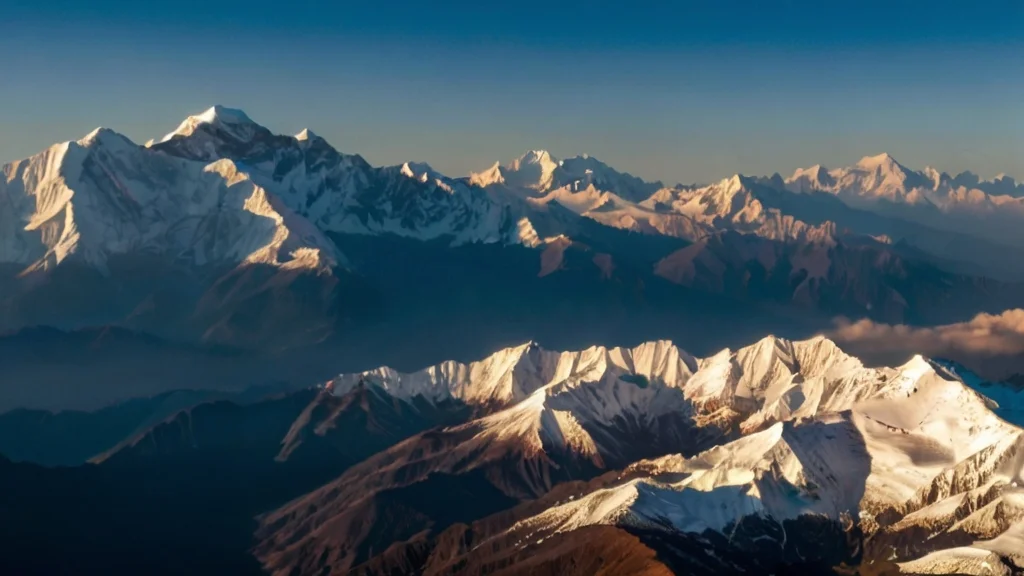
The best time for the Kanchenjunga Circuit Trek is during the Autumn (late September to November) and Spring (March to May) seasons. Because this is one of Nepal’s longest and most remote restricted treks taking 22 to 26 days to complete and reaching altitudes of 5,143 meters (16,873 feet) at Pangpema stable weather is absolutely critical for your safety.
Autumn is universally considered the best trekking window. After the summer monsoon washes the dust from the atmosphere, the skies in far eastern Nepal become impeccably clear, offering razor-sharp views of Mount Kanchenjunga, the third-highest mountain on Earth. Spring is the second-best option, bringing warmer daytime temperatures and vibrant blooming rhododendron forests to the lower trails.
Trekking the Kanchenjunga Circuit during the freezing winter or the wet monsoon is strongly discouraged. Extreme snowfall routinely blocks the high mountain passes connecting the north and south base camps, while heavy summer rains trigger severe landslides. This comprehensive guide from Mountain Treks Nepal breaks down the temperatures, pass conditions, and seasonal logistics to help you plan a safe expedition into this untouched wilderness.
Autumn (September to November): The Gold Standard for Clarity
Autumn provides the most reliable and photogenic conditions for the Kanchenjunga Circuit. The air is crisp, the trails are mostly dry, and the mountain panoramas are spectacular.
Weather and Temperatures
-
September: The first half of September can still experience lingering monsoon showers in eastern Nepal. By late September, the weather stabilizes, though the trails can still be slightly muddy in the lower subtropical zones.
-
October: This is the absolute peak month. Days are bright, sunny, and highly stable. In the lower and mid-elevations, daytime temperatures range from 10°C to 15°C (50°F to 59°F). Higher up, near the North Base Camp at Pangpema, daytime highs hover around 0°C to 5°C (32°F to 41°F), with nighttime lows dropping to -5°C to -10°C (23°F to 14°F).
-
November: The skies remain impeccably clear, but temperatures drop rapidly. Nighttime temperatures at the higher camps routinely fall between -10°C and -15°C (14°F to 5°F). You will need a high-quality down sleeping bag rated for at least -15°C.
Pros and Cons of Autumn Trekking
Pros:
-
Unparalleled, unobstructed views of the Kanchenjunga Massif and the surrounding glaciers.
-
Highly stable weather makes crossing the consecutive high passes (Sele La, Mirgin La) safer.
-
The dry trails significantly reduce the risk of leeches in the lower jungle sections.
Cons:
-
While far less crowded than Everest, the limited rustic teahouses on this route can reach capacity in October.
Spring (March to May): Rhododendrons and Warmer Days
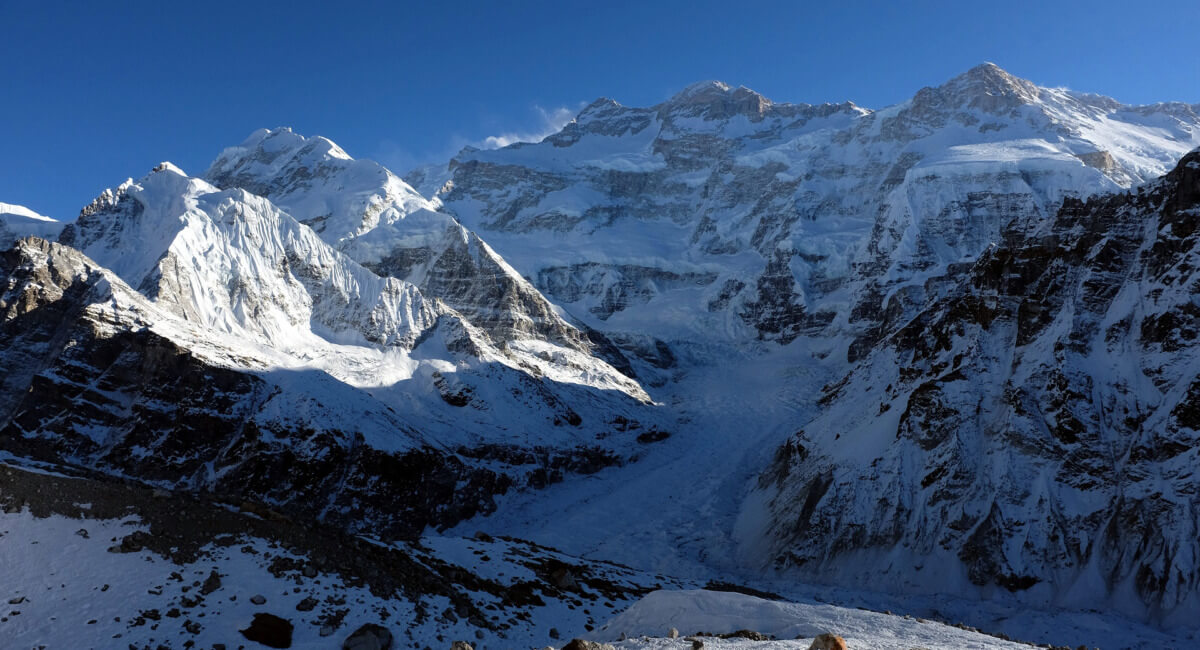
Spring is a magnificent time to explore the Kanchenjunga region. The primary draw is the dramatic explosion of color in the lower forests and the gradual warming of the alpine air.
Weather and Temperatures
-
March: Early March is still quite cold, and you will likely encounter residual winter snow on the trails above 4,000 meters. The pass crossings will be icy, but the days are increasingly bright.
-
April: April rivals October for ideal trekking conditions. The lower valleys, particularly around Amjilosa and Ghunsa, burst into color with pink and red rhododendrons. Temperatures are mild, making for highly comfortable hiking.
-
May: May is the warmest trekking month. Daytime temperatures in the lower valleys can reach 20°C (68°F). However, as May progresses, rising humidity brings pre-monsoon afternoon showers and a heat haze that can occasionally obscure distant peaks.
Pros and Cons of Spring Trekking
Pros:
-
Warmer daytime temperatures make the 6-to-8-hour daily hikes much more comfortable.
-
Excellent opportunities for wildlife spotting in the Kanchenjunga Conservation Area (including blue sheep and Himalayan birds).
-
Slightly fewer trekkers than in October.
Cons:
-
Lingering winter snow in early March can make the high passes physically harder to cross.
-
Occasional afternoon cloud build-up and heat haze in late May can limit visibility at base camps.
Winter & Monsoon: Why the Off-Seasons Are Dangerous
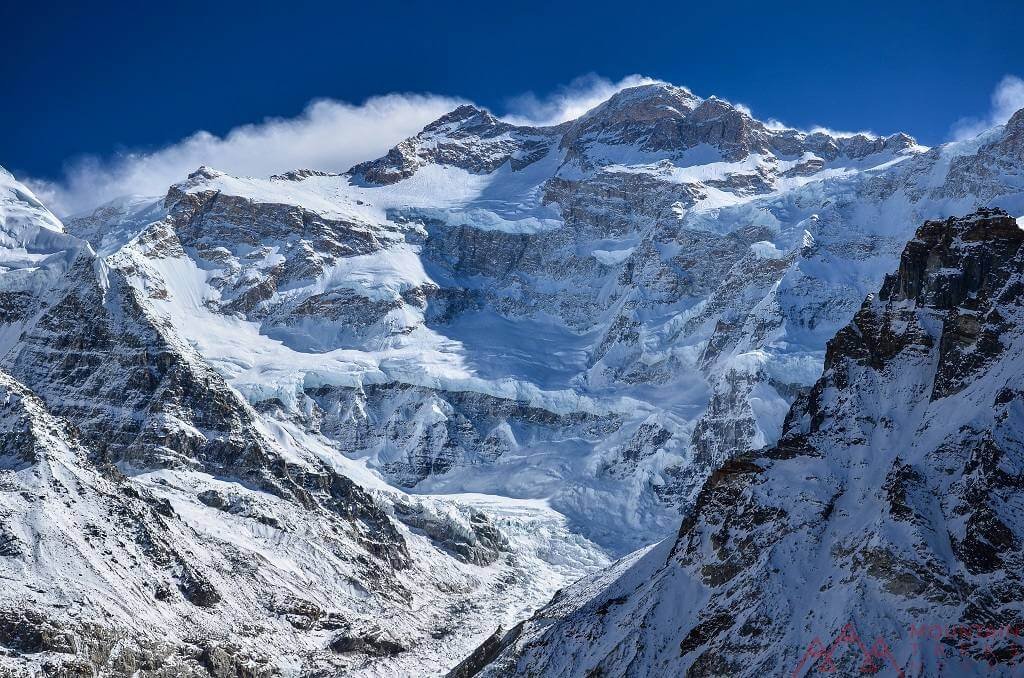
Unlike shorter, lower-altitude treks, the Kanchenjunga Circuit is highly susceptible to extreme off-season weather. Trekking during these months is generally not viable.
Winter (December to February)
Winter is harsh and unforgiving. The Kanchenjunga Circuit requires crossing a series of high alpine passes (Sele La at 4,290m, Mirgin La at 4,665m, and Sinelapche La at 4,840m) to connect the North Base Camp to the South Base Camp. During winter, these passes are frequently buried under deep, impassable snow, making the full circuit impossible to complete. Furthermore, many teahouse owners migrate to lower elevations for the winter, leaving trekkers without food or shelter in the highest zones.
Monsoon / Summer (June to August)
The summer months bring the Asian monsoon, unleashing torrential rain across eastern Nepal. The Kanchenjunga region receives higher rainfall than western regions, making the summer trek incredibly challenging. The lower trails become slick with mud, heavily infested with leeches, and highly prone to landslides. Dense clouds and fog will completely obscure the mountains, ruining the purpose of the trek.
Month-by-Month Kanchenjunga Weather & Temperature Guide
| Month | Season | Avg. Daytime Temp (Lower) | Avg. Nighttime Temp (High Altitude) | Trekking Conditions & Verdict |
| January | Winter | 5°C to 10°C | -15°C to -25°C | Deep winter. Passes blocked by snow. Teahouses closed. Avoid. |
| February | Winter | 6°C to 12°C | -15°C to -20°C | Very cold. Deep snow at higher elevations. Extremely difficult. |
| March | Spring | 8°C to 15°C | -10°C to -15°C | Good. Chilly mornings, clear skies, melting snow on passes. |
| April | Spring | 12°C to 18°C | -5°C to -10°C | Peak Season. Warm days, blooming rhododendrons. |
| May | Spring | 15°C to 20°C | -2°C to -5°C | Good. Warmest month, afternoon haze, pre-monsoon showers. |
| June – Aug | Monsoon | 18°C to 25°C | 5°C to 10°C | Off-Season. Heavy rain, leeches, landslide risks. Avoid. |
| September | Autumn | 15°C to 20°C | 0°C to -5°C | Good (Late Sept). Trails dry out, skies clear beautifully. |
| October | Autumn | 12°C to 18°C | -5°C to -10°C | Peak Season. Perfect clarity, stable weather, dry passes. |
| November | Autumn | 10°C to 15°C | -10°C to -15°C | Good. Crystal clear, very cold nights, thinning crowds. |
Seasonal Safety: Crossing the High Passes
The crux of the full Kanchenjunga Circuit Trek is the multi-day traverse connecting the northern and southern routes via the Sele La (4,290m) and Mirgin La (4,665m) passes.
-
In Autumn (Oct/Nov): The passes are generally free of deep, fresh snow. While you are hiking over exposed, rocky, and scree-covered trails, the footing is secure, making these strenuous 8-hour days much safer.
-
In Spring (March/April): You will likely encounter packed ice and residual winter snow. Trekking poles and microspikes are highly recommended to prevent slipping on the steep, icy descents.
-
The Golden Rule: Regardless of the season, high mountain passes act as wind channels where temperatures plunge quickly. You must start your ascent before dawn to ensure you cross the summits before noon, avoiding the severe afternoon winds and sudden mountain fog that can reduce visibility to zero.
Planning to trek during peak months? Because Kanchenjunga is a remote, restricted area, organizing the mandatory permits and securing local teahouse beds requires expert coordination. As a registered local agency, Mountain Treks Nepal handles your permits, flights to eastern Nepal, and elite guide services. Contact us to handle your logistics seamlessly.
FAQs
Which is the best month to trek the Kanchenjunga Circuit?
October is widely considered the absolute best single month to trek the Kanchenjunga Circuit. Following the summer monsoon, the atmosphere is completely clear of dust, offering crystal-clear mountain views. The weather is highly stable, making the crossing of the high mountain passes (Sele La, Mirgin La) safer, and daytime temperatures are comfortable.
How cold is Kanchenjunga Base Camp?
The temperature at Pangpema (North Base Camp, 5,143m) is always freezing at night. During the peak trekking months of October and April, daytime temperatures usually range from 0°C to 5°C (32°F to 41°F) in the sun. However, nighttime temperatures regularly plummet between -10°C and -15°C (14°F to 5°F). Wind chill can make it feel significantly colder.
Can you trek Kanchenjunga in December?
Trekking the full Kanchenjunga Circuit in December is highly discouraged and often impossible. The intense winter cold and heavy snowfall routinely block the high passes (above 4,600m) connecting the north and south base camps. Additionally, many local teahouse owners migrate to lower elevations during winter, leaving the upper trails without food or shelter.
Is the Kanchenjunga Trek safe during the monsoon?
No, the Kanchenjunga Circuit is generally unsafe and highly unpleasant during the monsoon (June to August). Eastern Nepal receives heavier rainfall than the western regions. The steep trails become incredibly muddy, slippery, and infested with leeches. Most critically, heavy rains significantly increase the risk of dangerous landslides along the lower river gorges.