



Share This:
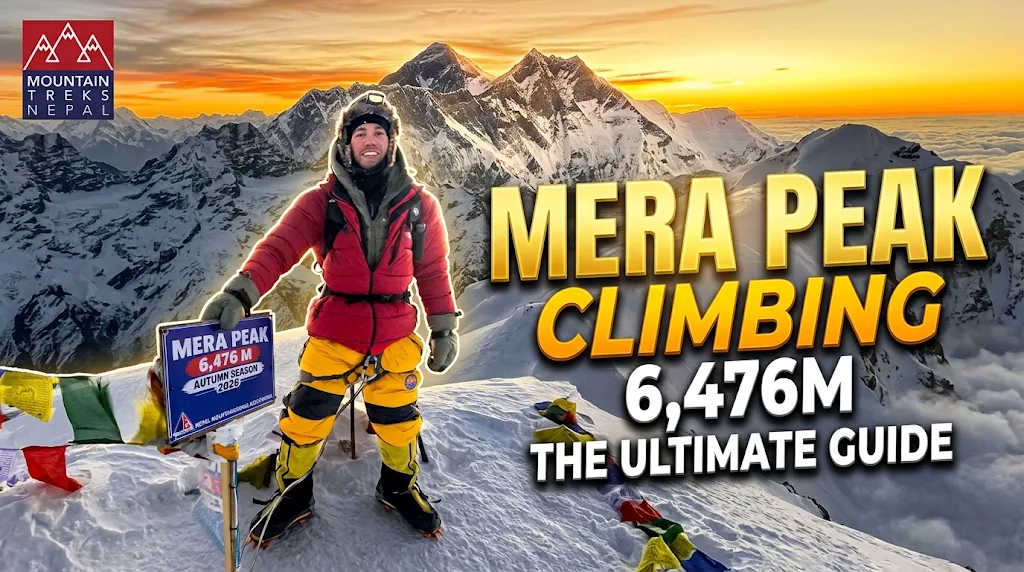
Complete Guide to Mera Peak Climbing (6,476m): Conquering Nepal’s Highest Trekking Peak (2026-2027 Edition)
Standing at a colossal 6,476 meters (21,246 feet), Mera Peak is the highest officially designated “Trekking Peak” in Nepal. Located on the edge of the remote Makalu Barun National Park, just south of Mount Everest, Mera Peak is a mountain of profound paradoxes. It demands extreme physical exertion and subjects you to the crushing reality of the death zone’s fringes, yet it is entirely non-technical. You do not need to be a seasoned alpinist to stand on its summit; you simply need unbreakable cardiovascular endurance, mental grit, and a world-class support team.
The reward for enduring the freezing winds and thin air of the Hinku Valley is arguably the greatest single panorama on planet Earth. From the summit dome of Mera Peak, you can see five of the six highest mountains in the world: Mount Everest (8,848m), Kanchenjunga (8,586m), Lhotse (8,516m), Makalu (8,485m), and Cho Oyu (8,188m).
For decades, Mera Peak Climbing has served as the ultimate gateway for trekkers looking to transition into high-altitude mountaineering. It is the perfect training ground for aspiring Everest or Ama Dablam climbers, and a monumental lifetime achievement for high-end adventurers.
This encyclopedic, definitive guide is crafted by the high-altitude expedition experts at Mountain Treks Nepal. Whether you are planning your first Himalayan summit or looking to push your alpine boundaries, this manual covers absolutely every aspect of the expedition. We break down the pristine ecology of the Hinku Valley, the meticulous 18-day acclimatization itinerary, the reality of the 3:00 AM summit push, the precise gear required for survival at -30°C, and the updated 2026 permit regulations.
The Geography and Ecology of the Hinku Valley
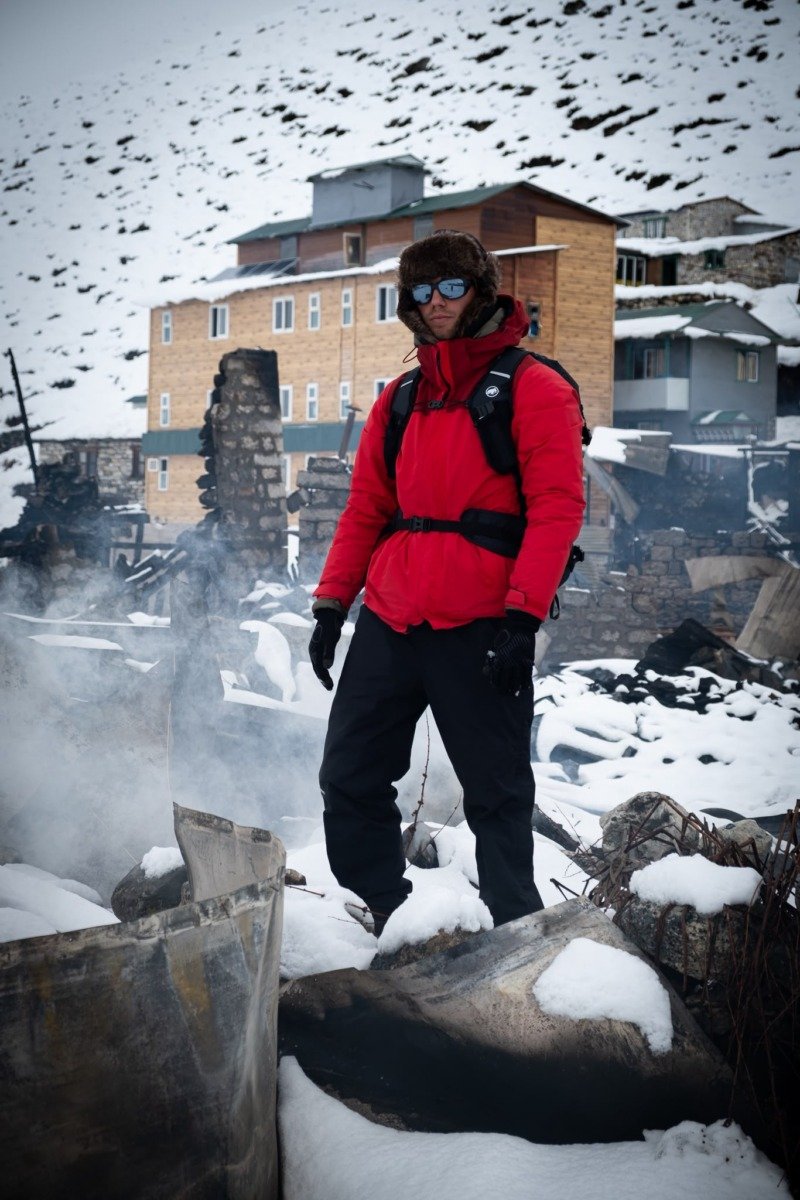
To understand the Mera Peak expedition, you must first understand the isolation of the landscape. Unlike the Everest Base Camp trek, which follows the heavily populated Dudh Koshi valley, the approach to Mera Peak navigates the Hinku Valley a deep, wild, and incredibly remote glacial watershed.
The Pristine Wilderness
The Hinku Valley is uninhabited by permanent settlements. The small clusters of stone huts you encounter at Kothe, Thaknak, and Khare are seasonal herding pastures (kharkas) that have been temporarily converted into basic teahouses for climbing groups. Because there is no permanent human habitation, the ecology of the valley remains entirely pristine.
You begin the trek descending from Lukla through lush, humid, sub-tropical forests of bamboo and rhododendron. As you cross the Panggom La and enter the Makalu Barun National Park, you are plunged into one of the most biologically diverse regions in the Himalayas. The lower forests are prime habitats for the elusive Red Panda, Himalayan Black Bear, and the vibrant Himalayan Monal (Nepal’s national bird).
The Alpine Transition
As you push north alongside the roaring Hinku Drangka river, the tree line vanishes abruptly past Kothe (3,691m). The environment transforms into a harsh, U-shaped glacial valley scoured by wind and ice. By the time you reach Khare (5,045m) the staging ground for the climb you are surrounded by towering vertical granite walls, massive seracs, and the sprawling Mera Glacier.
Why Choose Mera Peak? (Mera vs. Island Peak)
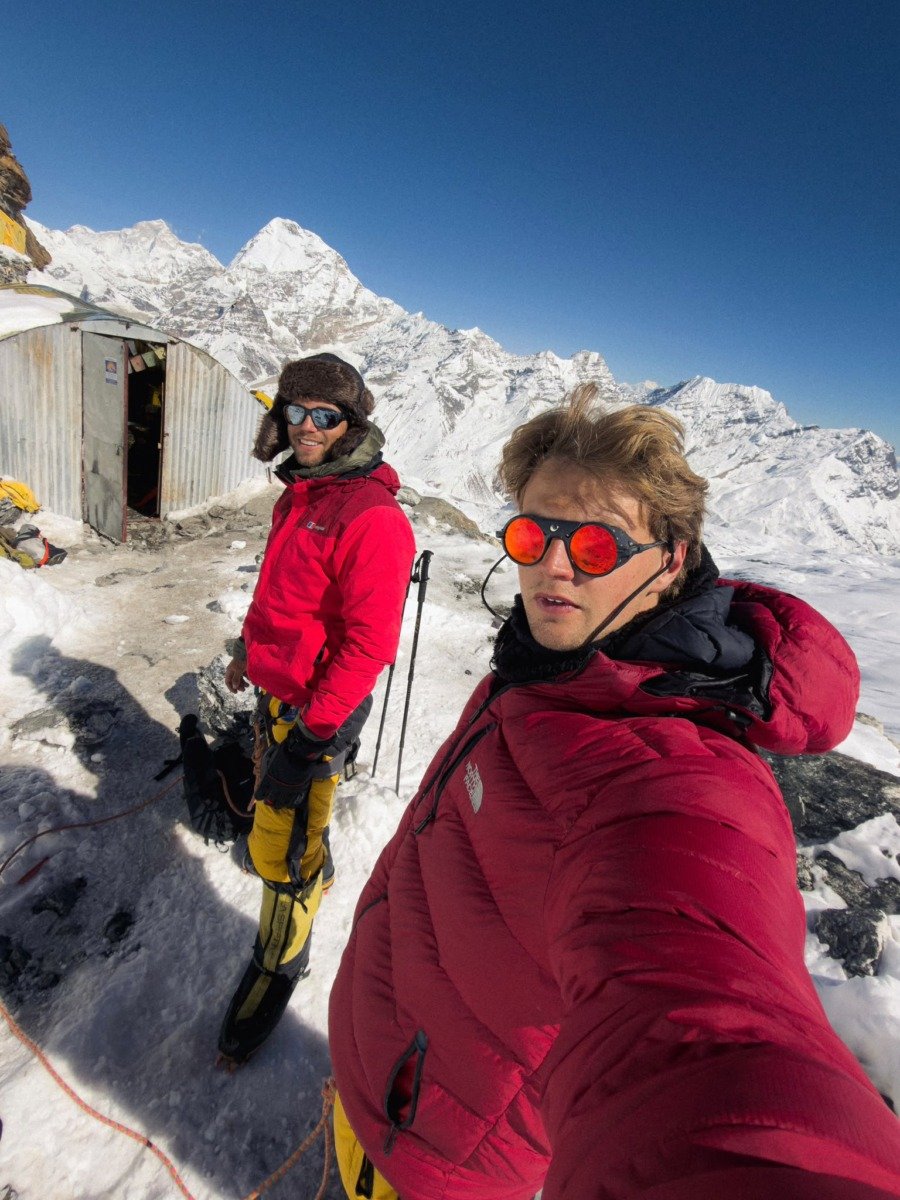
Trekkers looking to climb their first 6,000-meter peak in Nepal are almost always faced with a choice: Mera Peak (6,476m) or Island Peak (6,189m).
Why Mera Peak Wins for Beginners:
-
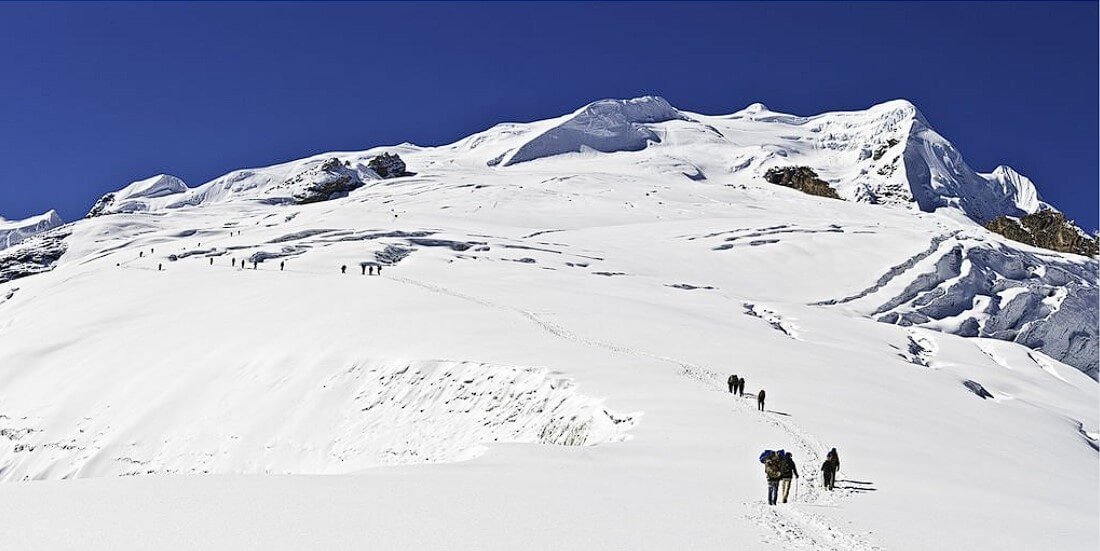
Non-Technical Terrain: Island Peak requires ascending a massive, vertical 100-meter ice wall using a jumar (ascender) and navigating treacherous, deep crevasses with aluminum ladders. Mera Peak is essentially a massive, high-altitude glacier walk. The slope rarely exceeds 30 degrees, making it highly accessible for strong trekkers with no prior ice-climbing experience.
-
Higher Altitude: Mera Peak is nearly 300 meters taller than Island Peak. For climbers testing their physiological response to extreme altitude before attempting 7,000m or 8,000m peaks, Mera provides a much more accurate simulation of the “death zone” fringe.
-
Absolute Solitude: The approach to Island Peak shares the main Everest Base Camp trail, meaning you are walking with thousands of other trekkers. The Hinku Valley approach to Mera Peak is isolated, quiet, and wildly authentic.
-
The Unmatched Summit View: Because Mera Peak sits further south of the main Himalayan divide, it acts as a colossal grandstand. You do not just see the mountains; you see the entire 8,000-meter ridgeline from Kanchenjunga in the east to Cho Oyu in the west.
How Difficult is Mera Peak Climbing?
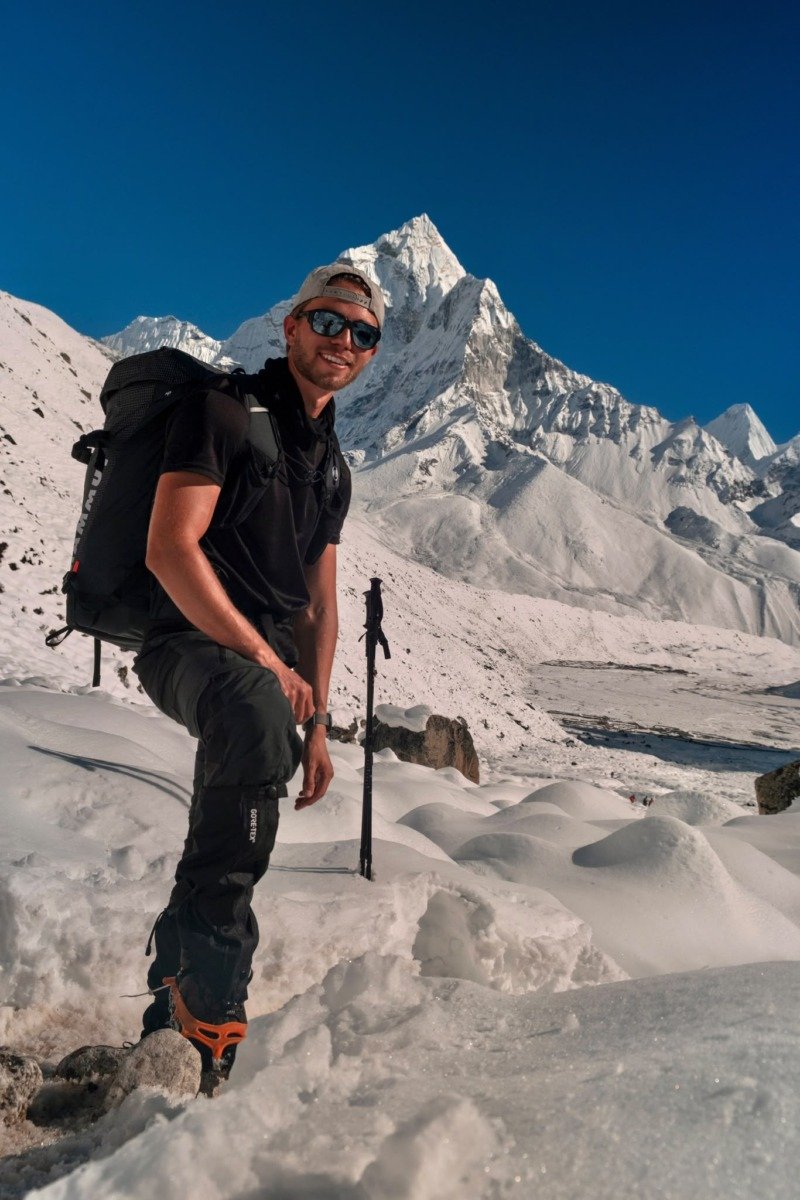
Do not let the term “non-technical” lull you into a false sense of security. Mera Peak is universally graded as Alpine Grade PD (Peu Difficile / A Little Difficult).
The Physical Toll
The true difficulty of Mera Peak is the relentless cardiovascular output required in a severely oxygen-depleted environment. You will be walking for 5 to 8 hours a day for two weeks just to reach Base Camp. On summit day, you will climb for 10 to 12 hours straight, wearing heavy double mountaineering boots and crampons, while breathing air that contains less than 45% of the effective oxygen found at sea level.
The Technical Requirements
While you do not need to be a professional ice climber, you will be introduced to fundamental mountaineering skills at Khare by your Mountain Treks Nepal Sherpa guide. You will learn:
-
How to walk efficiently in crampons without tripping.
-
How to self-arrest with a straight-shaft ice axe.
-
How to walk roped up in a team of 3 or 4 to safely navigate the hidden crevasses of the Mera Glacier.
-
How to use a jumar (ascender) for the final 30-meter ice dome leading to the true summit.
The Elements
The weather is your greatest adversary. At High Camp (5,800m), nighttime temperatures routinely plunge to -25°C (-13°F). Wind speeds on the glacier can induce a windchill that will cause frostbite in minutes if skin is exposed. Mental resilience is the single most important tool in your arsenal.
The Definitive 18-Day Mera Peak Itinerary
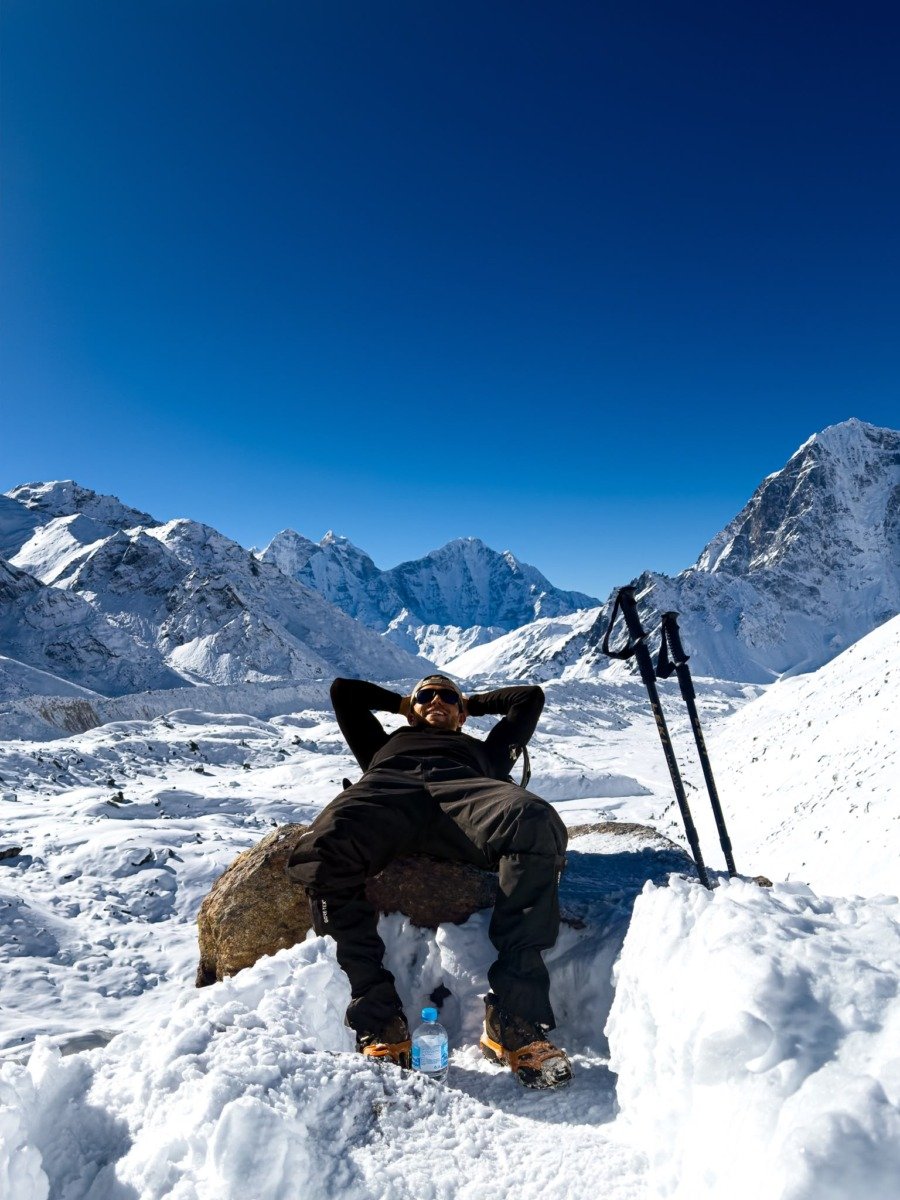
This exact, field-tested operational itinerary utilized by Mountain Treks Nepal is engineered for maximum altitude safety. Unlike the shorter 14-day itineraries that push climbers up the Zatrwa La Pass immediately (which frequently results in severe altitude sickness), we take the longer, scenic southern approach through Panggom to allow your body to build crucial red blood cells before hitting the glacier.
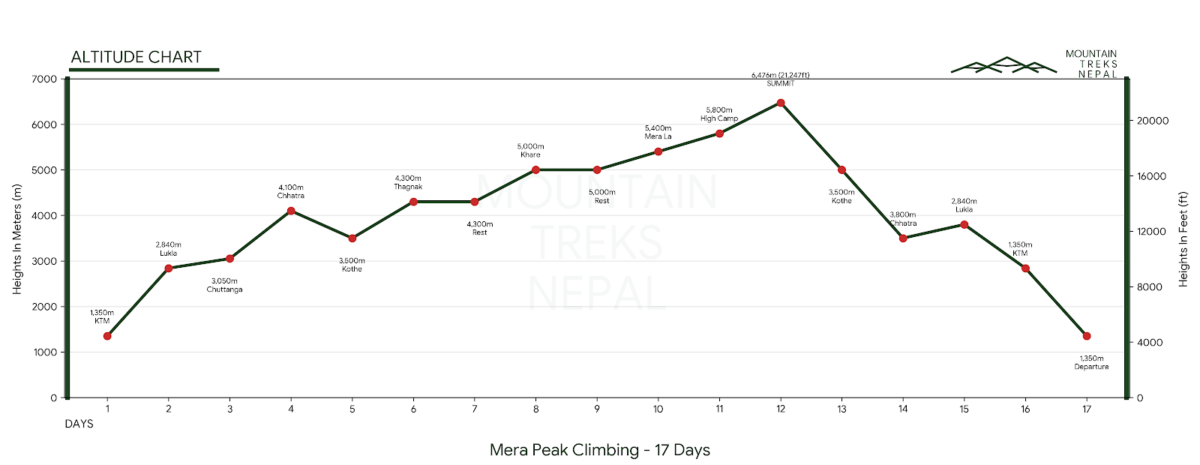
Day 1: Arrival in Kathmandu (1,400m)
Your expedition begins at Tribhuvan International Airport. A Mountain Treks Nepal representative will transfer you to your boutique Thamel hotel. In the evening, you will meet your lead climbing Sherpa for a mandatory gear check. If you are missing critical high-altitude items (like double boots or a -30°C sleeping bag), you will rent them today.
Day 2: Flight to Lukla (2,800m) and Trek to Puiya (2,720m)
(Note: During peak seasons in 2026, you may be diverted to Ramechhap/Manthali for the Lukla flight.) After a thrilling 25-minute flight to the cliffside Tenzing-Hillary Airport in Lukla, you meet your porters. Instead of heading north toward Everest, you turn south, descending into the lush, rhododendron-filled valleys to the village of Puiya (Paiya).
Day 3: Trek to Panggom (2,846m)
You ascend through dense bamboo and pine forests on a narrow, quiet trail. The Dudh Koshi valley drops away below you. Panggom is a beautiful, traditional farming and trading village, offering a peaceful glimpse into rural Himalayan life before the high altitudes take over.
Day 4: Trek to Ningsow (2,863m)
Leaving Panggom, you cross the Panggom La pass, officially leaving the Khumbu watershed. The trail climbs and descends through dense, misty forests, crossing the Ningsow Khola stream before arriving at the small settlement of Ningsow.
Day 5: Trek to Chhatra Khola (2,800m)
Today features a lot of the infamous “Nepali Flat” (steep ascents and descents) as you reach the Ramailo Danda viewpoint, offering your first extraordinary glimpse of the towering, glaciated peak of Mera. You officially enter the Makalu Barun National Park today, arriving at the riverside camp of Chhatra Khola.
Day 6: Trek to Kothe (3,691m)
You follow the Majang Khola until it merges with the roaring Hinku Drangka river. The trail pushes north directly up the Hinku Valley. As you cross the Sanu Khola bridge and arrive in Kothe, you will notice the tree line beginning to thin out rapidly. Kothe marks your entry into the serious alpine zone.
Day 7: Trek to Thaknak (4,358m)
You leave the forests behind entirely, walking along the rocky, sandy ridge of the Hinku Khola in the massive shadow of Mera Peak. You pass the 200-year-old Lungsumgba Gompa, where ancient routes to Mera are carved directly into the rock. Thaknak is a stark summer grazing area surrounded by massive moraines and glacial lakes.
Day 8: Trek to Khare (5,045m)
The trail climbs steeply over the massive lateral moraine of the Dig Glacier to reach the Dig Kharka pasture. From here, you have breathtaking views of Charpate Himal. You continue the grueling, breathless climb to Khare, the official staging ground for the Mera Peak climb. The air is incredibly thin, and the temperatures are freezing.
Day 9: Mandatory Acclimatization and Ice Clinic in Khare (5,045m)
Rest is a strict medical necessity. Today, your Mountain Treks Nepal guide will conduct a comprehensive ice clinic. You will put on your climbing harness, fit your crampons to your double boots, and practice walking on fixed lines and using your ice axe on a nearby snowy ridge. You must prepare your physical gear and your mental state for the days ahead.
Day 10: Trek to Mera Base Camp (5,300m)
You leave the teahouses behind. The trail navigates a steep, boulder-strewn path up to the Mera Glacier. You put on your crampons, rope up with your team, and begin the stunning, blindingly bright walk across the ice to Mera Base Camp. You will sleep in high-altitude expedition tents tonight. Our support crew will melt snow for drinking water and prepare hot meals in the dining tent.
Day 11: Climb to Mera High Camp (5,800m)
This is a short but brutal day. You ascend the glacier over a gentle but relentless 30-degree slope. The air is devastatingly thin. High Camp is perched on a rocky outcrop just behind a large serac, offering magnificent views of Mount Everest, Makalu, and Lhotse turning gold in the sunset. You will eat a forced dinner of hot soup and try to sleep in your -30°C bag. Temperatures will drop to -25°C.
Day 12: Summit Day! Mera Peak (6,476m) and Return to Khare
The Climax. You wake at 2:00 AM. In the pitch black, freezing cold, you force down some oatmeal, strap on your headlamp and crampons, and rope up.
The climb is a slow, rhythmic, hypnotic march up the massive glacial headwall. As the sun rises, the entire Himalayan range ignites around you. After 5 to 6 hours of exhausting climbing, you reach the final obstacle: a steep, 30-meter ice dome. Your guide will fix a rope, and you will use your jumar to haul yourself to the summit.
You are standing at 6,476 meters. You take your photos, absorb the greatest panorama on Earth, and then immediately begin the long, knee-crushing descent back past High Camp, all the way down to the thick air and warm teahouses of Khare.
Day 13: Contingency / Weather Buffer Day
Mountain weather is notoriously fickle. If high winds or heavy snow prevent a summit attempt on Day 12, this day serves as a critical buffer, allowing you a second chance at the summit. If unused, this day can be spent resting in Khare or descending early.
Day 14: Trek to Kothe (3,691m)
You begin the rapid descent. Dropping over 1,300 vertical meters allows your body to recover instantly. The oxygen rushes back into your lungs, and the return to the treeline at Kothe feels like entering a tropical paradise.
Day 15: Trek to Thuli Kharka (4,300m)
Instead of returning via the long southern Panggom route, you take the direct route back to Lukla. The trail climbs steeply out of the Hinku Valley through dense rhododendron forests, eventually reaching the high alpine pasture of Thuli Kharka.
Day 16: Cross Zatrwa La Pass (4,600m) and Trek to Lukla (2,800m)
The final physical hurdle. You ascend to the rocky crest of the Zatrwa La Pass. From the summit, you can look back at the Hinku Valley one last time before beginning the massive, plunging descent all the way down to Lukla. Tonight is a time for celebration, hot showers, and tipping your incredibly hardworking Sherpa crew.
Day 17: Flight to Kathmandu
You board the early morning Twin Otter flight back to Kathmandu (or Ramechhap). Upon arriving in the capital, you are transferred to your Thamel hotel. The afternoon is free for well-deserved massages and souvenir shopping. In the evening, Mountain Treks Nepal hosts a grand farewell dinner.
Day 18: Final Departure
Your monumental expedition comes to a close. A representative will transfer you to Tribhuvan International Airport three hours before your flight home.
Conquering the Altitude: Medical Safety at 6,476m
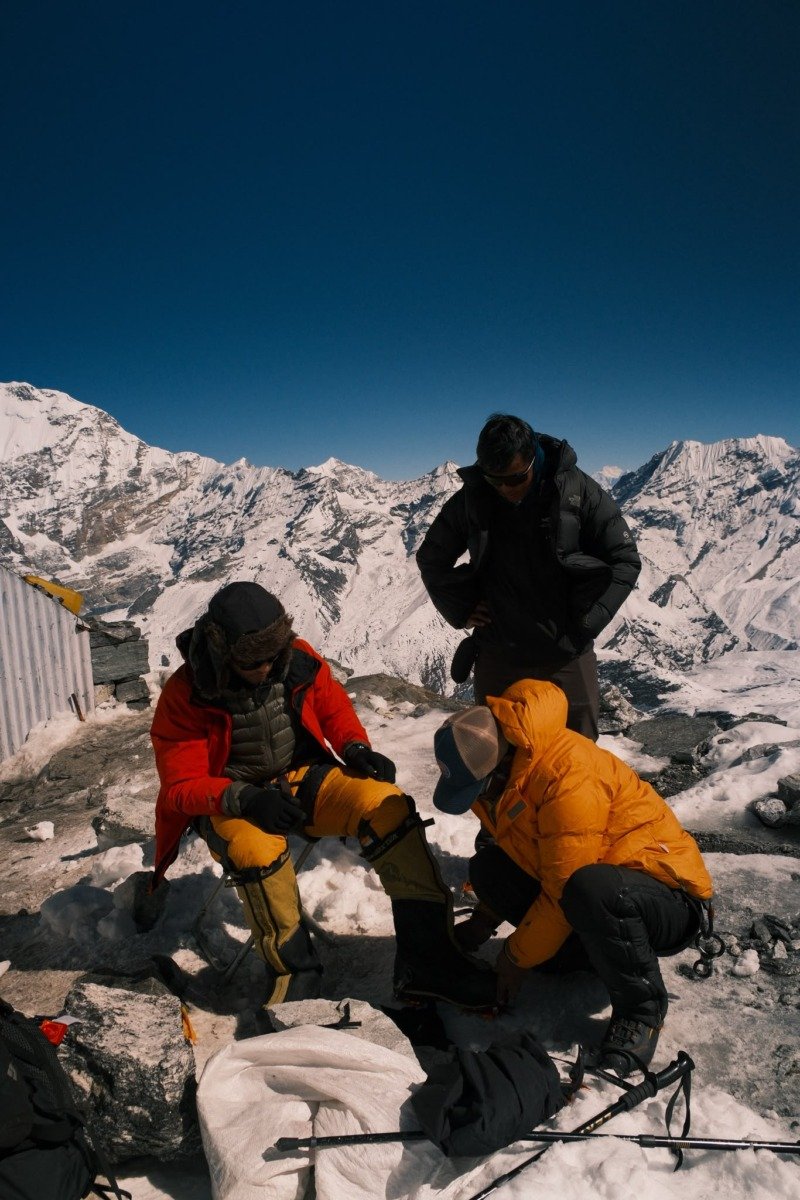
Mera Peak crosses the 6,000-meter threshold, firmly placing you in the lower fringes of the “Death Zone.” Acute Mountain Sickness (AMS), High Altitude Pulmonary Edema (HAPE), and High Altitude Cerebral Edema (HACE) are lethal threats.
Mountain Treks Nepal Safety Protocols
We do not take chances with altitude on our expeditions.
-
Meticulous Pacing: Our 18-day itinerary is medically optimized to build red blood cells before you ever touch the glacier.
-
Oximeter Monitoring: Our government-licensed, WFR-certified climbing Sherpas use digital pulse oximeters twice daily to monitor your blood oxygen saturation (SpO2SpO_2) and resting heart rate.
-
The PAC Bag and Oxygen: Our lead guides carry a Portable Altitude Chamber (PAC bag) and supplemental emergency oxygen. If HAPE or HACE is detected, you will be instantly treated and evacuated.
-
Helicopter Evacuation: In the event of a severe medical emergency, Mountain Treks Nepal is equipped with satellite communication to coordinate a rapid helicopter evacuation directly from Khare or Base Camp to a hospital in Kathmandu. Comprehensive travel insurance covering mountaineering above 6,000 meters and helicopter evacuation is absolutely mandatory.
Accommodations, Food, and High Camp Reality
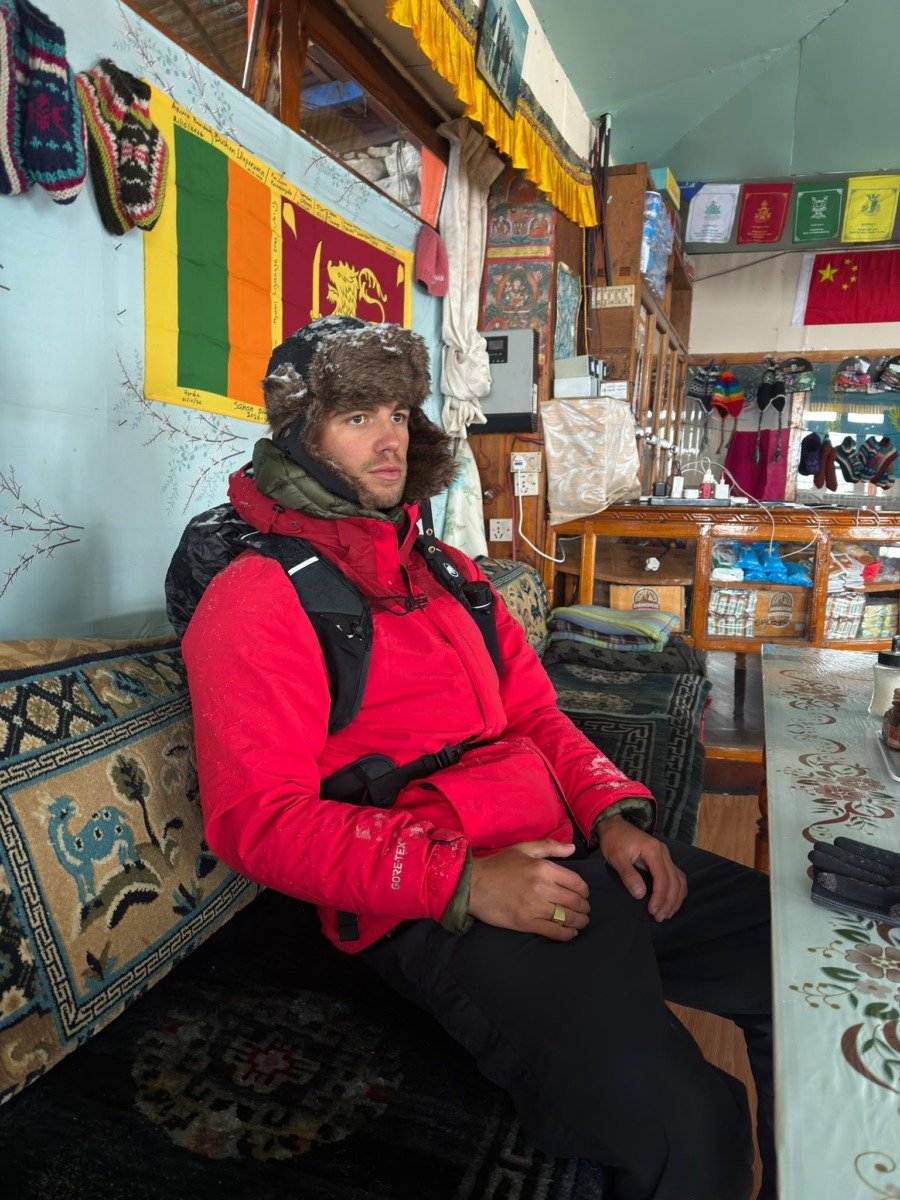
The Teahouses (Lukla to Khare)
The Hinku Valley is not the Everest Circuit. The teahouses here are highly utilitarian. You will sleep in basic wooden beds with thin foam mattresses. Rooms are constructed of plywood and offer zero insulation; temperatures drop below freezing inside your room at night. The only heated space is the communal dining room, warmed by a wood-burning stove.
Base Camp and High Camp
Above Khare, there are no teahouses. Mountain Treks Nepal provides a fully supported expedition camp. We provide high-altitude expedition tents, a dedicated kitchen tent, and a dining tent. You will sleep on insulated mats in your -30°C sleeping bag.
Food and Nutrition
On the trail, you will eat massive quantities of Dal Bhat (rice, lentils, and vegetable curry), instant noodles, potatoes, and eggs. Above Khare, our expedition chef will melt glacial ice for your drinking water and cook hot, high-carbohydrate meals to fuel your summit push.
-
The Meat Warning: Do not eat meat above Kothe. All meat is carried up by porters without refrigeration. Stick to a vegetarian diet to avoid severe gastrointestinal illness.
Connectivity
Wi-Fi (Everest Link or Airlink) is available at some teahouses for $7 to $15 per day, though it is highly unreliable. Device charging via solar panels costs $3 to $5 per hour. Bring a 20,000mAh power bank and keep it inside your sleeping bag to prevent the cold from draining the battery.
The Essential Mountaineering Gear List
You must pack for 25°C (77°F) jungle heat in Puiya and -30°C (-22°F) arctic winds at High Camp.
The Climbing Hardware
You do not need to buy this gear; you can rent the entire technical bundle in Kathmandu (Thamel) for roughly $150 to $250.
-
Double Mountaineering Boots: (e.g., La Sportiva G2 SM or Scarpa Phantom). Single hiking boots will result in severe frostbite on summit day. Rental: $2-$4 per day.
-
Crampons: 12-point steel mountaineering crampons (Step-in or Strap-on).
-
Ice Axe: A standard straight-shaft walking ice axe.
-
Climbing Harness: With a locking carabiner, safety lanyard, and a jumar (ascender).
-
Helmet: For protection against falling ice on the glacier.
Extreme Insulation and Clothing
-
The Layering System: Zero cotton. Moisture-wicking synthetic base layers, heavy Merino wool thermals, grid fleece mid-layers, and a heavy-duty Gore-Tex waterproof/windproof shell (jacket and pants).
-
Expedition Down Parka: An 800+ fill-power, heavily baffled down jacket with an insulated hood is mandatory.
-
Sleeping Bag: A genuine four-season down sleeping bag rated to -25°C to -30°C. (Mountain Treks Nepal provides high-quality loaner sleeping bags to our clients).
-
Hands and Head: Heavyweight expedition down mittens (worn over liner gloves), a warm beanie, a Buff (to prevent the Khumbu cough), and Category 4 polarized glacier glasses (snow blindness is a massive threat on the Mera Glacier).
Mandatory Permits and 2026 Regulations
Mera Peak climbing requires a stack of specific permits, all of which are handled entirely by Mountain Treks Nepal in Kathmandu before you depart.
The NMA Climbing Permit (2026 Fees)
Mera Peak is managed by the Nepal Mountaineering Association (NMA). The 2026 permit fees are strictly seasonal:
-
Spring (March to May): $350 USD per person.
-
Autumn (September to November): $175 USD per person (often listed historically at $125 or $115, but $175 is the standard quoted rate for the peak autumn window).
-
Winter/Summer (Dec-Feb, Jun-Aug): $175 USD per person.
Additional Trekking Permits
-
Makalu Barun National Park Entry Permit: NPR 3,000 (approx. $23 USD) per person.
-
Local Rural Municipality Fee: NPR 2,000 (approx. $15 USD) per person, collected locally (this replaces the old TIMS card requirement).
The Mandatory Guide Regulation
Crucial Update: Solo climbing and alpine-style independent expeditions are no longer legally permitted in Nepal. You must be accompanied by a government-licensed climbing guide affiliated with a registered trekking agency to attempt Mera Peak.
Realistic 2026 Budget Breakdown: How Much Does it Cost?

If you try to do Mera Peak “cheap,” you will inevitably pay later through hidden costs, inadequate gear, or emergency helicopter evacuations. A high-quality, fully supported expedition ensures your safety and summit success.
Standard Package Costs (Kathmandu to Kathmandu):
-
Mid-Range to Premium Operator (Mountain Treks Nepal): Expect to pay between $2,300 to $3,500 USD per person. This comprehensive package typically includes your Kathmandu boutique hotels, Lukla flights, all NMA and National Park permits, a licensed elite climbing Sherpa, porters, all teahouse meals, and the tented logistics at Base Camp/High Camp.
Out-of-Pocket / Extra Expenses to Budget For:
-
Gear Rental: $150 to $250 for the full technical bundle in Thamel.
-
Travel Insurance: $150 to $400 (Must cover 6,000m+ mountaineering and heli-evacuation).
-
On-Trail Luxuries: Hot showers, Wi-Fi, device charging, and extra snacks (Budget $100 to $150).
-
Tips for the Crew: Industry norm is 10-15% of the trip price. Budget $200 to $400 USD in cash to distribute to your guide and porters at the end of the expedition.
-
Weather/Contingency Buffer: Always hold $250 to $500 in reserve for extra lodge nights, flight delays, or excess baggage fees.
Best Time to Climb Mera Peak
Because you are pushing into the high alpine nival zone, weather stability is the single most critical factor for summit success.
1. Autumn (Late September to November) — The Clear Skies
This is the premier climbing season. The summer monsoon has washed the dust from the atmosphere, providing flawless, razor-sharp visibility of the 8,000m peaks from the summit. The winds are generally lower, and the weather windows are highly stable. The trade-off is the extreme cold; by late November, High Camp is a frozen, punishing environment.
2. Spring (March to May) — Warmer, but Hazy
Spring is the second most popular season. The temperatures are slightly warmer, making the high camps more bearable, and the lower valleys are bursting with rhododendron blooms. However, the air is hazier, and afternoon thermal clouds frequently build up. Early March can also carry the risk of heavy, residual winter snow burying the glacier and the Zatrwa La pass.
3. Winter & Monsoon (Strictly Avoid)
Do not attempt Mera Peak in Winter (Dec-Feb) or Monsoon (June-Aug). Winter brings lethal cold (-40°C windchills) and massive avalanches, while the monsoon brings zero visibility, constant rain, and dangerous, melting, shifting crevasses on the glacier.
Physical Training Plan
You cannot walk off the couch and conquer 6,476 meters. You must begin training at least 12 to 16 weeks before your flight to Kathmandu.
-
Cardiovascular Endurance (The Aerobic Engine): You need a massive aerobic base. Run, cycle, or swim 4 times a week for 60 minutes in Zone 2 (conversational pace). This trains your body to process limited oxygen with maximum efficiency.
-
Stair Climbing with Heavy Weight (Rucking): The absolute best specific training for mountaineering. Load a backpack with 12 to 15 kg (25 to 33 lbs) and climb the tallest stadium stairs, local hill, or gym Stairmaster for 1 to 2 hours, twice a week. You will be wearing heavy double boots on the mountain; you must build bulletproof calves, quads, and glutes.
-
Core Strength: A weak core will lead to severe lower back pain during the 12-hour summit push. Incorporate planks, deadlifts, and weighted lunges into your routine.
Frequently Asked Questions (FAQs)
1. Is Mera Peak suitable for beginner mountaineers?
Yes, Mera Peak (6,476m) is considered the premier entry-level expedition for trekkers transitioning into high-altitude mountaineering. Because the route up the Mera Glacier is non-technical meaning it lacks vertical ice walls or complex crevasse ladder crossings you do not need prior alpine climbing experience. However, you absolutely must possess extreme cardiovascular endurance and prior high-altitude trekking experience (such as Everest Base Camp or Kilimanjaro) to survive the brutal physical toll of the thin air.
2. How technically difficult is the Mera Peak climb?
Mera Peak is officially graded as Alpine PD (Peu Difficile / A Little Difficult). The ascent consists of a long, grueling glacier walk with an average slope of 30 degrees. You must be able to walk efficiently in crampons, safely use a straight-shaft walking ice axe for self-arrest, walk roped together in a team to mitigate crevasse danger, and use a jumar (ascender) on a fixed line to haul yourself up the final 30-meter ice dome to the true summit.
3. What physical fitness level is required for the expedition?
You need elite endurance. The itinerary requires hiking 5 to 8 hours a day for two weeks through the rugged, steep Hinku Valley just to reach Base Camp. Summit day demands 10 to 12 hours of continuous climbing in heavy double boots at extreme altitude. Your training must begin 12 weeks prior, focusing on Zone 2 cardiovascular training and stair-climbing with a heavy backpack (12-15 kg) to build bulletproof calves, quadriceps, and core strength.
4. Which is harder: Mera Peak or Island Peak?
They present entirely different challenges. Island Peak (6,189m) is technically harder, requiring you to ascend a massive, vertical 100-meter ice headwall and navigate deep crevasses with aluminum ladders. Mera Peak is physically and physiologically harder due to its significantly higher altitude (6,476m), longer approach, and colder, longer summit push on the exposed glacier.
5. Why is the Mountain Treks Nepal itinerary 18 days long instead of 14 days?
Altitude safety is the primary reason. Many budget operators offer 14-day itineraries that push climbers directly over the 4,600-meter Zatrwa La Pass on day three. This rapid ascent routinely causes severe altitude sickness and a high failure rate. Our 18-day itinerary approaches via the lower, highly scenic Panggom route, allowing your body the necessary time to build red blood cells naturally before you ever touch the high glacier.
6. What happens if I get altitude sickness on the mountain?
Your safety is proactively managed. Our Wilderness First Responder-certified Sherpa guides measure your blood oxygen saturation and resting heart rate twice daily using digital pulse oximeters. If mild Acute Mountain Sickness (AMS) occurs, we adjust your pacing or descend. For severe cases like High Altitude Pulmonary or Cerebral Edema (HAPE/HACE), our lead guides are equipped with a Portable Altitude Chamber (PAC bag) and supplemental oxygen to treat you instantly while coordinating a rapid helicopter evacuation.
7. Are helicopters available for emergency rescue from Mera Base Camp?

Yes. Helicopter rescues are viable from Khare (5,045m), Mera Base Camp (5,300m), and occasionally High Camp (5,800m), provided the weather and visibility permit safe flying. To climb with Mountain Treks Nepal, it is an absolute requirement that you hold comprehensive travel insurance that explicitly covers mountaineering above 6,000 meters and high-altitude helicopter medical evacuation.
8. Do I need prior experience using an ice axe and crampons before arriving in Nepal?
No prior experience is necessary. On the mandatory acclimatization day at Khare, your Mountain Treks Nepal lead climbing Sherpa will conduct a comprehensive ice clinic. You will be fitted with your harness and crampons, and you will practice walking on fixed lines, using your jumar, and executing self-arrest techniques with your ice axe on a nearby snowy ridge until you are confident.
9. Do I need to buy expensive double mountaineering boots for this climb?
No, purchasing $600+ double mountaineering boots (like the La Sportiva G2 SM or Scarpa Phantom) is not necessary if you do not plan to climb regularly. You can rent the entire technical hardware bundle including double boots, crampons, ice axes, helmets, and harnesses in Kathmandu’s Thamel district for approximately $150 to $250 for the entire expedition. Standard single hiking boots will not suffice and will result in frostbite on summit day.
10. What temperature rating must my sleeping bag have?
You must bring a genuine four-season down sleeping bag rated between -25°C and -30°C. The plywood teahouse rooms in the upper Hinku Valley offer zero insulation, and ambient temperatures inside the expedition tents at High Camp routinely drop to -25°C at night. Mountain Treks Nepal provides complimentary expedition-grade loaner sleeping bags to our clients to ensure survival warmth.
11. How heavy will my backpack be during the approach and climb?
You will only carry a 30L to 40L daypack weighing roughly 5 to 7 kg. This pack will contain your daily drinking water (3 liters), rain shell, heavy down jacket, camera, and sunscreen. Your dedicated porter will carry your main 15 kg duffel bag which includes your heavy climbing hardware, sleeping bag, and spare clothes from camp to camp.
12. Where do we sleep on the Mera Peak expedition?
For the approach from Lukla to Khare, you will sleep in basic teahouses (stone or wooden lodges with unheated, twin-bed rooms). Once you ascend beyond Khare to Mera Base Camp (5,300m) and High Camp (5,800m), you will sleep in specialized high-altitude expedition tents. The Mountain Treks Nepal support crew handles all tent pitching, camp logistics, and cooking in a dedicated kitchen tent.
13. What kind of food is available in the remote Hinku Valley?
In the teahouses, the menu relies heavily on non-perishable, high-carbohydrate staples designed to fuel mountaineers: Dal Bhat (rice, lentil soup, vegetable curry), potatoes, instant noodles, tsampa (roasted barley), and eggs. At Base Camp and High Camp, our expedition chef takes over, preparing hot, nutritious meals and melting glacial ice to ensure you are properly hydrated and fueled for the summit push.
14. Is it safe to drink the tap or stream water on the trek?
Never drink untreated water in the Himalayas. Plastic bottles are banned in the Makalu Barun National Park. You must carry two reusable 1-liter Nalgene bottles and treat all tap or stream water with purification tablets (Chlorine Dioxide) or a UV filter like a SteriPen. At the tented high camps, our crew will provide you with heavily boiled water.
15. Can I charge my phone and camera on the trek?
Device charging is available at the teahouses via small solar panels, usually for a fee of $3 to $5 per hour. However, this relies entirely on sunny weather and is highly unreliable. There are no charging facilities at Base Camp or High Camp. You must bring a high-capacity (20,000mAh+) power bank and sleep with it inside your sleeping bag to prevent the freezing temperatures from draining the lithium-ion battery.
16. Is there Wi-Fi or cellular service on the Mera Peak trail?
Cellular service drops out entirely shortly after you leave Lukla. Some teahouses in Kothe, Thaknak, and Khare offer satellite-based Wi-Fi cards (such as Everest Link) for $7 to $15, but the bandwidth is extremely low and the signal frequently drops out for days. Prepare for a rugged, off-the-grid experience. Our lead guides carry satellite phones exclusively for emergency logistics.
17. What permits are required to climb Mera Peak in 2026?
You require three distinct permits. First, a Nepal Mountaineering Association (NMA) climbing permit, which costs $350 USD per person in the Spring and $175 USD in the Autumn. Second, a Makalu Barun National Park Entry Permit (approx. $23 USD). Third, a local Khumbu Pasang Lhamu Rural Municipality fee (approx. $15 USD). Mountain Treks Nepal processes all of these on your behalf in Kathmandu.
18. Can I climb Mera Peak solo without a guide?
No. To protect climbers and provide local employment, the Nepal Tourism Board and the NMA strictly prohibit foreign nationals from attempting trekking peaks independently. You must be accompanied by a government-licensed climbing Sherpa affiliated with a legally registered trekking agency at all times on the mountain.
19. What is the best time of year to attempt the Mera Peak summit?
Autumn (late September to November) is the gold standard for climbing. The post-monsoon skies are crystal clear, offering razor-sharp panoramas of the 8,000-meter peaks, and the weather windows are highly stable. Spring (mid-March to May) is the second-best window, offering slightly warmer temperatures but carrying the risk of afternoon thermal haze and heavy residual winter snow on the glacier.
20. Why is a contingency day built into the Mountain Treks Nepal itinerary?
Mountain weather at 6,476 meters is notoriously volatile. High winds, whiteout snow conditions, or thermal clouds can make a summit push impossible on your scheduled day. The contingency day serves as a critical buffer, giving your team a second chance to wait out the weather at High Camp or Khare and summit successfully without missing your international flight home.
21. How do we return to Lukla after the summit?
To save time, we do not return via the long Panggom approach route. Instead, we descend rapidly down the Hinku Valley, climb steeply through the rhododendron forests to the high pasture of Thuli Kharka, and cross the formidable Zatrwa La Pass (4,600m). From the pass, it is a massive, knee-crushing plunge directly down into Lukla. It is a grueling but highly efficient 3-to-4-day exit route.
22. How cold does it actually get on summit day?
When you wake up at 2:00 AM at High Camp, ambient air temperatures generally hover between -15°C and -25°C (5°F to -13°F). Once you step onto the exposed Mera Glacier, the windchill can easily drop the effective temperature to -30°C (-22°F) or lower. Heavy expedition down parkas, insulated down mittens, and double mountaineering boots are strictly required to prevent frostbite.
23. How much should I budget for tips for the guide and porters?
Tipping is a deeply ingrained and expected tradition in the Himalayan mountaineering industry, acknowledging the immense physical risk the crew takes to ensure your success. The industry standard is 10% to 15% of your total expedition cost. This pool of cash is typically collected by the clients and distributed among the lead guide, assistant Sherpas, and porters on the final celebratory night in Lukla.
24. What happens if the domestic flight to Lukla is delayed or canceled?
Flights to Lukla’s Tenzing-Hillary Airport operate entirely on Visual Flight Rules (VFR) and are frequently grounded by low visibility, fog, or high crosswinds. If fixed-wing flights are canceled, you must wait in Kathmandu or Ramechhap. Alternatively, climbers can pool resources to charter a helicopter (requiring an out-of-pocket premium of roughly $400 to $600 per person) to stay on schedule. You must always build 1 to 2 buffer days into your international flight schedule.
25. Can Mountain Treks Nepal accommodate dietary restrictions on the mountain?
Yes. Whether you are vegetarian, vegan, or gluten-intolerant, we can accommodate your dietary needs. While the teahouse menus are basic, our guides communicate your restrictions directly to the lodge kitchens to avoid cross-contamination. Above Khare, our dedicated expedition chef will tailor your summit meals to ensure you receive the safe, high-calorie nutrition required for the climb.
Conclusion: Stand on Top of the World with Mountain Treks Nepal

Mera Peak is not just a mountain; it is a profound physical and spiritual crucible. It strips away the comforts of the modern world, testing your mental grit in the freezing, thin air of the Himalayas. But the reward standing at 6,476 meters, looking eye-to-eye with Mount Everest and the greatest peaks on Earth is an achievement that will define your life forever.
However, executing an 18-day high-altitude expedition requires flawless logistics, elite medical protocols, and a support team you can trust with your survival.
Mountain Treks Nepal guarantees your safety and success. We provide elite, Everest-summiteer Sherpa guides equipped with pulse oximeters and oxygen, handle all complex NMA permits, and supply the heavy-duty expedition tents and survival gear you need to thrive in the death zone’s shadow.
Don’t leave your greatest adventure to chance. Contact the expedition planners at Mountain Treks Nepal today to customize your 2026 itinerary, secure your climbing permits, and start preparing to conquer Nepal’s highest trekking peak.