



Share This:
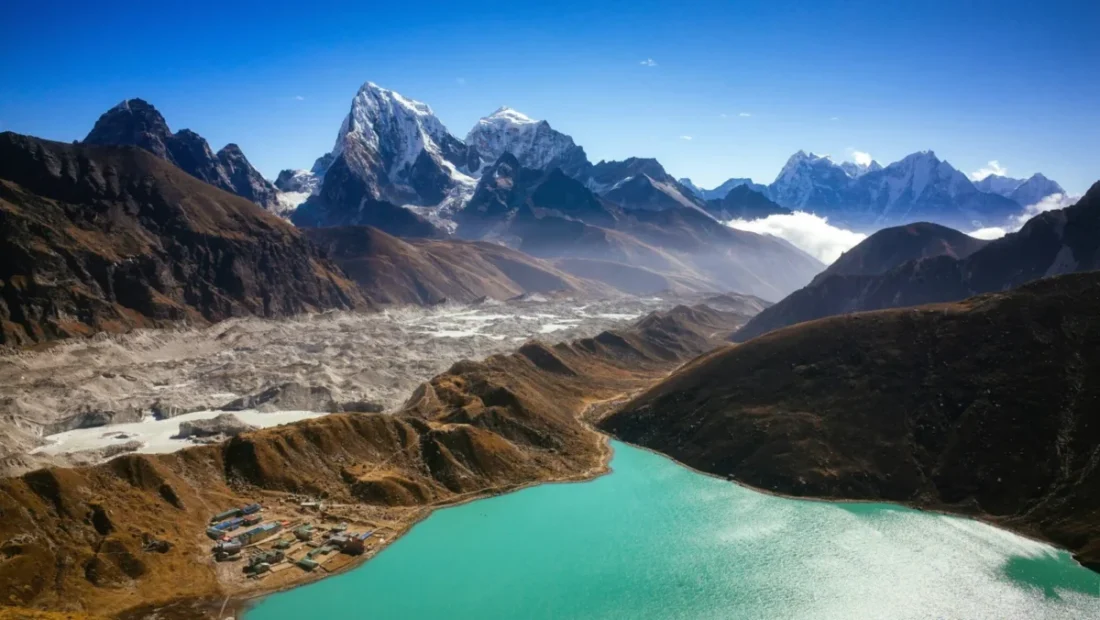
Gokyo Valley Trek
The Gokyo Valley Trek is an exhilarating journey directly into the heart of Nepal’s Everest region, guiding you away from the heavily trodden main trails and into a serene alpine valley defined by six pristine, turquoise glacial lakes.
Reaching a maximum altitude of 5,357 meters (17,575 feet) at the summit of Gokyo Ri, this 11-day itinerary offers some of the most expansive and spectacular panoramic views in the Himalayas. From this towering viewpoint, you will stand face-to-face with four of the world’s fourteen 8,000-meter peaks: Mount Everest, Lhotse, Makalu, and Cho Oyu, all rising above the massive Ngozumpa Glacier.
Whether you are a first-time Himalayan trekker or a seasoned mountaineer, the Gokyo Valley Trek blends the physical thrill of high-altitude hiking with the spiritual calm of authentic Sherpa culture. This comprehensive guide by Mountain Treks Nepal breaks down the daily itinerary, physical requirements, and high-altitude logistics you need to successfully complete this unforgettable adventure.
A Peaceful Alternative to the Everest Base Camp Trek

While the traditional Everest Base Camp (EBC) route is legendary, it can become incredibly crowded during the peak spring and autumn seasons. The Gokyo Valley Trek branches off from the EBC “highway” just past Namche Bazaar, offering a significantly quieter, more intimate trekking experience.
Because the trail sees less foot traffic, the teahouses are less congested, the trails are peaceful, and you have a much higher chance of spotting Himalayan wildlife, such as the colorful Danphe (Himalayan Monal) or Musk Deer. Furthermore, many photographers and mountain purists argue that the summit of Gokyo Ri actually offers a better panoramic view of the Everest Massif than Kala Patthar (the EBC viewpoint), as it sits further back, providing a wider, unobstructed perspective of the towering peaks.
The Highlights: Gokyo Lakes, Ngozumpa Glacier, and Gokyo Ri

-
The Gokyo Lakes System: Designated as a Ramsar site of international wetland importance, these six oligotrophic lakes are the world’s highest freshwater lake system (4,700m–5,000m). Their dazzling turquoise waters beautifully reflect the surrounding snow-capped peaks, creating a magical atmosphere that is sacred to both Buddhists and Hindus.
-
Ngozumpa Glacier: Stretching 36 kilometers, this is the longest glacier in the Himalayas. Trekking alongside its massive, debris-covered ice walls is a humbling reminder of the sheer geological power of the Khumbu region.
-
Sunrise at Gokyo Ri (5,357m): The physical climax of the trek. An early morning, steep ascent rewards you with golden sunlight illuminating the jagged peaks of Everest, Lhotse, Makalu, and Cho Oyu.
Daily Itinerary: 11 Days into the Heart of the Khumbu
This 11-day itinerary is meticulously designed by Mountain Treks Nepal to balance steady elevation gain with adequate acclimatization, ensuring a safe and successful journey.
| Day | Trekking Route | Elevation | Key Highlights |
| 1 | Fly to Lukla & Trek to Phakding | 2,620m | Thrilling 35-minute mountain flight; easy walk through the Dudh Koshi Valley. |
| 2 | Trek to Namche Bazaar | 3,440m | Entering Sagarmatha National Park; crossing high suspension bridges. |
| 3 | Acclimatization at Namche | 3,440m | Hike to Everest View Hotel and Khumjung Village (Hillary School & Monastery). |
| 4 | Trek to Phortse Thenga | 3,680m | Branching off the main EBC trail; walking through quiet rhododendron forests. |
| 5 | Trek to Machhermo | 4,410m | Emerging above the tree line; stunning views of Cho Oyu and Thamserku. |
| 6 | Trek to Gokyo Lakes | 4,750m | Walking alongside the Ngozumpa Glacier; arriving at the stunning turquoise lakes. |
| 7 | Gokyo Ri Hike & Exploration | 5,357m | Pre-dawn steep climb for 360-degree views of Everest, Lhotse, and Makalu. |
| 8 | Trek down to Dole | 4,200m | A scenic, easier descent back into the alpine scrub and juniper forests. |
| 9 | Trek to Namche Bazaar | 3,440m | Returning to the bustling Sherpa capital for a hot meal and celebration. |
| 10 | Trek to Lukla | 2,860m | Final walking day; descending along the Dudh Koshi River to the airstrip. |
| 11 | Fly to Kathmandu | 1,300m | Scenic morning flight back to the city; trip concludes with a farewell dinner. |
Best Time to Trek the Gokyo Valley
The Gokyo Valley Trek requires stable weather and clear skies to fully appreciate the views from Gokyo Ri.
-
Spring (March to May): One of the best times to go. The lower valleys (below Dole) are alive with blooming rhododendrons. The weather is generally clear, though occasional afternoon clouds can roll in.
-
Autumn (September to November): The absolute premier trekking season. The summer monsoon washes the dust from the atmosphere, leaving razor-sharp, crystal-clear views of the mountains and highly stable weather for Lukla flights.
-
Winter (Dec–Feb) & Monsoon (June–Aug): Winter brings extreme cold (below -15°C at Gokyo) and snow can occasionally block the trails. The summer monsoon brings heavy rain, zero mountain visibility, and high chances of flight cancellations.
Physical Fitness and Acclimatization
The Gokyo Valley Trek is graded as Strenuous. While it requires no technical climbing skills (no ropes or crampons are needed), you must be fit enough to walk 5 to 7 hours a day over steep ascents, rocky moraines, and high-altitude terrain.
Because you will sleep at 4,750m (Gokyo Village) and hike to 5,357m, Acute Mountain Sickness (AMS) is a serious consideration. Our itinerary includes a crucial acclimatization day in Namche Bazaar. We enforce a slow, steady walking pace and recommend drinking 3 to 4 liters of water daily. If you experience persistent headaches or nausea, communicate immediately with your Mountain Treks Nepal guide.
Food, Accommodation, and Logistics
-
Teahouse Living: You will sleep in comfortable, family-run Sherpa teahouses. In lower towns like Namche, you will find en-suite bathrooms and bakeries. As you move higher to Machhermo and Gokyo, accommodations become basic: twin beds with foam mattresses and a communal dining room heated by a yak-dung stove.
-
Food: The teahouses offer calorie-dense meals perfectly suited for trekking. Expect Dal Bhat (rice and lentil soup), momos, noodles, potatoes, and soups.
-
Packing for the Cold: Bedrooms at Gokyo and Machhermo are unheated. A high-quality down jacket and a four-season sleeping bag (rated to at least -10°C) are mandatory.
-
Connectivity: Mobile networks (Ncell/NTC) work up to Namche. Higher up, teahouses offer Everest Link Wi-Fi vouchers for a fee.
Required Permits for the Gokyo Trek
To trek in this region, two permits are required, both of which are fully arranged by Mountain Treks Nepal prior to your departure:
-
Sagarmatha National Park Entry Permit: NPR 3,000 (~$23 USD) to enter the UNESCO World Heritage site.
-
Khumbu Pasang Lhamu Rural Municipality Permit: NPR 3,000 (~$23 USD), which directly supports local Sherpa infrastructure and conservation.
Frequently Asked Questions (FAQs)
What is the highest point of the Gokyo Valley Trek?
The highest point of the trek is Gokyo Ri at 5,357 meters (17,575 feet). This steep, non-technical viewpoint peak sits directly above the third Gokyo Lake and offers a 360-degree panoramic view of four 8,000-meter mountains: Everest, Lhotse, Makalu, and Cho Oyu.
Is the Gokyo Valley Trek harder than Everest Base Camp?
The Gokyo Valley Trek is generally considered slightly less crowded and somewhat less physically demanding than the Everest Base Camp Trek, though both are graded as strenuous. Both routes reach high altitudes above 5,300 meters, meaning good cardiovascular fitness and proper acclimatization are absolutely essential for both.
What are the Gokyo Lakes famous for?
The Gokyo Lakes are a series of six oligotrophic glacial lakes renowned for their striking, crystal-clear turquoise color. Located between 4,700m and 5,000m, they form the world’s highest freshwater lake system, holding deep sacred and religious significance for both Buddhist and Hindu pilgrims.
Can beginners do the Gokyo Valley Trek?
Yes, ambitious beginners who are in very good physical condition can complete the Gokyo Valley Trek. However, you must commit to a pre-trek cardiovascular training routine (hiking, running, stair climbing). Trekking with an experienced guide who monitors a gradual acclimatization schedule is vital for a safe experience.
What mountains can be seen during the Gokyo Valley Trek?
From the summit of Gokyo Ri, trekkers can enjoy unobstructed views of Mount Everest, Lhotse, Makalu, and Cho Oyu. Along the trail, you will also have spectacular views of Ama Dablam, Thamserku, Kangtega, and the sprawling Ngozumpa Glacier.