



Share This:

Manaslu Circuit Trek: A Complete Expert Guide to Nepal’s Most Authentic Himalayan Journey
The Manaslu Circuit Trek represents one of the most comprehensive high-altitude trekking experiences in Nepal, combining geographical diversity, cultural authenticity, and controlled tourism. Positioned around Mount Manaslu (8,163 meters), the eighth-highest peak in the world, this circuit trek has evolved into a preferred route for trekkers seeking a less commercialized yet technically rewarding Himalayan journey.
For experienced trekking operators such as Mountain Treks Nepal, the Manaslu region reflects a balance between adventure and sustainability, where restricted access policies preserve both ecological systems and indigenous cultures.
Introduction to the Manaslu Circuit Trek
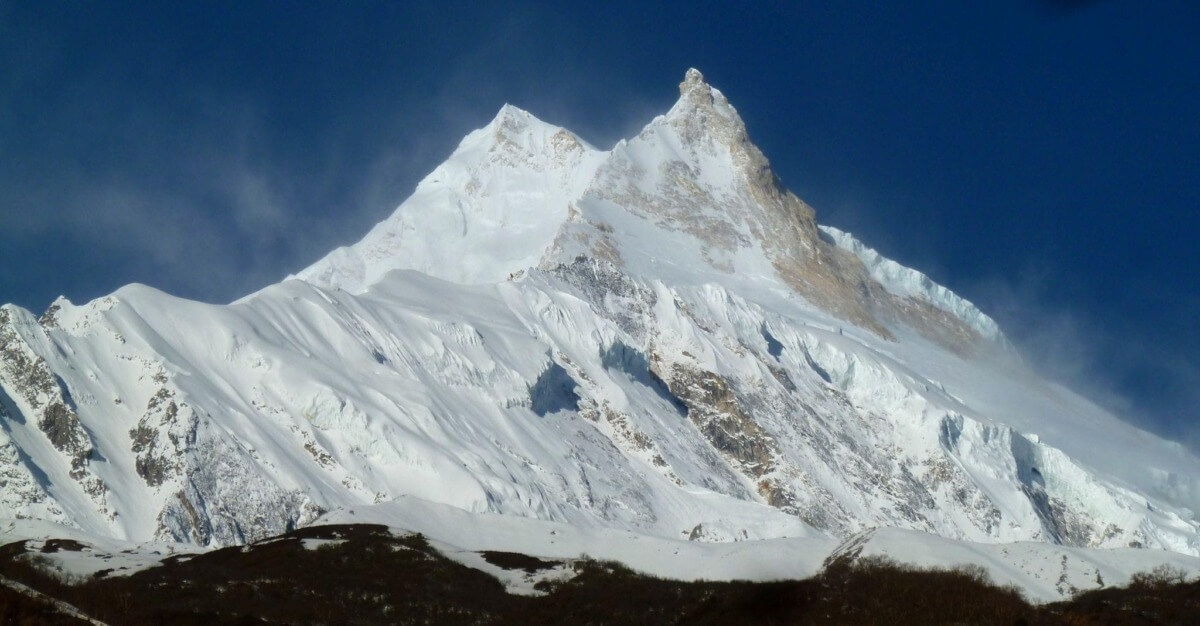
The Manaslu Circuit Trek follows one of Nepal’s most remote and geographically diverse Himalayan corridors, encircling the massive Manaslu range home to Mount Manaslu (8,163 meters), the eighth-highest peak in the world. Unlike heavily commercialized trekking routes, this trail preserves a raw and less-disturbed environment, shaped by both natural isolation and regulated access.
The journey begins in the low-altitude settlement of Machha Khola, situated at approximately 930 meters above sea level. This section passes through subtropical river valleys carved by the Budhi Gandaki River, where dense forests, cascading waterfalls, and suspension bridges define the early trekking experience. As elevation gradually increases, the landscape transitions through multiple ecological zones moving from humid greenery to temperate forests, and eventually into alpine and glacial terrain.
The route concludes in Besisahar, a gateway town that connects the Manaslu region with the Annapurna trekking network. This transition is significant, as it marks a shift from remote, restricted terrain into a more accessible trekking infrastructure.
According to structured itinerary data , the Manaslu Circuit Trek follows a carefully designed progression that supports both physical endurance and altitude adaptation:
- Starting elevation: 930 meters (Machha Khola), characterized by warm temperatures and river valley terrain
- Highest point: 5,167 meters at Larkya La Pass, one of the longest and most demanding Himalayan passes
- Typical duration: 13 days for the standard route, with extensions up to 22 days including side trips such as Tsum Valley
- Accommodation: Teahouse-based system, offering basic yet functional lodging throughout the trail
- Trek grade: Challenging, due to altitude, distance, and terrain complexity
A defining feature of the Manaslu Circuit Trek is its progressive elevation gain, which plays a critical role in high-altitude trekking safety. Rather than rapid ascent, the route gradually increases altitude over several days, allowing the body to adapt to decreasing oxygen levels. Strategic acclimatization stops particularly in locations such as Sama Gaon help reduce the risk of altitude-related illnesses while enhancing overall trekking performance.
Beyond its physical structure, the trek delivers continuous variation in landscape, climate, and cultural exposure. Within a single itinerary, the environment evolves from subtropical river basins to high-altitude glacial systems. Similarly, cultural influences shift from Hindu-dominated lower villages to Tibetan Buddhist communities in the upper regions, creating a layered and immersive experience.
From an expert trekking perspective, this combination of gradual altitude progression, ecological diversity, and cultural transition positions the Manaslu Circuit Trek as one of the most complete trekking routes in Nepal. For operators such as Mountain Treks Nepal, the route represents a benchmark itinerary where logistical planning, altitude management, and local expertise converge to deliver a structured yet deeply authentic Himalayan journey.
Why the Manaslu Circuit Trek Stands Out?
The Manaslu Circuit Trek is widely regarded as one of Nepal’s most complete trekking experiences, not because of a single highlight, but due to a combination of controlled access, environmental diversity, cultural authenticity, and physical challenge. Each of these factors contributes to a trekking experience that is both immersive and structurally unique compared to other Himalayan routes.
1. Controlled Tourism and Low Crowds
One of the most defining characteristics of the Manaslu Circuit Trek is its restricted area status, enforced by the Government of Nepal through a special permit system. Unlike open trekking regions such as Everest and Annapurna, entry into the Manaslu region is regulated, requiring:
- A restricted area permit
- A licensed guide
- A minimum group requirement
This controlled access directly influences the trekking experience in several measurable ways.
First, trail congestion remains significantly lower. While routes like Everest Base Camp experience heavy seasonal foot traffic, the Manaslu Circuit Trek maintains a quieter environment, even during peak seasons. This allows uninterrupted movement along trails, reducing delays and enhancing overall trekking flow.
Second, the quality of the experience improves substantially. With fewer trekkers:
- Scenic viewpoints remain uncrowded
- Teahouses are less saturated
- Natural soundscapes (rivers, wind, wildlife) remain intact
Third, and most importantly, traditional village life remains preserved. In regions with high tourism pressure, local culture often adapts to meet external demand. In contrast, the Manaslu region retains:
- Traditional agricultural practices
- Indigenous architectural styles
- Authentic daily routines
From an expert perspective, this controlled tourism model aligns with sustainable trekking principles. Operators such as Mountain Treks Nepal recognize that limited access not only enhances the trekking experience but also protects long-term ecological and cultural integrity.
As a result, the Manaslu Circuit Trek maintains a “wilderness-first” identity, where the environment dictates the experience rather than tourism infrastructure.
2. Exceptional Geographical Diversity
The Manaslu Circuit Trek offers one of the most vertically diverse trekking profiles in Nepal, covering a wide range of ecological zones within a single itinerary. This diversity is not only visual but also climatic, geological, and biological.
Subtropical Zone (Below 1,500 m)
The lower section of the trek is dominated by:
- Dense forests with high humidity
- River valleys shaped by the Budhi Gandaki
- Frequent waterfalls and landslide-prone cliffs
Temperatures are relatively warm, and vegetation is abundant. This zone sets the foundation for the trek, both physically and visually.
Temperate Zone (1,500–3,000 m)
As elevation increases, the environment transitions into:
- Pine and rhododendron forests
- Terraced farmland cultivated by local communities
- Cooler and more stable climatic conditions
This zone represents a cultural and ecological transition, where settlements become more structured and altitude adaptation begins.
Alpine Zone (3,000–4,500 m)
Beyond 3,000 meters, the landscape becomes increasingly rugged:
- Vegetation becomes sparse
- Yak grazing areas dominate the terrain
- Glacial rivers and moraine fields appear
Oxygen levels begin to decrease significantly, making this zone critical for acclimatization.
Nival Zone (Above 4,500 m)
The highest section of the Manaslu Circuit Trek enters the nival zone, characterized by:
- Permanent snowfields and glaciers
- Extreme temperature fluctuations
- Strong winds and unpredictable weather
This zone includes the approach and crossing of Larkya La Pass, where environmental conditions are at their most demanding.
This vertical ecological progression makes the Manaslu Circuit Trek one of the most geographically comprehensive treks in Nepal. It allows continuous exposure to changing landscapes, which enhances both visual experience and scientific interest for those studying mountain ecosystems.
3. Deep Cultural Immersion
The Manaslu region is not only geographically diverse but also culturally rich, particularly in its upper sections where Tibetan Buddhist traditions dominate.
Villages such as Sama Gaon and Samdo serve as cultural focal points, where long-standing traditions are still actively practiced. These settlements are located near ancient trade routes connecting Nepal and Tibet, influencing their architecture, language, and lifestyle.
Key cultural elements include:
- Monasteries and gompas serving as spiritual centers
- Mani walls and prayer wheels, reflecting Buddhist philosophy
- Chortens and prayer flags, symbolizing protection and peace
Unlike commercial trekking hubs, cultural practices in the Manaslu region are not staged or adapted for tourism. Instead, they remain integrated into daily life.
This creates opportunities for:
- Genuine interaction with local communities
- Observation of subsistence farming and livestock management
- Participation in cultural routines such as morning prayers
4. High-Altitude Challenge and Achievement
The Manaslu Circuit Trek is not only scenic and cultural it is also physically demanding, particularly during the crossing of Larkya La Pass (5,167 meters).
This section represents the technical and psychological peak of the trek.
Key Challenges
- Extended trekking duration: The pass crossing typically requires 8–10 hours of continuous movement
- Reduced oxygen levels: At this altitude, oxygen availability drops significantly, affecting stamina and recovery
- Rapid weather changes: Conditions can shift from clear skies to snow and high winds within hours
The approach to the pass involves gradual ascent, but the final crossing requires sustained effort under high-altitude conditions.
Detailed Itinerary Breakdown
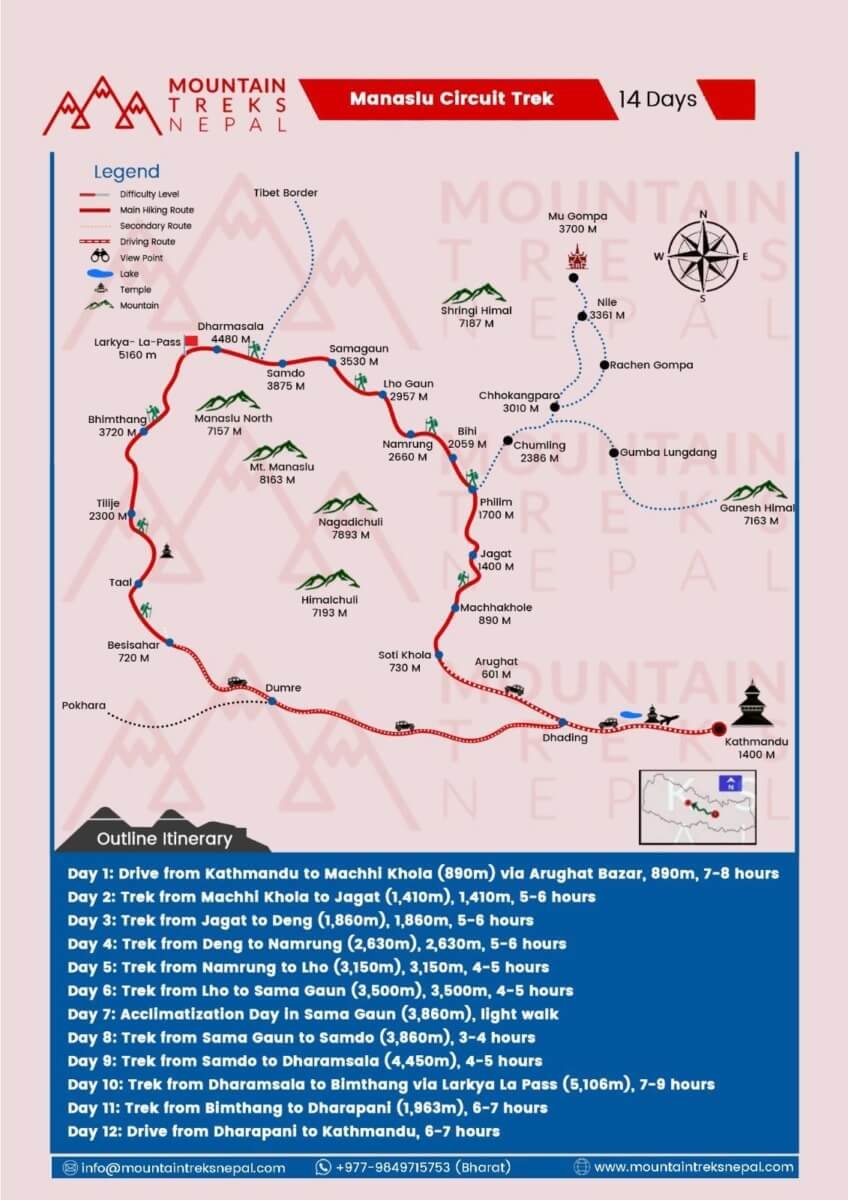
Arrival in Kathmandu (1,350m/4,428 ft)
As you arrive at Tribhuvan International Airport, a representative from Mountain Treks Nepal will meet you and take you to your hotel. Once you check-in, you can sit back, freshen up, and unwind after traveling.
In the evening, a short briefing will be provided to you with an introduction to your trek plan and important guidelines. As a preparation for the thrilling journey ahead, you can then enjoy the lively streets of Thamel or spend a quiet evening. Overnight in Kathmandu.
Drive from Kathmandu to Machhi Khola via Arughat Bazar (890m)
From picturesque Kathmandu, the real adventure begins as you drive through lush countryside and hilly terrains. The drive will take you through the lush green forests and the Trishuli river alongside. After a short hour of driving, you will first reach Arughat Bazar.
After passing Arughat Bazar, which is quite busy in the Budhi Gandaki Valley, the drive offers admission into all its tributaries-an insight into the rural life of Nepalese people. It is thus a 7 to 8 hr drive journey, which finally ends on the quiet riverbank village of Machha Khola.
It’ll be a lodge for you to spend a night at, enjoying the excellent tranquility of the hills and rivers all around. Stay overnight at Machha Khola.
Trek to Jagat (1,410m)
On the second day of 14 Days Manaslu Circuit Trek, you will hike to Jagat from the beautiful village of Machha Khola. Today’s hike takes you through beautiful bamboo and rhododendron forest. Occasionally, the path makes a high ascent up over the Budhi Gandaki River, giving spectacular views of one of the most magnificent deep gorges and rushing waters.
The valley opens further and further with the surrounding landscape as well as the path gets wider and attractive until reaching the village of Jagat. Jagat is known for its traditional stone-paved streets and another cozy stop where one can spend the night at a tea house. Overnight in Jagat.
Trek to Deng (1,860m)
Today’s journey begins at the village of Jagat and ends at Deng. The journey to Deng will lead you through terraced hillsides that are dotted here and there with small settlements. You can cross the suspension bridges that are made up of phenomenal landscapes and wonderful vegetation.
Further, the trail climbs up to the Gurung village of Deng, which is an ideal place to appreciate an amazing view of the Shringi Himal. This wonderful site has immersed itself in local culture, and one can spend a night at a tea house in Deng.
Trek to Namrung (2,630m)
Today, the trail runs along the Budhi Gandaki River, crossing over many times. You will first reach Ghap, a beautiful Buddhist village with mani walls and prayer flags. Here, you can get insights into Tibetan Buddhism and its practice.
After walking the ups and downs through dense and quiet forests, you will come to Namrung, a bustling settlement with a checkpoint for entering permits. It has some spectacular views of the peaks surrounding it, as well as a cozy lodge for rest. Overnight in Namrung.
Trek to Lho (3,150m)
The sixth day of the 14 Days Manaslu Circuit Trek will wind up from Namrung to Lho village. As you ascend, the world of alpine landscapes will open up for you along the trail to Lho. You will enjoy the sights of mighty peaks such as Mount Manaslu and Sringi Himal as you walk past the rhododendrons and pine trees. There, you will find your first views of Manaslu North and the surrounding peaks.
Lho is a typical Tibetan village with stone houses and a nice monastery. It is a good place to come and drink in silence while gazing up at the great mountains. Overnight in Lho.
Trek to Sama Gaun (3,500m)
Today’s hike will undoubtedly be a visual feast as it takes you to the peaks of the Kutang Himal to the northeast and the magnificent Manaslu to the southwest before stopping by an enchanting little village called Shala on the way to Sama Gaun.
Sama Gaun is indeed a melting pot of culture with impressive Gompa and excellent views of the Manaslu. It is ideal for unwinding and roaming around after checking into a lodge. Spend the night in Sama Gaun.
Acclimatization Day in Sama Gaun (3,860m)
Today is the day for acclimatization. We will acclimatize to preparing for higher elevations. You will hike up to some of the nearby viewpoints or absorb the cultural heritage of Sama Gaun.
The village gives insight into the traditional Tibetan life from the monasteries, chortens, and even stone walls. Let this time be for you to relax and let your body adapt to the altitude. Overnight stay in Sama Gaun.
Trek to Samdo (3,860m)
On the ninth day of the 14 Days Manaslu Circuit Trek, we will reach Samdo, one of the high-altitude locations in Manaslu Region. The travel between Sama Gaun and Samdo is short yet soulful. You will trek across the lush alpine meadows and move up a gentle path flanked by towering peaks.
Samdo, being a Tibetan influenced village, offers itself as a beautiful, calm place for interacting with the locals. This is a perfect acclimatization point and even better, the base for further explorations. Overnight stay at Samdo.
Trek to Dharamsala (4,450m)
This day will take you from Samdo to Dharmasala. The path climbs higher and higher, through some wild, savage terrain, to the old trade route with Tibet. The last climb is not the steepest, but it surely pays for itself with some breathtaking views of the majestic Himalayas.
Dharmasala, or Larkya Phedi, serves as the base for Larkya La Pass. You will be accommodated in basic accommodation at a tea house in Dharamsala.
Trek to Bimthang (3,855m) via Larkya La Pass (5,106m)
Today is the most difficult and rewarding phase of the 14 Days Manaslu Circuit Trek. The trail leading to Larkya La Pass would give a sweeping view of the Himalayas, which include Manaslu and Annapurna.
The scenery opened up on crossing the pass before the trail descends into Bimthang, with beautiful meadows surrounding the settlement. Celebrate this achievement and enjoy a nice, peaceful evening at a cozy lodge. Overnight in Bimthang.
Trek to Dharapani (1,963m)
The trail we catch from today will start descending from today as we head towards Dharapani. Further descending from Bimthang, we will pass through the colored villages Kharche, Gho, and Tilje, surrounded by terraced fields among wooded hills. The main trail then joins the famous Annapurna Circuit trail.
This great bustling village of Dharapani has better amenities, making it an excellent stop to take a breather with thoughts about your journey. Overnight stay in Dharapani.
Drive to Kathmandu
This is the last day of the 14 Days Manaslu Circuit Trek. Today, the route drags its way through a rugged drive down to Besisahar. The rest of the journey continues on the road and ends up in Kathmandu.
Upon reaching Kathmandu, you will be escorted to your respective hotel where you will stay overnight.
Final Departure
On this day, you will depart from Nepal after completing the beautiful 14 Days Manaslu Circuit Trek. Our representative will escort you to Tribhuvan International Airport, where you must attain the legal formalities before boarding a flight to your home country.
Difficulty Level and Physical Preparation
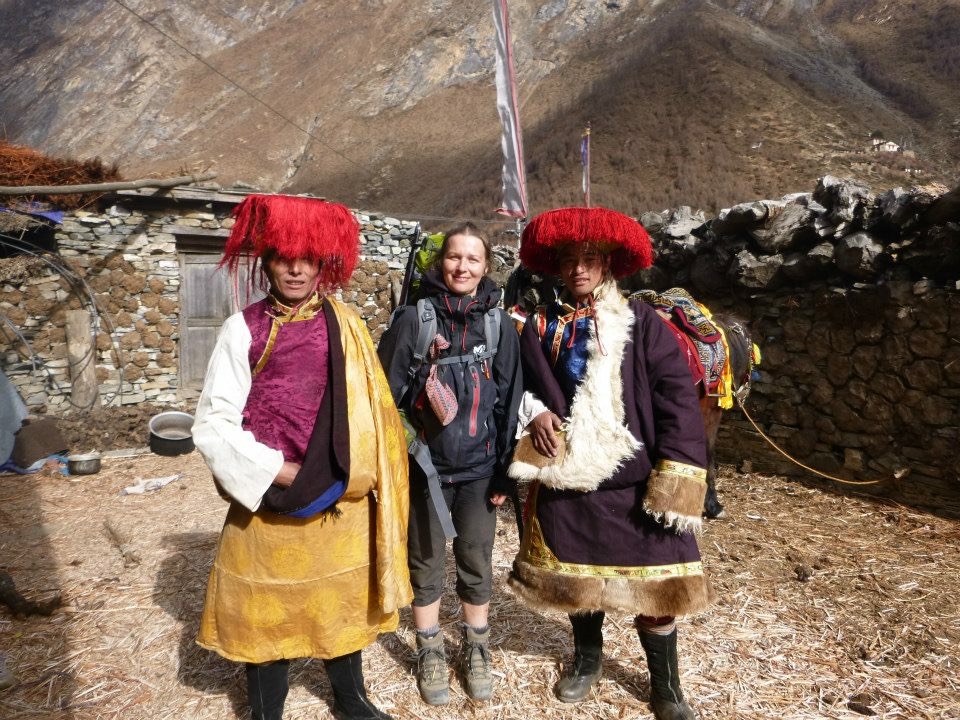
The Manaslu Circuit Trek is classified as a challenging high-altitude trek, requiring a combination of physical endurance, altitude awareness, and mental resilience. Unlike shorter or lower-altitude treks, this route demands sustained effort over multiple days in remote terrain, where environmental conditions and elevation gain significantly influence performance.
From an expert trekking perspective, difficulty on the Manaslu Circuit Trek is not defined by technical climbing skills but by cumulative stress factors—distance, altitude, terrain variability, and limited recovery conditions.
Physical Demands (Detailed Breakdown)
The physical demands of the Manaslu Circuit Trek build progressively throughout the journey, requiring consistent daily output.
Daily Trekking Duration: 6–10 Hours
Most trekking days involve:
- 6 to 8 hours of walking in lower and मध्य sections
- Up to 10 hours during critical days such as the Larkya La Pass crossing
This extended duration leads to:
- Muscular fatigue accumulation
- Increased caloric expenditure
- Reduced recovery time between trekking days
Unlike short hikes, this trek requires multi-day endurance, where performance must be sustained over nearly two weeks.
Steep Ascents and Descents
The terrain includes:
- Continuous uphill climbs through stone staircases and narrow trails
- Long descents that place stress on knees and joints
- Uneven paths with loose rocks and river crossings
These conditions require:
- Strong lower-body strength
- Joint stability
- Efficient pacing techniques
Downhill sections are often underestimated but contribute significantly to fatigue and injury risk.
High-Altitude Endurance
Above 3,000 meters, physical performance declines due to reduced oxygen availability. Tasks that feel manageable at lower elevations become significantly more demanding.
Effects include:
- Faster fatigue during simple movements
- Slower walking pace
- Increased breathing rate even at rest
This makes endurance at altitude fundamentally different from endurance at sea level.
Physiological Challenges
High-altitude trekking introduces physiological stress that cannot be fully simulated at lower elevations.
Reduced Oxygen Levels Above 3,500 m
At elevations above 3,500 meters:
- Oxygen levels drop by approximately 30–40% compared to sea level
- The body must adapt through increased breathing and heart rate
This adaptation process (acclimatization) is gradual and essential for safe trekking.
Risk of Acute Mountain Sickness (AMS)
AMS is one of the primary risks on the Manaslu Circuit Trek. Symptoms may include:
- Headache
- Nausea
- Dizziness
- Loss of appetite
If ignored, AMS can progress to more severe conditions.
Preventive strategies include:
- Gradual ascent
- Scheduled acclimatization days
- Adequate hydration and nutrition
Structured itineraries, such as those followed by Mountain Treks Nepal, are designed specifically to minimize these risks through controlled elevation gain.
Energy Depletion in Cold Conditions
At higher altitudes:
- The body burns more calories to maintain core temperature
- Appetite often decreases
- Dehydration risk increases due to dry air
This creates an energy deficit, leading to:
- Reduced stamina
- Slower recovery
- Increased fatigue
Proper nutrition and hydration strategies become essential for maintaining performance.
Recommended Physical Preparation
Effective preparation for the Manaslu Circuit Trek requires a combination of cardiovascular conditioning, strength training, and real-world trekking simulation.
1. Cardiovascular Training
Cardio fitness is the foundation of trekking endurance.
Recommended activities:
- Running (3–5 times per week)
- Cycling (moderate to long distances)
- Stair climbing or incline walking
Training goals:
- Improve oxygen efficiency
- Increase stamina
- Enhance recovery rate
Consistency over several weeks is more effective than short-term intense training.
2. Multi-Day Hiking Practice
Simulating trekking conditions is essential.
Practice should include:
- Back-to-back hiking days
- Carrying a loaded backpack (5–10 kg)
- Walking on uneven terrain
This helps develop:
- Muscle memory
- Load
- Mental Endurance
Real-world hiking experience is one of the most effective preparation methods.
3. Strength Training (Legs and Core Focus)
Strength training supports stability and injury prevention.
Key focus areas:
- Quadriceps and hamstrings (for uphill and downhill movement)
- Calves (for endurance on inclines)
- Core muscles (for balance and posture)
Recommended exercises:
- Squats and lunges
- Step-ups
- Planks and core stability workouts
Strong muscles reduce fatigue and improve overall trekking efficiency.
4. Mental Preparation (Often Overlooked)
Long-duration trekking in remote environments requires:
- Patience
- Adaptability to changing conditions
- Ability to handle discomfort
Mental resilience becomes especially important during:
- Long trekking days
- Cold weather conditions
- High-altitude fatigue
Best Time to Trek
Autumn (September–November)
- Stable weather patterns
- Clear mountain visibility
- Peak trekking season
Spring (March–May)
- Blooming rhododendrons
- Moderate temperatures
- Good trail conditions
Seasonal Risks
- Winter: heavy snow, pass closure
- Monsoon: landslides, poor visibility
Season selection directly impacts safety, visibility, and comfort.
Accommodation and Food

Teahouse System
Accommodation includes:
- Basic twin-sharing rooms
- Shared bathrooms
- Limited heating
Higher altitude = more basic facilities.
Food Availability
Typical meals:
- Dal Bhat (high-energy staple)
- Noodles, pasta, soups
- Tea and hot drinks
Nutritional intake is essential for maintaining energy levels at altitude.
Permits and Legal Requirements
The Manaslu Circuit Trek requires:
- Restricted Area Permit
- Manaslu Conservation Area Permit (MCAP)
- Annapurna Conservation Area Permit (ACAP)
A licensed guide is mandatory under Nepal government regulations.
These requirements:
- Ensure safety
- Control environmental impact
- Regulate tourism flow
Safety, Risk, and Emergency Considerations
Altitude Risk Management
- Gradual ascent strategy
- Scheduled acclimatization days
- Hydration and pacing
Emergency Protocols
- Helicopter evacuation availability
- Guide-led decision-making
- Communication systems in remote areas
Professional operators like Mountain Treks Nepal emphasize structured safety systems.
Packing Strategy
Clothing System (Layering Approach)
- Base layer: moisture-wicking
- Mid layer: insulation
- Outer layer: waterproof and windproof
Essential Gear
- Trekking boots (broken-in)
- Sleeping bag (-10°C or lower)
- Trekking poles
Health Essentials
- First aid kit
- Water purification tablets
- Altitude medication
Packing efficiency directly influences trekking success.
Cultural and Environmental Responsibility
Responsible trekking includes:
- Respecting local customs
- Minimizing environmental impact
- Supporting local economies
Ethical trekking practices contribute to long-term sustainability.
FAQ
What is the highest point of the Manaslu Circuit Trek?
Larkya La Pass at 5,167 meters.
How long is the Manaslu Circuit Trek?
Typically 13 days, extendable to 22 days with side trips.
How difficult is the Manaslu Circuit Trek?
Classified as challenging due to altitude and long trekking days.
What permits are required?
Restricted Area Permit, MCAP, and ACAP.
When is the best time to trek?
Autumn and spring seasons.
Is a guide required?
Yes, a licensed guide is mandatory.
Conclusion

The Manaslu Circuit Trek represents a rare combination of adventure, authenticity, and controlled tourism in the Himalayas. With its diverse landscapes, cultural richness, and high-altitude challenge, it stands as a premier trekking route for serious trekkers.
For companies such as Mountain Treks Nepal, the region offers an opportunity to deliver experience-driven, expert-led trekking journeys aligned with modern standards of safety, sustainability, and traveler expectations.