


Share This:
Everest Three Passes Trek
For the ambitious adventurer, the standard out-and-back trail to Everest Base Camp is simply not enough. Enter the Everest Three Passes Trek widely regarded as the ultimate, most comprehensive, and most physically demanding teahouse trek in the Nepalese Himalayas.
Spanning roughly 18 to 20 days, this grand circuit of the Khumbu region crosses three formidable alpine passes over 5,300 meters: Kongma La (5,535m), Cho La (5,420m), and Renjo La (5,360m). It doesn’t just take you to Everest Base Camp; it connects the four distinct valleys of Bhotekoshi, Gokyo, Khumbu, and Imja into one colossal loop.
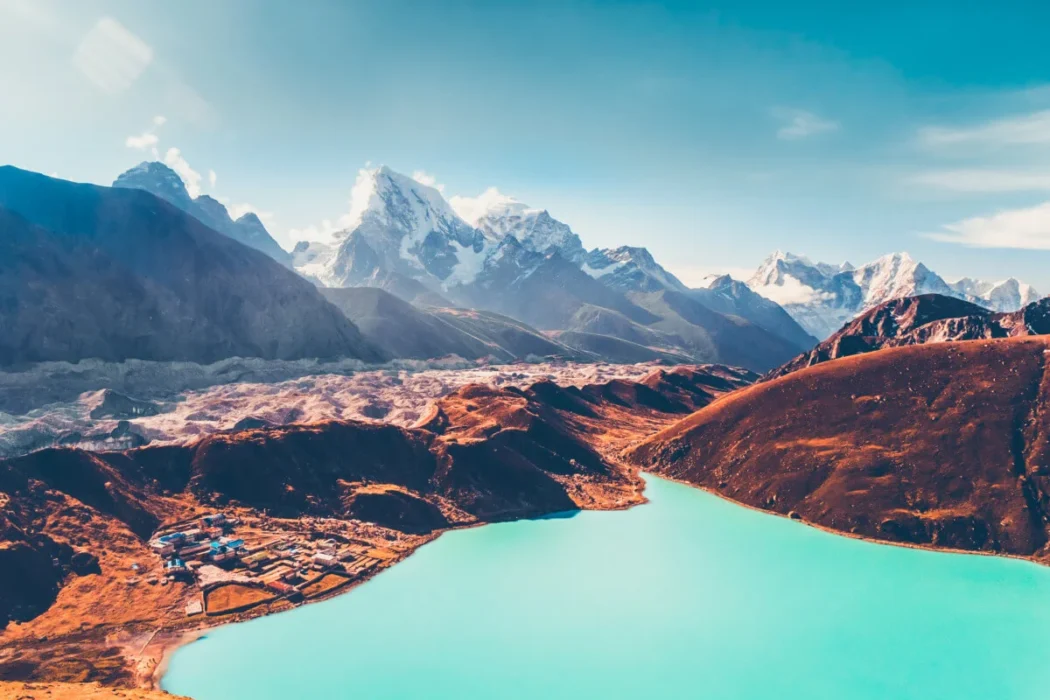
This trek is not for the faint of heart. It requires excellent cardiovascular fitness, immense mental resilience, and a respect for high-altitude environments. However, the rewards are unparalleled. You will escape the heavy crowds of the main EBC “highway,” walk alongside immense glaciers, gaze upon turquoise alpine lakes, and witness panoramic views of Mount Everest, Lhotse, Makalu, and Cho Oyu from vantage points few travelers ever reach.
In this exhaustive, 3,000-word guide, the high-altitude experts at Mountain Treks Nepal break down everything you need to successfully conquer the Everest Three Passes Trek from day-by-day trail conditions and acclimatization science to the realities of crossing glaciated passes.
Why Trek the Three Passes Instead of Standard EBC?

The traditional Everest Base Camp (EBC) trek is a linear route. You hike up the Khumbu Valley to the base camp, and then you turn around and walk back down the exact same path. While iconic, it can become highly congested during the peak months of October and April.
The Three Passes Trek solves this by creating a massive circuit.
-
Zero Repetition: Aside from the approach from Lukla to Namche Bazaar, you rarely walk the same trail twice.
-
Ultimate Completeness: You get the absolute best of everything. You still visit Everest Base Camp and Kala Patthar, but you also get the stunning Gokyo Lakes, the remote wilderness of the Thame Valley, and the technical thrill of the high passes.
-
Solitude and Wilderness: The moment you branch off the main trail toward Chhukung to tackle Kongma La, the crowds vanish. You are left with pure, rugged Himalayan silence.
The Counter-Clockwise Advantage: Which Direction is Best?
You can technically complete the Three Passes Trek in either direction, but 95% of successful expeditions (including ours) run counter-clockwise.
If you travel clockwise, your first major obstacle is the Renjo La Pass (5,360m) approached from Lungden. The elevation gain in the Thame valley is rapid, offering very few opportunities for side-treks to acclimatize.
By hiking counter-clockwise, you follow the traditional EBC approach up to Dingboche. This allows you to utilize the standard, medically proven acclimatization stops at Namche Bazaar (3,440m) and Dingboche (4,410m). Furthermore, the counter-clockwise route allows you to summit Chhukung Ri (5,550m) before attempting your first pass (Kongma La). By the time you reach the 5,535m Kongma La pass, your body has been above 4,000 meters for almost a week, drastically reducing the risk of Acute Mountain Sickness (AMS).
Deep Dive: The Three High Passes Explained
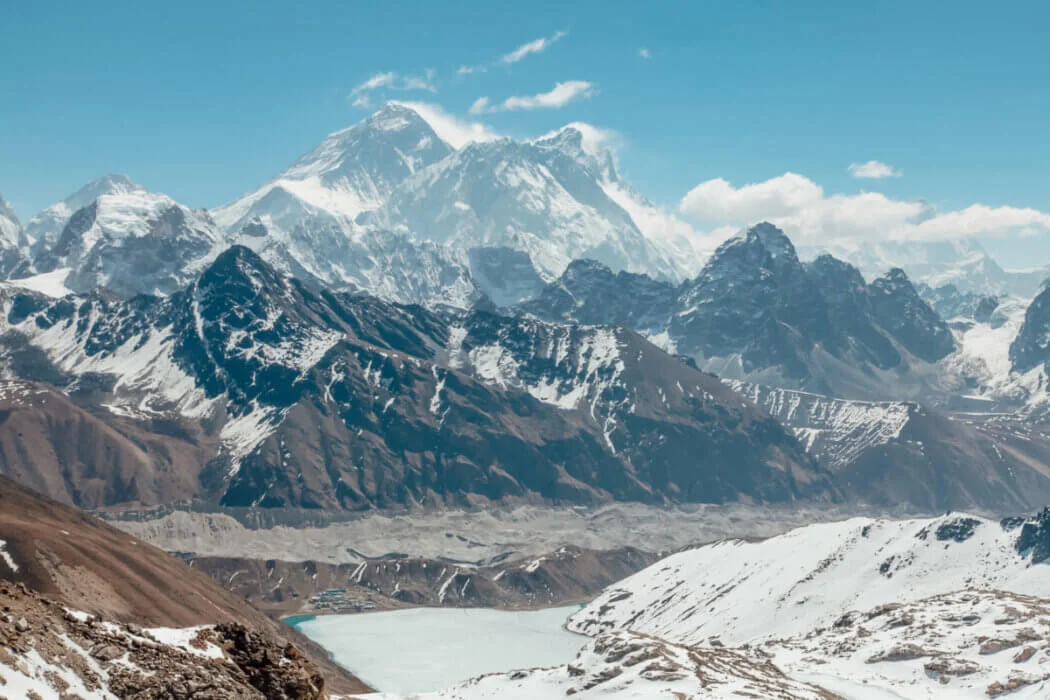
These are not simple hiking trails. High Himalayan passes are narrow, rocky saddles between towering peaks. They are heavily exposed to the weather, and oxygen levels at the summits are roughly 50% of what they are at sea level.
1. Kongma La Pass (5,535m): The Highest and Hardest
-
Location: Between Chhukung (Imja Valley) and Lobuche (Khumbu Valley).
-
The Challenge: Kongma La is the highest of the three passes and is universally considered the most physically exhausting. There are no teahouses between Chhukung and Lobuche, meaning you must complete the entire crossing in one grueling 8-to-10-hour push. The final ascent is a steep scramble over loose scree.
-
The Crux: After descending the pass, you are immediately faced with crossing the immense Khumbu Glacier. The glacier is a maze of shifting ice, massive boulders, and loose moraine that requires careful navigation before finally dragging yourself up the lateral moraine into Lobuche.
2. Cho La Pass (5,420m): The Glaciated Crux
-
Location: Between Dzongla and Thagnak, connecting the EBC trail to the Gokyo Valley.
-
The Challenge: Cho La is the most technical of the three passes. The eastern approach from Dzongla involves a steep, rocky scramble that transitions onto a permanent glacier.
-
The Crux: You must walk directly across the Cho La glacier. While it is generally flat, the ice can be incredibly slick. Microspikes (traction cleats) are often mandatory here. The descent into Thagnak involves navigating a steep, treacherous boulder field prone to rockfall, demanding immense focus.
3. Renjo La Pass (5,360m): The Ultimate Viewpoint
-
Location: Between Gokyo Village and Lungden (Bhotekoshi Valley).
-
The Challenge: Coming from Gokyo, the ascent is a relentless, steep zigzag up a dusty, rocky path. However, because it is the final pass, you are usually perfectly acclimatized, making it feel less exhausting than Kongma La.
-
The Crux / The Reward: As you crest the summit of Renjo La, you are hit with what is arguably the greatest mountain panorama on earth. You look directly down upon the third Gokyo Lake, with the jagged peaks of Everest, Lhotse, Makalu, and Cho Oyu piercing the horizon perfectly. The descent into Lungden features steep, often icy stone steps that require careful footing.
The Viewpoint Peaks: Reaching Higher Ground
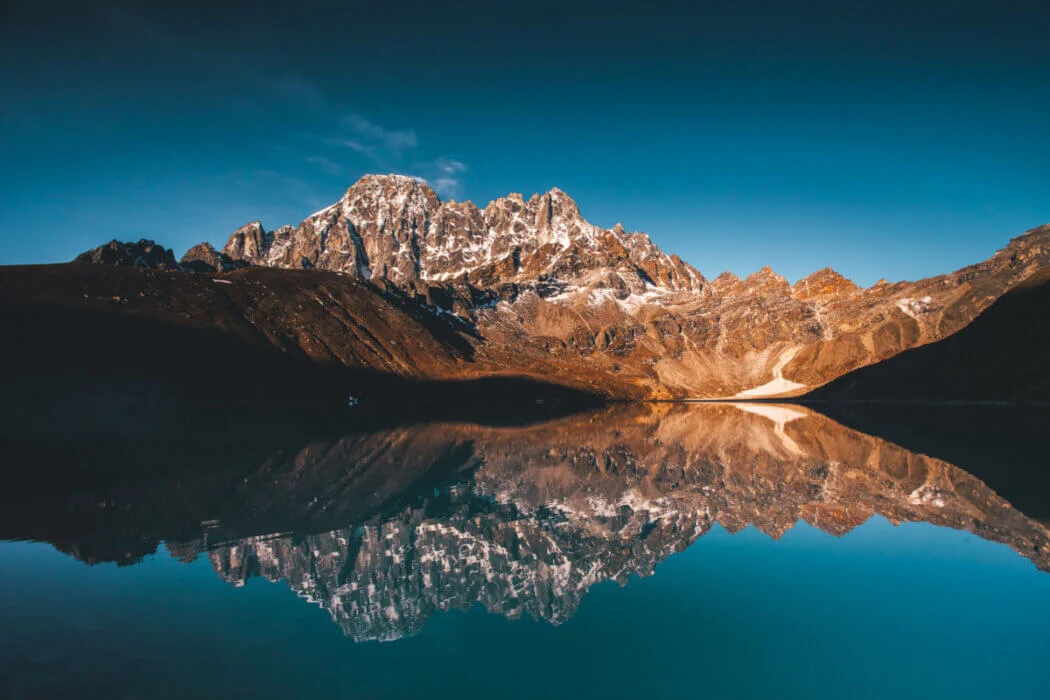
In addition to the three passes and Base Camp, this itinerary includes three “trekking peaks” that you can summit for acclimatization and unparalleled sunrise views.
-
Chhukung Ri (5,550m): Climbed from Chhukung before Kongma La. It offers a staggering, close-up view of the sheer ice walls of the Lhotse south face and Ama Dablam.
-
Kala Patthar (5,545m): Climbed from Gorak Shep. Everest Base Camp does not actually offer great views of the summit of Mount Everest (it is blocked by the West Shoulder). Kala Patthar is the famous viewpoint that provides the classic, unobstructed view of the Everest summit.
-
Gokyo Ri (5,357m): Climbed from Gokyo Village. It offers a panoramic view similar to Renjo La, allowing you to look down upon the Ngozumpa Glacier—the longest glacier in the Himalayas.
The Complete 18-Day Everest Three Passes Itinerary
This is the optimized, counter-clockwise itinerary utilized by Mountain Treks Nepal, designed to maximize safety, acclimatization, and scenery.
Day 1: Arrival in Kathmandu (1,350m)
You will be greeted at Tribhuvan International Airport and transferred to your hotel in Thamel. We conduct a comprehensive pre-trek briefing, check your gear, and distribute your waterproof porter duffel bags.
Day 2: Fly to Lukla (2,860m) & Trek to Phakding (2,610m)
A thrilling 35-minute mountain flight brings you to the Tenzing-Hillary Airport in Lukla. After meeting your porters, you begin an easy 3-hour descent through pine forests and along the Dudh Koshi River to the village of Phakding.
(Note: During peak seasons, flights may be diverted to Ramechhap, requiring a 1:00 AM drive from Kathmandu).
Day 3: Trek to Namche Bazaar (3,440m)
The trail crosses several high suspension bridges, including the famous Hillary Bridge, before entering Sagarmatha National Park. The final two hours involve a steep, relentless climb up to Namche Bazaar, the bustling, horseshoe-shaped capital of the Sherpa people. (Trek time: 6 hours).
Day 4: Acclimatization in Namche Bazaar (3,440m)
“Climb high, sleep low.” Today, you hike up to the Everest View Hotel (3,880m) to catch your first glimpse of Mount Everest and Ama Dablam. You will also visit the twin villages of Khumjung and Khunde to see the Hillary School and a monastery claiming to hold a Yeti scalp.
Day 5: Trek to Tengboche (3,860m)
Leaving Namche, the trail is smooth and highly scenic before plunging down to the river at Phunki Tenga. From there, it is a brutal two-hour climb through rhododendron forests to Tengboche. The village is home to the Tengboche Monastery, the largest and most important Buddhist monastery in the Khumbu, sitting against the stunning backdrop of Ama Dablam. (Trek time: 5-6 hours).
Day 6: Trek to Dingboche (4,410m)
You descend through a birch forest to Debuche, cross the Imja Khola, and climb toward Pangboche. As you pass 4,000 meters, the trees disappear entirely, replaced by alpine tundra and low shrubs. The air becomes noticeably thinner as you arrive in the windy, stone-walled village of Dingboche. (Trek time: 5-6 hours).
Day 7: Acclimatization in Dingboche (4,410m)
A critical day for altitude safety. You will hike up the steep slopes of Nangkartshang Peak (approx. 5,083m) for incredible views of Makalu. Spending a few hours at 5,000 meters prepares your body for the passes to come.
Day 8: Trek to Chhukung (4,730m) & Hike Chhukung Ri (5,550m)
You leave the main EBC trail, turning east up the Imja Valley toward Chhukung. It is a short 3-hour hike. After lunch, ambitious trekkers will summit Chhukung Ri (5,550m). This is a gruelling climb, but the close-up views of the Lhotse face are staggering.
Day 9: Cross Kongma La Pass (5,535m) to Lobuche (4,910m)
The First Pass. You start before dawn. The ascent to Kongma La is long and isolating. At the summit, prayer flags flutter violently in the wind. The descent is incredibly steep and loose. Finally, you must cross the vast, shifting ice and boulder field of the Khumbu Glacier to reach the lodges at Lobuche. (Trek time: 8-10 hours).
Day 10: Lobuche to Gorak Shep (5,140m) & Everest Base Camp (5,364m)
You trek alongside the glacial moraine to the desolate outpost of Gorak Shep. After dropping your bags, you continue for another two hours over rocky, uneven terrain to reach Everest Base Camp (5,364m). While the views of the Khumbu Icefall are spectacular, the true reward is standing at the foot of the world’s highest peak. (Trek time: 7-8 hours).
Day 11: Hike Kala Patthar (5,545m) & Trek to Dzongla (4,830m)
A 4:00 AM start to climb Kala Patthar. In temperatures often well below -15°C (5°F), you push to the summit to watch the sunrise ignite the peak of Mount Everest. After returning to Gorak Shep for breakfast, you retrace your steps past Lobuche and branch off toward the isolated settlement of Dzongla, nestled directly beneath the sheer north face of Cholatse. (Trek time: 7-8 hours).
Day 12: Cross Cho La Pass (5,420m) to Thagnak (4,700m)
The Second Pass. The approach to Cho La involves a steep rock scramble. At the top, you transition onto the Cho La glacier. You strap on your microspikes and walk carefully across the flat, dazzling ice field to the true pass. The descent is notoriously steep and requires absolute focus over unstable boulders until you reach the small hamlet of Thagnak. (Trek time: 7-9 hours).
Day 13: Trek to Gokyo (4,790m) & Hike Gokyo Ri (5,357m)
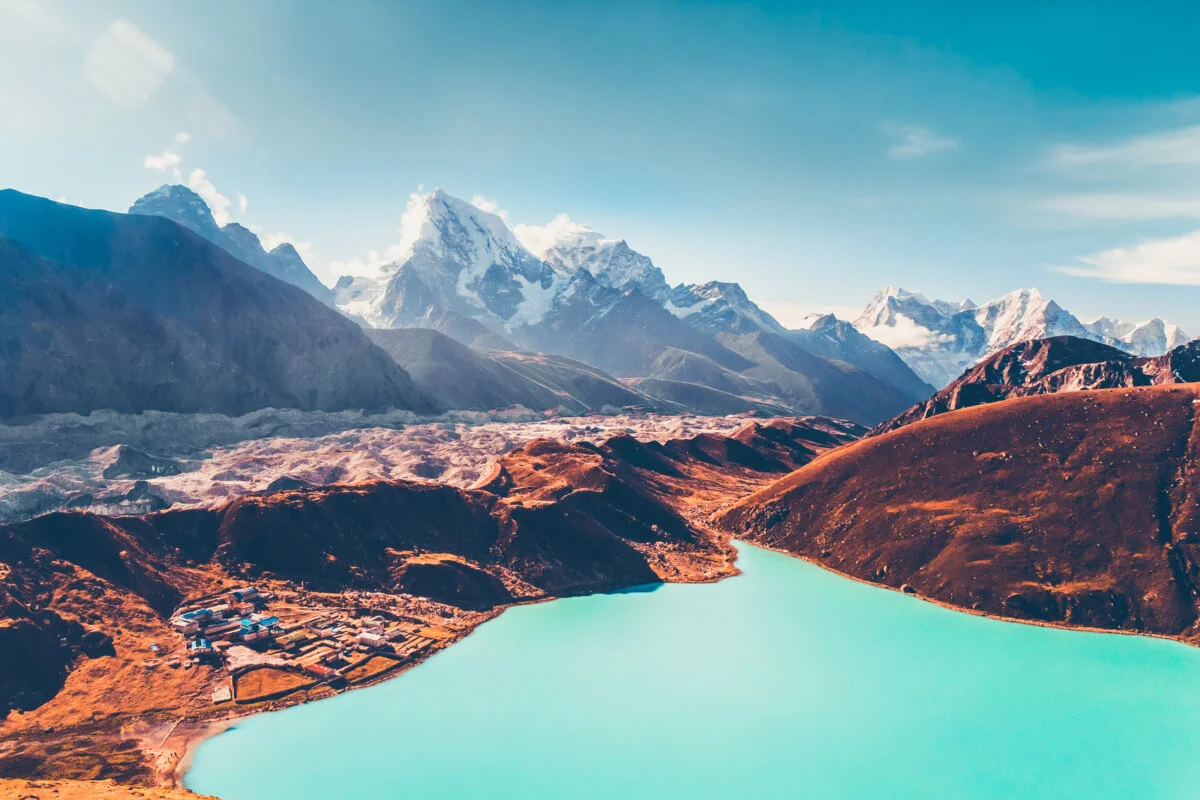
A shorter day, but it involves crossing the Ngozumpa Glacier—a massive, grey sea of rock and ice. Upon exiting the moraine, you are greeted by the startling blue waters of the third Gokyo Lake. In the afternoon, you climb Gokyo Ri (5,357m) for a sunset view over the Everest Massif. (Trek time: 4 hours, plus 3 hours for Gokyo Ri).
Day 14: Cross Renjo La Pass (5,360m) to Lungden (4,368m)
The Third Pass. Leaving Gokyo, you traverse around the lake and begin a relentless, steep climb to Renjo La. As you look back from the summit, you are treated to the ultimate postcard view of the Gokyo Lakes and Everest. The descent drops you into the Bhote Koshi Valley, an ancient Tibetan trading route, ending at the remote village of Lungden. (Trek time: 7-8 hours).
Day 15: Trek to Thame (3,820m)
A gentle, mostly downhill day. The Bhote Koshi valley is a stark contrast to the rest of the Khumbu—quiet, pastoral, and deeply traditional. Thame is the home of many legendary Sherpa mountaineers, including Tenzing Norgay. You will visit the 300-year-old Thame Monastery clinging to the cliffside above the village. (Trek time: 4-5 hours).
Day 16: Trek to Namche Bazaar (3,440m)
You continue descending through pine forests, passing ancient mani walls and painted Buddha rock carvings. The air becomes thick and rich with oxygen as you finally complete the grand circuit, arriving back in the vibrant streets of Namche Bazaar for a hot shower, a cold beer, and fresh pastries. (Trek time: 5-6 hours).
Day 17: Trek to Lukla (2,860m)
The final day of walking. You plunge back down the massive hill from Namche, cross the Hillary Bridge one last time, and follow the Dudh Koshi River out of the national park. The final short climb into Lukla marks the end of your trek, capped off by a celebration with your guides and porters. (Trek time: 7 hours).
Day 18: Fly to Kathmandu
You board your morning Twin Otter flight, soaring out of the mountains and back to the chaos of Kathmandu. Mountain Treks Nepal hosts a farewell cultural dinner in the evening to celebrate your monumental achievement.
Difficulty, Training, and Physical Preparation
The Everest Three Passes Trek is graded as Challenging/Strenuous. Make no mistake: this is significantly harder than standard EBC.
-
Elevation Profile: You will spend over 10 days above 4,000 meters and cross the 5,000-meter mark on six separate occasions.
-
Terrain: You are navigating loose scree, glacier ice, shifting boulders, and incredibly steep, lung-busting ascents.
-
Training Regiment: You must begin training at least 3 to 4 months prior. Focus on cardiovascular endurance (running, swimming, cycling). Crucially, you must do loaded hill climbs or stair-stepper sessions wearing a weighted backpack. Your leg muscles must be conditioned to endure steep, sustained ascents and descents.
Altitude Sickness (AMS) and Safety Protocols
When trekking above 5,000 meters, Acute Mountain Sickness (AMS) is a primary concern. Symptoms include severe headaches, nausea, dizziness, and extreme fatigue. If left untreated, AMS can progress into life-threatening HACE (Cerebral Edema) or HAPE (Pulmonary Edema).
Mountain Treks Nepal Safety Protocols:
-
Oximeter Monitoring: Our guides carry pulse oximeters and take daily readings of your blood oxygen saturation and resting heart rate.
-
Pacing: Bistari, Bistari (Slowly, Slowly). Moving at a slow, deliberate pace is the best way to prevent AMS.
-
Hydration: You must drink 4 liters of water a day. Dehydration masks and exacerbates altitude sickness.
-
Diamox: Many trekkers take Acetazolamide (Diamox) prophylactically. Consult your doctor before arriving in Nepal.
-
Helicopter Evacuation: If severe altitude sickness occurs, our guides are trained to coordinate immediate helicopter evacuations to Kathmandu. Comprehensive travel insurance covering high-altitude evacuation up to 6,000m is mandatory.
Accommodation, Food, and Teahouse Realities
-
The Teahouse Experience: Up to Namche Bazaar, lodges are highly comfortable, offering en-suite bathrooms and heated blankets. However, at places like Lobuche, Dzongla, and Gorak Shep, accommodation becomes highly utilitarian. Rooms are constructed of plywood, unheated, and temperatures inside the bedroom regularly drop below freezing.
-
Dining: The communal dining rooms are the only heated spaces (usually via a yak-dung stove). Food is carbohydrate-heavy and excellent for trekking fuel. Staples include Dal Bhat (lentil soup and rice—unlimited refills!), garlic soup (great for acclimatization), momos, noodles, and potatoes.
-
Toilets & Showers: High-camp toilets are often shared, squat-style facilities. Hot showers (gas-powered) cost extra ($4-$8) but are generally not recommended above 4,500 meters, as stripping down in freezing temperatures can shock your system and lead to colds.
Required Permits and Lukla Flight Logistics
Permits:
-
Sagarmatha National Park Entry Permit: NPR 3,000 (~$23 USD).
-
Khumbu Pasang Lhamu Rural Municipality Permit: NPR 3,000 (~$23 USD).
(Mountain Treks Nepal handles all permit processing and government taxes for you).
The Lukla Flight Reality:
Flights to Lukla operate on visual flight rules (VFR). If there are clouds or high winds in the mountains, flights are grounded. During the peak trekking months of October and April, the Civil Aviation Authority of Nepal frequently reroutes all Lukla flights away from Kathmandu to Ramechhap (Manthali Airport) to reduce airspace congestion. This requires waking up at 1:00 AM in Kathmandu for a 4-to-5-hour overland drive to catch your morning flight. It is exhausting, but our private transport ensures it goes as smoothly as possible.
Essential Packing List for the Three Passes
Packing for the Three Passes is a delicate balance. You must prepare for -20°C (-4°F) temperatures on the passes, but you are limited to a 15 kg (33 lbs) total weight limit on the Lukla flight (10kg duffel + 5kg daypack).
-
Layering System: No cotton. You need 3 sets of Merino wool base layers, a fleece mid-layer, and a heavy-duty, expedition-grade down jacket (700+ fill power).
-
Outer Shell: A Gore-Tex windproof and waterproof jacket and pants. The passes act as wind tunnels; blocking the chill is critical.
-
Sleeping Bag: A genuine four-season down sleeping bag rated for a comfort level of -15°C to -20°C. (Available for complimentary use when booking with Mountain Treks Nepal).
-
Footwear: Sturdy, broken-in, high-ankle waterproof trekking boots.
-
Microspikes: Mandatory. Cho La pass features a permanent glacier, and Renjo La’s descent is often coated in black ice. Slip-on traction cleats (microspikes) will save you from dangerous falls.
-
Power Banks: High-camp teahouses charge $3-$5 to charge a phone via solar panels. Bring a high-capacity (20,000mAh) power bank, and sleep with it inside your sleeping bag to prevent the cold from draining the battery.
-
Water Purification: Plastic bottles are banned in the Khumbu. Bring two 1-liter Nalgene bottles and water purification tablets (Chlorine Dioxide) or a SteriPen.
Best Time to Trek the Three Passes
Because this trek crosses 5,300-meter passes, weather windows are incredibly narrow.
-
Autumn (Late September to November): The undisputed best time. The monsoon has washed the dust from the sky, offering crystal-clear, razor-sharp views of Everest. The weather is stable, reducing the chance of flight cancellations. November is colder, but offers the best clarity.
-
Spring (March to May): The second-best window. The lower valleys are bursting with rhododendron blooms, and the Everest Base Camp is alive with expedition tents. However, spring afternoons often bring haze and cloud buildup. Early March can still see heavy snow blocking the passes.
-
Winter (Dec–Feb): Strongly discouraged. Extreme cold (-30°C) and heavy snowfall routinely bury Kongma La and Cho La, rendering the passes impassable and highly prone to avalanches.
-
Monsoon (June–Aug): Not recommended. Zero visibility, constant rain, flight cancellations, and dangerous rockfall on the passes.
Frequently Asked Questions (FAQs)
How difficult is the Everest Three Passes Trek?
The Everest Three Passes Trek is widely considered the most difficult non-technical teahouse trek in Nepal. It is graded as “Challenging” because it requires trekkers to spend over two weeks at high altitudes, cross three mountain passes above 5,300 meters, and navigate rough, icy, and steep glacial moraines.
Do I need a guide for the Three Passes Trek?
While independent trekking is currently allowed in the Everest region, hiring a guide for the Three Passes Trek is highly recommended. The trails over Kongma La and Cho La can be difficult to navigate, especially after snowfall. A licensed guide ensures route finding across the glaciers, monitors you for altitude sickness, and secures lodge rooms during peak seasons.
Do I need crampons for Cho La Pass?
You do not need heavy mountaineering crampons or ice axes, but you absolutely need lightweight slip-on microspikes (traction cleats). The crossing of the Cho La glacier and the steep descents on Kongma La and Renjo La can be incredibly icy. Microspikes provide essential grip and safety.
Can beginners do the Three Passes Trek?
No, the Everest Three Passes Trek is not suitable for absolute beginners. Trekkers should have prior high-altitude experience (above 4,000 meters) and possess excellent cardiovascular fitness. Beginners should opt for the standard Everest Base Camp Trek or the Gokyo Lakes Trek before attempting the Three Passes.
What happens if a pass is blocked by snow?
Mountain weather is unpredictable, and heavy snowstorms can render the high passes impassable due to avalanche risks. If this happens, your guide will alter the itinerary, routing you down the valley to connect to the next destination safely, bypassing the blocked pass while still ensuring you see EBC or Gokyo.