



Share This:

Everest Base Camp Trek with Mera Peak Climbing: The Ultimate Himalayan Expedition Guide
The combination of the Everest Base Camp Trek with Mera Peak Climbing represents one of the most complete high-altitude adventures in Nepal. This journey integrates classic trekking in the Khumbu region with a non-technical yet demanding Himalayan summit, creating a multi-dimensional expedition that balances endurance, altitude adaptation, and mountaineering exposure.
For experienced operators such as Mountain Treks Nepal, this combined itinerary reflects a structured approach to Himalayan exploration where progressive acclimatization, route design, and safety systems align with modern trekking standards.
Overview of Everest Base Camp Trek with Mera Peak Climbing

The Everest Base Camp Trek with Mera Peak Climbing spans approximately 18–20 days and combines two of Nepal’s most iconic Himalayan objectives trekking to Everest Base Camp (5,364 m) and climbing Mera Peak (6,476 m), the highest trekking peak in Nepal. According to structured itinerary data , this expedition includes a duration of around 20 days, a maximum altitude of 6,476 meters, and a strenuous difficulty level that reflects both high-altitude trekking and peak climbing demands. The journey integrates trekking and mountaineering activities, with accommodation provided through teahouses during the Everest Base Camp phase and tented camps during the Mera Peak climbing section. The best seasons for this expedition are spring (March–May) and autumn (September–November), when weather conditions are most stable and visibility is optimal. This integrated route delivers both deep trekking immersion and a high-altitude summit experience, making the Everest Base Camp Trek with Mera Peak Climbing one of the most comprehensive adventure journeys in Nepal, often organized by experienced operators such as Mountain Treks Nepal.
Route Structure and Expedition Flow

The journey follows a carefully structured progression designed to balance trekking and climbing demands.
Phase 1: Everest Base Camp Trek
The first phase of the Everest Base Camp Trek with Mera Peak Climbing follows the iconic Everest Base Camp route, beginning with a high-altitude flight to Lukla, the primary gateway to the Khumbu region. The trail progresses through Phakding and gradually ascends toward Namche Bazaar, the commercial and cultural center of the Everest region. Strategic acclimatization days in Namche and Dingboche allow the body to adapt to increasing altitude while maintaining trekking efficiency. The route then continues through Lobuche and Gorakshep before reaching Everest Base Camp (5,364 m), situated beside the Khumbu Glacier. This phase is essential for building altitude tolerance, as it introduces sustained trekking above 4,000 meters while exposing trekkers to Sherpa culture, Buddhist monasteries, and expansive Himalayan landscapes. The structured ascent profile reduces altitude-related risks and prepares the body for the more demanding climbing phase that follows.
Phase 2: Kala Patthar and Transition
The second phase focuses on elevation gain and strategic transition, beginning with the ascent to Kala Patthar (5,545 m), one of the most important viewpoints in the Everest region. From this vantage point, panoramic views of Mount Everest, Lhotse, Nuptse, and the surrounding himalayas range become clearly visible, offering a visual highlight of the expedition. Following this ascent, the route transitions toward the Mera Peak region, often supported by a helicopter transfer in optimized itineraries to reduce physical strain and logistical complexity. This transition phase plays a critical role in expedition efficiency by conserving energy, minimizing repetitive trekking sections, and maintaining acclimatization levels achieved during the Everest Base Camp phase. By avoiding unnecessary descent and re-ascent, this stage ensures that physical resources are preserved for the technically demanding Mera Peak climbing segment.
Phase 3: Mera Peak Climbing
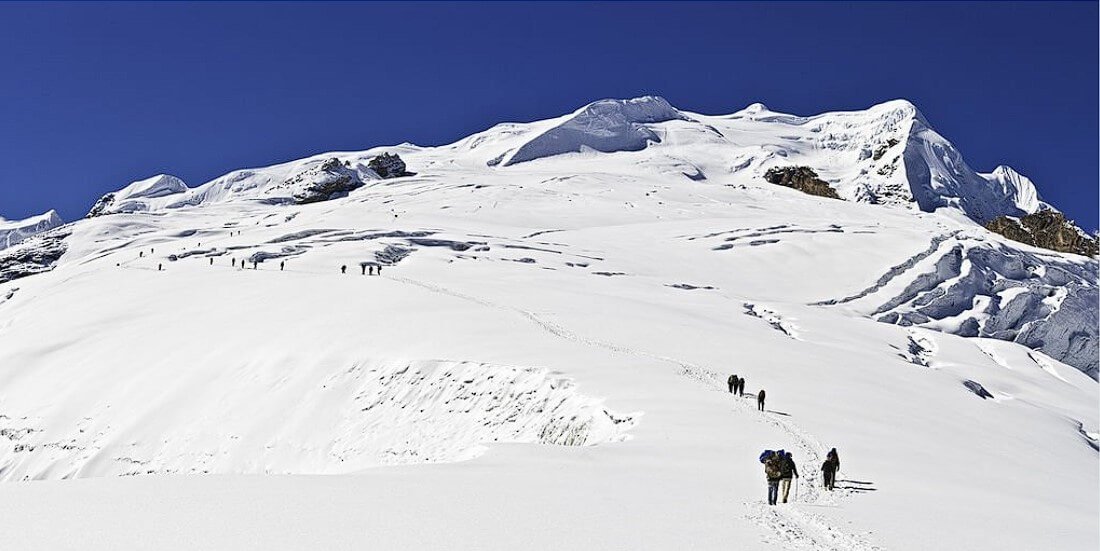
The final phase centers on Mera Peak Climbing, beginning from Khare, the primary base for summit preparation. This stage includes dedicated acclimatization and pre-climb training, where essential mountaineering techniques such as crampon use, rope handling, and glacier movement are practiced. The route then progresses to Mera Base Camp (5,300 m), where the environment shifts from trekking terrain to high-altitude glacial conditions. The climb involves navigating snowfields and crevassed glacier sections using basic technical equipment under the supervision of experienced guides. Summit day typically begins in the early morning hours, often around 2 AM, to take advantage of stable weather conditions. The ascent requires steady pacing, controlled breathing, and efficient energy management, particularly during the final steep section leading to the summit at 6,476 meters. From the top of Mera Peak, expansive views of Everest, Makalu, Lhotse, and Cho Oyu define one of the most rewarding panoramas in the Himalayas, marking the successful completion of this combined trekking and climbing expedition.
Why Combine Everest Base Camp and Mera Peak Climbing?
1. Complete Himalayan Experience
The combination of the Everest Base Camp Trek with Mera Peak Climbing delivers a truly complete Himalayan experience by integrating multiple dimensions of adventure into a single expedition. The trekking phase through Everest Base Camp provides deep cultural immersion within Sherpa communities, exposure to centuries-old Buddhist traditions, and interaction with local lifestyles shaped by high-altitude environments. At the same time, the journey builds physical endurance through long trekking days across varied terrain, including river valleys, alpine landscapes, and glacial moraines. The addition of Mera Peak Climbing introduces a mountaineering component, allowing progression beyond trekking into summit-based achievement. This integration eliminates the need to choose between trekking and climbing, instead offering a seamless transition where cultural exploration, physical challenge, and technical exposure are experienced within one structured itinerary.
2. Progressive Acclimatization Advantage
One of the most important advantages of combining Everest Base Camp with Mera Peak Climbing lies in the natural acclimatization process built into the itinerary. The Everest Base Camp Trek involves gradual altitude gain over several days, with key acclimatization stops in locations such as Namche Bazaar and Dingboche. This progressive ascent allows the body to adapt to decreasing oxygen levels before entering more extreme altitudes required for Mera Peak. As a result, the risk of altitude-related illnesses, including Acute Mountain Sickness (AMS), is significantly reduced. Additionally, improved acclimatization enhances overall physical performance, enabling better stamina, recovery, and energy efficiency during the summit push. This structured progression directly contributes to a higher success rate for Mera Peak Climbing, as the body is already conditioned to function effectively above 5,000 meters.
3. Panoramic Himalayan Views
The summit of Mera Peak (6,476 m) offers one of the most expansive panoramic viewpoints in the Himalayas, making it a defining highlight of the combined expedition. From this vantage point, visibility extends across five of the world’s highest mountains Mount Everest, Lhotse, Makalu, Cho Oyu, and, in exceptionally clear conditions, Kanchenjunga. Unlike viewpoints within the Everest Base Camp Trek, which are often limited by surrounding formations, Mera Peak provides a broader, unobstructed perspective due to its geographical position in the Hinku Valley. This creates a unique visual experience where multiple giants can be observed simultaneously across a wide horizon. The scale and clarity of this panorama are widely recognized as among the finest in Nepal, reinforcing the value of combining trekking with peak climbing in a single itinerary.
4. Technical Yet Accessible Climbing
Mera Peak Climbing is classified as a trekking peak, meaning it offers an accessible introduction to Himalayan mountaineering while still requiring fundamental technical skills. The climb does not involve highly technical rock or ice climbing; however, it requires the use of essential equipment such as crampons, harnesses, ropes, and ice axes in glacier environments. Under guided supervision, climbers learn basic techniques including rope movement, balance on snow slopes, and controlled ascent using fixed lines. This balance between accessibility and challenge makes Mera Peak suitable for individuals transitioning from trekking to climbing. It provides a practical introduction to high-altitude mountaineering without the extreme associated with more technical peaks. As a result, the Everest Base Camp Trek with Mera Peak Climbing serves as an ideal progression route for developing both confidence and capability in Himalayan expeditions.
Difficulty Level and Physical Requirements
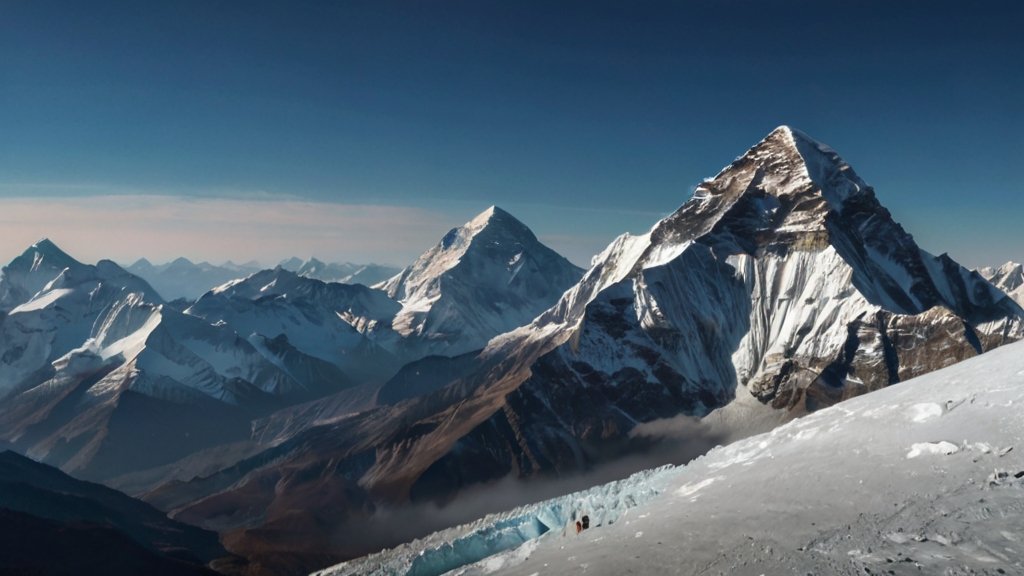
The Everest Base Camp Trek with Mera Peak Climbing is categorized as a strenuous high-altitude expedition, requiring a combination of long-distance trekking endurance and basic mountaineering readiness. The physical demands include sustained trekking for 6 to 10 hours per day across varied terrain, along with glacier travel and a physically demanding summit push on Mera Peak. High-altitude endurance is essential, as a significant portion of the journey takes place above 5,000 meters, where oxygen levels are substantially lower. In addition to trekking fitness, the expedition involves technical components such as the use of crampons and harnesses, rope-assisted movement using jumar or ascending techniques, and controlled navigation across snow and ice-covered terrain. Physiological challenges further increase the difficulty, including reduced oxygen availability, cold temperatures that can drop to -10°C or lower, and energy depletion during prolonged high-altitude exertion, particularly on summit day. Effective preparation for the Everest Base Camp Trek with Mera Peak Climbing must include structured cardiovascular conditioning to improve stamina, strength training focused on legs and core for stability, and a strong understanding of high-altitude awareness to manage acclimatization and overall safety.
Cultural Experience in the Everest Region
The cultural experience in the Everest region forms a central part of the Everest Base Camp Trek with Mera Peak Climbing, offering insight into the traditions and lifestyle of the Sherpa community, one of the most resilient high-altitude populations in the world. The trekking route passes through key cultural landmarks such as Namche Bazaar, a historic trading hub that connects local and cross-border commerce, and Tengboche Monastery, the spiritual center of the Khumbu region where Buddhist rituals and ceremonies are actively practiced. Villages like Khumjung and Khunde further reflect traditional Himalayan settlement patterns, where stone-built homes, monasteries, and agricultural practices define daily life. Throughout the journey, cultural elements are deeply rooted in Tibetan Buddhism, visible through prayer flags, mani walls, and community monasteries. Daily life in these altitude villages is shaped by mountain-based livelihoods such as farming, yak herding, and tourism support, all sustained by strong community networks and shared cultural values. This level of cultural immersion adds significant depth to the expedition, transforming the Everest Base Camp Trek from a physical journey into a broader exploration of Himalayan heritage and human adaptation to extreme environments.
Accommodation and Logistics
Teahouse Trekking (EBC Phase)
During the Everest Base Camp phase of the expedition, accommodation is primarily based on the traditional Himalayan teahouse system, which consists of basic yet functional lodges operated by local families. These teahouses typically offer twin-sharing rooms with simple bedding, providing a practical resting space after long trekking days. Facilities become more limited as altitude increases, with shared bathrooms and minimal heating in higher altitudes. Communal dining areas serve as the social center of each lodge, where trekkers gather for meals and warmth, often around a central stove. The food menu is designed to support high-energy requirements, with commonly available meals including dal bhat (rice, lentils, and vegetables), noodles, soups, and simple Western options. This system not only supports local economies but also allows consistent access to food and shelter throughout the Everest Base Camp Trek, making it one of the most well-supported high-altitude trekking routes in Nepal.
Camping (Mera Peak Phase)
As the expedition transitions into the Mera Peak Climbing phase, accommodation shifts from teahouses to expedition-style tented camps due to the remote and high-altitude environment of the Hinku Valley. At elevations above Khare and toward Mera Base Camp, infrastructure is limited, requiring a self-supported setup managed by the climbing team. Tented accommodation includes sleeping tents, dining tents, and basic kitchen arrangement, ensuring safety and functionality in extreme conditions. Meals are carefully planned and prepared to maintain energy levels during the climbing phase, with a focus on warm, high-calorie food suitable for cold environments. This camping system reflects a transition from trekking logistics to mountaineering operations, where flexibility, weather awareness, and resource management become essential for a successful summit attempt.
Logistics include:
The logistics of the Everest Base Camp Trek with Mera Peak Climbing are structured to ensure efficiency, safety, and smooth transitions between trekking and climbing phases. The journey typically begins with domestic flights between Kathmandu and Lukla, providing access to the Everest region while significantly reducing travel time. In some itineraries, helicopter transfers are incorporated, particularly during the transition from the Everest Base Camp region to the Mera Peak area, helping conserve energy and optimize the route. Throughout the expedition, experienced guides and porter support play a critical role in navigation, load management, and safety monitoring. Guides provide route knowledge, altitude management, and climbing instruction, while porters assist in carrying essential gear, allowing trekkers to focus on performance and acclimatization. This coordinated logistical framework ensures that the expedition operates efficiently even in remote and high-altitude conditions.
Safety and Expedition Management
High-altitude expeditions such as the Everest Base Camp Trek with Mera Peak Climbing require well-structured safety systems to manage environmental risks and ensure a successful outcome. The foundation of expedition safety lies in a gradual acclimatization schedule, which allows the body to adapt to decreasing oxygen levels as altitude increases, significantly reducing the risk of altitude-related illnesses. Professional guides and climbing support teams play a critical role in maintaining safety standards by providing route guidance, technical instruction, and continuous monitoring throughout both the trekking and climbing phases. Emergency evacuation readiness, including access to helicopter rescue services, is another essential component, particularly in remote areas where rapid response is crucial. Experienced operators such as Mountain Treks Nepal emphasize detailed route planning to avoid hazardous sections, continuous weather monitoring to adapt to changing conditions, and regular assessment of client health and performance. These integrated safety measures create a controlled expedition environment, significantly improving both safety and overall success rates in high-altitude Himalayan journeys.
Best Time for Everest Base Camp Trek with Mera Peak Climbing
Spring (March–May)
- Stable weather
- Ideal for climbing
- Clear mountain views
Autumn (September–November)
- Dry conditions
- Excellent visibility
- Peak trekking season
Seasonal Risks
- Winter: extreme cold and snow
- Monsoon: poor visibility and landslides
Season selection directly impacts summit success and safety.
FAQ: Everest Base Camp Trek with Mera Peak Climbing
1. What is the highest point of the trek?
The highest point is the summit of Mera Peak at 6,476 meters.
2. How long does the expedition take?
The expedition typically takes 18 to 20 days, depending on itinerary and weather conditions.
3. What is the difficulty level of this trek?
The difficulty level is strenuous due to high altitude, long trekking days, and the summit climb.
4. Is Mera Peak a technical climb?
Mera Peak is considered a non-technical trekking peak but requires basic mountaineering skills.
5. Is prior climbing experience required?
Advanced climbing experience is not mandatory, but basic training and preparation are required.
6. What is the altitude of Everest Base Camp?
Everest Base Camp is located at 5,364 meters above sea level.
7. When is the best time for Everest Base Camp Trek with Mera Peak Climbing?
Spring (March–May) and autumn (September–November) offer the best conditions.
8. How physically demanding is the expedition?
The journey requires strong endurance, with 6–10 hours of trekking daily and high-altitude effort.
9. What permits are required for this expedition?
Permits include Sagarmatha National Park entry, TIMS, and Mera Peak climbing permit.
10. What kind of accommodation is available?
Teahouses are used during the Everest Base Camp trek, while tented camps are used during Mera Peak climbing.
11. How cold does it get during the trek?
Temperatures can drop to -10°C or lower, especially during the summit phase.
12. Is altitude sickness a risk on this trek?
Yes, altitude sickness is a major risk, which is managed through acclimatization and proper pacing.
13. What is the role of a guide during the expedition?
Guides provide navigation, safety monitoring, technical support, and climbing instruction.
14. Are helicopter evacuations available?
Yes, helicopter evacuation is available in case of emergencies at high altitude.
15. What gear is required for Mera Peak Climbing?
Essential gear includes crampons, harness, ropes, helmet, and cold-weather clothing.
16. How does acclimatization work during the trek?
The itinerary includes gradual altitude gain and rest days to allow the body to adapt.
17. What makes this trek different from Everest Base Camp alone?
This expedition combines trekking with a summit climb, offering both cultural and mountaineering experience.
18. Can beginners complete this expedition?
Well-prepared beginners with good fitness and proper guidance can complete the trek.
19. What are the main highlights of the journey?
Key highlights include Everest Base Camp, Kala Patthar, Sherpa culture, and Mera Peak summit.
20. Why choose Everest Base Camp Trek with Mera Peak Climbing?
This combination provides a complete Himalayan experience, including trekking, climbing, and panoramic mountain views.
Conclusion
The Everest Base Camp Trek with Mera Peak Climbing represents one of the most comprehensive and strategically designed high-altitude expeditions in Nepal, combining the iconic journey to Everest Base Camp with the rewarding challenge of Mera Peak Climbing. This integrated route goes beyond a traditional trekking experience by offering a structured progression from cultural exploration in the Khumbu region to high-altitude mountaineering in the remote Hinku Valley. The result is a multi-layered Himalayan journey that balances physical endurance, technical exposure, and immersive cultural insight.
Throughout the expedition, each phase contributes to a broader experience. The Everest Base Camp trek builds foundational acclimatization while introducing the rich traditions of Sherpa communities and the dramatic landscapes of the Himalayas. The transition toward Mera Peak shifts the focus toward expedition-style climbing, where glacier travel, altitude management, and summit strategy become central. Reaching the summit of Mera Peak at 6,476 meters not only represents a significant physical achievement but also provides one of the most expansive panoramic views in the region, reinforcing the value of combining trekking with peak climbing.
From an expert perspective, the success of this expedition depends on careful preparation, including physical conditioning, altitude awareness, and the use of well-planned itineraries. Professional support, such as that provided by experienced operators like Mountain Treks Nepal, plays a critical role in ensuring safety, logistical efficiency, and overall expedition success. Structured acclimatization, weather monitoring, and guided climbing support collectively enhance both safety and performance at high altitude.
Ultimately, the Everest Base Camp Trek with Mera Peak Climbing stands as a benchmark Himalayan adventure, offering a rare combination of trekking immersion and summit achievement within a single expedition. With proper planning and expert guidance, it delivers not only a physically demanding journey but also a deeply rewarding and memorable experience in one of the world’s most iconic mountain landscapes.