



Share This:

Trekking to Everest Base Camp: A Life-Changing Adventure with Mountain Treks Nepal
Introduction
There are few adventures on Earth as iconic and soul-stirring as the Everest Base Camp trek. Standing at the base of the world’s tallest mountain Mount Everest (8,848 meters) is a dream shared by trekkers, adventurers, and mountain lovers across the globe. The journey is more than just a walk through the Himalayas; it’s a profound experience filled with breathtaking landscapes, Sherpa hospitality, ancient monasteries, and the humbling power of nature.
At Mountain Treks Nepal, we specialize in making this once-in-a-lifetime adventure accessible, safe, and deeply rewarding. Whether you’re an experienced hiker or a first-time trekker, our expert team ensures your journey to Everest Base Camp is unforgettable both physically and spiritually.
Why Choose Everest Base Camp?

The Everest Base Camp trek isn’t just about reaching a famous destination it’s about embracing a journey that challenges and transforms you. Winding through the heart of the Khumbu region, the trail unveils awe-inspiring views of Himalayan giants like Ama Dablam, Lhotse, and Nuptse, with Everest towering above them all. But the beauty of the trek lies just as much in the people, the stories, and the culture you encounter along the way.
You’ll pass through bustling mountain towns like Namche Bazaar, visit the serene Tengboche Monastery, cross suspension bridges strung over deep gorges, and walk alongside yaks carrying goods up the trails. Each day brings a new challenge, a new view, and a new sense of wonder.
The Everest Base Camp trek is not just a trek it’s a rite of passage for mountain lovers. And with Mountain Treks Nepal, you’re not just a tourist. You’re a welcomed guest, a fellow adventurer, and a part of our mountain family.
The Everest Base Camp Trek Itinerary
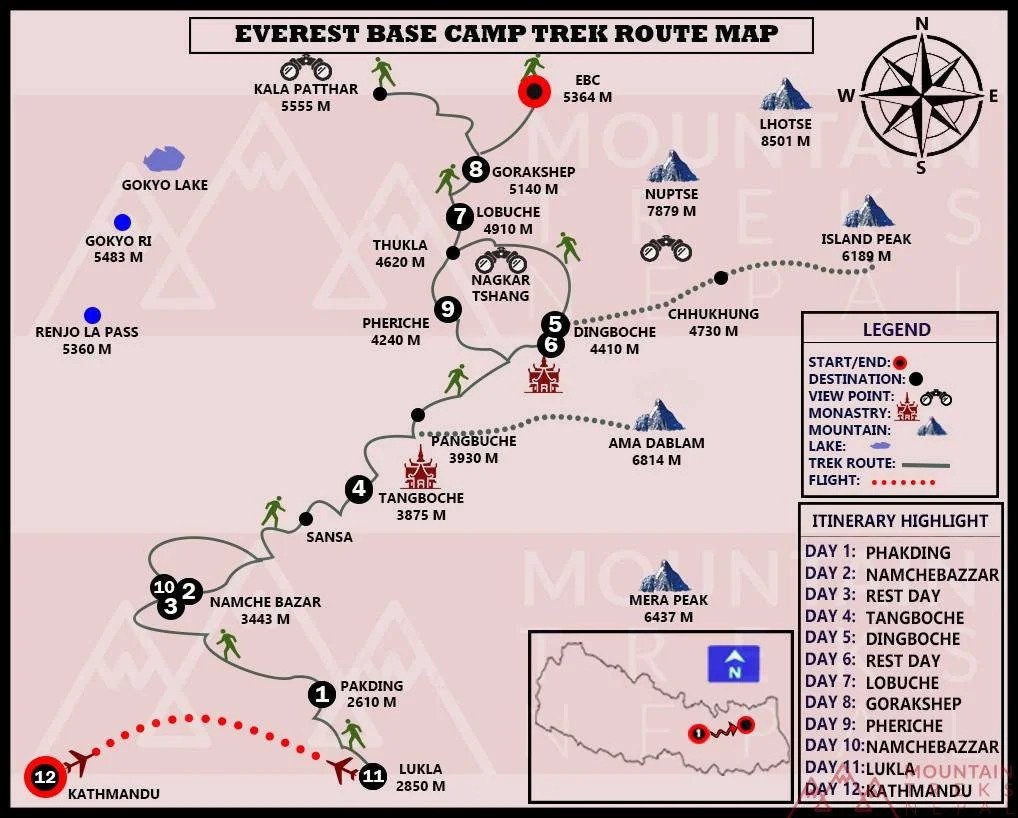
The classic Everest Base Camp trek spans around 12 to 14 days, depending on your pace and acclimatization needs. Here’s a typical 14-day itinerary crafted by Mountain Treks Nepal to ensure maximum safety, enjoyment, and cultural immersion:
Day 1: Arrival in Kathmandu (1,400m)
Welcome to Nepal! Upon arrival, you’re greeted by our team and transferred to your hotel. After some rest, we’ll brief you about the upcoming adventure.
Day 2: Fly to Lukla (2,860m) – Trek to Phakding (2,610m)
A thrilling 30-minute flight to the mountain town of Lukla marks the start of the trek. After landing, we hike for 3–4 hours to Phakding, a charming riverside village.
Day 3: Phakding to Namche Bazaar (3,440m)
A challenging but rewarding 6-hour hike brings us to the vibrant Sherpa town of Namche Bazaar, the main hub of the Khumbu region. You’ll cross the famous Hillary Suspension Bridge and catch your first glimpse of Mount Everest on a clear day.
Day 4: Acclimatization Day in Namche Bazaar
To help your body adjust to the altitude, we rest here — but it’s far from boring. Optional hikes to Everest View Hotel or Khumjung village offer panoramic views and cultural insight.
Day 5: Namche Bazaar to Tengboche (3,867m)
A 5–6 hour hike takes us to Tengboche, home to the region’s largest monastery. With Everest looming in the distance, this is one of the most spiritual and scenic spots on the trek.
Day 6: Tengboche to Dingboche (4,410m)
Today we trek through forests and alpine landscapes to reach Dingboche, a beautiful village surrounded by fields of barley and potatoes.
Day 7: Acclimatization in Dingboche
We’ll take another acclimatization day here, possibly hiking to Nangkartshang Peak (5,083m) for incredible views of Makalu and other Himalayan giants.
Day 8: Dingboche to Lobuche (4,940m)
The air grows thinner as we climb past the Thukla Pass and visit the memorials for climbers who lost their lives on Everest. We overnight at Lobuche, a rugged and remote outpost.
Day 9: Lobuche to Everest Base Camp (5,364m), Overnight in Gorak Shep (5,164m)
This is the big day! We trek to Gorak Shep, drop our bags, and hike to Everest Base Camp the legendary staging area for summit expeditions. After soaking in the atmosphere, we return to Gorak Shep for the night.
Day 10: Hike Kala Patthar (5,545m), then return to Pheriche (4,280m)
An early morning ascent to Kala Patthar offers the best sunrise views of Everest. Then we begin our descent to Pheriche.
Day 11: Pheriche to Namche Bazaar
Retracing our steps through alpine terrain and forests, we return to Namche for a well-earned rest.
Day 12: Namche Bazaar to Lukla
The final leg of our trek brings us back to Lukla, where we celebrate the completion of an epic adventure.
Day 13: Fly Back to Kathmandu
A scenic flight returns us to Kathmandu. Time for souvenirs, relaxation, and reflection.
Day 14: Departure or Optional Tours
You’ll be transferred to the airport or continue exploring Nepal with one of our customized add-on tours.
Best Time to Trek to Everest Base Camp

While Everest Base Camp is accessible most of the year, choosing the right season can greatly enhance your trekking experience. At Mountain Treks Nepal, we recommend the two prime trekking windows:
Spring (March to May)
This is one of the most popular and scenic times to trek. The weather is stable, skies are generally clear, and the trails are lined with blooming rhododendron forests. You’ll also see climbers preparing for Everest summit expeditions at Base Camp during this time.
-
Pros: Lush landscapes, stable weather, active climbing season
-
Cons: Slightly more crowded, especially in April
Autumn (September to November)
Another excellent time with crystal-clear skies and moderate temperatures. The monsoon rains have just cleared the dust and pollution, giving you the clearest mountain views of the year.
-
Pros: Best visibility, pleasant temperatures, festive season in Nepal (Dashain, Tihar)
-
Cons: Also a popular season, so trails can be busy
Winter (December to February)
This season brings cold temperatures and snowfall, but also fewer crowds and a tranquil atmosphere. Best suited for experienced trekkers who enjoy solitude and are well-prepared for extreme cold.
-
Pros: Peaceful trails, majestic snowy scenery
-
Cons: Harsh cold, some teahouses may be closed at higher altitudes
Monsoon (June to August)
This is the least recommended season due to heavy rains, flight delays, and muddy trails. However, some trekkers still attempt it for the lush greenery and solitude.
Physical Preparation & Difficulty Level
The Everest Base Camp trek is a moderate to challenging trek that requires mental resilience, physical stamina, and smart pacing but it’s achievable for anyone with the right preparation. At Mountain Treks Nepal, we help you get trek-ready well before you hit the trail.
Mental Preparation
Altitude trekking is as much about mental strength as physical fitness. Expect long walking days (5–7 hours), changing weather, and basic accommodations. Embracing the adventure including its discomforts is key to enjoying the journey.
Physical Fitness Requirements
You don’t need to be a mountaineer, but you should be in good health and able to handle uphill climbs, rough terrain, and consecutive days of trekking. Start preparing at least 6–8 weeks before your trek with a mix of:
-
Cardio training: Running, cycling, swimming, hiking
-
Leg strengthening: Squats, lunges, stair climbing
-
Core exercises: Planks, crunches, yoga
-
Endurance hikes: Practice walking 10–15 km with a backpack
Acclimatization and Altitude Awareness
The trek reaches altitudes above 5,000 meters, where oxygen levels drop by 50%. Symptoms of altitude sickness can include headaches, fatigue, and nausea. That’s why we include built-in acclimatization days and encourage hydration, slow ascent, and recognizing early symptoms.
Our Safety Protocols
Mountain Treks Nepal guides are trained in Altitude Sickness First Aid and carry oximeters, first aid kits, and have access to emergency evacuation if needed. Your safety is our #1 priority.
With proper preparation and expert guidance, even first-time trekkers can reach Everest Base Camp and have an unforgettable journey.
What to Pack for the Everest Base Camp Trek?
Packing smartly for the Everest Base Camp trek can make a huge difference in your comfort and safety. The key is to prepare for changing weather conditions, cold nights, and limited access to supplies at higher altitudes.
Here’s a comprehensive packing list recommended by Mountain Treks Nepal:
Essential Clothing
-
Base layers (thermal tops and bottoms)
-
Insulated jacket (down or synthetic)
-
Waterproof jacket and pants
-
Fleece or soft shell jacket
-
Moisture-wicking trekking shirts and pants
-
Warm hat, buff/scarf, and gloves
-
Sun hat and UV sunglasses
-
Wool socks and inner liners (multiple pairs)
Footwear
-
Well-broken-in hiking boots (waterproof)
-
Camp shoes or sandals (for evenings)
Trekking Gear
-
Backpack (30–40L) for daily use
-
Duffel bag (provided by Mountain Treks Nepal for porters)
-
Trekking poles (highly recommended)
-
Sleeping bag (rated to -10°C or below; we can provide if needed)
-
Headlamp with extra batteries
-
Water bottles or hydration bladder (2–3 liters total capacity)
-
Water purification tablets or filter
Toiletries & Health
-
Toilet paper and wet wipes
-
Sunscreen (SPF 50+) and lip balm
-
Personal medication
-
Hand sanitizer and basic first-aid kit
-
Altitude sickness medication (consult your doctor)
Documents & Money
-
Passport & extra photos (for permits)
-
Travel insurance (must cover high-altitude trekking)
-
Cash (Nepali Rupees) for small purchases along the trail
Optional Extras
-
Power bank or solar charger
-
Camera or GoPro
-
Snacks (energy bars, chocolates, nuts)
Your guide from Mountain Treks Nepal will help you double-check everything during your pre-trek briefing in Kathmandu. Don’t worry we’re here to make sure you’re ready!
Cultural and Natural Highlights Along the Way
The trek to Everest Base Camp is not just a physical journey it’s a deep dive into Himalayan culture, spirituality, and natural wonder. Every step reveals stories, traditions, and unforgettable views that make this trek a true pilgrimage for the soul.
The Majesty of the Himalayas
From your first steps in Lukla to the final ascent to Kala Patthar, you’re constantly surrounded by legendary peaks Mount Everest, Lhotse, Ama Dablam, Thamserku, and more. Every day offers new perspectives, changing with light, weather, and altitude.
Sherpa Culture & Hospitality
The Everest region is home to the Sherpa people, famed for their mountaineering legacy and warm hospitality. Villages like Namche Bazaar, Khumjung, and Pangboche offer a glimpse into their high-altitude life prayer flags fluttering in the wind, stone houses, and yak caravans.
At Mountain Treks Nepal, we prioritize cultural respect helping you engage authentically with locals, visit monasteries, and learn about Tibetan Buddhist traditions.
Sacred Sites & Spiritual Energy
Highlights include the Tengboche Monastery, the largest in the region, perched on a ridge with Everest as its backdrop. You’ll often hear the hum of chanting monks, spin prayer wheels, and pass colorful mani stones carved with sacred mantras.
Unique Flora and Fauna
The Sagarmatha National Park a UNESCO World Heritage Site is rich in biodiversity. You may spot Himalayan tahrs, musk deer, danphe (the national bird of Nepal), and if you’re lucky, even signs of the elusive snow leopard.
From high-altitude forests to windswept alpine deserts, the changing landscapes are as captivating as the culture.
FAQs About the Everest Base Camp Trek
If you’re planning your first Everest Base Camp trek, you probably have a few questions. At Mountain Treks Nepal, we’ve guided hundreds of trekkers here are the answers to the most frequently asked questions:
How difficult is the Everest Base Camp trek?
It’s a moderate to challenging trek. You don’t need technical climbing skills, but you do need good fitness and mental stamina. Daily hikes range from 5 to 7 hours, with increasing altitude. Acclimatization and pacing are key — and we ensure both.
Do I need prior trekking experience?
Not necessarily. Many first-time trekkers complete the journey successfully with proper preparation and guidance. Our team will support you at every step.
Is altitude sickness a concern?
Yes, it’s a serious consideration. That’s why we build rest days into the itinerary and ascend gradually. Our guides are trained in altitude safety and monitor your health throughout the trek.
What’s included in the trek package?
With Mountain Treks Nepal, everything from Lukla flights, permits, accommodations, meals, guide/porter services, and airport transfers is included. We offer transparent pricing and no hidden fees.
What’s the accommodation like?
You’ll stay in mountain teahouses, which offer basic but cozy rooms. Most have twin beds, shared bathrooms, and dining areas with heaters. Higher up, amenities may be limited — but the views are priceless.
Can I charge my phone or access Wi-Fi?
Yes but expect extra charges for electricity and Wi-Fi at teahouses above Namche Bazaar. Bring a power bank and enjoy the chance to disconnect and be fully present in the mountains.
Conclusion: Why Your Everest Journey Starts with Mountain Treks Nepal?
Trekking to Everest Base Camp is more than just ticking off a bucket list item it’s a transformational journey through some of the planet’s most awe-inspiring landscapes. It challenges your body, rewards your spirit, and opens your eyes to the profound beauty of the Himalayas and the people who call them home.
At Mountain Treks Nepal, we understand that every trekker has a unique story, and we’re honored to help write a chapter of yours. With our expert guides, ethical approach, and heartfelt hospitality, we don’t just guide you to Base Camp we guide you through an experience that stays with you long after the trek is over.
Are you ready to walk in the footsteps of legends?
Let Mountain Treks Nepal be your trusted partner on this incredible adventure.