



Share This:

Mera Peak Climbing with Mountain Treks Nepal: A Himalayan Journey Beyond the Ordinary
Nestled deep in the heart of the Himalayas, Mera Peak stands tall as the highest trekking peak in Nepal. Towering at an altitude of 6,476 meters (21,247 feet), this majestic summit offers a truly rewarding challenge for adventurous souls. Mera Peak Climbing isn’t just a trek—it’s a bold expedition that combines remote trails, Sherpa culture, glacial landscapes, and the thrill of high-altitude mountaineering.
As one of Nepal’s premier trekking agencies, Mountain Treks Nepal has curated the ideal route and support system for anyone eager to conquer Mera Peak. With a reputation built on safety, experience, and personalized service, Mountain Treks Nepal makes this Himalayan dream a reachable reality.
What Makes Mera Peak Climbing So Special?
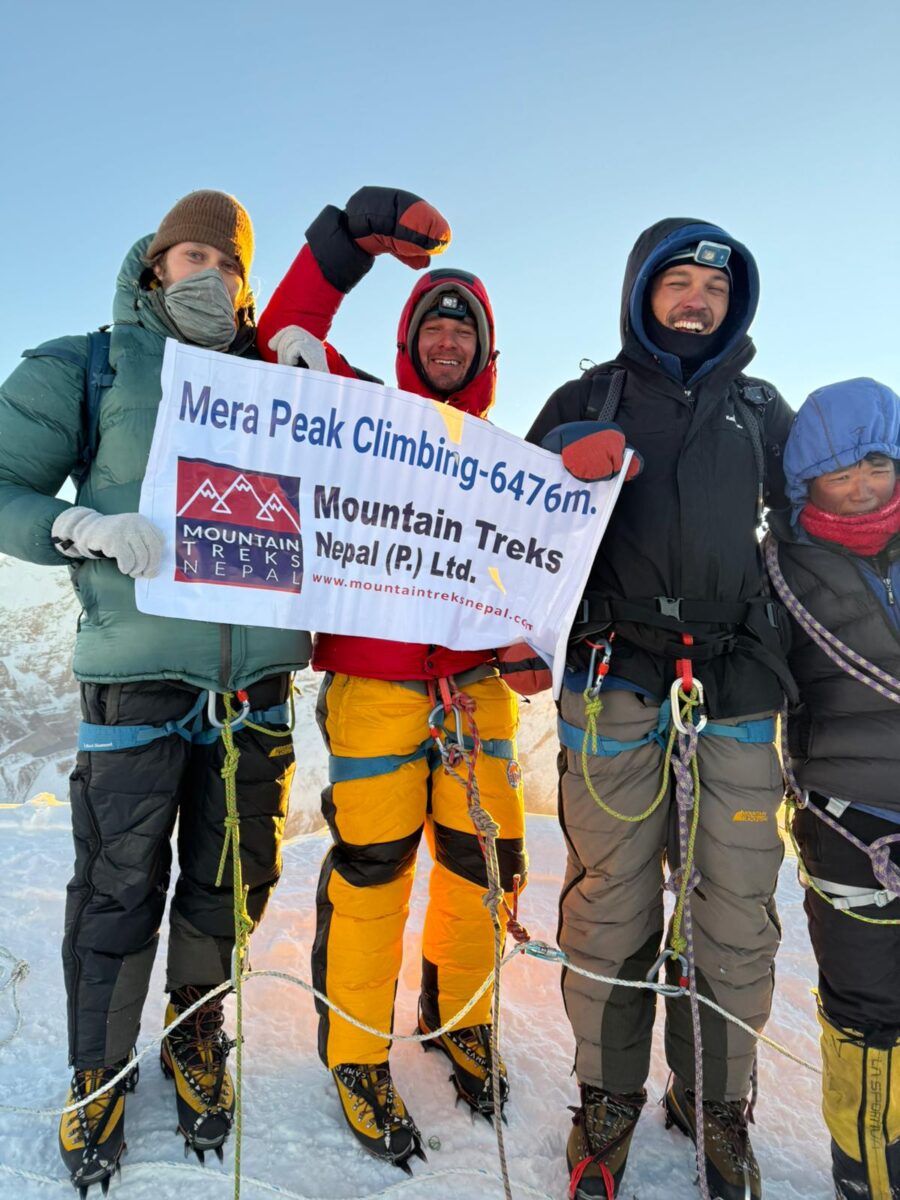
Not all peaks in Nepal offer such a rich blend of altitude, adventure, and scenery as Mera Peak. Unlike crowded trails leading to Everest Base Camp, the Mera Peak region is less commercialized, offering a more untouched and raw Himalayan experience.
From the summit, climbers are treated to a 360-degree panorama of five of the world’s highest mountains Everest (8,848m), Lhotse (8,516m), Makalu (8,485m), Cho Oyu (8,188m), and Kanchenjunga (8,586m). The sense of solitude, combined with sweeping views of icy ridgelines and hidden valleys, makes Mera Peak Climbing a photographer’s paradise and a climber’s triumph.
Mountain Treks Nepal ensures that every climber enjoys this experience to the fullest, offering expert guidance and high-altitude support staff who know the region like their own backyard.
The Route: Day-by-Day Mera Peak Itinerary
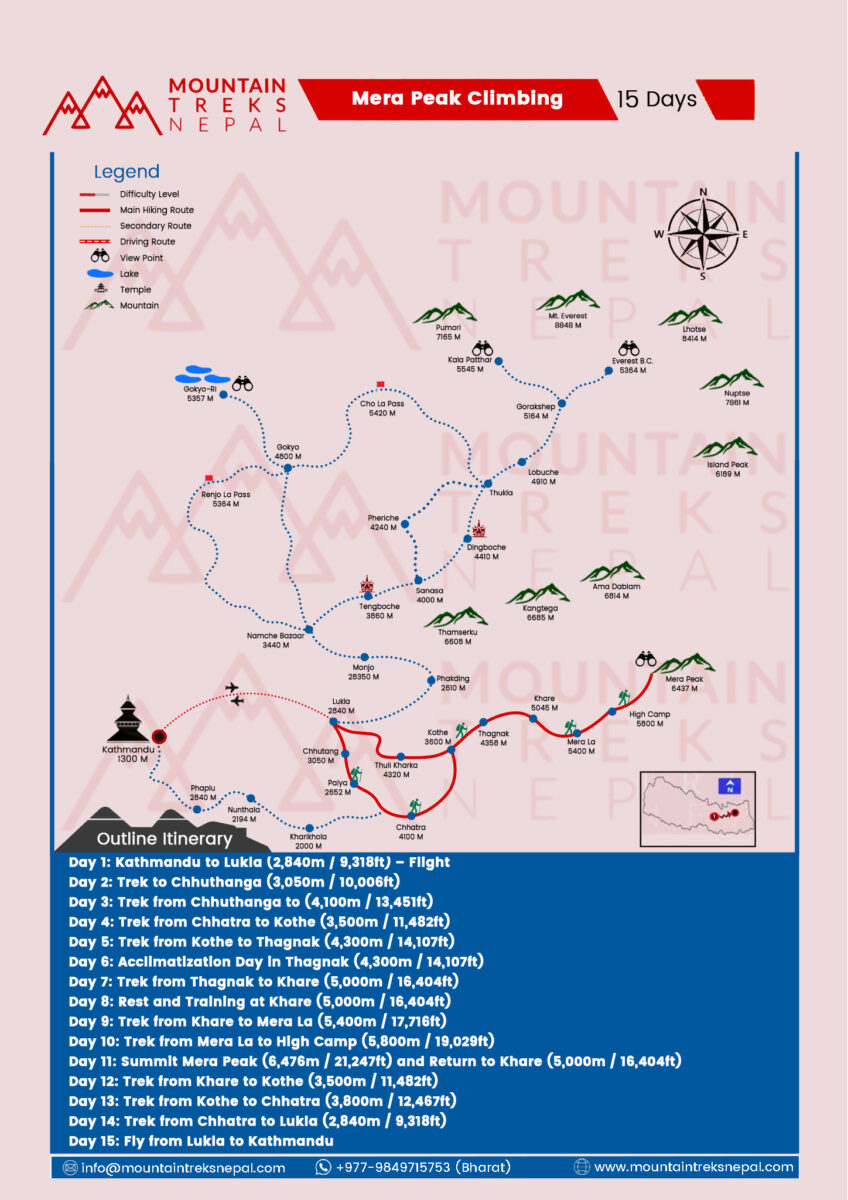
Mera Peak Climbing begins with a scenic mountain flight from Kathmandu to Lukla, the gateway to the Khumbu region. From there, trekkers traverse a less-trodden path through remote villages, dense rhododendron forests, and high mountain passes. Here’s a glimpse into the typical itinerary offered by Mountain Treks Nepal:
Day 1–2: Kathmandu to Lukla to Paiya
The journey starts with a 35-minute flight to Lukla. After landing, the trek heads south to Paiya, avoiding the usual Everest Base Camp route to allow a more secluded experience.
Day 3–6: Paiya to Chhatra Khola to Kothe
Trekkers pass through bamboo forests, cross suspension bridges, and climb gradually toward Chhatra Khola and onward to Kothe, a serene village on the banks of the Inkhu Khola river.
Day 7–8: Thaknak and Khare (Acclimatization Days)
Stopping at Thaknak and Khare allows for acclimatization. This part of the trek is crucial for adjusting to altitude. Mountain Treks Nepal places great emphasis on slow, safe altitude gain, ensuring trekkers are physically ready for the climb ahead.
Day 9: Mera Base Camp
Climbers reach Mera Base Camp, set against a dramatic alpine backdrop. Here, final preparations and gear checks take place.
Day 10: Mera High Camp
Ascending to Mera High Camp involves navigating steep snow slopes and icy ridges. The camp offers breathtaking views and a taste of what’s to come.
Day 11: Summit Day – Mera Peak Climbing Highlight
Starting in the early hours, the summit push begins. With crampons strapped and headlamps on, climbers follow the rope lines set by guides. Reaching the summit is a surreal moment—where snow meets sky, and the grandeur of the Himalayas unfolds in every direction.
Day 12–15: Descent and Return to Lukla
After summiting, trekkers retrace their steps to Lukla. Mountain Treks Nepal ensures a smooth and safe return, allowing time for reflection and celebration before the flight back to Kathmandu.
Best Time for Mera Peak Climbing

Two primary seasons provide the best conditions for Mera Peak Climbing:
-
Spring (March to May): Clear skies, blooming forests, and stable weather make this a favorite season.
-
Autumn (September to November): Offers crystal-clear mountain views, cooler temperatures, and minimal rainfall.
Mountain Treks Nepal schedules group departures during these windows, while also offering private expeditions for those with custom dates.
Mera Peak Climbing Difficulty and Preparation
Although Mera Peak is considered a “trekking peak,” the climb requires determination, fitness, and preparation. The primary challenges include:
-
Altitude: Mera Peak’s height exceeds 6,400 meters, making acclimatization essential.
-
Terrain: The route includes rocky paths, snowfields, and crevassed glaciers.
-
Weather: Conditions can change rapidly at high altitude.
Physical Fitness
Trekkers should be in good shape, with strong cardiovascular health and prior hiking experience. Altitude training and long hikes are recommended in the months leading up to the trip.
Equipment List
Essential gear includes:
-
Mountaineering boots
-
Crampons
-
Ice axe
-
Climbing harness
-
Down jacket and sleeping bag
-
Trekking poles
Mountain Treks Nepal provides rental options for technical gear and offers a complete packing list to all climbers.
Training and Support
Guides from Mountain Treks Nepal conduct pre-climb training sessions at High Camp, including ice walking and rope techniques. This extra step prepares climbers mentally and physically for summit success.
Why Choose Mountain Treks Nepal for Mera Peak Climbing?

With dozens of trekking companies in Nepal, Mountain Treks Nepal stands apart for its commitment to personalized service, mountaineering safety, and deep local knowledge.
Experienced Guides
Every Mera Peak Climbing expedition is led by certified, English-speaking guides with extensive high-altitude experience. Many of them hail from Sherpa communities and have summited major Himalayan peaks.
Tailored Itineraries
Each itinerary is designed with altitude safety and client fitness in mind. Adjustments can be made to suit individual goals, whether it’s extending acclimatization or taking a more scenic route.
End-to-End Service
From airport pickup in Kathmandu to summit support and farewell dinner, Mountain Treks Nepal handles every detail—permits, porters, meals, lodging, and emergency support.
Client Testimonials
Trekkers from around the world have praised the company for its professionalism, safety, and heartwarming hospitality. These glowing reviews reflect the team’s dedication to providing unforgettable journeys.
Permits, Costs, and Booking with Mountain Treks Nepal
Required Permits
For Mera Peak Climbing, the following permits are necessary:
-
Mera Peak Climbing Permit (issued by NMA)
-
Makalu Barun National Park Permit
-
Local area entry permits
Mountain Treks Nepal arranges all permits on behalf of clients, simplifying the process.
Cost Estimate
Prices vary depending on group size, itinerary, and services, but a complete Mera Peak Climbing package typically ranges between USD 2,000 to 2,800. This includes guides, permits, accommodation, meals, and transportation.
Booking and Custom Trips
Trekkers can book directly through mountaintreksnepal.com, where detailed itineraries, FAQs, and contact options are available. Custom expeditions for private groups or photographers are also offered.
Conclusion: Summit Dreams Begin Here
Standing atop Mera Peak is not just about elevation it’s about elevation of spirit, determination, and connection with nature. The journey is demanding, but the reward is unmatched: a glimpse into the heart of the Himalayas, and into one’s own strength.
For those seeking a guided, supportive, and expertly managed expedition, Mera Peak Climbing with Mountain Treks Nepal is the ultimate choice. From the first step in Lukla to the final summit push, Mountain Treks Nepal ensures that every moment is filled with purpose, passion, and the power of the mountains.