



Share This:
Ultimate Guide to the Manaslu Circuit Trek: Adventure with Mountain Treks Nepal
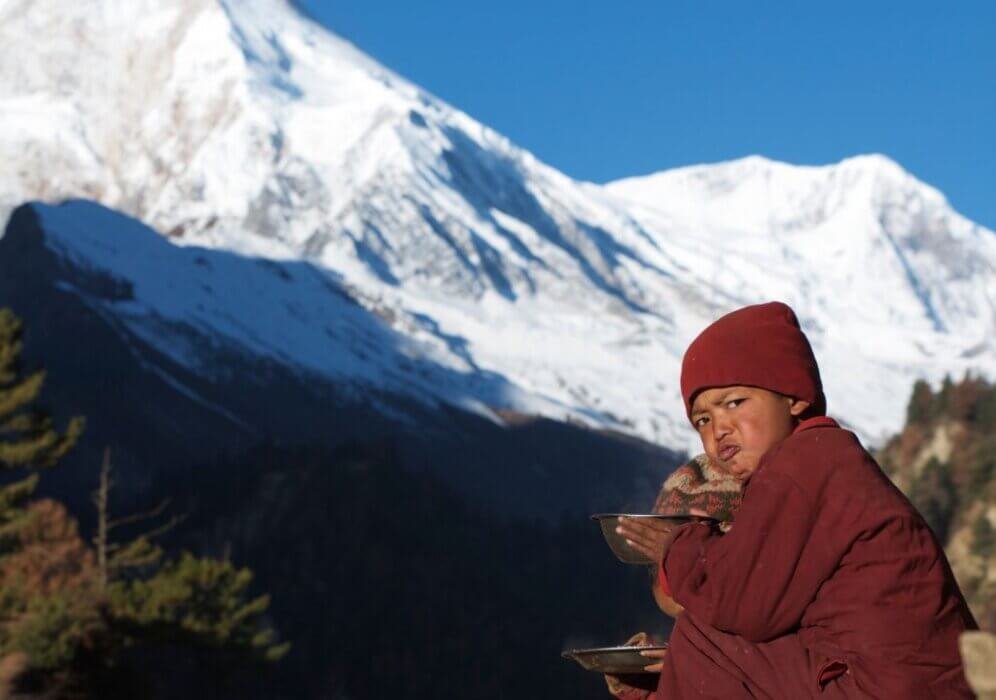
The Manaslu Circuit Trek stands as one of the Himalayas’ most compelling and truly authentic adventures, offering a spectacular blend of high-mountain scenery, deeply preserved Tibetan-Buddhist culture, and a level of pristine solitude rarely found on Nepal’s more frequented trails. Circumnavigating Mount Manaslu (8,163m)—the world’s eighth-highest peak—this journey takes trekkers through an astonishing diversity of landscapes, from lush, subtropical forests to the harsh, glacial valleys near the Tibetan border.
The Manaslu Circuit Trek is a complete, life-changing experience, demanding dedication yet rewarding trekkers with sights of unparalleled beauty. To ensure this challenging, high-altitude journey is both safe and deeply enriching, partnering with a trusted local expert is essential. Mountain Treks Nepal delivers this expertise, offering meticulously planned itineraries, top-tier safety protocols, and a deep-rooted commitment to sustainable and culturally respectful trekking.
Why the Manaslu Circuit Trek Deserves the Top Spot on Your Bucket List?

The Manaslu region, designated a restricted area, has maintained a unique wildness and cultural integrity because trekking here is strictly regulated, requiring special permits and a licensed local guide. This exclusivity has kept the trails quieter than the Annapurna or Everest regions, making the Manaslu Circuit Trek the perfect choice for those seeking a tranquil, immersive Himalayan experience.
Key Highlights of the Manaslu Circuit Trek:
-
Circumnavigating an Eight-Thousander: The trek offers breathtaking, close-up views of Mount Manaslu (8,163m) from numerous angles, a spectacle reserved for this route.
-
The Challenging Larkya La Pass (5,160m): Crossing this high-altitude pass is the trek’s physical and scenic climax, providing panoramic vistas of Himlung Himal, Cheo Himal, Annapurna II, and other majestic peaks.
-
Authentic Tibetan-Buddhist Culture: Trekkers pass through remote villages like Sama Gaun and Samdo, where the Nubri and Tsum people maintain centuries-old Tibetan-influenced traditions, seen in the frequent Mani walls, prayer wheels, and ancient monasteries.
-
Dramatic and Diverse Landscapes: The trail plunges from the tropical lowlands with terraced rice paddies, through dense subtropical forests along the Budi Gandaki River gorge, and finally ascends into the desolate, wind-swept alpine zone.
The Manaslu Circuit Trek: A Day-by-Day Journey
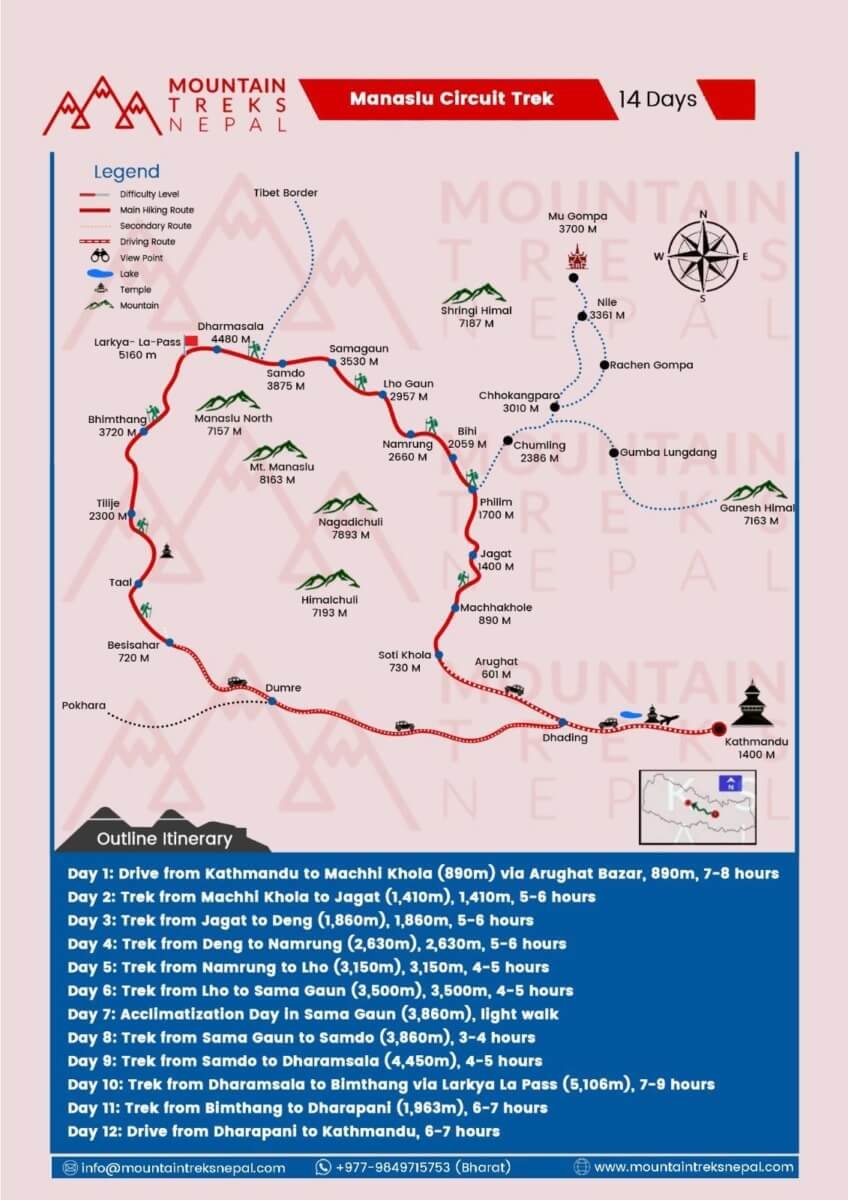
A standard, well-acclimatized itinerary for the Manaslu Circuit Trek with Mountain Treks Nepal typically spans 14 to 18 days, beginning with a drive from Kathmandu to the trailhead.
Lower Region: Subtropical Forests and Gurung Villages
The journey begins with a long, scenic drive from Kathmandu to Soti Khola or Machha Khola. The initial days of trekking follow the winding Budi Gandaki River, taking trekkers through varied terrain.
-
Days 1-4: Kathmandu to Jagat (1,410m): The drive to the trailhead is an adventure in itself, followed by trekking through Sal forests, terraced fields, and past beautiful waterfalls. The trail passes through settlements like Machha Khola and Doban before reaching Jagat, the checkpoint where the Manaslu Conservation Area begins.
-
Days 5-6: Jagat to Namrung (2,630m): Ascending further, the landscape transitions. Trekkers cross numerous thrilling suspension bridges and pass through Philim and Deng (1,860m), noting the shift in culture as they enter villages with a more pronounced Tibetan influence. Namrung offers the first true glimpses of Manaslu and Himalchuli.
Upper Region: Alpine Zone and Tibetan Heritage
This section is where the magnificent mountain views truly open up, and the cultural immersion deepens.
-
Days 7-9: Namrung to Samagaun (3,530m): The path to Lho (3,180m) and then on to the vast, open valley of Samagaun is arguably the most spectacular. At Lho, the Ribung Gompa offers a magnificent spot for reflection, while Sama Gaun provides stunning panoramic views of Mount Manaslu, Himchuli, and the Ganesh Himal range.
-
Day 10: Acclimatization Day in Samagaun: A crucial day for high-altitude adjustment. Mountain Treks Nepal organizes essential side trips, such as the hike to Manaslu Base Camp or Pungyen Gompa, to aid acclimatization. This ‘hike high, sleep low’ strategy is key to a safe trek.
-
Days 11-12: Samagaun to Dharamsala (4,460m): The trek continues past Birendra Lake to the ancient trading village of Samdo (3,875m), close to the Tibetan border. The final push before the pass is to Dharamsala (Larkya Phedi), the high camp, where an early night is essential for the next day’s challenge.
Crossing the Pass and Descent
The final days are a mix of intense physical challenge and blissful descent.
-
Day 13: Crossing Larkya La Pass (5,160m) to Bimthang (3,720m): This is the longest and most demanding day. Starting before dawn, the climb to the pass rewards with breathtaking views of a vast Himalayan panorama. The subsequent descent to Bimthang is long but exhilarating, bringing trekkers back down to the valley floor amidst spectacular glacial scenery.
-
Days 14-16: Bimthang to Drive Out: From Bimthang, the trail descends rapidly through beautiful forests to Gho and then on to Dharapani (1,960m), where the Manaslu Circuit meets the Annapurna Circuit trail. A final drive from Dharapani or Besisahar completes the journey back to Kathmandu.
Logistics and Planning the Manaslu Circuit Trek
Planning for an expedition of this caliber requires careful consideration of permits, physical preparation, and the ideal season.
Best Seasons for the Manaslu Circuit Trek
The most favorable times for the Manaslu Circuit Trek are during the Autumn and Spring seasons.
| Season | Months | Conditions & Highlights |
| Autumn (Peak) | September, October, November | Post-monsoon clarity offers crystal-clear skies, moderate temperatures, and the best mountain views. Trails are dry and in excellent condition. |
| Spring (Popular) | March, April, May | Mild temperatures and clear skies. The lower trails are vibrant with blooming rhododendrons and other wildflowers. |
| Winter (Off-Season) | December, January, February | Very cold, especially at high altitudes. Larkya La Pass is often blocked by heavy snow, making the trek significantly more challenging or impossible. |
| Monsoon (Off-Season) | June, July, August | Heavy rainfall creates muddy, slippery trails and clouds often obscure mountain views. Increased risk of landslides in lower regions. |
Mountain Treks Nepal ensures all logistics, from transport to accommodation bookings, are handled professionally across all seasons, with specific gear and safety adjustments made for off-peak departures.
Permits and Regulations
The Manaslu region is a restricted area, necessitating three specific permits, all of which are included and arranged when booking the Manaslu Circuit Trek with Mountain Treks Nepal:
-
Manaslu Restricted Area Permit (MRAP): The most significant permit, mandatory for entry into the core region.
-
Manaslu Conservation Area Permit (MCAP): Required for trekking within the Manaslu Conservation Area.
-
Annapurna Conservation Area Permit (ACAP): Required as the trek concludes by joining the Annapurna region trail at Dharapani.
Crucially, trekkers must be accompanied by a licensed Nepali guide and trek in a group of at least two people. This regulation underscores the remote nature of the trail and the importance of professional support for safety and compliance.
Difficulty and Preparation
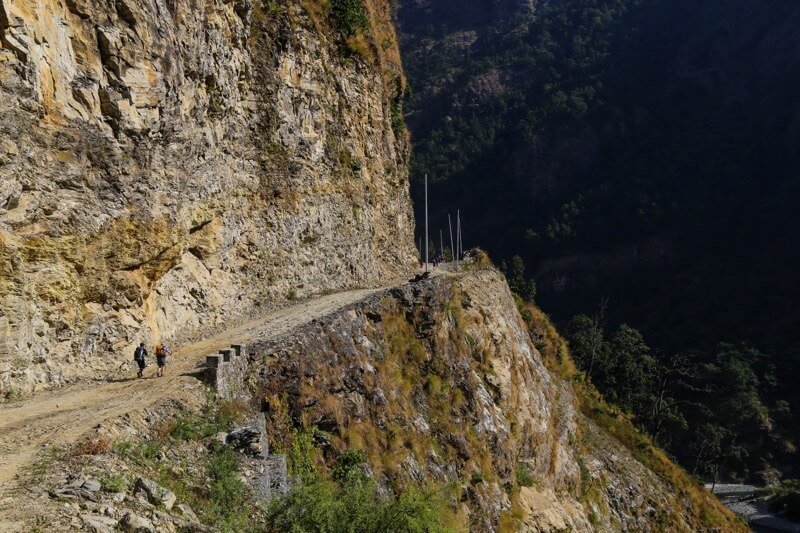
The Manaslu Circuit Trek is classified as a challenging to strenuous trek. The key difficulties involve:
-
Altitude: The trek reaches 5,160m at Larkya La Pass, requiring proper acclimatization days to mitigate the risk of Acute Mountain Sickness (AMS).
-
Long Trekking Days: Especially the day of the pass crossing, which can involve 8-10 hours of walking over challenging terrain.
-
Remoteness: Facilities are basic, particularly in the higher villages, and professional emergency logistics are paramount.
Preparation should involve consistent cardiovascular exercise (running, cycling, swimming) and strength training (hiking with a weighted backpack) for at least two to three months before departure.
Mountain Treks Nepal: The Gold Standard for the Manaslu Circuit Trek
Choosing the right trekking agency is the single most important decision for an adventure like the Manaslu Circuit Trek. Mountain Treks Nepal is not merely a service provider; it is a dedicated partner committed to delivering an exceptional, secure, and responsible Himalayan journey.
Unmatched Local Expertise and Safety
Mountain Treks Nepal elevates the trekking experience through:
-
Veteran Local Guides: The team comprises highly experienced, government-licensed guides, often from the Manaslu region itself. This intimate, local knowledge of the trail, weather, culture, and emergency procedures is invaluable for trekker safety and immersion.
-
Superior Safety Protocol: Safety is the highest priority. Guides are trained in Wilderness First Aid and Altitude Sickness management. The company maintains reliable communication channels and a robust, rapid emergency evacuation plan, providing peace of mind in remote areas.
-
Guaranteed Departure: Mountain Treks Nepal guarantees departure on all scheduled dates, eliminating the stress of potential trip cancellations due to low group numbers.
A Commitment to Comfort and Sustainability
Beyond safety, Mountain Treks Nepal focuses on enhancing the quality and ethical nature of the journey:
-
Comprehensive, All-Inclusive Packages: The company handles all complex logistics—from permits and ground transportation (Kathmandu to the trailhead and back) to securing the best available teahouse accommodations and providing quality meals throughout the trek. This transparent, no-hidden-cost approach allows trekkers to focus entirely on the adventure.
-
Cultural and Environmental Respect: Mountain Treks Nepal practices sustainable tourism, respecting the Manaslu Conservation Area and supporting the local economies of the villages along the route. Guides act as cultural ambassadors, enriching the trek with insights into the local Gurung and Tibetan-influenced communities.
-
Personalized Experience: Understanding that every trekker is unique, Mountain Treks Nepal offers customizable itineraries. Whether a trekker seeks to include the challenging Tsum Valley side trip or prefers a more relaxed acclimatization schedule, the trip can be tailored to individual fitness levels and interests.
The journey around the world’s eighth-highest mountain is not a casual walk; it is a profound immersion into the heart of the Himalaya. By entrusting this journey to Mountain Treks Nepal, trekkers are guaranteed a professional, safe, and culturally rich experience on the celebrated Manaslu Circuit Trek. This is the pathway to true Himalayan adventure.
Frequently Asked Questions about the Manaslu Circuit Trek
Q: What type of accommodation is available on the Manaslu Circuit Trek?
A: Accommodation consists of locally-owned teahouses (lodges). These provide basic but comfortable private rooms, a shared dining hall, and simple food menus. Mountain Treks Nepal prioritizes booking the best-available teahouses to ensure trekkers have a restful night after a long day on the trail. In the highest camps, particularly Dharamsala, facilities are very basic due to the altitude and remoteness.
Q: What is the altitude risk on the Manaslu Circuit Trek, and how is it managed?
A: The highest point is Larkya La Pass at 5,160m. Acute Mountain Sickness (AMS) is a genuine risk. Mountain Treks Nepal mitigates this through a professionally designed itinerary that includes mandatory rest and acclimatization days, specifically at Samagaun (3,530m). Guides enforce slow, steady trekking paces, ensure adequate hydration, and monitor all trekkers for any signs of AMS, carrying necessary first aid and communication equipment.
Q: What should be expected regarding food and water on the trek?
A: Teahouses typically offer a menu of local and international dishes. The staple food is Dal Bhat (rice and lentil soup), a nutritious, energy-rich option. Other options include noodles, soup, potato dishes, and occasionally, simple bakeries. Water is sourced from local taps or springs and must be purified, either with purification tablets carried by the trekker or through boiled water purchased at teahouses. Mountain Treks Nepal advises against single-use plastic bottles to promote environmental sustainability.
Q: What is the maximum group size for the Manaslu Circuit Trek with Mountain Treks Nepal?
A: To ensure a high-quality, personalized, and safe experience, Mountain Treks Nepal generally keeps group sizes small, typically between 1 and 15 people. Small groups enhance safety monitoring and allow for a deeper, more personal connection with the local environment and culture, which is paramount on the secluded Manaslu Circuit Trek.
Q: Is insurance mandatory for the Manaslu Circuit Trek?
A: Yes, travel insurance is strictly mandatory for the Manaslu Circuit Trek. The policy must cover emergency medical expenses and, critically, high-altitude helicopter rescue up to an altitude of at least 6,000 meters. Mountain Treks Nepal requires proof of this insurance coverage before the trek begins, underlining the serious nature of safety in this remote Himalayan environment.
Embark on Your Manaslu Circuit Trek Adventure
The Manaslu Circuit Trek offers a raw, untouched view of the Himalayas, a challenging trek that rewards with magnificent views and a profound cultural experience. Mountain Treks Nepal is the dedicated, professional partner ready to guide this journey, handling all complexities so the focus remains entirely on the majesty of Manaslu and the surrounding peaks.
Book the Manaslu Circuit Trek with Mountain Treks Nepal today and secure a place on the adventure of a lifetime.